REVIEW · BERLIN
Berlin: The Feuerle Collection Guided Tour and Entry Ticket
Book on GetYourGuide →Operated by The Feuerle Collection · Bookable on GetYourGuide
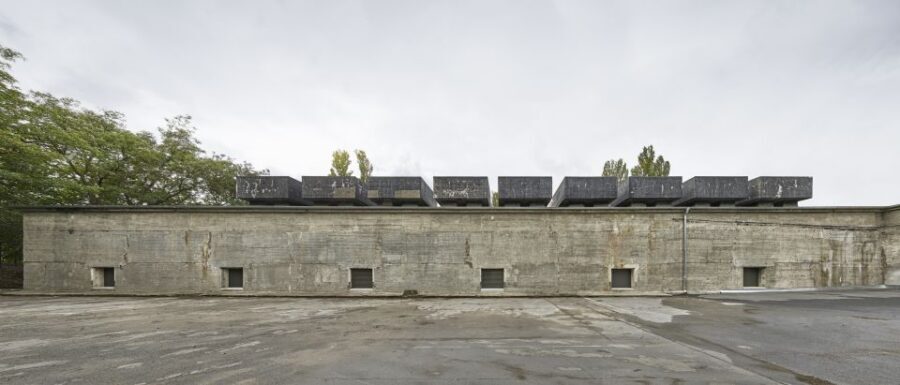
A Berlin bunker museum sounds like a plot twist, and this one works. You step into the Feuerle Collection inside a renovated World War II telecommunications bunker and move through a conversation between Imperial Chinese design, Southeast Asian sculpture, and contemporary artists. Two things I really like: the calm, focused atmosphere of the space, and how the guide helps you connect objects across time without turning it into a lecture. One possible drawback: the full show runs about an hour, and if you’re hoping for extra room-specific surprises every time, be aware some visitors reported a feature like the Scent Room wasn’t available.
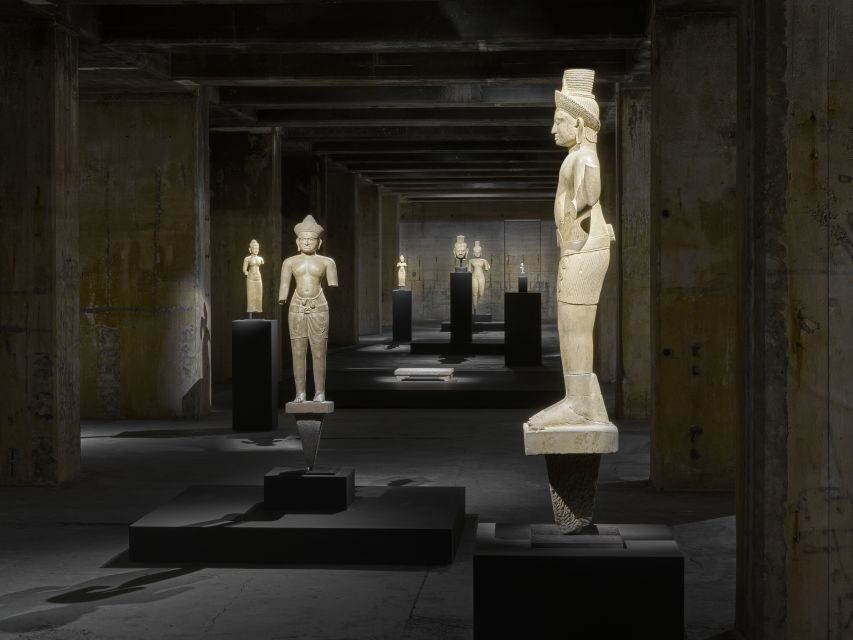
The setting is part of the art. The building was reworked by architect John Pawson, and the museum lighting and layout make you look harder at details you might otherwise miss. You’ll see everything from stone and bronze Khmer pieces (7th to 13th century) to intricate Imperial Chinese lacquer and stone furniture, then get contemporary counterpoints from artists like Nobuyoshi Araki and Adam Fuss. The main consideration is rules: phones, cameras, and video recording are not allowed, so plan on experiencing it with your own eyes and memory.
At $25 for a 1-hour guided entry, it’s not a budget museum detour, but it can feel like good value if you enjoy art-world context and architectural design. If you’re traveling with kids under 16, this one won’t fit. And if you need snacks on-site, you’ll be out of luck since food and drinks aren’t permitted inside.
In This Review
- Key things I’d circle in your planner
- First impressions: walking into a renovated WWII bunker
- Your guided walk: how the one-hour format actually works
- The collection’s core: Imperial Chinese furniture and ancient Southeast Asian art
- The contemporary pairings: Nobuyoshi Araki and Adam Fuss in context
- The underground lake and light design: a feature worth planning for
- What rules mean for your experience (and your photos)
- Who this tour suits best (and who should skip it)
- Price and value: is $25 for a 1-hour guided entry worth it?
- Practical tips so you get the most out of it
- Should you book The Feuerle Collection guided tour in Berlin?
- FAQ
- How long is the Berlin Feuerle Collection guided tour?
- Where do I meet the guide?
- What’s included in the ticket price?
- Is the tour offered in English?
- Is the tour wheelchair accessible?
- Are children allowed?
- Are pets allowed in the museum?
- Can I take photos or video during the tour?
Key things I’d circle in your planner
- A quiet, purpose-built bunker setting where you can slow down and look without chaos
- John Pawson’s architecture shaping your route and your eye line through the rooms
- Imperial Chinese furniture + Khmer sculpture paired thoughtfully with modern art
- Underground lake and light design that turns a hidden feature into a visual anchor
- Contemporary pairings with artists like Nobuyoshi Araki and Adam Fuss
- A guided tour in English that explains Désiré Feuerle’s idea in plain language
First impressions: walking into a renovated WWII bunker
The first thing you notice is how controlled the space feels. You’re not in a big, echoing museum hall where everyone streams past the main rooms. Instead, you’re walking into a former WWII telecommunications bunker that’s been renovated to hold art in a very still, deliberate way. That quiet matters. It changes how you look at sculpture and furniture, because you’re not fighting crowds or distractions.
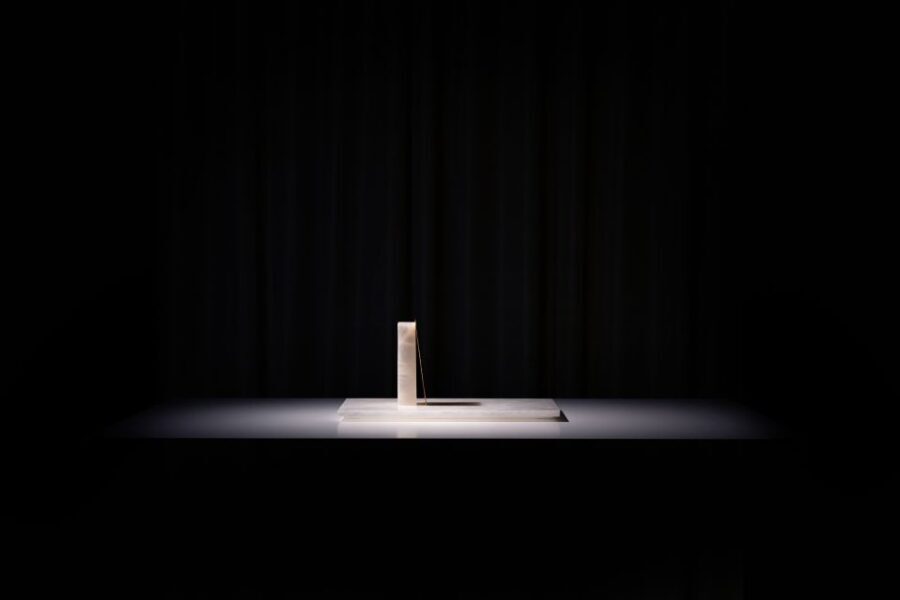
Then there’s the architectural hand of John Pawson. You’ll feel it in the lighting and in how the rooms guide your route. It’s the kind of design that doesn’t announce itself every second, but once you start paying attention, you realize you’re being steered toward specific moments: a surface here, a silhouette there, the way light lands on a carved form.
I also appreciate the practical rhythm of the experience. The museum is built for a guided walk, and your guide sets the tempo so you don’t rush through important pieces. You’ll cover a lot for just one hour, but it doesn’t feel like you’re getting sprinted through.
A few more Berlin tours and experiences worth a look



Your guided walk: how the one-hour format actually works
This is a guided museum tour with entry included, and the whole experience lasts about 1 hour. That hour is the deal—short enough to fit into a busy Berlin day, long enough to make the art feel connected rather than random.
The guide plays a key role in making sense of what you’re seeing. You learn about Désiré Feuerle and the thinking behind the collection: he pioneered the idea of placing antiquities next to contemporary work, so they talk to each other instead of sitting in separate time periods. That sounds like a gallery slogan, but on the floor it works because you’re literally walking from one visual language to the next.
Here’s my advice for maximizing the hour: don’t try to read every label line by line. Use the guide’s cues. If the guide points out how a carved Khmer surface echoes a modern material approach, your looking gets more precise fast. If you’re the type who likes art explained in simple, grounded terms, this format is a good match.
If you’re expecting a self-guided wandering experience with extra time to stop and rest whenever you want, you may find the schedule a little tighter than that. One review also flagged that some tours can feel shorter than expected, so don’t count on extra time for detours once you’re inside.
The collection’s core: Imperial Chinese furniture and ancient Southeast Asian art
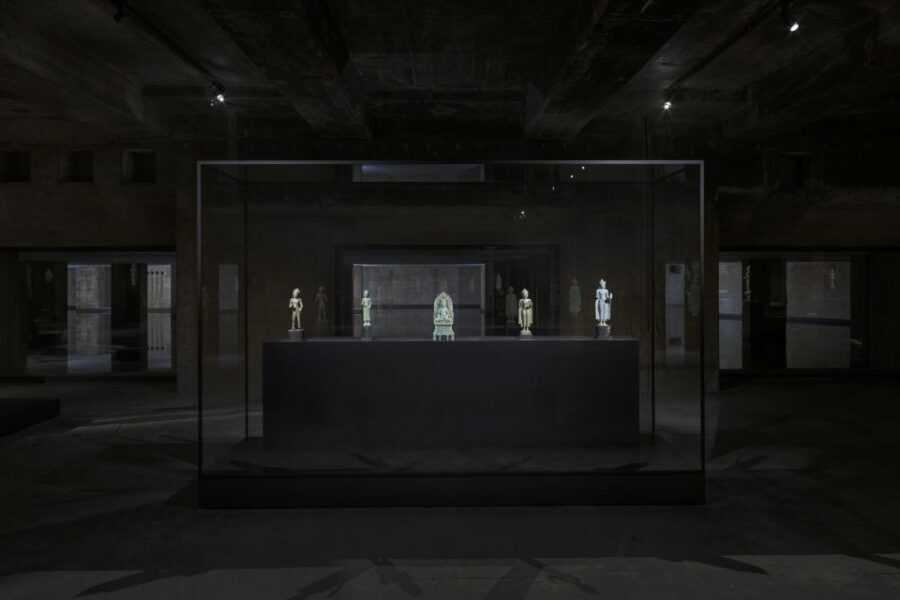
The heart of the visit is the way the museum balances two strengths: ancient objects with deep material craft, and the art-world power of contemporary voices.
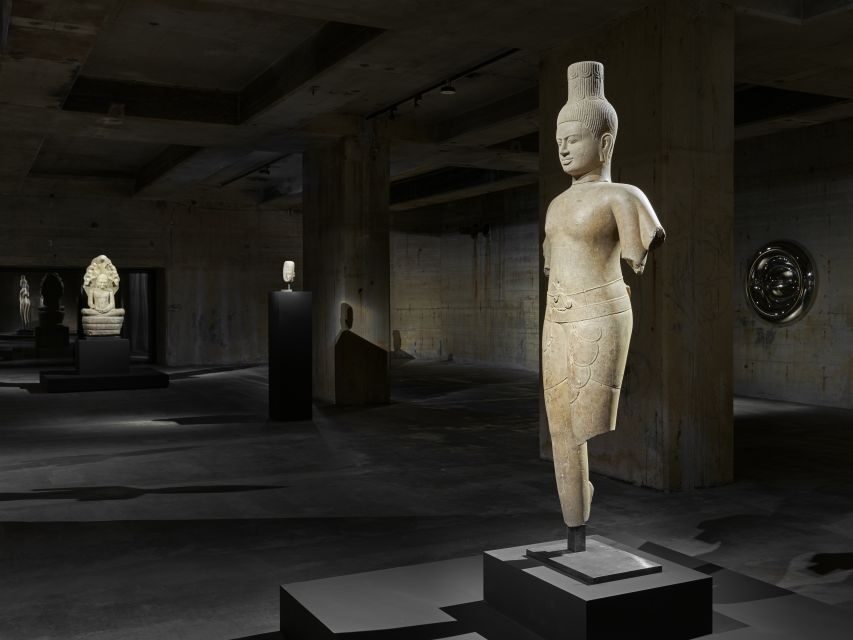
On the older-art side, you’ll see Khmer sculptures in stone and bronze, including works from the 7th to the 13th century. This is the period where form and presence matter a lot. When you’re in front of these pieces, focus on weight and gesture—how the sculpture holds still, yet looks like it’s ready to move. The bunker setting helps here because it feels like the sculptures belong to the room, not like they’re competing with a modern hall.
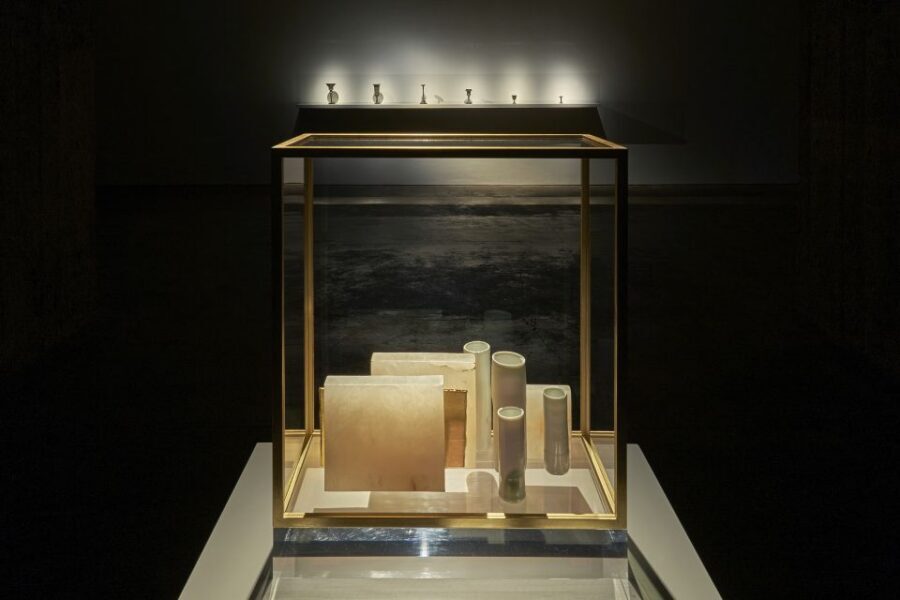
Next you’ll spend time with Imperial Chinese lacquer and stone furniture. Lacquer is all about surface—light, sheen, and fine detail. In a normal museum, lacquer can look flat or overly glossy depending on lighting. Here, the building design and controlled light help you see the texture and craftsmanship more clearly.
You’re also shown a wider thread of Southeast Asian art, including references to ancient works beyond just one region. The point isn’t to memorize dates like a quiz. The point is to notice how different cultures treat similar visual problems—decorative detail, symbolic structure, and how objects occupy space.
A big takeaway for me: the museum makes you compare. You’re not just viewing a highlight reel. You’re being nudged to notice how a surface treatment in one part of the collection can make you look differently at a contemporary piece a few rooms later.
The contemporary pairings: Nobuyoshi Araki and Adam Fuss in context
After the older works, the museum shifts the tone without breaking the thread. You’ll see contemporary artists such as Nobuyoshi Araki and Adam Fuss, positioned so the conversation feels intentional rather than random.
What I like about this part is that it doesn’t try to force meaning too hard. It offers a relationship. For example, you may find yourself thinking about repetition, scale, the ethics of display, or how a work treats a viewer’s distance. Even without a lecture, the juxtaposition makes your brain do the connection work.
This is where Désiré Feuerle’s premise becomes real. If you usually separate antique rooms from modern art rooms, this museum challenges that habit. It asks you to look for links in materials, mood, and presentation choices—even when the objects come from completely different worlds and eras.
If you enjoy art that makes you pause and re-check your first impression, this is a strong match. And if you only want art that is instantly clear with a quick caption takeaway, the contemporary side might feel a bit more thought-required.
The underground lake and light design: a feature worth planning for
One of the most memorable elements is the underground lake and how the museum uses light to make it feel like part of the exhibition rather than a side attraction.
You don’t just hear about it. You see the way the space is arranged so the lake fits into the atmosphere—visually connected to the rooms and the objects around it. In a building like this, a hidden water feature can easily become background. Here, it acts like a visual reset button: you look at art, then you’re pulled toward a natural element framed by design.
For your planning: the lake doesn’t replace the art. It supports the pace. It helps the collection breathe. If you’re the type who needs at least one architectural or environmental wow moment in a museum, you’ll likely appreciate this part.
Also, keep your expectations flexible. One visitor specifically noted that the Scent Room wasn’t available during their visit. That’s a reminder that experience elements tied to atmosphere or special rooms can vary depending on operations, timing, or staffing.
You can also read our reviews of more guided tours in Berlin






What rules mean for your experience (and your photos)
This museum has strict behavior rules, and they shape your visit:
- No touching exhibits
- No cameras, cellphones, or video recording
- No food or drinks inside
- Pets aren’t allowed
- Children under 16 aren’t suitable
The no-phone, no-camera rule is honestly a big deal. You’ll have fewer impulse distractions. You can stand in front of a lacquer surface and actually see it, not try to capture it. If you love photographing art for later, you’ll have to adjust your expectations. Bring a notebook app substitute in your memory instead: jot down a few visual details while you’re there, then write them out later.
Food and drinks restrictions are also worth noting. If you’re pairing this with other Berlin stops, schedule a meal before or after. Inside, you’re there for art and architecture, not an extended break with snacks.
And if you’re traveling with family: with no children under 16, this is best for adults, older teens, and anyone who enjoys museums at a slower, more reflective pace.
Who this tour suits best (and who should skip it)
This experience is ideal if you like at least one of these:
- Art that mixes old and new on purpose
- Museums where architecture matters as much as the artworks
- Guided tours where you want context without getting buried in jargon
- Quiet, structured spaces that don’t feel like you’re sprinting
It’s also a good choice for a first-time Berlin museum day because it’s short. A one-hour tour with entry can slot into your schedule without swallowing an entire afternoon.
You might skip it if you want a fully self-guided experience with lots of free time, or if you strongly prefer documenting every artwork with your phone camera. And if you’re traveling with kids under 16, it’s not designed for that age group.
Price and value: is $25 for a 1-hour guided entry worth it?
At $25 per person for a guided tour with entry included, this is a mid-priced museum activity. Whether it’s worth it comes down to what you’re looking for.
If you enjoy the idea of guided interpretation—especially explanations about Désiré Feuerle and the logic of placing Imperial Chinese furniture alongside Khmer sculpture and contemporary work—then $25 can feel fair because you’re buying more than access. You’re buying the map for how to connect the pieces.
If you’re more of a wander-and-skim visitor, you might feel the hour is too short, especially since there’s limited time to linger. One reported concern was that the tour can feel shorter than expected. So plan your expectations around the guided format, not around slow museum browsing.
Practical tips so you get the most out of it
A few small moves can make a big difference:
- Go in ready to look carefully. The space rewards slow attention to surfaces and shapes.
- Leave time before and after for your own wrap-up. With strict rules on phones and no touching, you’ll want time to mentally land the experience.
- If you’re sensitive to lighting or have visual comfort needs, give yourself a moment at each room entry to adjust—bunker spaces can shift lighting levels by design.
- If you’re curious about atmospheric features like the Scent Room, ask when you arrive or check whether it’s operating on your day. A prior visitor noted it wasn’t available.
Should you book The Feuerle Collection guided tour in Berlin?
I’d book it if you like thoughtful pairings—ancient and modern side by side—and you want a guided walk that keeps the pace manageable. The combination of a renovated WWII bunker, John Pawson’s architectural lighting, and the jump from Imperial Chinese furniture to Khmer sculpture to contemporary work is exactly the kind of museum experience that feels different from the usual big-hall routine.
I’d hesitate if you need a long, freeform visit, or if phone-free viewing will feel like a dealbreaker. Also, if atmospheric rooms like the Scent Room matter to your plan, know that availability can vary.
If you’re aiming for one high-impact, art-and-architecture stop in Berlin, this is a strong bet.
FAQ
How long is the Berlin Feuerle Collection guided tour?
The tour lasts 1 hour.
Where do I meet the guide?
Meet at the entrance of The Feuerle Collection.
What’s included in the ticket price?
Included are the guide, the museum tour, and the entrance ticket to The Feuerle Collection.
Is the tour offered in English?
Yes, the live tour guide is English.
Is the tour wheelchair accessible?
Yes, the experience is wheelchair accessible.
Are children allowed?
It isn’t suitable for children under 16.
Are pets allowed in the museum?
No, pets are not allowed.
Can I take photos or video during the tour?
No. Cameras, cellphones, and video recording are not allowed.