REVIEW · BERLIN
An Introduction to Berlin Private Walking Tour
Book on Viator →Operated by Insight Cities · Bookable on Viator
Berlin’s history is written on the streets. This private walking tour maps you through major landmarks and the meaning behind them, with a historian-guide who can answer the questions you actually have. I especially like how the 3-hour pace is structured: you get time at big-photo sites like the Reichstag and Brandenburg Gate, plus quieter stops that change how you read the city.
Two things I really liked: you’re not stuck listening at a distance, since private means your guide can tailor the story to your interests, and you get a guide with real historical perspective (not just facts). One thing to consider: this is a heavy-history route, and the Holocaust Memorial stop can be emotionally intense, even when you’re only there for a short time.
In This Review
- Key takeaways before you go
- Why this Berlin private walk hits different
- The Reichstag dome sets the theme fast
- Brandenburg Gate: from empire statements to Cold War theater
- Museum Island and the Spreeinsel museums with built-in context
- Potsdamer Platz: a square rebuilt after a break
- Unter den Linden and Tiergarten: Berlin’s formal face and its green reset
- The Holocaust Memorial: what a short visit can still do
- Hackescher Markt: Art Nouveau courtyards and a more everyday Berlin
- How a historian-guide changes the experience (Jakob’s example)
- Price and value for a group up to 10
- Getting around: meeting point and Berlin transit tips
- Who this private tour fits best
- Should you book this Berlin private history tour?
- FAQ
- How long is the Berlin private walking tour?
- Is the tour private, or do I join other groups?
- What language is the tour offered in?
- Where do I meet the guide?
- Is hotel pickup available?
- Do I need tickets for the sights?
- Is food or transportation included?
- Can I cancel for free?
Key takeaways before you go
- Private, historian-led: plenty of room for your questions and follow-ups
- Iconic landmarks, explained: Reichstag dome, Brandenburg Gate, and major city squares with context
- Wall-era storytelling: your guide connects sites to Berlin’s division and reunification
- Memorial moment included: you’ll also visit the Holocaust Memorial’s reflective space
- Some transit involved: expect a few rides, and plan for day-pass pricing
Why this Berlin private walk hits different
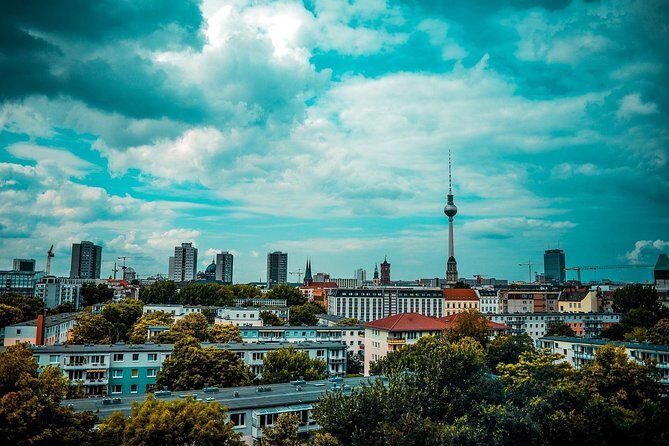
Berlin can feel like two cities at once: the one with elegant old avenues and museums, and the one shaped by war, division, and reinvention. This tour leans into that tension. It’s not just a parade of famous stops. It’s a guided explanation of how politics, ideology, and everyday life left their fingerprints across the same streets.
What makes it work for you is the format. The tour is private for your group of up to 10, and it runs about 3 hours. That matters because Berlin history is not simple, and most walking tours race past the parts you might want to ask about. Here, your guide can slow down where your attention goes—especially around the themes of democracy, tyranny, tolerance, and memory.
I also like the selection of stops. You bounce between world-famous architecture and locations that feel more human: parks, squares, and courtyards. Even with a short total time, you get variety, not just “postcard points.”
You can also read our reviews of more walking tours in Berlin



The Reichstag dome sets the theme fast
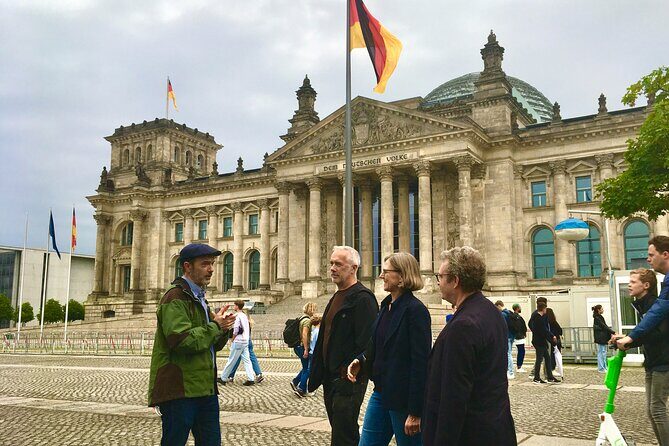
You start at the Reichstag Building area, the meeting place of Germany’s national legislature. The headline feature is the glass, transparent dome added in the 1990s by Norman Foster. Your guide uses that dome to frame a big idea: modern Germany’s commitment to democratic government. In other words, you’re not just looking at an impressive structure. You’re watching architecture act like political messaging.
The stop is short—about 20 minutes—but it’s enough to get oriented. You can think of this opening moment as a “how Berlin’s present grew out of its past” lesson. It also helps that the Reichstag sits in a setting where you can make sense of the scale of government in Germany, not just the building itself.
Practical note: the tour includes free admission at the stops listed in the route, and you’re also given a mobile ticket. Still, plan to arrive ready for outdoor walking and tight time blocks.
Brandenburg Gate: from empire statements to Cold War theater
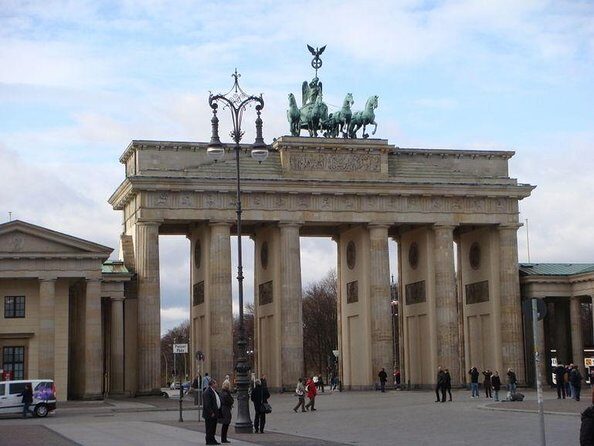
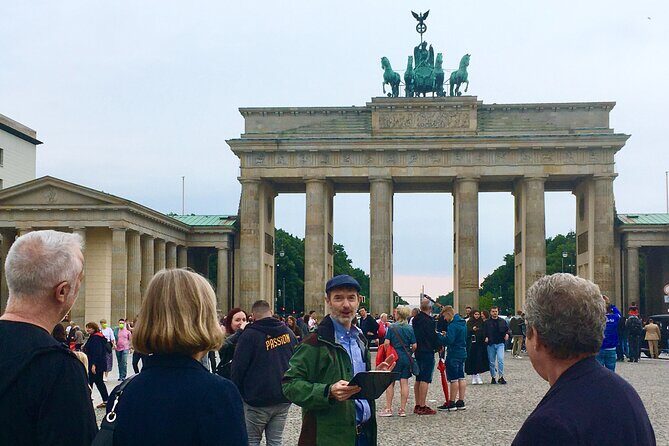
Next up is the Brandenburg Gate, an 18th-century neoclassical monument ordered by Prussian king Frederick William II. It’s one of those places where history seems to orbit the structure no matter where you stand.
What I like here is that your guide connects the gate to dramatic moments across centuries. The gate has been part of Napoleon’s triumphal entrance, and it later became tied to Ronald Reagan’s Cold War speech. That’s a useful reminder: Berlin isn’t only modern. It’s a stage where each era writes its own meaning onto the same stone.
The stop is about 20 minutes. If you’re the kind of traveler who enjoys details, you can spend that time watching how the gate’s placement shapes the photos and the walking flow. If you’re more “tell me the story,” you can just follow your guide’s explanation and treat it like a living timeline.
Museum Island and the Spreeinsel museums with built-in context
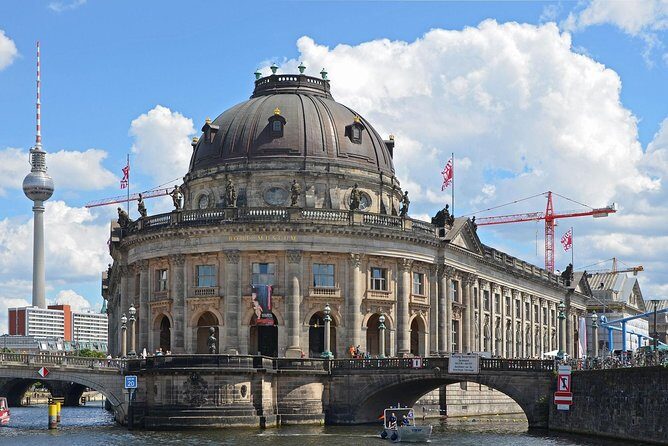
You then reach Museum Island (Spreeinsel), the ensemble of major museums on the island in the heart of Berlin. The tour points you toward the big names: the Pergamon Museum, the Neues Museum (New Museum), and the Alte Nationalgalerie (Old National Gallery).
A short 20-minute stop can be limiting if you were hoping for deep museum time. But as part of a walking history tour, Museum Island is perfect for getting the “why Berlin invested here” story. This area ties back to Prussian rulers building cultural power alongside political power. Berlin’s museums aren’t just collections. They’re part of the city’s identity-making.
If you want to turn this stop into an extra day-plan later, Museum Island is a strong clue. You’ll know which museum makes sense for your interests, so you can decide after you’ve heard the basics.
Potsdamer Platz: a square rebuilt after a break
Then the route heads to Potsdamer Platz, a historic square that has been reborn since the fall of the Berlin Wall. Today, it’s a hub for restaurants, shops, and entertainment—so it can feel like the place where Berlin goes to have fun.
That contrast is the point. Your guide uses Potsdamer Platz to show how redevelopment can function like a new chapter. The square’s modern energy doesn’t erase what came before, but it changes how people experience the space.
This stop is about 15 minutes, which works because Potsdamer Platz is easy to read quickly from street level: you can see what’s new, and your guide can explain why the new look matters in the story of reunification.
You can also read our reviews of more private tours in Berlin


Unter den Linden and Tiergarten: Berlin’s formal face and its green reset
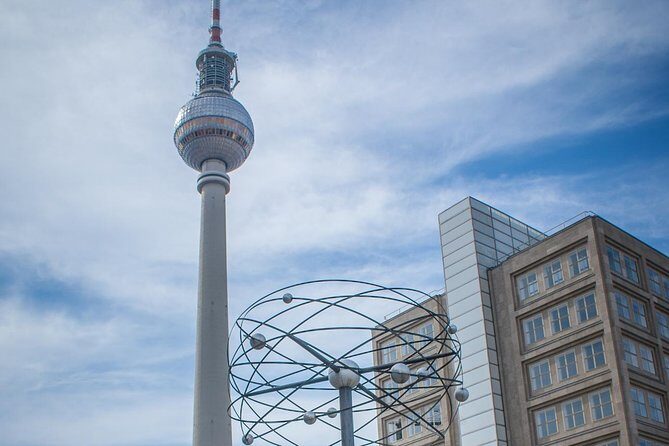
After Potsdamer Platz, you walk along Unter den Linden, the grand boulevard running from the City Palace toward Brandenburg Gate. The name comes from the linden trees lining the avenue. It’s often described as Berlin’s answer to Paris’s Champs-Élysées, and the boulevard’s purpose is similar: it’s a ceremonial spine through the city.
This segment is about 30 minutes, and it’s long enough to feel the “procession” quality of the street. It’s also a good time to let the guide connect different eras you’ve already touched—because a boulevard is not only about architecture. It’s where power likes to be seen.
From there, you reach Tiergarten, Berlin’s most famous inner-city park. The stop is shorter—about 10 minutes—but it’s a smart palate cleanser. You trade stone monuments for gardens and statuary, which changes your mental tempo. It also gives you space to absorb the tour’s heavier themes without constantly staring at political symbols.
The Holocaust Memorial: what a short visit can still do
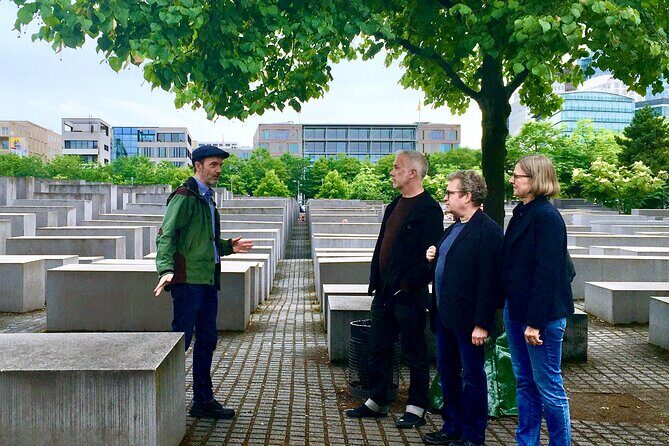
One of the most meaningful stops is the Memorial to the Murdered Jews of Europe. It opened in 2005 and was designed by architect Peter Eisenman. The memorial features 2711 concrete slabs of different heights, creating a space that feels like a labyrinth for walking and reflection.
The stop is about 15 minutes. That sounds brief, but this is the kind of place where you don’t need sightseeing speed. Your guide’s framing matters more than time spent standing in the same spot. I like that the tour includes this stop because it grounds the political history in the human reality that history always involves.
If you’re sensitive to intense memorials, plan your emotional pacing. You don’t have to rush your feelings just because the group schedule says move along.
Hackescher Markt: Art Nouveau courtyards and a more everyday Berlin
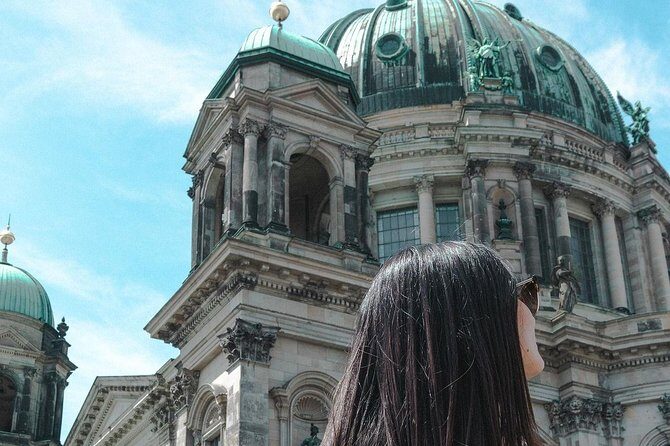
To wrap up, the tour includes Hackescher Markt, a lively square known for views into preserved pre-war Art Nouveau courtyards. This is a different vibe from the big-state landmarks. It’s closer to how Berliners and visitors actually spend time: streets, courtyards, and the energy of a central neighborhood.
The stop is about 10 minutes, so it’s not a long hangout. But in a tour that covers tyranny, tolerance, and war-era themes, Hackescher Markt gives you a helpful balance. It’s the city’s texture, not just its turning points.
How a historian-guide changes the experience (Jakob’s example)
The guide is the real differentiator on this tour. It’s not just that you get a “scholar-guide.” The reviews show the guide is comfortable with depth, tone, and personal context.
One standout story from a guide named Jakob is how he brought a family perspective into the history—he’s the grandchild of a Holocaust survivor. That kind of connection doesn’t turn the tour into a memoir. It turns the facts into something with weight and care. He’s also described as enthusiastic about helping with practical things like restaurant recommendations, which is a reminder that good guides don’t stop after the last stop on the route.
Another point I’d highlight: private time makes it easier to ask questions and keep the conversation going. In one review experience, the guide was happy to answer lots of individual questions. That’s a big deal in Berlin, where it’s easy to feel like you’re drowning in events unless someone helps you sort what matters.
If you like tours where you can say, I’m curious about how this connected to that, this kind of guide fit is exactly what you’re looking for.
Price and value for a group up to 10
The price is $520.73 per group, up to 10 people, and the tour runs for about 3 hours. That pricing model is worth thinking through as a value equation, not just a sticker shock.
Here’s how I’d judge it for you:
- If you’re traveling with a bigger group (around 6–10), the per-person cost often becomes reasonable because you’re sharing the guide’s time.
- If it’s just two or three people, you’re paying more per person, but you’re buying something you can’t easily replicate in a standard tour: direct interaction, the chance to shape the story, and fewer time-wasting logistics.
The private factor matters most if you care about WWII context, Cold War details, and how Berlin’s landmarks connect. If you mostly want quick photos and minimal talking, you may feel the cost more than the value.
But if you want a guide who can explain the symbolism of the Reichstag dome, the shifting meanings of the Brandenburg Gate, and the emotional weight of the Holocaust Memorial, then you’re paying for interpretation, not just movement.
Getting around: meeting point and Berlin transit tips
Meet-up is at Unter den Linden 42, 10117 Berlin, with a default meeting point at Cafe Einstein, Unter den Linden 42 unless hotel pickup has been arranged. Aim to arrive about 15 minutes early if no pickup is arranged.
The route uses a mix of walking and public transport. That’s normal here because some distances between key sites are too far to make fully on foot. If you don’t already have a Berlin visitor transit pass, you’ll want to look at day-ticket options.
From the tour details, these are the specific transit fares mentioned:
- Single one-way AB ticket: 2.8 EUR
- Senior one-way: 1.70 EUR
- Day ticket: 7 EUR (one person)
- Senior day ticket: 4.70 EUR
If you can’t purchase ahead of time, the guide can help you buy at the first metro station on the tour. That’s useful because transit machines can be finicky if you’re rushing in a foreign language environment.
Also, since the tour is near public transportation, you’ll have easier options if you need to adjust your plan.
Who this private tour fits best
This experience is a strong match for you if:
- You want a history-focused walk with a real local historian
- You like asking questions and hearing your answers in context
- You want a route that balances big symbols (Reichstag, Brandenburg Gate) with reflective spaces (Holocaust Memorial)
- You’re traveling with family or friends and want the schedule to stay in your control as a group
It’s less ideal if you want a light, casual sightseeing loop. Berlin’s story here includes trauma and memory, and the route is designed to treat those themes seriously.
Should you book this Berlin private history tour?
Book it if you want more than landmarks. You’re paying for a guided story that connects places like the Reichstag, Brandenburg Gate, Museum Island, Potsdamer Platz, and the Holocaust Memorial to the themes that shaped Berlin’s modern identity. The private format and the historian-guide experience—illustrated by Jakob’s depth—are the main reasons this tour feels worth the cost.
Don’t book it if you’re short on time and want a faster photo tour, or if you know you’ll struggle with emotionally heavy memorial sites. Even then, you could still benefit if you prepare yourself for the Holocaust Memorial moment and give it the respect it deserves.
If you’re on the fence, here’s the practical test: If you love history that has consequences you can still see in the streets, this is your kind of walk.
FAQ
How long is the Berlin private walking tour?
The tour lasts about 3 hours.
Is the tour private, or do I join other groups?
It’s a private tour/activity, so only your group participates.
What language is the tour offered in?
The tour is offered in English.
Where do I meet the guide?
If no hotel pickup is arranged, meet your guide 15 minutes before the start time at Cafe Einstein, Unter den Linden 42.
Is hotel pickup available?
Pickup is offered, unless hotel pick up has not been arranged for your booking.
Do I need tickets for the sights?
You receive a mobile ticket, and the itinerary lists the stops as having free admission for the time you spend there.
Is food or transportation included?
Food and drinks are not included. Transportation to/from attractions is also not included, and you’ll use public transport a few times during the tour. A day metro pass may help, and your guide can assist with buying tickets at the first metro station if needed.
Can I cancel for free?
Yes. The experience offers free cancellation if you cancel up to 24 hours in advance of the start time for a full refund.