REVIEW · BERLIN
Stasi Museum GDR History Skip-the-line Private Tour Berlin
Book on Viator →Operated by Rosotravel - Munich · Bookable on Viator
Stasi surveillance still has teeth today. This skip-the-line private tour takes you from Alexanderplatz to the Stasi Museum and explains how the GDR kept order through fear and paperwork. I love that you’re not just looking at objects—you’re connecting them to real life, including what citizens faced day to day.
Second, I really appreciate the guide angle. One guide experience stood out: yours may share lived, on-the-ground perspective from growing up in the east under Stasi rule, which adds weight to the stories and keeps the tour from turning into dry facts. The one drawback to keep in mind is time: at about 3 hours, you’ll cover a lot, so you won’t have the luxury of roaming slowly at every stop.
In This Review
- Key highlights to look for
- Meeting at Alexanderplatz: the start that sets your day up
- Alexanderplatz in 1989: the GDR backdrop before the museum
- The Stasi Museum Berlin setting: what you’ll see in the former HQ
- Spying technology and control methods you can actually picture
- Why the guide quality matters more than you think
- Skip-the-line entry: how to use it without losing time
- Stop-by-stop flow you can expect (and how to prepare)
- Price and value: what $258.59 buys you in real terms
- Who should book this Stasi Museum private tour
- Should you book this Stasi Museum skip-the-line private tour?
- FAQ
- How long is the Stasi Museum GDR History skip-the-line private tour?
- Is the tour offered in English?
- Where do I meet the guide?
- Does the tour include tickets to the Stasi Museum?
- Will I need to pay for public transport to reach the museum?
- Is this tour the same as Berlin-Hohenschönhausen Memorial?
- Is this a private tour or a group tour?
- What can I expect to see inside the Stasi Museum?
- What is the cancellation policy?
Key highlights to look for
- Skip-the-line reserved entry saves you from queue stress if you arrive on schedule
- Alexanderplatz context (1989) helps you understand the mood before Stasi control tightened or cracked
- Original Stasi headquarters building means you’re seeing the real setting, not a copy
- Erich Mielke’s red briefcase and the ministerial offices bring the system into sharper focus
- Two-way public transport tickets make the museum’s location easier to handle
Meeting at Alexanderplatz: the start that sets your day up
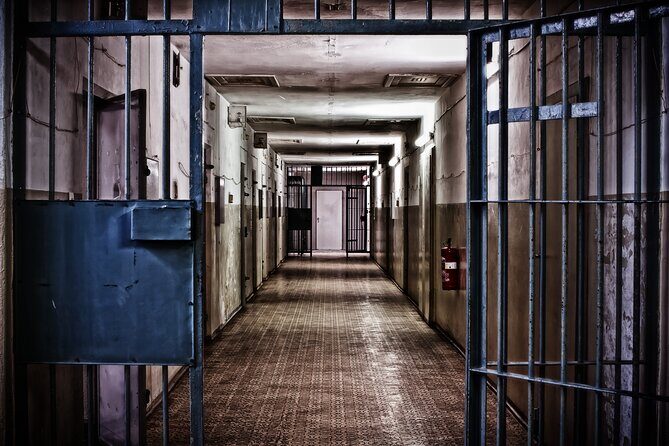
You’ll begin in central Berlin at Alexanderpl. 5-7, right by Park Inn by Radisson Berlin Alexanderplatz. The exact meeting point matters: stand in front of the hotel entrance, between the Burger King and the T-Mobile store. The guide will be meeting you there, and it’s best to wait outside—don’t walk into the building because the staff may not expect your group.
This is the kind of start that can feel tiny but actually makes a big difference. Arrive a few minutes early so you’re not rushing through a meeting point that can be busy with normal city foot traffic. With skip-the-line entry later, being on time isn’t just polite—it helps the whole plan run smoothly.
The tour ends back at the same meeting point, so you can build the rest of your evening without figuring out complicated logistics.
You can also read our reviews of more private tours in Berlin



Alexanderplatz in 1989: the GDR backdrop before the museum
Before you head into the museum, you get context at Alexanderplatz, where a major turning point unfolded in 1989. This public square is linked to the largest demonstration in GDR history, which is a useful anchor for the story you’ll hear next.
Here’s why I think this matters: the Stasi wasn’t operating in a vacuum. The museum works better when you remember you’re learning about a state that faced mounting pressure right before the wall fell. Alexanderplatz helps you place what you’re about to see into a timeline—control, dissent, and eventual collapse.
The tour then moves by public transport toward the museum. You’ll be given two-way transit tickets for your convenience since the Stasi Museum isn’t in the very center. It’s a small detail, but it removes the “how do I get there” distraction so you can stay focused on the human story.
The Stasi Museum Berlin setting: what you’ll see in the former HQ
The Stasi Museum (Forschungs- und Gedenkstätte Normannenstraße) is housed in the original building used by the former Ministry for State Security. That location changes the feel of the visit. You’re not just reading about power—you’re walking through spaces tied to how that power ran.
You’ll spend about 2 hours inside the museum, with your guide leading you through key areas like the Ministerial Offices and specific exhibition zones tied to Stasi operations. The emphasis stays on how the secret police worked: not only what they did, but how the system functioned day to day.
One quick but important heads-up: this is not the same site as the former Stasi prison at Berlin-Hohenschönhausen (the memorial there has its own name). If you’re doing a Stasi-themed itinerary, keep that distinction in mind so you’re choosing the kind of experience you want—museum HQ and spying technology here, and prison/memorial focus at Hohenschönhausen.
Spying technology and control methods you can actually picture

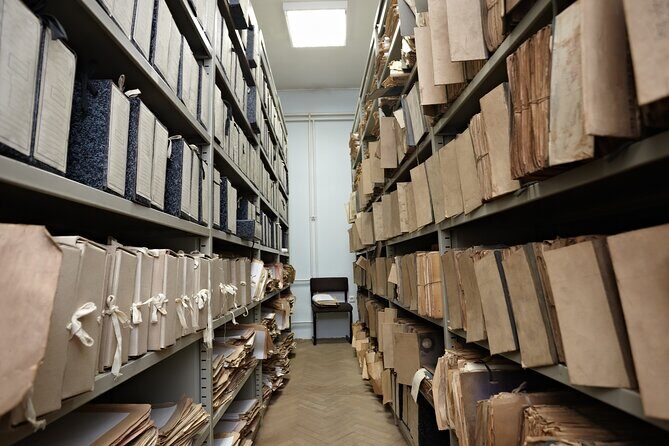
A big reason this tour earns strong marks is the practical, visual nature of what you get to see. The museum highlights original spying technology such as bugs and hidden cameras. Seeing objects associated with surveillance helps you understand the Stasi method without needing a whole background lecture.
Your guide will also connect the dots on recruitment and control. You’ll learn how informants were found and used, and how citizens were spied on and managed. It’s a heavy subject, but that’s exactly what makes it valuable: you get the mechanics of a system, not just moral outrage.
The tour also focuses on the hierarchy and decision-making side of Stasi work. In other words, it’s not only about the street-level fear—it’s also about the offices, offices records, and the people coordinating the machine.
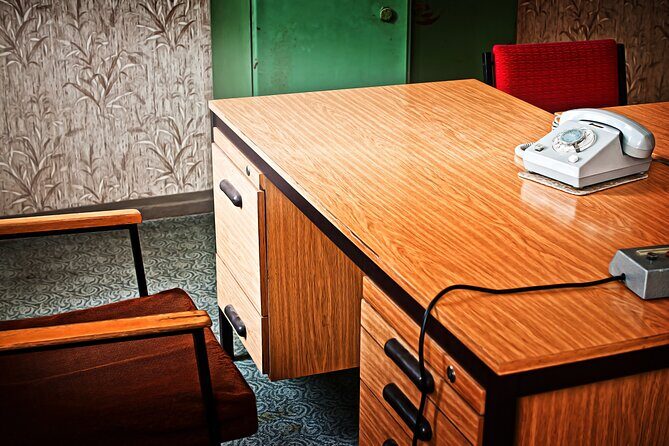
And then there’s the detail that seems to land with many people: Erich Mielke’s office. The museum displays his famous red briefcase, a prop that turns abstract power into something you can point at and explain. It’s not magic, but it makes the story feel real.
Why the guide quality matters more than you think
This is a private tour, meaning only your group participates. That’s not just a comfort perk—it changes how the visit flows. When you ask questions, you’re not competing with a large crowd. When the guide slows down to explain a concept, you benefit from the extra time instead of watching it disappear into the next group’s schedule.
This format is especially useful for a topic like Stasi history, where people often have a lot of assumptions or gaps. If you want the tour to answer your personal questions—How did they recruit informants? What did everyday control look like? How did the system maintain itself?—you’ll have the space to get clearer explanations.
One review insight that really resonates is the impact of a guide who grew up in the east and lived under Stasi rule. That kind of perspective can make a difference in tone. Facts still matter, but lived experience can help you feel what official language and surveillance routines actually meant for normal people.
A possible drawback of a very good guide is that the tour can leave you wanting more. The museum covers a lot in a short window, and if you’re hungry for every detail, you might wish you had even another hour.
You can also read our reviews of more historical tours in Berlin





Skip-the-line entry: how to use it without losing time
Skip-the-line sounds simple, but it works only if you play your part. With reserved time-slot entry, you can bypass the general queue—yet you must arrive at the meeting point on time and follow the schedule closely.
That means two things for you:
- Build in buffer time to reach the meeting spot near Park Inn by Radisson Berlin Alexanderplatz.
- Don’t plan a tight connection right before the tour starts, because if you miss timing, your reserved slot can be harder to use.
Also, you’ll use a mobile ticket. That’s convenient, but make sure your phone battery and ticket access are ready. It’s a small risk, and on a busy day it’s easy to lose track of details.
Stop-by-stop flow you can expect (and how to prepare)
Here’s the rhythm of the experience in practical terms:
- You start at Alexanderpl. 5-7, get oriented, and then move toward the museum by public transport.
- At Alexanderplatz, you get a short but meaningful historical framing—especially tied to the 1989 demonstration.
- The bulk of the museum time is spent inside the former Stasi HQ building, where you’ll see office spaces, the Ministerial Offices, the surveillance-related displays, and key interpretive areas around recruitment and control.
What I’d do to prepare: set your expectations that you’re visiting an operations-focused museum. Expect to come away with a clearer map of how surveillance worked, not just a list of historical dates. If you’re the type who likes systems and mechanisms, you’ll likely enjoy this more than a lighter sightseeing stop.
Price and value: what $258.59 buys you in real terms

At $258.59 per person for a roughly 3-hour private tour, this isn’t the cheapest way to see Berlin history. But value here isn’t only about convenience—it’s about what’s included and how the time is used.
You’re getting:
- Private guide time (only your group)
- Skip-the-line entry with a reserved entry slot
- Museum admission included
- Two-way public transport tickets (useful because the museum is outside the city center)
- The tour runs in English
For many visitors, that combination is what turns a museum visit into a guided understanding session. Instead of spending your limited energy trying to decode exhibits on your own, you’re hearing how pieces connect—bugs, hidden cameras, offices, recruitment, and the logic of control.
So, who is it best for? People who want an organized, expert-led experience with minimal hassle and who care about context. If you’re the type who can happily wander museums at your own pace for hours, you might choose a self-guided plan. But if you want the story stitched together fast—this price starts to feel more reasonable.
Who should book this Stasi Museum private tour
This tour is a strong fit if you:
- Want an English explanation focused on how the Stasi operated, not only major events
- Like being led through specific rooms, objects, and key displays like Mielke’s red briefcase
- Prefer a private format where your questions don’t get swallowed by a larger group
- Want skip-the-line timing so you can keep your day moving
It may be less ideal if you:
- Want long, slow exploration with lots of personal wandering time
- Are very sensitive to distressing themes and want a more gentle pacing (you’ll still be guided, but it’s inherently about surveillance and control)
Should you book this Stasi Museum skip-the-line private tour?
Yes, if you want a structured, high-impact Stasi Museum visit that focuses on the mechanics of surveillance and the lived meaning behind it. The skip-the-line entry plus included transit tickets reduces friction, and the private guide format helps you get clear answers instead of vague impressions.
I’d book especially if Alexanderplatz’s 1989 context and the inner workings of the Stasi HQ sound like your kind of history. If you’re purely collecting photos and don’t care about explanation, then the guided portion is the whole point—and you’d likely get less out of it.
FAQ
How long is the Stasi Museum GDR History skip-the-line private tour?
The tour runs about 3 hours.
Is the tour offered in English?
Yes, the experience is offered in English.
Where do I meet the guide?
You meet at Alexanderpl. 5-7 (in front of Park Inn by Radisson Berlin Alexanderplatz), between Burger King and the T-Mobile store. Wait at the entrance and do not enter the building.
Does the tour include tickets to the Stasi Museum?
Yes. Stasi Museum admission is included, and you receive a reserved time slot for skip-the-line entry.
Will I need to pay for public transport to reach the museum?
No. Two-way public transport tickets are provided because the museum is outside the city center.
Is this tour the same as Berlin-Hohenschönhausen Memorial?
No. The Stasi Museum (Forschungs- und Gedenkstätte Normannenstraße) is different from the former Stasi prison memorial in Berlin-Hohenschönhausen.
Is this a private tour or a group tour?
It’s private. Only your group participates.
What can I expect to see inside the Stasi Museum?
You’ll visit parts of the former Stasi headquarters, including ministerial offices and Erich Mielke’s office, plus exhibits about Stasi spying technology and how informants were recruited.
What is the cancellation policy?
You can cancel for free up to 24 hours in advance for a full refund. If you cancel less than 24 hours before the start time, the amount paid isn’t refunded.