REVIEW · BERLIN
Sachsenhausen Concentration Camp Bus Tour in English from Berlin
Book on Viator →Operated by Insider Tour Berlin · Bookable on Viator
A bus ride, then reality hits hard. Sachsenhausen is one of Germany’s most important WWII sites, and this small-group tour uses a guided route through the camp’s key structures, plus clear context about what happened there from 1936 to 1945 and what the Soviets did afterward. You’ll also get to see the famous gate text ARBEIT MACHT FREI and understand the camp system in plain terms.
I love that the tour is led by licensed guides trained by the memorial authority, with explanations that people remember long after they leave. Guides like Ariel, Hannah, Rebecca, and Irish Paul come through repeatedly with a respectful, steady pace and strong handling of a very heavy topic.
One possible drawback: at around 4 hours, this is still a “cover the essentials” format. There’s plenty to process on-site, but if you want lots of time to sit and read individual prisoner details without moving as a group, you may wish you had more hours.
In This Review
- Key things to know before you go
- From Berlin to Oranienburg: the day’s pace and transport comfort
- Getting to the start: meeting point, 10:00 am departure, and what to do first
- Stop at Sachsenhausen: the interior walk and what you’ll actually see
- Expect some strong emotional moments
- Before and during the walk: how the guide turns the camp into context
- The two timelines you won’t want to miss: Nazi Sachsenhausen and the Soviet special camp
- Museum time vs. guided walking: what you gain and what you might miss
- What to bring and how much you’ll walk (so you don’t regret it)
- Price and value: is $68.77 worth it for Sachsenhausen?
- Who should book this tour (and who should consider another plan)
- Should you book the Sachsenhausen English bus tour from Berlin?
- FAQ
- How long is the Sachsenhausen concentration camp bus tour?
- Is the tour in English?
- Does the price include admission to the memorial?
- Where is the meeting point and what time does the tour start?
- Is food included?
- What group size should I expect?
- Is the tour suitable for people with limited mobility?
- What is the cancellation policy?
Key things to know before you go
- Small-group comfort (max 28) with air-conditioned round-trip transport from central Berlin
- Licensed memorial-trained guides who keep explanations clear and sensitive
- You walk the camp interior, including the commandants house area and tower A
- Two dark chapters covered: 1936–45 Nazi camp operations, then Soviet special camp life (1945–1950)
- Admission is included, plus an on-top €3 donation per person to the memorial
- Plan for moderate walking and bring snacks, since food isn’t part of the tour
From Berlin to Oranienburg: the day’s pace and transport comfort
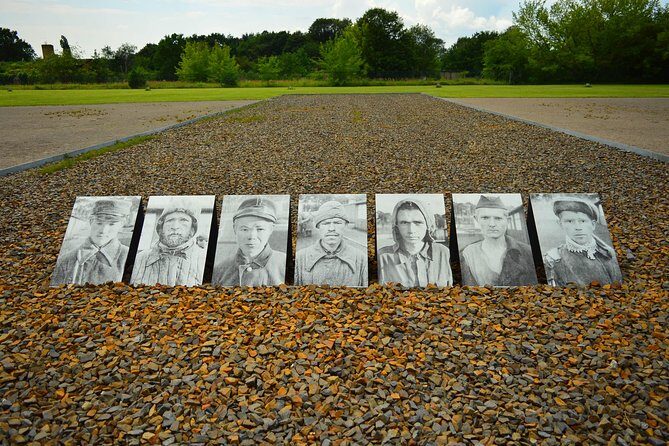
Sachsenhausen is close enough to Berlin to make a day trip feel practical, but far enough that it’s worth doing by bus. You get air-conditioned transport and a smooth round trip back to central Berlin, which helps when you’re already emotionally braced for what you’ll see.
The whole experience runs about 4 hours, so the timing is tight in a way that actually matters. You’re not meant to “linger forever” across every display. Instead, you get a structured walk through the most important parts, with context delivered along the way so you can place each scene in the wider story of Nazi persecution and imprisonment.
I also like that the tour keeps the group size modest—up to 28—which means your guide can respond to questions without the tour feeling like a rushing conveyor belt. When your guide is someone like Rebecca or Ariel, the pacing often feels thoughtful rather than chaotic.
You can also read our reviews of more tours and experiences in Berlin.



Getting to the start: meeting point, 10:00 am departure, and what to do first

This tour starts at 10:00 am, and you’re asked to arrive about 15 minutes early so the bus and group can roll out on time. The start point is listed at Reichstagufer 17, 10117 Berlin, and you’ll board the hired coach bound for Oranienburg (where Sachsenhausen is located). If you’re using public transport, the meeting area is described as near transit, so you shouldn’t need a car or complicated routing.
The best move here is simple: treat this like a museum day with a schedule, not like an optional stroll. When you’re dealing with a memorial, arriving late can cut into your ability to hear the opening context (and you really want that first layer of explanation before you enter the camp).
Because the tour is in English and guided from the start, you’ll get oriented fast—what Sachsenhausen was built to do, how the labor system worked, and why the layout still feels so deliberate even today.
Stop at Sachsenhausen: the interior walk and what you’ll actually see
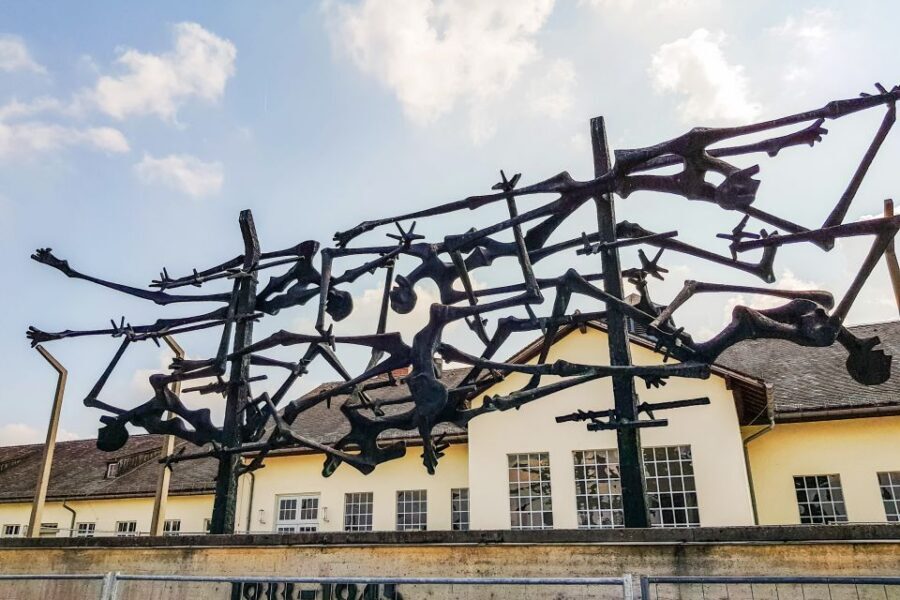
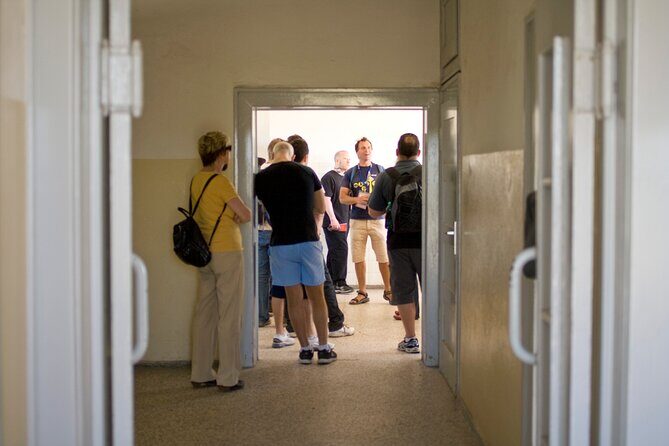
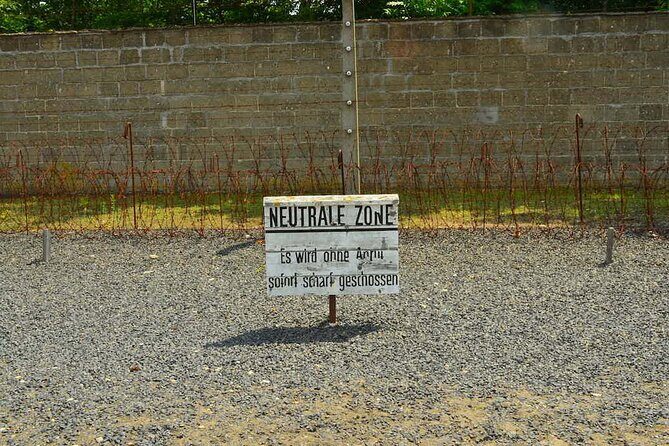
The main visit is at Gedenkstätte und Museum Sachsenhausen, where you’ll explore the interior of the concentration camp. With a group, you don’t wander randomly—you follow a guided route designed to help you connect the buildings, fences, and “numbers on a map” to real human lives and real suffering.
Here are key elements you can expect to encounter:
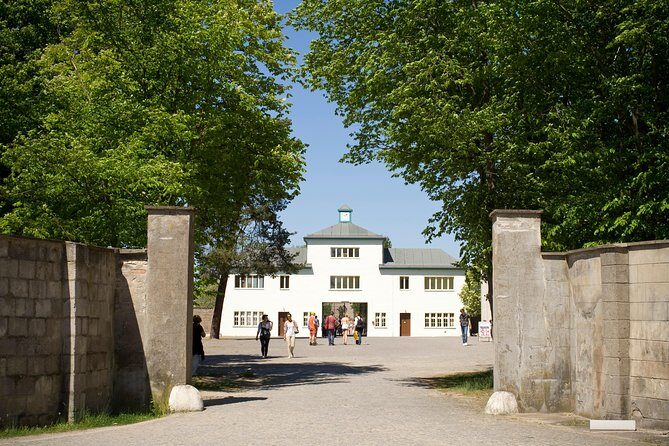
- The guide brings you through the camp’s command area, including the commandants house region. This is where the power structure becomes visible in physical form—who was in charge, and how control was enforced.
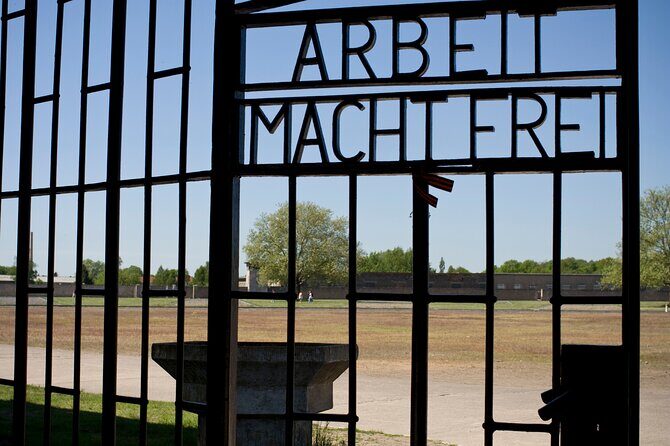
- You’ll walk by tower A, tied to the iconic gate inscription ARBEIT MACHT FREI. Seeing that wording in place is far more unsettling than reading it on a poster.
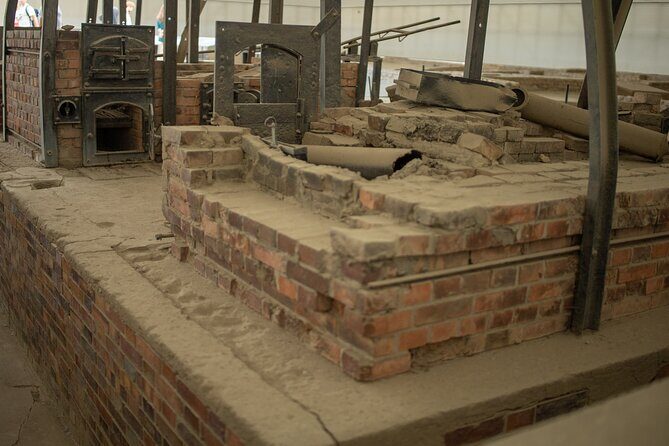
- You’ll visit parts of the camp connected to medical torture and war-era crimes, including the infirmary barracks, where experimentation took place.
You’ll also hear about the camp’s scale and brutality. During its operation between 1936 and 1945, 35,000 people died. The number is staggering, but the guide’s job is to keep the site from becoming a vague abstraction. Even when time is limited, the explanations help you process what you’re looking at in the moment.
Expect some strong emotional moments
This is a memorial, and it can be rough. The pace is structured, but the impact still lands as you pass locations tied to suffering. I can’t sugarcoat it: Sachsenhausen is not a place where you “just tour it.” The best guides—like the ones mentioned by many visitors, including Hannah and Joseph—tend to slow things down at the hardest points so the meaning doesn’t get lost.
Before and during the walk: how the guide turns the camp into context
One reason this bus tour works well is that the guide doesn’t wait until you reach the camp to start teaching. On the way to Oranienburg, you get a setup: where prisoners were made to work in the surrounding area and what local populations knew about the camp system.
That matters. Without context, it’s easy to view Sachsenhausen as a sealed-off historical object. With the explanation, you see it as a system embedded in a broader society—organized labor, surveillance, and complicity at different levels.
Once inside, the explanations are built around recognizable structures you’re walking past. The goal isn’t to list every historical detail. It’s to give you enough of the story so that what you see feels coherent: the site’s purpose, how control was maintained, and why certain locations mattered.
In the best moments, guides handle the topic with clarity and respect—guides like Irish Paul and Maria are frequently praised for presenting a grim subject without turning it into drama. That tone is important for you, because the site already supplies enough shock.




The two timelines you won’t want to miss: Nazi Sachsenhausen and the Soviet special camp
A standout part of this tour is that it doesn’t end in 1945. You’re not just learning about Nazi rule. You’re also learning how the camp was re-purposed by the Soviets as a special camp after WWII.
This second chapter is vital for understanding why Sachsenhausen still feels alive with meaning today. You’ll hear that an additional 12,500 people died after the war, with suffering continuing through 1945 to 1950.
That timeline shift can be emotionally demanding, but it’s also where many people come away with a more complete view of the site. It reminds you that “the war ended” doesn’t mean abuse and imprisonment magically stopped. The camp’s infrastructure and the logic of detention could continue under different authorities.
So yes, you’ll learn the Nazi story—but you’ll also see how the machinery of confinement didn’t disappear overnight.
Museum time vs. guided walking: what you gain and what you might miss
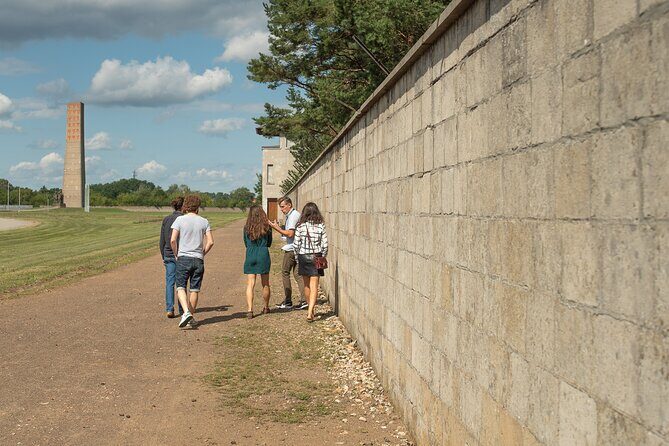
The tour includes entry to the Sachsenhausen memorial, and you’ll get a guided group walk across the camp’s major areas. That’s a strength: a good guide helps you see connections quickly, so you’re not staring at a place wondering what to look for first.
But here’s the trade-off. Since the overall experience is about 4 hours, the tour emphasizes main points and movement over long independent reading time. Some guides may incorporate suggestions for what to read in the museum areas, but you shouldn’t count on deep personal time with every exhibit and every individual story.
If you crave slow, line-by-line reading of personal records and prisoner biographies, you might want to pair this with extra time on your own after the tour. That’s the best way to get both: guided orientation first, then your own pacing to absorb the memorial at your speed.
What to bring and how much you’ll walk (so you don’t regret it)
The tour involves moderate physical fitness and significant walking. It’s not described as suitable for people with limited mobility or walking impairments, so be honest with yourself about your ability to stand, walk, and move through uneven memorial grounds.
Since food and drinks aren’t included, bring a simple plan:
- a snack
- a drink
- something warm if it’s cold (it can feel colder when you’re standing outdoors between buildings and watchtowers)
In winter conditions, the walking can add up fast, but the group schedule keeps you moving so you’re not stuck in one spot for too long.
Also, this is one of those tours where it’s smart to bring a bit of mental readiness. You’re going to see structures tied to death, medical abuse, and forced labor. The best way to make the experience meaningful is to arrive prepared to listen and to pause when your mind needs a moment.
Price and value: is $68.77 worth it for Sachsenhausen?
At $68.77 per person, this is not a bargain-tour price. But it’s also not overpriced for what you’re getting.
Here’s why it can feel like good value:
- Round-trip transport from Berlin is included, so you’re not piecing together trains, transfers, and time management.
- Your guide is licensed and trained by the memorial authority, which you don’t typically get with lower-cost options.
- Admission to the Sachsenhausen memorial is included.
- There’s a €3.00 donation per person to the memorial, built into the experience.
The bigger value is less financial and more practical: you’re getting the site’s meaning filtered through someone who understands how to explain it without skipping the essentials. On a memorial day trip, that sort of guidance can turn an overwhelming place into a guided story you can actually hold in your head.
If you compare alternatives, the “cheapest” route often ends up costing you time and confusion. A guided visit helps you get your bearings fast—what you’re looking at, why it matters, and how the timeline connects.
Who should book this tour (and who should consider another plan)
This tour is a strong fit if you want:
- a structured day trip that’s realistic in Berlin’s schedule
- an English guide to connect the camp layout to historical context
- round-trip logistics handled for you
- a smaller group experience rather than a huge crowd
It may be less ideal if you:
- need an option with less walking
- want hours to individually read many displays without group movement
- prefer to spend more time focused purely on personal stories inside the museum spaces
In that case, you could still use the tour for orientation, then come back later (or after the bus ride) for independent reading—if your schedule allows.
Should you book the Sachsenhausen English bus tour from Berlin?
I’d book it if you want a respectful, well-paced way to understand Sachsenhausen without gambling on getting the right context yourself. The combination of licensed guidance, included memorial entry, and easy Berlin-to-Oranienburg round-trip transport is a very practical way to turn a hard day into a clear one.
If you’re the type who wants to linger and read every personal story slowly, treat this as your foundation tour, then plan extra time for independent museum reading. Either way, the key is the same: bring snacks, dress for the weather, and go in ready to listen.
This is one of those experiences where doing it with the right guide can help you carry the message out of the camp—where it belongs.
FAQ
How long is the Sachsenhausen concentration camp bus tour?
It runs for about 4 hours.
Is the tour in English?
Yes, the tour is offered in English.
Does the price include admission to the memorial?
Yes. Entry into the Sachsenhausen Memorial is included, along with a ticket for the memorial visit.
Where is the meeting point and what time does the tour start?
The start time is 10:00 am. The meeting point is listed at Reichstagufer 17, 10117 Berlin, and you should arrive 15 minutes early.
Is food included?
No. Food and drinks are not included, so you should bring snacks and a drink with you.
What group size should I expect?
The tour has a maximum group size of 28 travelers.
Is the tour suitable for people with limited mobility?
It’s not recommended for individuals with limited mobility or walking impairments.
What is the cancellation policy?
You can cancel for a full refund up to 24 hours before the experience start time. If you cancel less than 24 hours before, the amount paid isn’t refunded.