REVIEW · BERLIN
Private walking Tour: Berlin Architecture Tour
Book on Viator →Operated by Insider Tour Berlin · Bookable on Viator
Berlin’s buildings read like a political diary. This private architecture tour walks you through the city’s big moments in stone, glass, and concrete. You’ll see how post–World War II division shaped what went up in the east and what flourished in the west.
I especially like the East vs West framing, because it turns sightseeing into understanding. And I also like the customizable pace with your guide, so the route can flex toward what you care about most. Guides such as Ariel and Thomas have been praised for adjusting time and explaining how design choices reflect the ideas behind them.
One possible drawback: you’re covering a lot in about 4 hours, so some stops are quick hits. If you love one building enough to want to linger, plan on treating this as your fast, smart orientation and then go deeper on your own later.
In This Review
- Key Things to Know Before You Go
- Berlin’s Architecture Tour in One Clear Mission
- First Stop: Museum Island and the Art of Looking Up
- Gendarmenmarkt: The Cathedral Trio and Perfect Square Symmetry
- Berliner Philharmonie at the Kulturforum: Modern Shape, Serious Acoustics
- Reichstag Glass Dome: Where Democracy Meets Daylight
- Potsdamer Platz: Cold War Ruins Rebuilt into a Modern Hub
- Berliner Dom: A Massive Dome and Marble-Heavy Drama
- Kreuzberg and Friedrichshain: Residential Architecture with Social Meaning
- Kreuzberg: Altbau Charm and the Oberbaum Bridge
- Friedrichshain: Former East Berlin Meets Wall-Era Art
- Friedrichstraße: Golden Twenties Spirit and New Berlin Foot Traffic
- Pariser Platz to Hackescher Höfe: Monuments, Embassies, and Courtyard Design
- Pariser Platz: Brandenburg Gate and Embassies with Contrasting Styles
- Hackescher Höfe: Art Nouveau Courtyards Where Detail Matters
- Price and Logistics: Is $191.87 Worth It?
- So, Who Should Book This Private Berlin Architecture Tour?
- Should You Book It?
- FAQ
- How long is the Berlin architecture tour?
- Is this tour walking only?
- Does the tour include hotel pickup and drop-off?
- What language is the tour offered in?
- What’s included in the price?
- Are any admissions required at the stops?
- Can I bring a service animal?
- Is it a private tour?
Key Things to Know Before You Go
- Private guide, private group: Only your group participates, with hotel pickup and drop-off included.
- East-West architecture comparison: The tour is built around the contrasts after World War II.
- Photo-forward stops: You’ll hit Museum Island, Gendarmenmarkt, the Philharmonie area, and the Reichstag views.
- Your choice: walking or biking: Pick what matches your legs and your energy level.
- Friedrichstraße stop included: You’ll see the Golden Twenties-to-modern shopping and café scene, including Galeries Lafayette.
- Guides get high praise for flexibility: Reviews name guides like Sara, Daniel, Heiko, and Tarek Ibrahim for adapting to your interests.
Berlin’s Architecture Tour in One Clear Mission
Berlin can be confusing at first. Neighborhood lines shift, borders moved, and entire city chapters were erased and rebuilt. This tour helps you make sense of it by using architecture as your map.
Your guide focuses on the way big political shifts show up in everyday design. After World War II, the city didn’t just have different administrations—it developed different building languages. That’s why the route keeps bouncing between monumental civic sites, cultural hubs, and residential streets.
Also, it’s a private experience, not a “follow the leader” script. If you want more time on domes and façades, or you want more street-level context, it’s the kind of tour where you can ask.
You can also read our reviews of more walking tours in Berlin



First Stop: Museum Island and the Art of Looking Up
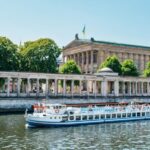
Museum Island is the kind of place where you end up taking photos every 30 seconds—because there’s always another angle. The schedule begins with the Altes Museum, a neoclassical standout with grand columns and a portico. It’s a classic “Berlin knows how to stage a viewpoint” start.
Then you move through the island’s major neighbors:
- Pergamon Museum for its monumental classical façade and sculpture-heavy presence.
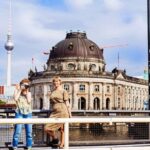
- Bode Museum for the elegant dome and the way it softens the skyline with graceful curves.
- Neues Museum, famously restored after wartime damage, which gives you a real before-and-after feeling without turning it into a lecture.
This stop is about seeing contrast in form, not just admiring beauty. Neoclassical structure, grand antiquity-inspired fronts, baroque-leaning curves—then a restored museum building that reminds you Berlin’s story includes destruction and careful rebuilding. Even when you only spend about 20 minutes, the island gives you a strong visual anchor for the rest of the tour.
Practical note: wear shoes you don’t mind walking in. Museum Island is compact, but the “look up, look sideways” approach adds up fast.
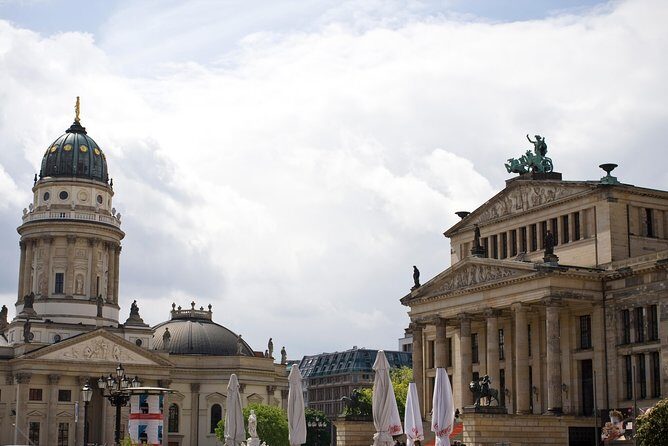
Gendarmenmarkt: The Cathedral Trio and Perfect Square Symmetry
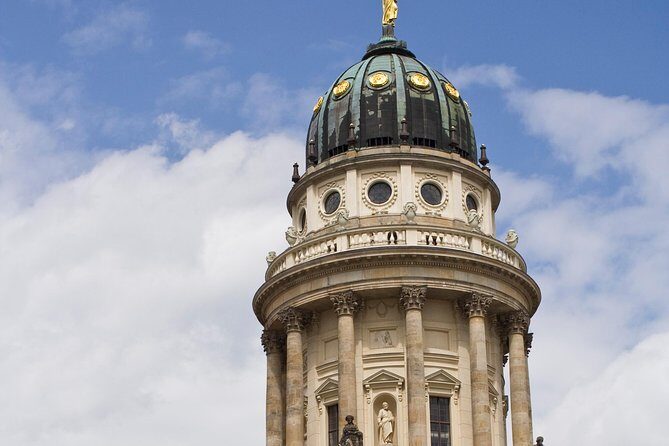
Gendarmenmarkt is famous for a reason. It’s a square built like a stage set, with three landmark buildings forming a dramatic architectural ensemble.
You’ll focus on:
- Französischer Dom (French Cathedral)
- Deutscher Dom (German Cathedral)
- Schinkel’s Konzerthaus (Concert Hall)
Add Friedrich Schiller’s statue in the center, and you get a clean composition that makes photography easy. If you’re the type who likes symmetry, this is your stop.
And it’s not just aesthetics. This area also works as a turning point in your Berlin story—moving from museum grandeur to a cultural square where national identity and civic design feel tightly linked.
Timing is short (about 15 minutes), so think of it as a “get your shots and understand the shapes” stop. If you want more time here, plan a return on another day.
Berliner Philharmonie at the Kulturforum: Modern Shape, Serious Acoustics
Next comes the Berliner Philharmonie, one of Berlin’s best-known cultural buildings. The exterior has a distinctive asymmetrical, tent-like look, and your guide will point out why the design feels so bold compared with older styles nearby.
The inside matters too: the building’s shape supports impressive acoustics, and it’s home to the Berliner Philharmoniker orchestra. Even if you’re not catching a concert, you can still appreciate the logic of the architecture—how the form is connected to the purpose.
This is also a very “photo from multiple sides” location. The surrounding area and the garden elements give you context, so you aren’t just photographing a single object—you’re seeing how it sits within a planned cultural district.
You’ll spend around 15 minutes, so keep it efficient: one wide shot, then get close for the details.
Reichstag Glass Dome: Where Democracy Meets Daylight
The Reichstag stop is a highlight for many people because it tells a clear story: old political power plus modern transparency.
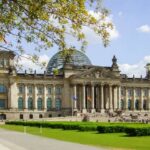
You’ll see the original building’s classical façade with its historic grandeur. Then the attention shifts to the glass dome by Norman Foster, added after reunification. That dome isn’t just a design flourish. It’s meant to visually express transparency—an architectural idea you can actually feel when you’re there, especially in how light plays across surfaces.
The schedule sets aside about 10 minutes here, which is short, but the building is so distinctive that even a quick stop gives you a strong takeaway. My advice: treat this as the stop where you “lock in” Berlin’s modern civic identity, then let the rest of the day fill in the regional contrasts.
You can also read our reviews of more private tours in Berlin


Potsdamer Platz: Cold War Ruins Rebuilt into a Modern Hub
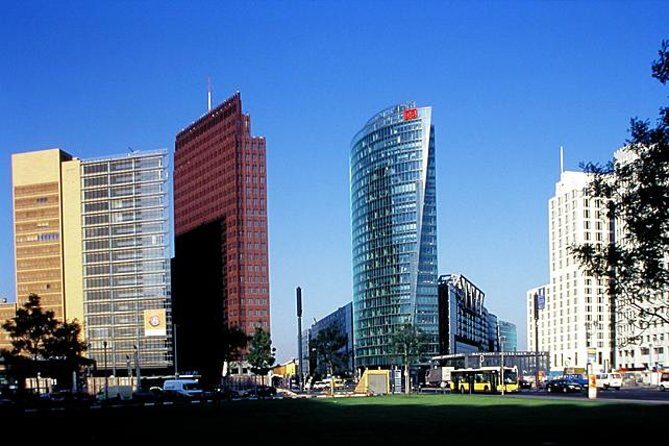
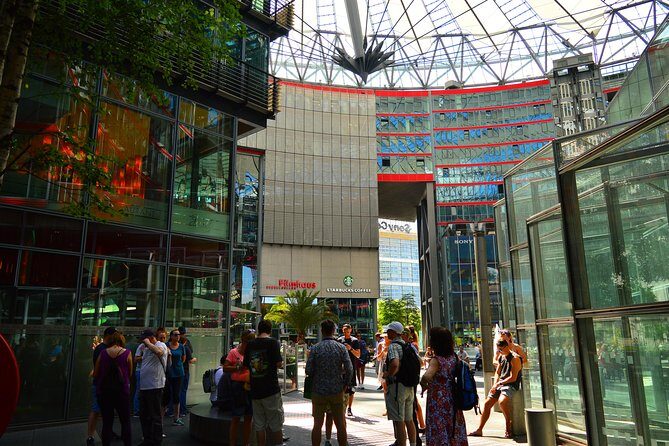
Potsdamer Platz is Berlin in fast-forward. It was a major center before World War II, then the Cold War left it scarred and divided. Today, it’s a high-impact mix of modern office buildings and ambitious public space design.
You’ll pass or view major landmarks, including:
- Sony Center with its iconic glass roof
- DB Tower, a sleek glass-clad presence on the skyline
- Panoramapunkt for broader city views
This is one of the best places on the tour to understand how urban planning changed after the city reopened itself. It’s not just “new buildings”—it’s the idea of rebuilding a central district to say: we’re back, and we’re future-facing.
It’s also time-efficient: about 20 minutes. If you’re the kind of person who loves design at a distance, this stop will feel just right.
Berliner Dom: A Massive Dome and Marble-Heavy Drama
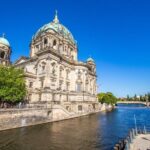
Then it’s the Berliner Dom, completed in 1905. This stop leans into scale. The enormous central dome dominates the skyline, and the building’s symmetry gives it a formal, almost ceremonial feel.
The façade mixes Baroque and Renaissance Revival elements, and the interior continues the drama with rich ornamentation. Expect soaring arches and richly decorated surfaces—enough to make it feel like the building is performing.
Spending about 15 minutes is workable here, because the structure reads quickly from outside and the dome is hard to ignore. Still, don’t rush your eyes. This is a “look at proportions” stop as much as a “take photos” stop.
Kreuzberg and Friedrichshain: Residential Architecture with Social Meaning
These two neighborhoods give you the street-level Berlin that most architecture tours skip.
Kreuzberg: Altbau Charm and the Oberbaum Bridge
You’ll walk through Kreuzberg with its mix of older apartment buildings and newer adaptations. A big theme here is Altbau architecture—19th-century buildings with ornate facades and the classic apartment-building rhythm Berlin does so well.
You’ll also see the Oberbaum Bridge, with its late 19th-century red-brick towers and Gothic-inspired arches. It’s a favorite for photos because it links two neighborhood worlds across the Spree.
Friedrichshain: Former East Berlin Meets Wall-Era Art
Friedrichshain is positioned in the former East Berlin story. Here, you’ll see pre-war Altbau apartment streets alongside Socialist-era structures and more modern development.
The stop includes the East Side Gallery, an open-air stretch of the Berlin Wall covered in murals by artists from around the world. It’s not a “stop and read every caption” kind of place on a 30-minute visit, but it’s a powerful architectural-cultural marker. The Wall becomes a surface for art and political memory at the same time.
These neighborhood segments are each about 30 minutes. That’s enough to get the pattern, but not enough to pretend you’ve mastered every street. Treat it as your intro—and then choose one neighborhood to explore after your tour ends.
Friedrichstraße: Golden Twenties Spirit and New Berlin Foot Traffic
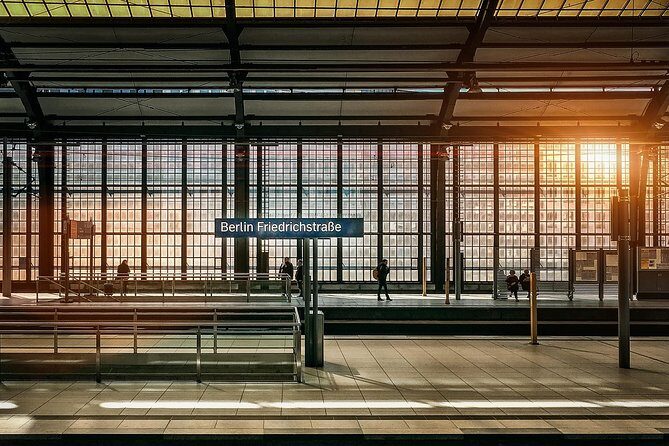
The tour also includes Friedrichstraße, one of Berlin’s most famous central streets where old-era glamour meets modern shopping.
This is where you get the “Golden Twenties” feel—decorated buildings, office life, and coffee-shop energy—then transition into newer Berlin architecture. Galeries Lafayette is highlighted, and the overall street scene blends traditions with contemporary retail and dining.
For architecture lovers, this works because it’s not only about what the buildings look like—it’s about how the street functions. It’s a cultural and commercial artery, so the architecture is constantly in motion, shaped by how people use the space.
I’d suggest using this time for observation. Look at façades, but also pay attention to entrances, storefront layouts, and how the street frames views.
Pariser Platz to Hackescher Höfe: Monuments, Embassies, and Courtyard Design
This late stretch gives you two very different textures.
Pariser Platz: Brandenburg Gate and Embassies with Contrasting Styles
At Pariser Platz, the star is the Brandenburg Gate, the neoclassical triumphal arch symbolizing unity and peace. Nearby, you’ll also see notable embassy buildings, including the French Embassy and the American Embassy, plus the Hotel Adlon area.
Then comes a striking modern counterpoint: the DZ Bank building designed by Frank Gehry, completed in 1999. Its fluid glass-and-steel façade contrasts strongly with the older architecture around it. This is the kind of contrast that helps you understand Berlin as a “layers” city, not a single-style city.
Hackescher Höfe: Art Nouveau Courtyards Where Detail Matters
Finally, the tour visits Hackescher Höfe, a complex of eight interconnected courtyards built in 1906 by August Endell. This part is all about detail: art nouveau-style design, ceramic tiles, and ironwork.
Courtyard buildings here are meant to blend beauty with function, so every turn feels purposeful. Even with limited time (about 20 minutes), you can get a sense of how Berlin used courtyard design to build atmosphere without sacrificing practicality.
If you’re a photographer, this is where you’ll find the “small shot” payoff: doors, tiles, and angles you’d miss while walking past quickly.
Price and Logistics: Is $191.87 Worth It?
At $191.87 per person for roughly 4 hours, the key value isn’t just the sights. It’s the format: private guide, hotel pickup and drop-off, and customization.
Compared with larger group tours, you’re paying for three things you can feel immediately:
- Context on demand: If you care about the political side of architectural choices, the guide can steer there.
- Pace control: You don’t have to rush just because ten strangers are waiting.
- Efficient routing: You see major anchors across central Berlin in one go—without spending your first day figuring out what to do.
A note on the “price-per-minute” feel: this tour does quick visits at many stops. If you want slow museum wandering, you’ll need to add extra time later. But for a smart first architecture overview (or a high-impact second visit), the cost tends to make sense.
Also consider that the tour is offered in English, includes a mobile ticket, and has group discounts if more people join your group.
So, Who Should Book This Private Berlin Architecture Tour?
This tour is a good fit if:
- You want a first-timer architecture orientation that still pays attention to politics and history.
- You enjoy photo-ready landmarks, especially squares, domes, and civic buildings.
- You like your sightseeing explained in a way you can use—so you can plan the rest of your days better.
It’s also good for groups that want flexibility. Reviews highlight guides like Sara (praised for architecture-and-design perspective), Daniel, Heiko, and Tarek Ibrahim for making the tour feel tailored and worth the money.
If you’re the type who only wants quiet, museum-depth visits, this may feel brisk. In that case, use it as a foundation, then go back for longer on the buildings that grab you.
Should You Book It?
If you want Berlin architecture with a clear storyline—how east and west diverged, then how the city layered back together—this is an easy yes.
Book it when you want to:
- get your bearings fast,
- see the big monuments and the smaller urban details,
- and leave with enough understanding to choose your next stops confidently.
Skip it (or pair it with something else) if you know you’ll only enjoy slow, long indoor visits. This is built for movement, views, and design cues—so treat it like the sharp introduction it is.
FAQ
How long is the Berlin architecture tour?
It runs for about 4 hours.
Is this tour walking only?
No. You can choose to do the tour on foot or by bike.
Does the tour include hotel pickup and drop-off?
Yes. Hotel pickup and drop-off are included.
What language is the tour offered in?
The tour is offered in English.
What’s included in the price?
The price includes a professional guide, plus hotel pickup and drop-off. Food and drinks are not included.
Are any admissions required at the stops?
The schedule lists stops with admission marked as free (for the time listed at each stop).
Can I bring a service animal?
Yes, service animals are allowed.
Is it a private tour?
Yes. It’s a private tour/activity, so only your group participates.