REVIEW · BERLIN
Private Third Reich Walking Tour of Berlin
Book on Viator →Operated by Sightseeing Point GmbH · Bookable on Viator
Berlin has dark corners you should know. This private Third Reich walking tour is a focused way to understand how Nazi power took over the city, with a private historian guide and a route that ties key locations into one clear story. I especially like the pace (about two hours, no rushing) and the fact you get to ask questions while you walk. One drawback: the subject matter is heavy, and it won’t feel like a casual sightseeing stroll.
You’ll see major landmarks tied to the regime, including the Fuhrerbunker suicide site, the Holocaust Memorial (and you actually walk through it), plus Nazi-era government architecture tied to ministries and air-defense power. The tour ends at Topography of Terror, and you’ll also learn how to get to the next underground station nearby. It’s offered in English, uses a mobile ticket, and is set up for a small group that stays together.
In This Review
- Quick highlights
- Why a private Third Reich walk makes sense in Berlin
- Price and value: what $150.51 really buys you
- Meeting at Brandenburg Gate (Pariser Platz) and ending at Topography of Terror
- Stop 1: Topography of Terror and the headquarters of Nazi terror
- Stop 2: Fuhrerbunker and the reality of the suicide site
- Stop 3: The Holocaust Memorial—walking through remembrance
- Stop 4: Bundesministerium der Finanzen and Nazi architecture you can’t miss
- Stop 5: Johann Georg Elser sculpture and the 1939 bombing attempt
- Along the way: Goering’s air-defense ministry and Hitler’s New Chancery
- How the guide shapes the tour (and why it matters)
- Who should book this tour—and who should pause
- Should you book this tour?
- FAQ
- FAQ
- What is the duration of the tour?
- Is the tour private?
- Is the tour offered in English?
- What sites are included?
- Do I need to buy admission tickets for the stops?
- Where do I meet the guide, and where does the tour end?
- Is there a mobile ticket?
- How does free cancellation work?
Quick highlights
- Private, English-language guide keeps the story tight and your questions answered
- Fuhrerbunker site: where Hitler killed himself shortly before WWII ended
- Holocaust Memorial walking segment focused on remembrance, not just photos
- Nazi-era architecture in use today at the Bundesministerium der Finanzen building
- Johann Georg Elser memorial adds the story of attempted resistance in 1939
Why a private Third Reich walk makes sense in Berlin
Berlin is big, and the Third Reich landmarks are scattered. A guided walking route turns that sprawl into a sequence you can follow, so your brain doesn’t have to do all the routing and guessing on its own. With a private tour, you’re not stuck listening to a generic script while other people set the pace. You can slow down at the spots that hit you hardest and move on when you’re ready.
What I like most is how the guide connects places to people and decisions. The goal isn’t just “look at a building.” It’s “why this location mattered.” That approach is especially useful in Berlin, where many sites sit in everyday streets and public squares. Nazi-era history isn’t locked behind ropes in every case—it’s part of the city’s physical layout.
This is also one of those tours where the guide’s name can matter, because you’ll notice the difference between reading facts and hearing them explained. In past tours, guides like Stefan and Alexander have been praised for being passionate, friendly, and able to tailor the route to your interests. If you care about how the Nazis rose, you should expect the discussion to follow that thread. If you care more about the specific sites, the guide should keep those linked together.
You can also read our reviews of more walking tours in Berlin


Price and value: what $150.51 really buys you
At $150.51 per person for about two hours, this isn’t a bargain-basement group tour. But you are paying for something you can’t easily DIY: a private historian-led route through emotionally and historically loaded spaces, with time to ask questions as you go.
You’ll usually be walking multiple locations tied to the regime, including outdoor memorial areas and sites where the story is carried through exhibitions. That’s time you don’t want to spend figuring out transport, crossing schedules, and how to interpret what you’re seeing. In a city like Berlin, that kind of “translation” is often the real value.
You also get the practical stuff that makes tours smoother: a mobile ticket, and the tour is structured with free admission tickets for what’s scheduled at each stop. Plus, the tour is booked ahead often enough (around 9 days on average), which usually means people value the convenience of locking in a time.
Meeting at Brandenburg Gate (Pariser Platz) and ending at Topography of Terror
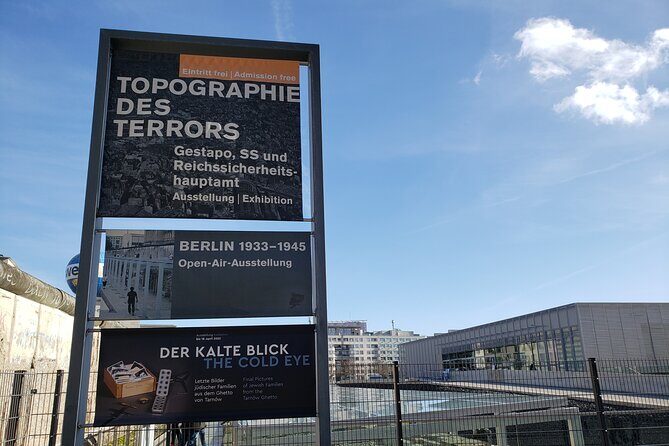
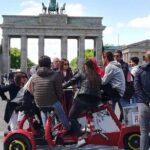
You start at Brandenburg Gate, Pariser Platz—a solid orientation point. It’s central, easy to find, and it gives you immediate context for walking through Berlin’s modern city center. You’ll also finish at Topography of Terror (Niederkirchnerstraße 8), which is helpful because it’s a destination many visitors want to see anyway.
One practical detail I like: the guide helps with the next step after the tour. The information says the next underground station is about a 10-minute walk away, and the guide will show you how to get there. That can sound small, but it saves time when you’re standing in a historic neighborhood that can feel slightly confusing after a long, reflective walk.
Bring comfy shoes. You’re on your feet for a full 2 hours, and you’ll want to linger at places like memorials and exhibition areas rather than rush through. Also, wear layers. Berlin weather can change fast, and you’ll be outdoors more than you’d think.
Stop 1: Topography of Terror and the headquarters of Nazi terror
Your first major stop is Topography of Terror, at the site of the former headquarters of the Nazi terror regime. Today, there’s an exhibition here, and you’ll visit it during the stop.
The best part of this start is the framing. When you begin with a place that literally documents and explains the machinery of terror, the later stops won’t feel random. You’re building a mental map: who held power, what that power did, and how it shaped everyday life.
You’ll have about 20 minutes for this portion, with admission ticket information marked as free. That time window is short enough that you won’t be reading everything in sight, but long enough to get the key ideas the guide wants you to walk away with. If the exhibition text is your thing, you may want to keep one or two specific questions in mind—like how the regime operated day to day—so your time stays useful.
Possible drawback: exhibitions can be dense, and 20 minutes can feel tight if you naturally want to slow down and read every panel. In that case, the private format helps. Ask the guide which sections matter most for understanding the rest of your route.
Stop 2: Fuhrerbunker and the reality of the suicide site
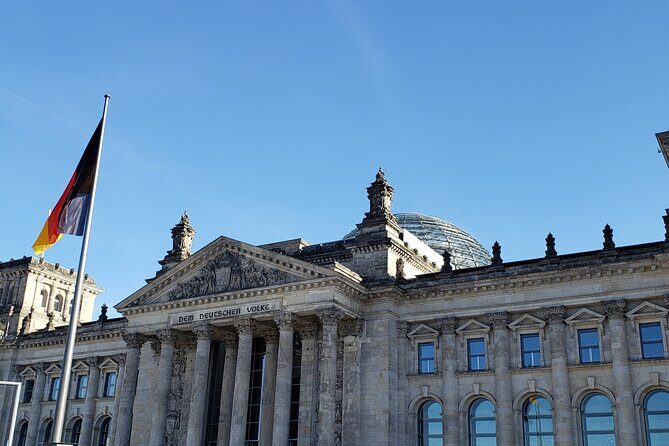
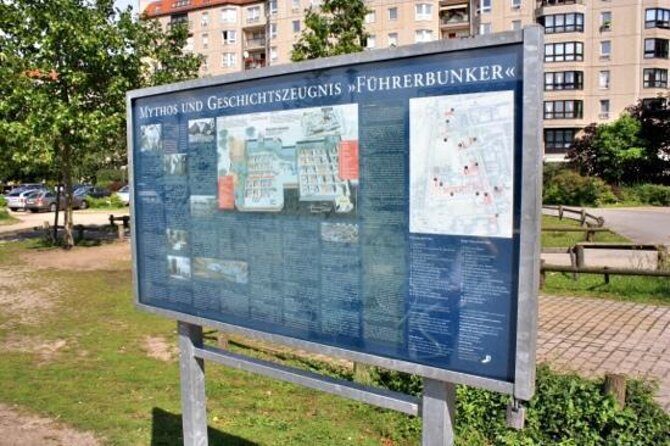
Next is the Fuhrerbunker, where Hitler’s bunker was located and where he committed suicide shortly before WWII ended.
This stop is often the one that turns the tour from “history facts” into something more direct. You’re not just hearing about the final days—you’re standing on the site tied to that end. The tour allocates about 20 minutes, which is usually enough time to understand the context without getting stuck in a somber loop.
A detail that makes this stop feel real is that the site is marked within the modern city landscape. One description from past experiences notes that the location is essentially a parking lot today. That contrast matters. It shows how history can sit under ordinary life, and how easy it is to walk past something world-changing without noticing.
Tips for this stop: don’t treat it like a photo mission. Let the guide explain what happened and why it matters, then take your photos if you want—but give yourself a minute to absorb what you’re seeing before you do.
You can also read our reviews of more private tours in Berlin



Stop 3: The Holocaust Memorial—walking through remembrance
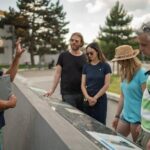
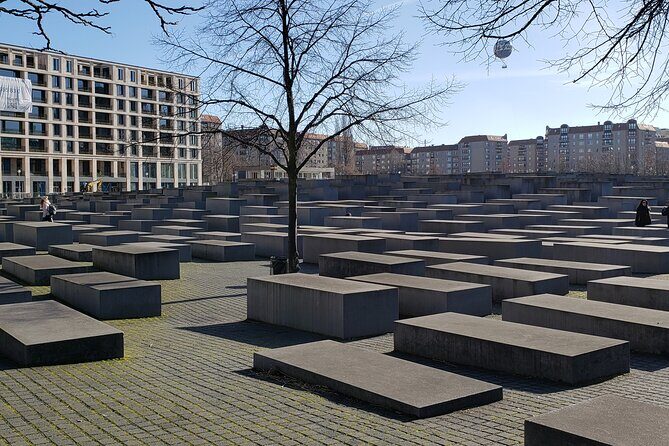
The tour then moves to the Memorial to the Murdered Jews of Europe—the Holocaust Memorial. This isn’t a “stand and look from the edge” stop. You’ll walk through the memorial with the guide, with about 20 minutes set aside.
This is one of the most powerful parts of Berlin, not because it’s loud, but because it’s designed for movement and reflection. When you walk between the stelae, you feel the space shrink and shift. With a guide, you also get context for what the memorial represents and why it’s structured the way it is.
Drawback to consider: this can be emotionally demanding. If you’re bringing teens, some families find it meaningful and educational, but not everyone wants their sightseeing to be this heavy. If you think you might need breaks, tell the guide early. A good guide will adjust pacing so the tour stays respectful without becoming a chore.
If you’re the type who likes quiet time, use one short pause without talking. You’ll get more out of it than if you rush straight through.
Stop 4: Bundesministerium der Finanzen and Nazi architecture you can’t miss
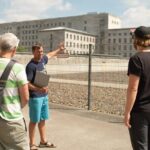
Next you’ll see the Bundesministerium der Finanzen building, a huge structure built in a typical Nazi architectural style. In the Nazi era, it was used as the Aviation Ministry.
This stop does a smart job of showing how regimes shape the physical world. The building isn’t just “old architecture.” It’s a reminder that the Nazi state didn’t only rely on propaganda and violence. It also invested in visible power—big, official structures meant to look permanent.
You’ll have about 20 minutes here. That’s enough time for your guide to explain what you’re looking at and help you notice the design cues that would have communicated authority at the time. It also gives you a chance to step back and see how the same streets that host modern life now carry that imprint.
Possible drawback: if you’re mostly interested in outdoor memorials, you may want a bit more time for the explanation here, because architecture can be subtle at first glance. If that’s your style, ask the guide to point out the most noticeable features as you look.
Stop 5: Johann Georg Elser sculpture and the 1939 bombing attempt
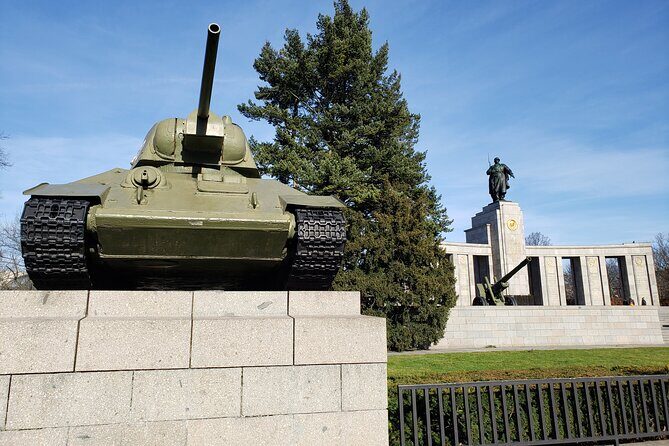
The final stop is the Johann Georg Elser Sculpture, a memorial to Georg Elser, who in 1939 tried to kill Hitler with a bomb.
This is a great way to balance the tour. After sites tied closely to Nazi power and its victims, Elser’s story reminds you that opposition existed earlier than most people think. Even if his attempt failed, the idea that someone tried to stop Hitler adds a different angle to the overall narrative.
You’ll have about 10 minutes at this stop. That’s short, but the point here is impact, not sightseeing. With only 10 minutes, the guide can focus on why Elser mattered and how this kind of resistance fits into the broader timeline.
Along the way: Goering’s air-defense ministry and Hitler’s New Chancery
The tour highlights include strolling over former sites tied to the Nazi leadership structure, including Goering’s Air Defence Ministry and Hitler’s New Chancery.
These stops (even when you’re only seeing exterior areas and location markers) help connect the dots. The Nazis weren’t just ideologues—they were administrators. They built systems for control, and those systems required spaces: military coordination, state bureaucracy, and the kind of office complex where decisions could be made close to the top.
This part also helps explain the rise of the Nazis in a more practical way. You can’t always “see” ideology, but you can see where power was organized. When the guide ties these locations to the timeline, your understanding stops being a list of events and becomes a pattern.
How the guide shapes the tour (and why it matters)
This is a private tour, so your guide’s role is huge. The best results come when you treat the guide like the interpreter between history and place. Ask questions like:
- What was the purpose of this building or site?
- How does this location connect to earlier or later events?
- What should I notice that I might otherwise miss?
Past experiences with guides such as Stefan and Alexander have been praised for being friendly, highly knowledgeable in the best way, and able to keep conversations going. One common theme from good tours like this is that the guide can individualize the pace and emphasis based on your interests, including for families with teenagers.
For you, that means you’re not stuck with a one-size-fits-all route. If you’re more curious about how the regime grew, say so. If you want extra time at memorial areas, ask.
Who should book this tour—and who should pause
Book this if:
- You want a 2-hour, private walkthrough of major Third Reich sites in Berlin
- You’d rather get context from a guide than rely on captions alone
- You’re comfortable with heavy history and want to understand it clearly
- You’re visiting Berlin for the first time and want a route that makes the city’s darker chapter easier to place
Consider skipping or adjusting expectations if:
- You want a light, purely sightseeing-focused walk
- You don’t handle intense memorial spaces well
- You’re short on time and need a quick overview rather than a guided route
If you’re bringing teens, this can work well when the guide keeps the story straight and answers questions. It’s also the kind of tour where kids can feel like they’re getting real explanations, not just doom-and-gloom.
Should you book this tour?
I think this is a strong book for the right traveler. The price isn’t cheap, but you’re paying for a private guided sequence through some of Berlin’s most historically weighty locations—places where understanding matters as much as seeing. The mix is smart: Nazi power sites, the Fuhrerbunker suicide location, the Holocaust Memorial walking segment, Nazi-era architecture, and a resistance memorial in Georg Elser.
If you want a respectful, structured experience that turns scattered landmarks into one coherent story, this tour fits that need. If you’re looking for a carefree stroll, you may feel the weight of the topic quickly. In that case, pick a different kind of Berlin day.
FAQ
FAQ
What is the duration of the tour?
It’s about 2 hours long, with each stop taking roughly 10 to 20 minutes.
Is the tour private?
Yes. It’s a private tour/activity, so only your group participates.
Is the tour offered in English?
Yes, it’s offered in English.
What sites are included?
You’ll see Topography of Terror, the Fuhrerbunker site, the Memorial to the Murdered Jews of Europe (walk through it), the Bundesministerium der Finanzen building, and the Johann Georg Elser Sculpture.
Do I need to buy admission tickets for the stops?
Admission ticket details for the scheduled stops are listed as free.
Where do I meet the guide, and where does the tour end?
The start is Brandenburg Gate, Pariser Platz, 10117 Berlin. The tour ends at Topography of Terror, Niederkirchnerstraße 8, 10963 Berlin.
Is there a mobile ticket?
Yes, the tour includes a mobile ticket.
How does free cancellation work?
Free cancellation is available up to 24 hours in advance for a full refund. If you cancel within 24 hours of the start time, the amount paid is not refunded.