REVIEW · BERLIN
Private Berlin Top Historical Sites Tour with Black Van
Book on Viator →Operated by Humboldt Tours Berlin GmbH · Bookable on Viator
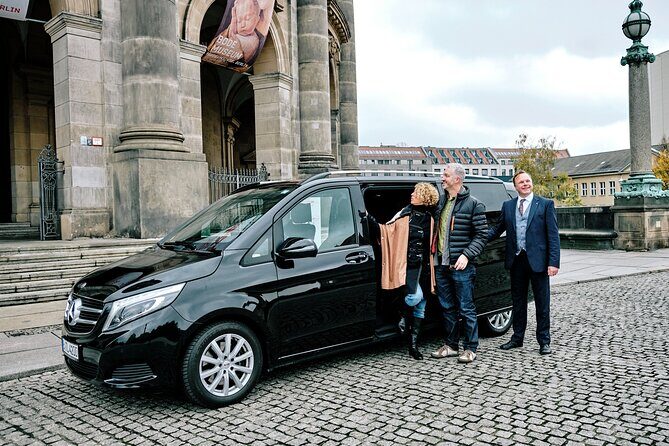
Berlin history hits fast. This private half-day tour in a black van is built for big-city orientation and quick, meaningful looks at Berlin’s main landmarks. You also get the practical perk of hotel pickup and drop-off, so you spend less time figuring out transit and more time asking questions.
I especially like the focus on attention from the guide. It’s private, so the route can feel tailored to your pace, and you’re not stuck listening to headphones while people shuffle past you. The guides named in customer feedback include Stephanie (also mentioned as Steffi) and Manfred, and both are praised for explanations that are both informative and fun.
The main consideration is timing: the stops are brief (listed around 10 minutes each), so this is best for seeing and understanding the big picture. If you want long museum time or deep inside-the-building visits, you’ll likely want a follow-up day plan.
In This Review
- Key reasons this tour works well
- Private Berlin in a Black Van: time saved, questions answered
- How 4 hours covers so much (without feeling like a blur)
- Reichstag Building: the political spine of modern Berlin
- Brandenburg Gate: from imperial grandeur to a Cold War boundary
- Museum Island: UNESCO core, big meaning, quick orientation
- Topography of Terror: reading the past with a human explanation
- Potsdamer Platz and Tiergarten: the modern city stitched onto the old one
- Unter den Linden and Gendarmenmarkt: grand streets, clear sightlines
- Memorial of the Berlin Wall: the city’s split, made physical
- Bebelplatz and the Holocaust Memorial: memory with different textures
- Checkpoint Charlie and Führerbunker: borders and the final chapters
- Price and value: when $681.49 per person makes sense
- Who should book this tour
- Should you book this private Berlin historical tour
- FAQ
- How long is the private Berlin top historical sites tour?
- Is this tour private or group-based?
- Do you include hotel pickup and drop-off?
- What language is the tour offered in?
- Are food and drinks included?
- Is the tour offered rain or shine?
Key reasons this tour works well
- Private black van pickup keeps your morning (or afternoon) efficient from the start
- A hit list of core landmarks gives you a solid mental map for the rest of your trip
- History-heavy stops like Topography of Terror and the Holocaust memorial are handled with care
- UNESCO Museum Island included so you can place it in the larger Berlin story
- English guide plus a format where you can ask questions without the crowd pressure
Private Berlin in a Black Van: time saved, questions answered
A lot of Berlin sights are spread out, and public transport can be fine, until you’re cold, wet, or just tired. The big advantage here is the private black van with hotel pickup and drop-off. You get a smooth start, then a guided walking-and-stopping rhythm that’s easier on your feet than doing everything solo.
This tour also makes it simpler to ask “why this matters.” Instead of reading plaques in silence, you get a live guide to connect the dots across eras. And because it’s private, you’re not forced into someone else’s pace.
You can also read our reviews of more private tours in Berlin


How 4 hours covers so much (without feeling like a blur)
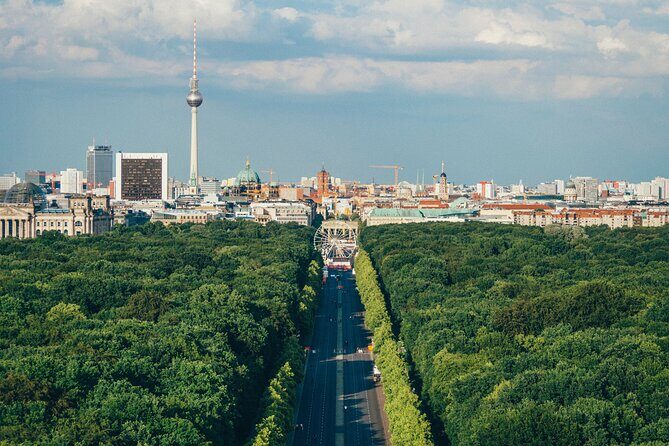
The tour runs about 4 hours and concentrates on major landmarks, with short time blocks at each stop. That can sound rushed on paper, but it’s actually a smart way to handle Berlin’s scale. You’re not trying to do everything in depth—you’re building a useful framework you can expand later.
Here’s the expectation you should set: you’ll walk, look, listen, and reposition. You’ll get highlights and historical context, but you won’t be hanging out for hours at one single museum or memorial site. If that trade-off fits your style, you’ll feel like you got a lot of value quickly.
Practical tip: wear comfortable shoes. Even with a van, Berlin’s pavements and long stretches add up, especially if weather shifts.
Reichstag Building: the political spine of modern Berlin
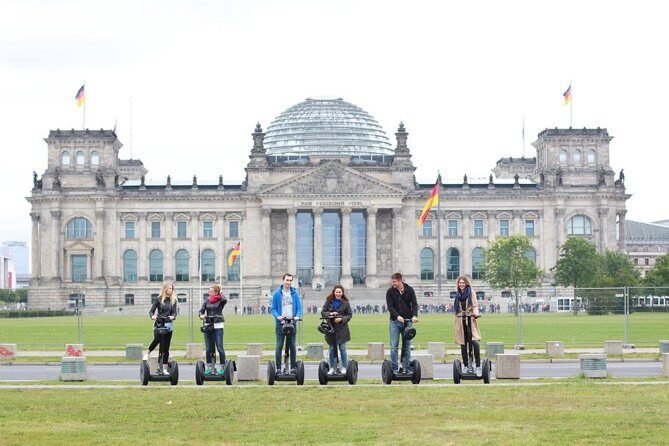
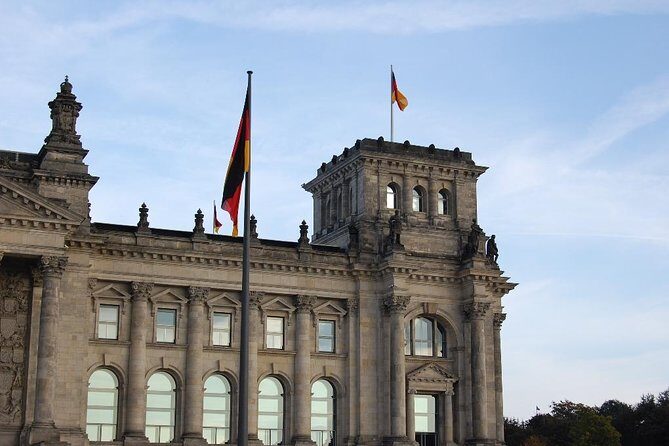
The route begins with the Reichstag Building, a place you can’t really understand Berlin without. It’s a symbol that has survived monarchy-era rule, dictatorship, war, and the rebuilding of Germany. Even if you’re only spending about 10 minutes there, the point is to get the story straight early.
What I like about starting here: it anchors the day. Once you understand the Reichstag as a political “through-line,” the later checkpoints, memorials, and border stories start to click.
Possible drawback: with the short stop length, you’ll mostly be taking in the exterior and the guiding context. If you want extra time inside, plan to come back later.
Brandenburg Gate: from imperial grandeur to a Cold War boundary
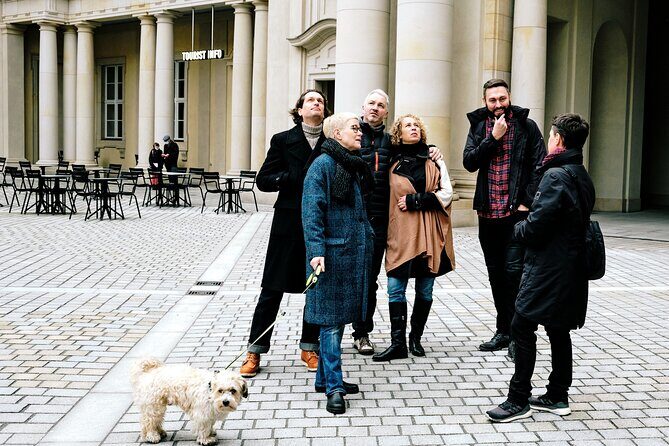
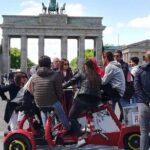
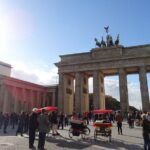
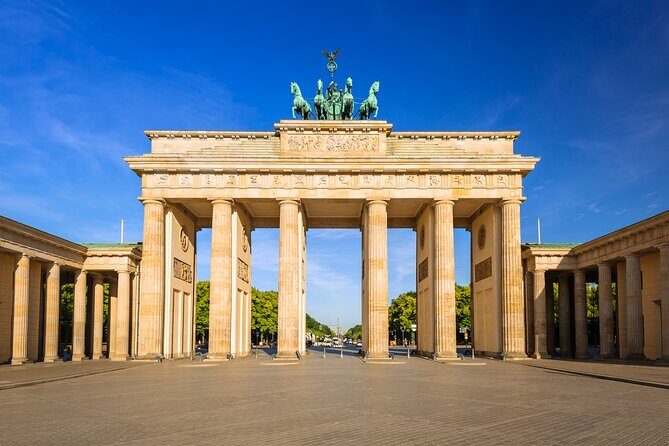
Next comes the Brandenburg Gate, one of the most recognizable images from 20th-century Europe. The gate has become shorthand for so much: Prussian ambition, post-World War shifts, and the Cold War reality of a city split in half.
This stop is also good for photo orientation. Once you’ve seen it with a guide’s explanation, you’ll understand why this area keeps showing up in Berlin’s history lessons—and why it’s more than just a pretty monument.
One consideration: it’s a high-profile spot, so it can be busy at times. Still, the private nature of the tour helps you avoid the worst feeling of being herded.
Museum Island: UNESCO core, big meaning, quick orientation
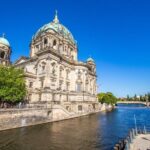
You’ll then reach Museum Island, the UNESCO-listed area of major museums along the Spree. Even if you’re not doing full museum entrances in this time window, seeing it during your historical orientation helps you place Berlin’s cultural priorities in context.
What’s useful here is the framing. Museum Island isn’t just about art; it’s about why Berlin has treated culture as part of its identity—through rebuilds, reunification, and shifting political climates.
Possible drawback: this stop is likely more about viewpoints and context than deep museum time. If you’re an art history fan, treat this as a “set your bearings” moment, then book museum hours separately.
You can also read our reviews of more historical tours in Berlin




Topography of Terror: reading the past with a human explanation

The route heads to Topography of Terror, one of Berlin’s most serious history sites. The strength of having a guide here is pacing and interpretation. The building, documents, and setting can overwhelm you if you walk in cold.
In a short visit window, your guide’s job becomes crucial: they help you focus on what you’re seeing and why it matters. You’ll leave with clearer context for later memorial sites, too.
Consideration: this is heavy material. If you’re traveling with kids or want a gentler pace, tell your guide. A private format makes it easier to adjust how long you linger on sensitive sections.
Potsdamer Platz and Tiergarten: the modern city stitched onto the old one
Next up is Potsdamer Platz, then Tiergarten. These areas help balance the day. After so much 20th-century weight, it’s valuable to see how Berlin rebuilt, reshaped public space, and turned former conflict zones into everyday city life.
I like this pairing: Potsdamer Platz gives you the “new Berlin face,” while Tiergarten reminds you that the city also has breathing space and long-term urban planning. It’s a practical break in mood while keeping you in the same historical narrative.
Potential drawback: if you’re expecting a park walk or a slow hang, you may find the time is more like an overview. Use it as a launchpad: note what you want to revisit later.
Unter den Linden and Gendarmenmarkt: grand streets, clear sightlines
The tour includes Unter den Linden, Berlin’s famous boulevard. This stop is a lesson in how built space carries power and culture. Even in a brief time block, you can understand why this corridor became a stage for major moments in German history.
Then you’ll visit Gendarmenmarkt, a classic square with impressive architecture and symmetry. Again, the guided context matters: it’s easier to appreciate the aesthetics when you understand what the space represents across different eras.
Practical tip: these are good stops for slowing down just a bit. If your group energy is still high, this is where you’ll likely enjoy the street-level walking and photos.
Memorial of the Berlin Wall: the city’s split, made physical
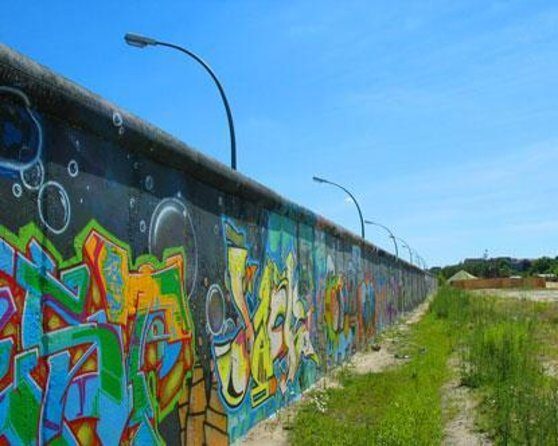
A key stop is the Memorial of the Berlin Wall. This is the part of the tour where the history stops being abstract. The guide’s explanation helps you understand the logic of division—what separation meant day to day, not just what it meant politically.
I love that the tour includes this before going to other border-linked sites. It makes the later stories feel like chapters in the same book rather than random stops.
Possible consideration: memorial sites can feel emotionally intense. If you’re sensitive to heavy topics, plan some lighter time afterward (like a café break nearby, which the tour info suggests as an option when weather turns).
Bebelplatz and the Holocaust Memorial: memory with different textures
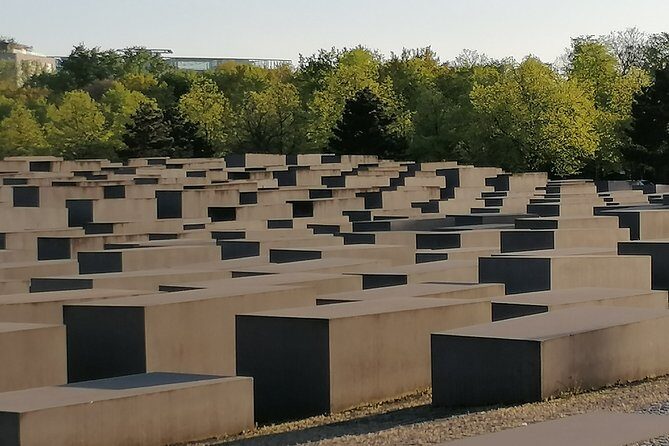
The route includes Bebelplatz and the Memorial to the Murdered Jews of Europe (the Holocaust Memorial). These stops work well together because they represent different ways Berlin remembers.
Bebelplatz can feel more symbolic and “public,” while the Holocaust Memorial is structured in a way that creates a strong emotional and physical experience. Having a guide helps you navigate how to look and what to focus on—especially when the scale and layout can make you unsure where to start.
One consideration: if you’re short on time in Berlin overall, these are the stops you’ll want to take most seriously. Even if you only have a brief guided window, it’s worth planning time later to return on your own if something really grabs you.
Checkpoint Charlie and Führerbunker: borders and the final chapters
The tour includes Checkpoint Charlie, one of the most famous crossing points associated with Berlin’s divided era. It’s a place people often recognize from photos, but the guided explanation helps you connect the location to real barriers, choices, and human consequences.
Finally, there’s Fuhrerbunker. This one is about the late-war shadow of history. Even if you’re not going inside anywhere, the guide’s context helps you place this location in the last phases of the Nazi regime and Berlin’s destruction.
Possible drawback: the day is packed with twentieth-century flashpoints. If your brain feels overloaded, ask your guide for a quick recap in your language—something like, what are the three big themes I should remember from today. Private guides can usually adjust on the fly.
Price and value: when $681.49 per person makes sense
This tour is listed at $681.49 per person for roughly 4 hours, private with a van, plus pickup and drop-off. That price is not cheap, so value depends on your group and your priorities.
It tends to be worth it if:
- you want a guide-led plan rather than building your own route
- you’re short on days and want fast orientation across major sites
- your group includes people who prefer comfort and fewer logistics steps
It may feel steep if you’re traveling solo on a tight budget and you’re comfortable using transit on your own. In that case, you might prefer self-guided walking plus a single paid guide for one or two neighborhoods.
A smart move: if the guide offers local food suggestions (some guides like Manfred are praised for pointing out good places), take advantage. One good meal recommendation can make the day feel more complete.
Who should book this tour
This is a strong fit for:
- families who want a private pace and clear explanations without the stress of crowds
- history-focused visitors who want a guided storyline across Berlin
- people who want a first-day orientation before exploring further on their own
It’s less ideal if you want long museum hours at multiple locations. Think of it as “Berlin’s greatest hits with context,” not a deep seminar inside every building.
Should you book this private Berlin historical tour
Yes, if you want a well-paced overview of Berlin’s key historical sites with the convenience of pickup and a private guide to answer your questions. The short stop format is exactly what makes it practical for a half-day: you get the mental map fast, then you can choose what to revisit later.
Skip it or supplement it if you’re expecting long stays at each landmark. Tell your guide what you care about most early in the tour—then use the time you have to focus your attention.
FAQ
How long is the private Berlin top historical sites tour?
It runs about 4 hours.
Is this tour private or group-based?
It’s private. Only your group participates.
Do you include hotel pickup and drop-off?
Yes. The guide meets you at your hotel lobby with a sign, and there is pickup and drop-off included.
What language is the tour offered in?
The tour is offered in English.
Are food and drinks included?
No. Food and drinks are not included.
Is the tour offered rain or shine?
Yes. The tour runs rain or shine. Dress for weather and bring an umbrella or raincoat; in winter it can get cold, so packing extra layers helps.
If you want, tell me your travel dates and whether you’re more interested in WWII, Cold War, or earlier Prussian-era history. I can suggest a simple follow-up plan for what to revisit after this orientation tour.