REVIEW · MUNICH
Ghosts of Munich: The Haunted Apprentice Exploration Game
Book on Viator →Operated by Questo · Bookable on Viator
Munich has more ghosts than you expect. This self-guided adventure game sends you to classic sights while you solve story-based challenges that connect the city to the darker side of its past, and it’s offline-friendly so you don’t burn phone data. You’re also not stuck with a big group, which makes it easier to pause for photos, snacks, or a breather when the mood hits.
What I like most is the flexible pacing: you can start any time and pause whenever you want, yet still keep moving through the route without feeling rushed. The main drawback to consider is that several stops charge for entry on your own (church/tower and museums), so your total spend can creep up if you want everything.
In This Review
- Key Things to Know Before You Play
- Ghosts of Munich Game Style: Walk, Solve, and Keep Moving
- Price and Value: What $7.21 Buys You in Real Life
- The Route: Odeonsplatz to Rindermarkt (and What the Stops Teach You)
- Stop 1: Odeonsplatz and the Italian-Looking Square
- Stop 2: Hofgarten—Roses, Quiet Paths, and Old Power
- Stop 3: Theatinerkirche St. Cajetan and Church Beauty with Questions
- Stop 4: Sitzender Keiler—A Sitting Boar with a Luck Ritual
- Stop 5: Frauenkirche and the Devil’s Footprint
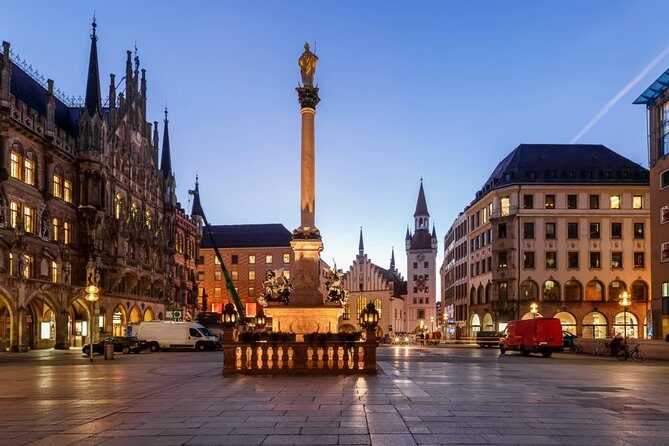
- Stop 6: Marienplatz—The Central Square Where Big Stuff Happens
- Stop 7: St. Peter’s Church—Old Munich and a Tower Climb
- Stop 8: New Town Hall (Neues Rathaus) and the Glockenspiel Story
- How to Fit It Into Your Day (Without Feeling Rushed)
- Who This Is Best For (and Who Might Want Something Else)
- Practical Notes That Save You Money and Time
- Should You Book Ghosts of Munich?
- FAQ
- How long does Ghosts of Munich take?
- Is it available in English?
- Can I play it offline to avoid data charges?
- Can I start and pause whenever I want?
- Are admission fees included for every stop?
- Where do I start and where does it end?
- What if I’m traveling with a large group?
- Is free cancellation possible?
Key Things to Know Before You Play
- Offline access means the game can work without expensive phone data charges.
- Self-guided and private so you’re not weaving through other groups.
- Start/pause/resume anytime helps you match the route to your energy level.
- English audio stories keep the spooky parts clear, even if your German is rusty.
- Some sites are paid entries while others are free, so plan for a small extra budget.
Ghosts of Munich Game Style: Walk, Solve, and Keep Moving
This is a different way to tour Munich. Instead of following a human guide, you follow a story using your phone (a mobile ticket is part of the experience), and you stop at specific points to answer questions and trigger the next step. It’s meant to feel like you’re investigating the city rather than just reading plaques.
For me, the best part is that the experience is built for flexibility. You’re allowed to start at any hour and you can pause and resume whenever you like, which is ideal in Munich where weather can change fast. If you want a calm morning version or an after-lunch version, you can.
A few more Munich tours and experiences worth a look



Price and Value: What $7.21 Buys You in Real Life
At $7.21 per person for about 1 to 2 hours, you’re paying for the game itself: the audio storytelling in English and the challenge flow between stops. You’re not paying for entrance fees at every location, and that matters for value.
Here’s the practical way to think about it: if you’re happy with mostly free stops, you’ll likely keep costs tight. If you decide to go inside the churches, climb a tower, or enter places that are marked as not included, you should expect additional ticket prices. Still, even then, the game can add a lot of “I didn’t know that” moments to sights you’d probably visit anyway.
Also worth noting: it’s booked on average 12 days in advance, so if you’re going in peak seasons, snag your time window early.
The Route: Odeonsplatz to Rindermarkt (and What the Stops Teach You)
The game takes you from Odeonsplatz to the area around Rindermarkt 17. Along the way, you hit a mix of big-name landmarks and calmer garden or museum-adjacent spots, with a theme of hauntings, legends, and historical twists.
The route is short enough that you can treat it like a focused city walk. It’s also structured enough that you don’t need to constantly “figure out where to go next,” which is a big stress saver when you’re in a new city.
Stop 1: Odeonsplatz and the Italian-Looking Square
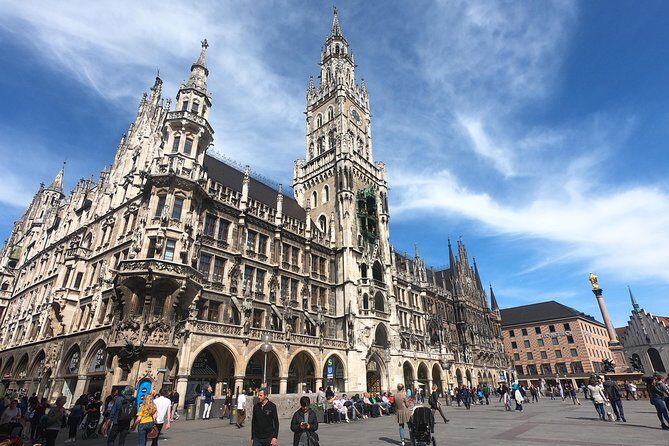
Your story starts at Odeonsplatz, a central Munich square designed in the early 19th century by Leo von Klenze in an Italian-like style. This matters because it frames the first checkpoint: you’re standing in an impressive civic space, and the game shifts into history-with-a-dark-edge mode.
The challenge here points to an event in 1921 involving an obscure leader of a minor band who tried to seize control of Bavaria. The authorities were waiting with machine guns at Odeonsplatz, and while some people were killed in the fire, the unknown leader escaped and later caused many deaths across Europe.
Admission for this checkpoint is free, which is a nice start. You can also pause as long as you want before moving on, because you’re not locked into paying for an entry line.
Stop 2: Hofgarten—Roses, Quiet Paths, and Old Power

Next you’re sent to Hofgarten, Munich’s elegant green space at the edge of the historic old town. The garden was designed in the 17th century by Elector Maximilian I, inspired by an Italian Renaissance garden style.
This is a smart stop for the game. It slows you down. If you like walking at a softer pace, Hofgarten gives you a chance to reset before the next church-heavy stretch.
The checkpoint asks you to look around and consider the idea of dark secrets hiding in a place that once was for high-class personalities like dukes and electors. Admission is free, so it’s low-cost and easy to fit into any schedule.




Stop 3: Theatinerkirche St. Cajetan and Church Beauty with Questions
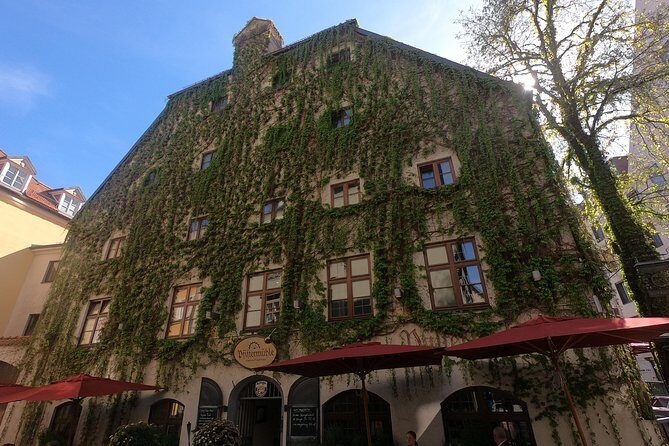
Now comes a major visual payoff: the Theatinerkirche St. Cajetan. It’s a Catholic church erected by Elector Ferdinand Maria and his wife Henriette Adelaide in the mid-17th century, tied to the birth of a Bavarian heir.
The game also nudges you to look past the outside. The interior is described as white and ornate, contrasting with the bright yellow facade that became a well-known symbol for Munich and influenced German Baroque architecture.
Admission at this stop is not included, so if you want the full experience inside, plan time for entry. This is one of the places where the route can cost more if you don’t just stick to the exterior.
Stop 4: Sitzender Keiler—A Sitting Boar with a Luck Ritual
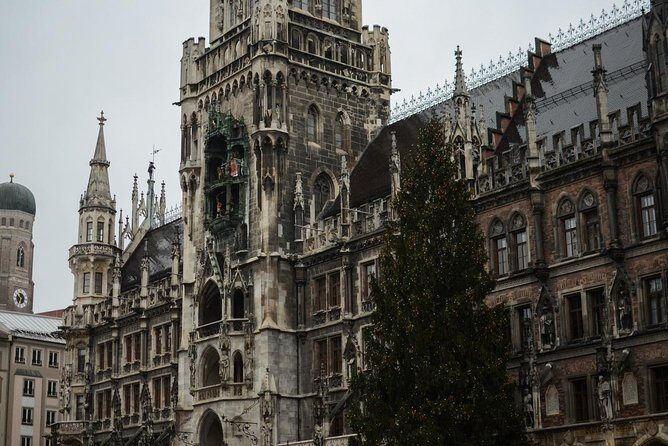
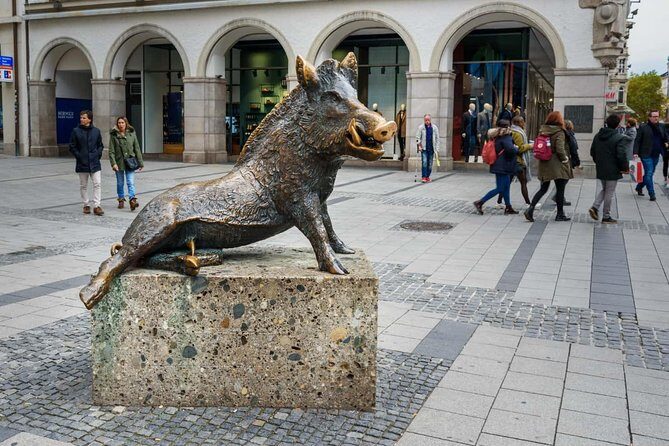
This checkpoint is fun in a slightly silly, very human way. The Sitzender Keiler (the Sitting Boar) is a statue near the Hunting and Fishing Museum entrance. The statue shows a pig perched on his short front legs while resting his hind legs on the ground, as if watching something ahead.
The game adds a tradition: you’ll be encouraged to rub the boar’s nose to invite luck for the rest of your life. Even if you treat that as playful superstition, it’s still a great moment for a pause-and-smile stop.
Admission here is listed as free. Practically, this makes it a great break point—good for photos, good for momentum.
Stop 5: Frauenkirche and the Devil’s Footprint
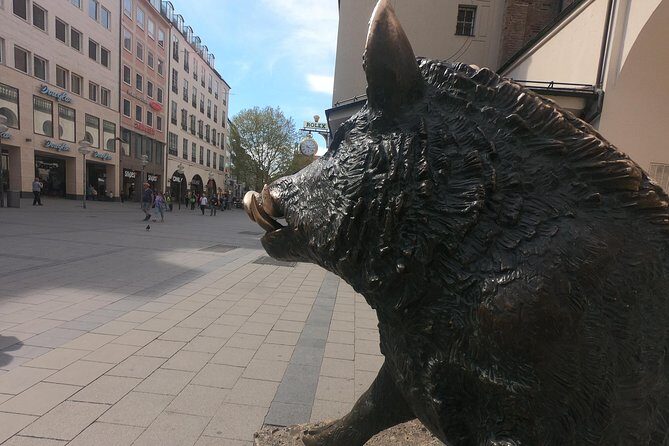
You can’t miss the Frauenkirche (Cathedral of Our Dear Lady). Its twin towers rise to about 100 meters, so when the game takes you here, it’s basically calling out the skyline.
Inside, you’re told to expect intricate vaulted ceilings and long stained-glass windows. That’s the visual hook. The challenge then shifts to the legend of the Devil’s footprint at the entrance—part of a story where the builder made a bet that the church would have no windows, but was tricked, and the Devil left his mark.
Admission is not included at this stop. If you’re the type who likes church interiors and legends you can actually see up close, this is worth planning for. If you prefer keeping costs down, you might spend more time just around the exterior and jump to the next checkpoint.
Stop 6: Marienplatz—The Central Square Where Big Stuff Happens
From here you head to Munich Marienplatz, the heart of city life. It’s the central square that gathers everything from Christmas markets to FC Bayern celebrations, and the game uses that idea of a busy public center to frame its next question.
Marienplatz is also historically rooted: it has been central since Munich’s early days, when the city was founded by Henry the Lion in the 12th century. Streets converge here, and tournaments were organized there through history.
Admission is free. This stop is also easy for a quick break: you can refuel with a snack from nearby stalls and still keep the game moving.
Stop 7: St. Peter’s Church—Old Munich and a Tower Climb
Next is St. Peter’s Church, described as Munich’s oldest Catholic church and one of the city’s important symbols. The building has survived tragic fires and wars over around 800 years, so you get a mix of architectural styles—Gothic, Baroque, and Rococo.
Here’s the practical reason this stop stands out: the game highlights a tower climb with a bird’s-eye view. You’ll climb 299 steps to reach the top.
Admission is not included at this checkpoint. If climbing sounds fun, it’s a strong payoff; if you’d rather avoid stairs, you can still treat the church visit as a story stop and keep the tower optional.
Stop 8: New Town Hall (Neues Rathaus) and the Glockenspiel Story
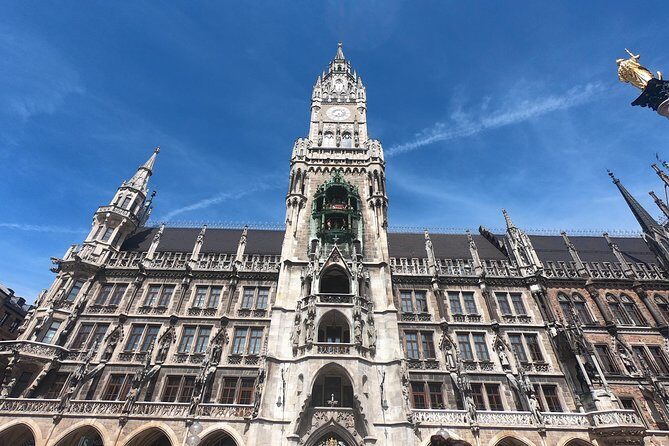
Your final destination is New Town Hall (Neus Rathaus)—home to city politics, and famously a balcony spot tied to FC Bayern celebrations when the team wins. If you like sports culture, this is a clever closing point.
The tower’s Glockenspiel draws crowds with performances and stories. The game also references a legend tied to a plague epidemic: after fear gripped the population, barrel makers were said to have been among the first to step back out onto the streets, dancing for the amusement of everyone afraid of the disease.
This is a great ending because it mixes civic life, music, and a grim historical theme. Admission is not included here, so decide ahead of time whether you’ll spend extra to see the interior features tied to the story.
How to Fit It Into Your Day (Without Feeling Rushed)
Since the experience runs about 1 to 2 hours, you can treat it like a smart “second layer” to Munich sightseeing. I like pairing it with another plan so you’re not trying to do everything at once.
A simple approach:
- Start when the light is good (morning or late afternoon often works well for photos).
- Give yourself time at paid-entry churches if you want the full interior look.
- Use Hofgarten or Marienplatz as your built-in pause moments.
The self-guided structure helps here. If you want breaks for coffee, bathrooms, or just to watch people, you can.
Who This Is Best For (and Who Might Want Something Else)
This works especially well if you want a tour that feels active. Solving challenges while you walk makes it easier to notice details you might otherwise skip, like how the facade colors contrast inside spaces, or how towers shape the skyline.
It’s also a good family option. One of the strongest themes from the feedback is that couples and families can teamwork their way through the clues, which is a fun dynamic for teens who might otherwise say they’re bored of “history.”
If you hate anything tech-based, or you’re worried your phone won’t cooperate, this might feel stressful. For a smooth outing, make sure your app and mobile ticket are ready before you start.
Practical Notes That Save You Money and Time
A lot of the stops are listed as free, but multiple key checkpoints are not included. If you want to keep the budget predictable, decide early which paid stops you care about most—like tower views or church interiors.
Also remember this is positioned as a private self-guided activity. That’s great for comfort, but it also means there’s no physical guide to step in if you get stuck on a clue. If you’re the type who likes quick human help, keep that in mind.
If something technical goes wrong, the provider has support listed in their troubleshooting response with a contact email at [email protected].
Should You Book Ghosts of Munich?
Yes, if you want a compact, story-driven walk that turns Munich landmarks into something you actually pay attention to. The best value comes from the combination of offline gameplay, flexible timing, and the fact that you can do it at your own pace without crowd pressure.
I’d skip it (or at least approach with caution) if you strongly prefer a traditional guided tour with a person to lead the way, because this experience relies on your phone for the story and the challenges. And if you’re trying to keep total costs ultra-tight, plan for the fact that some of the most famous stops require entry fees on your own.
FAQ
How long does Ghosts of Munich take?
It takes about 1 to 2 hours.
Is it available in English?
Yes. The English version includes audio stories.
Can I play it offline to avoid data charges?
Yes. The game can be accessed offline.
Can I start and pause whenever I want?
Yes. You can start at any hour, take a break, and resume later.
Are admission fees included for every stop?
No. Some stops are free, while others list admission as not included (for example certain churches and the New Town Hall).
Where do I start and where does it end?
Start: Odeonsplatz, 80 München-Altstadt-Lehel, Germany. End: Rindermarkt 17, 80331 München, Germany.
What if I’m traveling with a large group?
If your group is larger than 15 people, you’ll need to make multiple bookings.
Is free cancellation possible?
Yes. You can cancel up to 24 hours in advance for a full refund.