REVIEW · WEIMAR
weimar card – Abholung in der Tourist Information Weimar
Book on GetYourGuide →Operated by Tourist Information Weimar · Bookable on GetYourGuide
Weimar rewards people who like culture, but hate paying for it. The weimar card turns 48 hours into a smart mix of classic writers, Bauhaus-era ideas, and even a major memorial site.
What I like most is the chance to pair big names like Goethes Wohnhaus with modern design stops, all without nickel-and-diming every ticket.
The second thing I really appreciate is the built-in structure: free entry to a long museum list plus free participation in public guided tours organized by the Tourist Information Weimar. One possible drawback: with so many options packed into just two days, you’ll want to plan your order so you don’t end up speed-walking between buildings with tired legs.
In This Review
- Key highlights worth planning around
- Picking up your weimar card at the market square
- What you get for $38 in 48 hours (and why it’s good value)
- Day 1: Goethe and Schiller without paying a ticket for each stop
- Day 1 in the Bauhaus orbit: see modernism as buildings, not just ideas
- The heavy stop you shouldn’t skip: Museum Zwangsarbeit and Buchenwald
- Day 2 beyond the big names: the fun and the odd in free entry
- A realistic 48-hour rhythm (so you don’t burn your day)
- Price/value math: when the weimar card pays off fast
- Who this is best for (and who should pass)
- Should you book the weimar card?
- FAQ
- How long is the weimar card valid?
- Where do I pick up the weimar card?
- What do I need to receive the card?
- What’s included with the weimar card?
- Which city transport is free?
- Are public guided tours included?
- Can I visit KZ-Gedenkstätte Buchenwald with the card?
- Are there any age limits?
- How much does it cost?
- Is there free cancellation?
Key highlights worth planning around
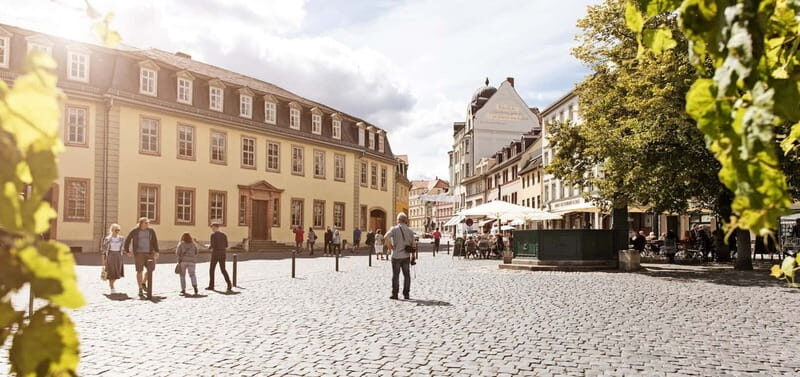
- Goethes Wohnhaus and Schillers Wohnhaus for a writers’ Weimar that feels personal, not postcard-y.
- Bauhaus-Museum Weimar plus homes tied to modernism, so you can see the ideas and the architecture.
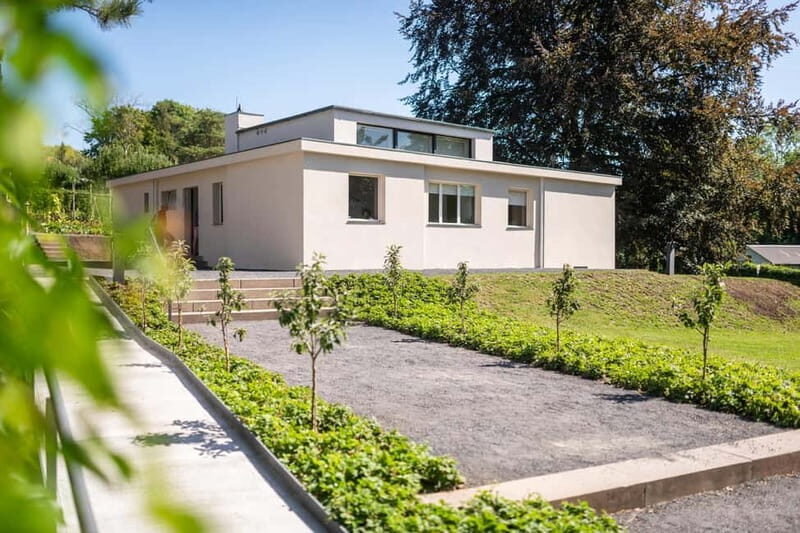
- Haus Am Horn and related modernism sites that make the Bauhaus story feel physical.
- Museum Zwangsarbeit im Nationalsozialismus with admission plus guided tours and museum talks, for context you can’t get from a quick glance.
- KZ-Gedenkstätte Buchenwald with a public tour or access to a lending multimedia guide, so you can choose how you want to engage.
Picking up your weimar card at the market square
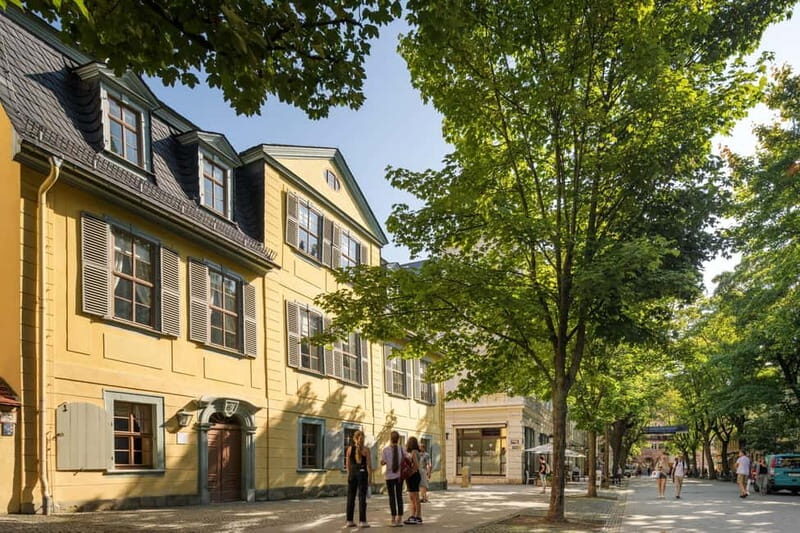
Your card starts with a simple handoff at the Tourist Information Weimar. Show your voucher there, and you’ll receive the weimar card right away. The meeting point is direct at the market square area, so you can get oriented fast before you hop on buses or head to the first museums.
This setup matters because Weimar can be walked, but it’s not a one-street town. Having your card in hand immediately helps you shape the next few hours based on your energy level and what looks closest on the map.
You can also read our reviews of more tours and experiences in Weimar.



What you get for $38 in 48 hours (and why it’s good value)
At $38 per person for a two-day stay, the real value is how many different places the card covers. It’s not only “free museum entry.” It also includes:
- Free admission to all the museums listed on the card program (a wide mix of literary, Bauhaus, design, science-ish oddities, and memorial sites)
- Free use of public city buses
- Free participation in public guided tours organized by the Tourist Information Weimar
The card is valid for 48 hours from your first activation, so you get to start when it best fits your day. If you activate right after pickup, you’ll essentially have two museum-heavy days (plus tours) to work with.
The best way to think about this: you’re paying once to turn multiple admissions and local transport into a single fixed cost. If you’d normally buy several tickets anyway, the card usually makes sense.
Day 1: Goethe and Schiller without paying a ticket for each stop

If you want Weimar to make sense, start with the writers. Classical Weimar sites are the backbone of the town’s identity, and the card gives you free entry to the major cluster.
Goethe-Nationalmuseum und Goethes Wohnhaus (Goethe’s house and museum) is often the emotional center of this part of town. Standing in the spaces tied to Goethe, you get a sense of how a writer’s working life can shape the tone of a whole era. Don’t rush this one. Take your time, then let it change how you read the next places.
Next, pair it with Schillers Wohnhaus. Goethe and Schiller together gives you a fuller picture than either alone. The contrast between their worlds is part of the point, and you’ll feel it more when you see them close in time.
Then add Goethes Gartenhaus. It’s one of those stops that helps you shift gears from indoor exhibits to how people lived day-to-day. If you tend to get museum-saturated, this kind of place can reset your brain.
After you’ve done the “home base” sites, you can expand outward to grander settings:
- Wittumspalais
- Schloss Belvedere
- Fürstengruft und Historischer Friedhof
- Schloss, Park und Liebhabertheater Kochberg
A quick practical note: this section gives you both public-facing museums and more reflective spaces. If you’re visiting the town for two days only, you can’t do everything at full speed. Pick what matches your mood that day—museum time when you want information, grounds and parks when you want breathing room.
Day 1 in the Bauhaus orbit: see modernism as buildings, not just ideas
Weimar’s claim to modern art isn’t vague. The card helps you see it through the Bauhaus-Museum Weimar and multiple connected sites.
Start with Bauhaus-Museum Weimar. This is your “anchor stop”—the place where the movement’s logic becomes clearer. Even if you only skim at first, it gives you a lens for the rest of the day.
From there, I’d move into the architecture-linked stops that make the Bauhaus story feel real:
- Haus Am Horn
- Haus Hohe Pappeln
- Museum Neues Weimar
- Haus der Weimarer Republik
- Stadtmuseum
You’ll likely notice a theme: this isn’t just about artworks on walls. It’s about how people tried to design everyday life—through form, function, and social ideas. Visiting several of these back-to-back makes the “so what” click faster than bouncing between unrelated museums.
If you’re interested in philosophy and ideas, the card also includes Nietzsche-Archiv. It can be a good change of pace when you want your brain to work differently than it does in architecture galleries.
The heavy stop you shouldn’t skip: Museum Zwangsarbeit and Buchenwald

Two parts of this program deserve deliberate pacing: the Nazi-forced labor museum and the Buchenwald memorial.
The card includes Museum Zwangsarbeit im Nationalsozialismus with admission, guided tours, and museum talks. That combination matters. A museum talk can turn a pile of facts into context you can actually use, instead of information that slides by too fast.
Then there’s KZ-Gedenkstätte Buchenwald. The card supports a public tour or access to a lending multimedia guide. That choice is helpful if you know you want an organized explanation (public tour) versus a self-guided approach (multimedia guide).
My advice here is simple: don’t treat these as “extra points” on a checklist. Schedule them for when you can stay focused. It’s okay if you don’t feel upbeat afterwards. This program covers difficult content, and your time deserves respect.



Day 2 beyond the big names: the fun and the odd in free entry
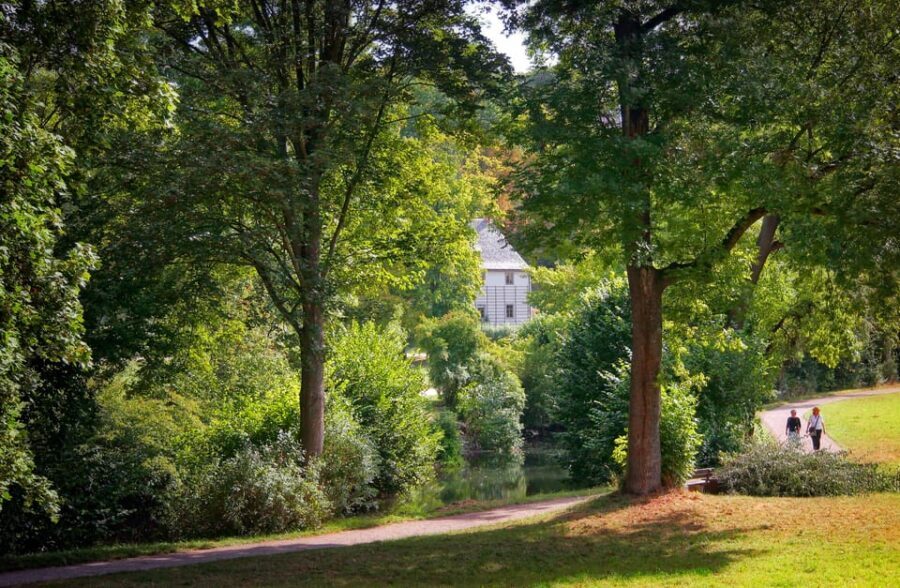
One reason I like the weimar card is that it doesn’t force you into only Goethe and Bauhaus. It gives you several optional directions, and you can shape Day 2 around curiosity instead of only planning.
Here are some of the included stops you can plug in based on your interests:
- ACC Galerie (art space—good for a lighter-feeling visit between heavier stops)
- Deutsches Bienenmuseum (a chance to switch from literary and design culture to nature and everyday science)
- Dornburger Schlösser (dramatic settings and a break from the city-center routine)
- Kirms-Krackow-Haus and Palais Schardt (additional sites that round out the town’s cultural map)
- Museum für Ur- und Frühgeschichte (for early history—useful if you like seeing deep time)
- Pavillon-Presse Weimar and WEIMAR HAUS (media and context-focused options, depending on what they have running at your visit)
- Schwanseebad (a simple reset option if you want water and a slower pace)
And if your “museum brain” starts to overheat, this variety is a lifesaver. You can spend more time where your attention stays sharp, and swap out a topic when you feel your interest slipping.
A realistic 48-hour rhythm (so you don’t burn your day)
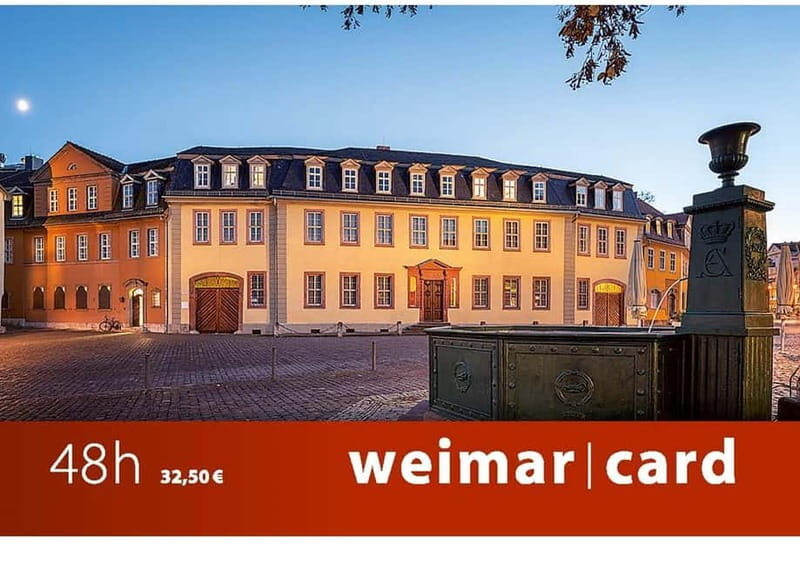
Because this is a card-based experience, you’re not locked into one exact itinerary. That’s freedom, but it can also feel like too many choices. Here’s a way I’d structure it so it stays enjoyable.
Day 1 morning through afternoon: Goethe and Schiller core sites first—Goethes Wohnhaus and Schillers Wohnhaus, then add Goethes Gartenhaus if you want a breather.
Day 1 late afternoon: move into Schloss Belvedere territory if you want the grand setting or keep it indoors if the weather is rough.
Day 2 morning: modernism start at Bauhaus-Museum Weimar, then choose two or three architecture/modernism stops from the list (like Haus Am Horn, Haus der Weimarer Republik, and Haus Hohe Pappeln).
Day 2 afternoon: schedule either Museum Zwangsarbeit im Nationalsozialismus or KZ-Gedenkstätte Buchenwald when you can focus. If you choose both, don’t stack them back-to-back without a break.
Day 2 evening: pick one “lighter” stop—art at ACC Galerie, something nature-ish like the bee museum, or just use the buses to reposition and end where you want your night to be.
You can also rely on the included public city buses to reduce walking distances between clusters. That means you spend more energy inside museums (where you came to be) and less time rushing across the city.
Price/value math: when the weimar card pays off fast
At $38, the card is a bargain if you plan to visit multiple included museums and use the free bus rides.
You don’t need to be a museum machine. The program covers enough major sites that two or three “serious” stops plus a couple smaller ones can make the card feel like a win. And since the card also includes free participation in public guided tours, you’re getting added value beyond self-entry.
The only time I’d hesitate is if you’re the type who wants to see only one or two places total. With a card like this, the cost is fixed, so you benefit most when you use the full menu.
Who this is best for (and who should pass)
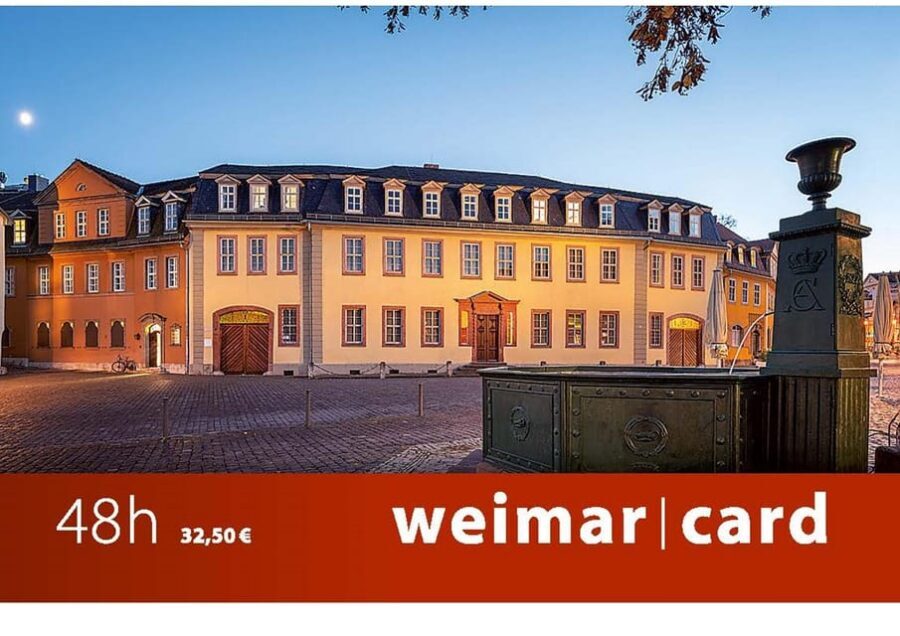
This experience fits best if you:
- Like structured culture in a walkable, museum-rich city
- Want to combine Goethe/Schiller with Bauhaus modernism
- Prefer free transport and public tours instead of piecing together tickets and schedules all day
It does not fit well if you’re traveling with kids under 18, since it’s listed as not suitable for children under 18.
Also, if you dislike planning and prefer fully scheduled tours only, you may find the card format requires more decision-making. Still, the card’s breadth is exactly what makes it powerful when you’re willing to pick your stops.
Should you book the weimar card?
I’d book it if you’re looking for a cost-smart way to experience a lot of Weimar’s core ideas in just 48 hours. The mix is the point: writers’ homes like Goethes Wohnhaus, modernism through Bauhaus-Museum Weimar, and essential context at Museum Zwangsarbeit im Nationalsozialismus and KZ-Gedenkstätte Buchenwald.
I’d think twice only if you’re likely to visit just a couple of museums and then call it a day. For most culture-focused adults, though, this card turns your two days into something closer to a curated cultural tour—without the extra ticket stack.
FAQ
How long is the weimar card valid?
The card is valid for 48 hours starting from your first activation.
Where do I pick up the weimar card?
You receive it in the Tourist Information Weimar, with the meeting point direct at the market square.
What do I need to receive the card?
You show your voucher at the Tourist Information Weimar to get the weimar card.
What’s included with the weimar card?
It includes free admission to the listed museums, free use of the public city buses, and free participation in public guided tours organized by the Tourist Information Weimar.
Which city transport is free?
The card covers the free use of public city buses in Weimar.
Are public guided tours included?
Yes. You can join the public guided tours organized by the Tourist Information Weimar with the card.
Can I visit KZ-Gedenkstätte Buchenwald with the card?
Yes. The program includes Buchenwald with a public tour option or a lending multimedia guide.
Are there any age limits?
Yes. It is not suitable for children under 18.
How much does it cost?
The price is $38 per person.
Is there free cancellation?
Yes. You can cancel up to 24 hours in advance for a full refund.