REVIEW · BERLIN
Berlin: Hansaviertel “The City of Tomorrow” Guided Tour
Book on GetYourGuide →Operated by Sonderweg-Berlin · Bookable on GetYourGuide
Berlin’s modernist dream still walks with you. On this Hansaviertel guided tour, I liked seeing the Berlin Pavilion and standout homes up close, and I also liked how the guide explains the 1957 City of Tomorrow idea behind the whole neighborhood. Everything feels designed, not accidental, and that makes the architecture easy to read as you walk.
The one thing to watch is timing, especially in winter. It’s a 2-hour stroll, and on darker days you may wish you had slightly earlier daylight to enjoy the details as the tour moves between stops.
In This Review
- Key points at a glance
- Hansaviertel: Berlin’s City of Tomorrow on Foot
- The 2-Hour Format: What You’ll Actually Do
- Following the 1957 Idea: How the Neighborhood Was “Newly Designed”
- Berlin Pavilion and the Müller-Rehm/Siegmann House
- Gropius-Haus and the Kaiser-Friedrich Memorial Church
- Swedish House plus Hansaplatz: Where Transit Meets Design
- Library and Hospital Stops: Architecture Isn’t Just for Photos
- Van den Broek House, Schwippert House, and the Academy of Art
- The Guide Experience: Friendly, Funny, and Ready for Questions
- Price and Value: Is $23 Worth It?
- Who Should Book This Tour (and Who Might Skip)
- Practical Tips Before You Go
- Should You Book the Hansaviertel Guided Tour?
- FAQ
- How long is the Hansaviertel guided tour?
- How much does the tour cost?
- What languages is the tour offered in?
- Is the tour wheelchair accessible?
- Can I cancel for a full refund?
- Can the tour start from a specific point?
Key points at a glance
- 1957 planning theme: Learn how the Hansaviertel was newly designed using modern urban development ideas for the International Building Exhibition.
- Iconic buildings on foot: You’ll see the Müller-Rehm/Siegmann House, the Gropius-Haus, and the Kaiser-Friedrich Memorial Church.
- A mix of culture and everyday places: Stops include Hansaplatz station, the Hansaviertel Library, and the Hansaviertel Hospital.
- Off-the-usual-path energy: The tour focuses on a part of Berlin many people skip, yet it’s full of design landmarks.
- Guides who answer questions well: Guides like Tobias and Mr Schwabe are praised for being engaging, friendly, and good at handling lots of questions.
Hansaviertel: Berlin’s City of Tomorrow on Foot
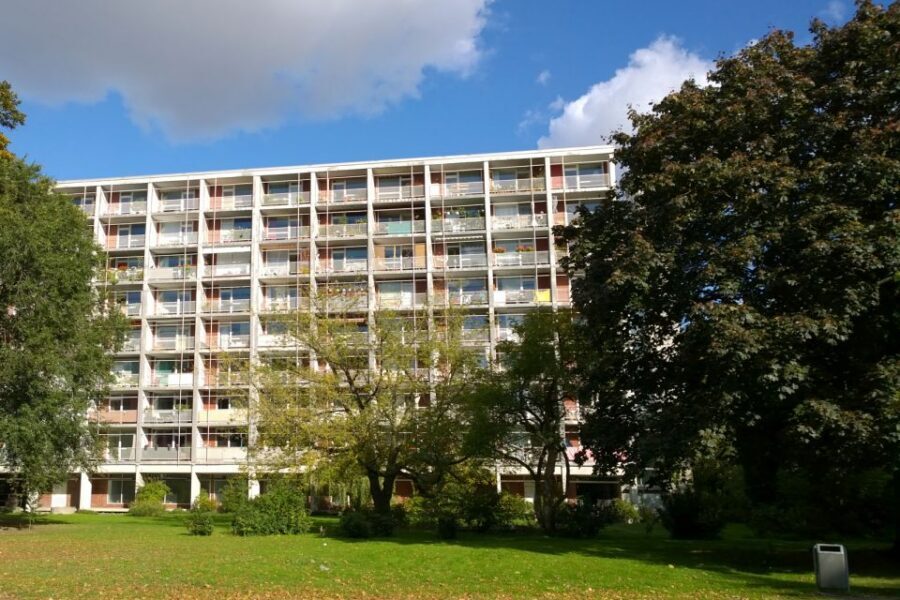
The Hansaviertel is one of those Berlin neighborhoods that feels like it’s trying to teach you how to look. You’re not just passing buildings; you’re walking through an urban plan that was meant to feel orderly, spacious, and future-minded.
This tour leans hard into that story. You’ll learn how the district was designed anew according to modern development principles for the International Building Exhibition of 1957, and you’ll see how much of that concept still exists in the street layout and building placement.
The best part is that the architecture comes with context. Instead of memorizing facts, you start to understand why these buildings look the way they do and how the neighborhood was supposed to function as a whole.
You can also read our reviews of more guided tours in Berlin



The 2-Hour Format: What You’ll Actually Do
This is a leisurely walking tour that lasts about 2 hours, which is a good length for architecture sightseeing without frying your feet. It’s structured enough to cover major sights, but flexible enough that you’re not constantly rushing.
You meet your guide and head toward the Hansaviertel area. The meeting point may vary depending on the option booked, so double-check your exact pickup instructions when you reserve.
Because it’s a walk, the practical stuff matters more than usual. Wear comfortable shoes, and in cool months dress in layers so you can handle the changes between shaded streets and open spaces. If you’re sensitive to cold, you’ll feel it faster on a January or February morning than a summer afternoon.
Following the 1957 Idea: How the Neighborhood Was “Newly Designed”

The tour’s backbone is the idea that Hansaviertel was part of a broader push toward modern living. The guide explains the plan as a structured, spacious city concept, and you’ll hear how the International Building Exhibition of 1957 shaped the neighborhood’s layout and identity.
As you walk, try to look beyond single buildings. Notice how the open areas, movement paths, and building spacing affect how you experience the district. Even if you don’t know architecture theory, the physical design makes the “future” goal feel real.
This section also helps you understand why Hansaviertel can feel different from many other parts of Berlin. Instead of incremental growth, you’re seeing a neighborhood that was deliberately conceived for a specific moment and a specific vision.
Berlin Pavilion and the Müller-Rehm/Siegmann House
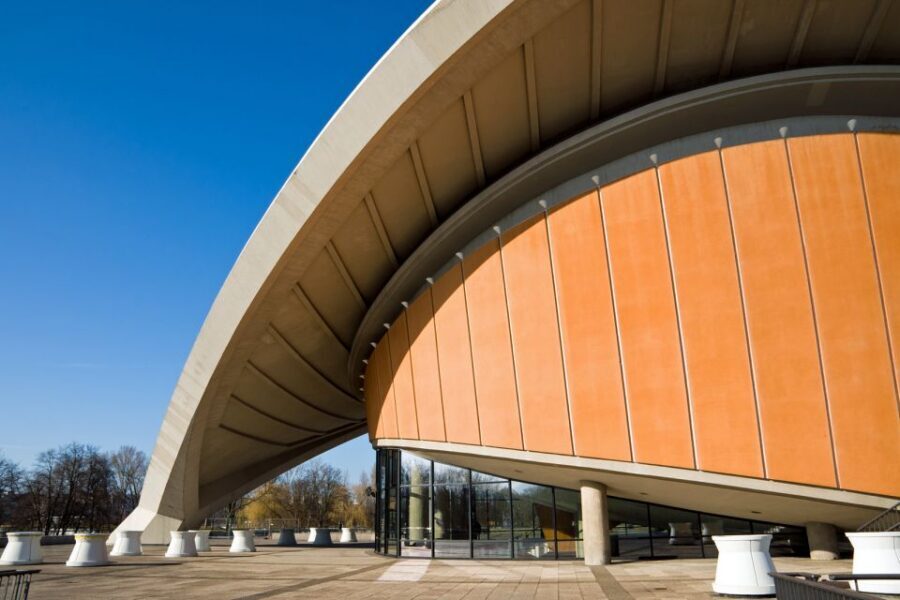
The first major “wow” stops are the Berlin Pavilion and the Müller-Rehm/Siegmann House. These are the kinds of buildings you can walk by without noticing—unless someone points out what to look for.
The pavilion is valuable because it sets the tone. You get a sense that this district wasn’t only about housing; it was also about presenting ideas—like a physical showcase of what modern living could look like.
Then you shift into residential reality with the Müller-Rehm/Siegmann House. The guide ties the building back to the overall “tomorrow” plan so it stops being just an attractive facade. You start seeing how design choices fit a larger urban idea: how people might live, move through the space, and relate to their surroundings.
Gropius-Haus and the Kaiser-Friedrich Memorial Church
Next comes a strong contrast: the Gropius-Haus and the Kaiser-Friedrich Memorial Church. Even if you’re not a church person, the church stop matters because it shows how modern design thinking interacts with spiritual and community architecture.
The Gropius-Haus is one of those names that instantly signals design importance. On this tour, you’ll be encouraged to look at how the building’s form contributes to the overall feel of the Hansaviertel streetscape, not just how it photographs.
Then the Kaiser-Friedrich Memorial Church adds another layer. Instead of treating it as a stand-alone landmark, you’ll place it inside the neighborhood story. That’s what makes the tour feel more like guided interpretation than a checklist.
If you enjoy architecture that’s slightly understated—clean lines, clear massing, and structures that make sense when you walk around them—this pair of stops is a highlight.
You can also read our reviews of more city tours in Berlin





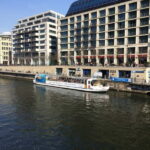
Swedish House plus Hansaplatz: Where Transit Meets Design
The tour includes the Swedish House, another key marker of Hansaviertel’s International Building Exhibition-era identity. It’s the kind of stop that helps you see how multiple architects and influences can coexist while still following a shared neighborhood vision.
Right after that, you pass Hansaplatz station. This is where the tour gets especially practical for first-timers. Transit landmarks like Hansaplatz make the district feel connected to real life rather than frozen in 1957.
You’ll also see how the station and nearby buildings affect how you navigate the area. Even if you don’t take the U-Bahn during your visit, it helps you understand where this neighborhood sits in Berlin and how easy it is to reach.
Library and Hospital Stops: Architecture Isn’t Just for Photos
This tour smartly includes the Hansaviertel Library and the Hansaviertel Hospital. These aren’t the usual star attractions, but that’s exactly why they work on a guided walk.
When you see public buildings like libraries and hospitals inside a “city of tomorrow” concept, you start to grasp what planners were aiming for. The neighborhood wasn’t only supposed to look modern; it was supposed to support modern daily routines.
It also changes your pace. After several architectural landmarks, these stops remind you you’re in a functional district. You’re seeing Berlin as a lived-in place, not only as an open-air museum.
Van den Broek House, Schwippert House, and the Academy of Art
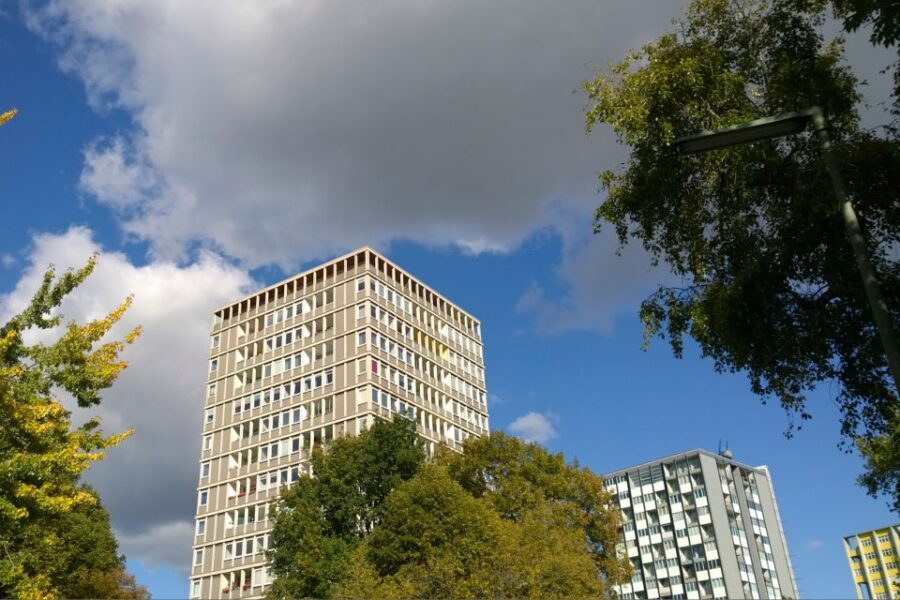
Toward the end, you’ll visit more individual architectural landmarks, including the Van den Broek House, the Schwippert House, and the Academy of Art.
These stops are best for people who enjoy pattern recognition. Once you’ve learned the Hansaviertel “tomorrow” framework, you’ll start noticing how each building contributes to the overall plan while still showing personal design choices.
The Academy of Art stop also adds a nice cultural angle. It helps you connect the district’s modernist past to Berlin’s ongoing identity as a place where art, design, and architecture keep overlapping.
If your travel style is part walking, part looking, and part asking questions, the later stops are where the tour often clicks.
The Guide Experience: Friendly, Funny, and Ready for Questions
A big reason this tour earns such strong feedback is the human factor: the guiding style. The experience is run by Sonderweg-Berlin, and guides such as Tobias and Mr Schwabe are described as personable, engaging, and unusually good at explaining the background behind the buildings.
You also get a sense that the guide won’t shut down questions. People highlight patience and a friendly approach, which matters on architecture tours where you might want to ask, Why that shape? What’s the plan here? How does this fit the 1957 idea?
One small tip: if you know you’re curious about details, ask early. Once the guide understands what you’re interested in—layout, design style, or how the buildings relate to each other—the tour tends to feel more tailored.
Price and Value: Is $23 Worth It?
For $23 per person and about 2 hours, this is the kind of Berlin tour that can feel like high value—especially if you’re the type who likes to connect buildings to the bigger story.
Here’s the value math that matters: you’re paying for two things you can’t easily DIY. First, you get a guided explanation of the Hansaviertel’s 1957 planning concept and what it meant at the time. Second, you get help noticing the right details on your feet, across multiple stops.
If you’re only casually interested in architecture, you might prefer to spend more time exploring the area on your own. But if you enjoy modern design, architecture names, or simply want a guided lens that makes the district readable, this price feels fair.
Who Should Book This Tour (and Who Might Skip)
I think this tour is a great fit if you want a calm, focused walk through a design-minded neighborhood. It’s especially well-suited for people who like modernist architecture, appreciate historical context, and want a route that takes you to more than the obvious landmarks.
It may be less ideal if you want nonstop scenic stops or a tour packed with major Berlin-ticket sights. Hansaviertel is about design and planning ideas, so you’ll enjoy it most if you’re willing to slow down and look.
And if you visit in winter, build in extra daylight awareness. The tour is short, but the streets can feel long when the light fades.
Practical Tips Before You Go
A few small choices can make your experience smoother:
- Bring layers if you’re going in cooler months.
- Wear grippy shoes for walking around residential blocks.
- Have your questions ready on what you’re looking at, especially if you care about how the district was planned.
- If you’re booking in a way that offers options, double-check the exact meeting point, since it can vary.
Also, if you’re planning around a specific day and need flexibility, the tour offers reserve now & pay later, which can help when your Berlin schedule is still changing.
Should You Book the Hansaviertel Guided Tour?
If you like modern architecture and you want real context in a short walk, I’d book it. The tour’s strength is that it connects building names—like Berlin Pavilion, Müller-Rehm/Siegmann House, Gropius-Haus, and the Kaiser-Friedrich Memorial Church—to a clear neighborhood idea from the 1957 exhibition era.
It’s also a good “Berlin palate cleanser.” After ticking off classic landmarks, Hansaviertel gives you a different kind of story: one about planning, space, and how everyday buildings fit into a vision of the future.
If you’re sensitive to winter light or you hate cold walks, choose your departure time carefully. Otherwise, this is an easy yes for anyone who wants architecture in Berlin that actually teaches you how to see.
FAQ
How long is the Hansaviertel guided tour?
It lasts about 2 hours.
How much does the tour cost?
The price is $23 per person.
What languages is the tour offered in?
The live guide is available in English and German.
Is the tour wheelchair accessible?
Yes, the tour is wheelchair accessible.
Can I cancel for a full refund?
Yes. You can cancel up to 24 hours in advance for a full refund.
Can the tour start from a specific point?
It may be possible to organize tours beginning from specific points at certain times.