REVIEW · MUNICH
Munich City Walking Tour, includes Third Reich & Viktualienmarkt
Book on Viator →Bookable on Viator
Munich comes alive when you walk it first. This small-group (up to 20) tour gives you a real city feel, a mid-tour Viktualienmarkt food stop, and thoughtful context on the Third Reich—with lots of time on your feet outdoors. The main drawback to plan for: when it’s cold, you can end up standing around longer than you’d like.
I like how the guide-style approach mixes big sights with practical city tips. You’ll also get a clear path for where to go next, so the rest of your Munich days feel easier.
If you’re hoping for a deep, site-by-site Nazi era seminar, this may not satisfy every history-hungry mood. Think of it as context plus orientation, not an all-day lecture.
In This Review
- Quick hits before you go
- Where this 3h15 Munich walk fits in your trip
- Starting at Schützenstr and heading straight to the big icons
- Frauenkirche: the twin towers and the Devil’s Footstep detail
- The German Hunting and Fishing Museum: weapons, wildlife, and Wolpertinger
- Hofbräuhaus: beer hall history without the tourist fog
- Isartor to Marienplatz: medieval gate, then city center control
- Max-Joseph-Platz and Odeonsplatz: palaces, theatres, and power
- St. Michael and Alter Peter: huge churches, and one tower for views
- Wolfsbrunnen and Karlsplatz: small details that make Munich feel like a lived-in city
- Maximilianeum and Platzl: the Isar river view and old-town character
- Viktualienmarkt: the food break that anchors the whole experience
- Price and pacing: what $31.78 buys you in real terms
- How to get the most from it (especially if it’s your first day)
- Who this works for, and who might prefer something else
- Should you book this Munich City Walking Tour with Third Reich & Viktualienmarkt?
- FAQ
- How long is the Munich City Walking Tour?
- What does the tour cost?
- Is the tour offered in English?
- How large is the group?
- Where do you meet and where does it end?
- What’s included in the price?
- Is there a food stop during the tour?
- Is admission required for the stops?
- Can I cancel, and are service animals allowed?
Quick hits before you go
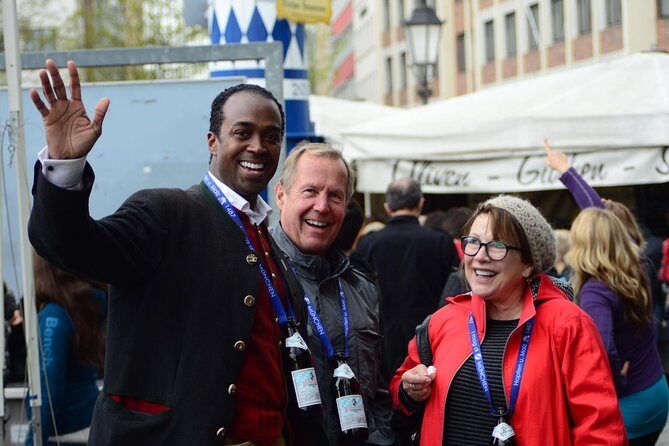
- Up to 20 people means you can ask questions without getting lost in the crowd
- Third Reich context is woven in while you’re looking at real Munich places
- Beer hall time at Hofbräuhaus fits the Bavarian rhythm of the city
- Viktualienmarkt lunch break is where you’ll try classic snacks and Bavarian beer culture
- Free-entry-style stops show you a lot without extra ticket hassle
- Landmarks you’ll use later: Marienplatz, Odeonsplatz, Karlsplatz, and more
Where this 3h15 Munich walk fits in your trip
This is a 3 hours 15 minutes walking tour designed for your first days, when you still feel like Munich is a map full of question marks. You’ll start near Schützenstr and finish up at Odeonsplatz, which is a handy end point for going on to other parts of the center.
It’s priced at $31.78 per person, and a big part of the value is how much you see for the time. Many stops on the route list free admission, so you’re not burning your budget at every church and square.
The tour runs in English, and it helps that the pace is built around frequent stops rather than one long slog. Still, you should plan for real walking and some waiting, especially in winter weather.
You can also read our reviews of more walking tours in Munich
Starting at Schützenstr and heading straight to the big icons
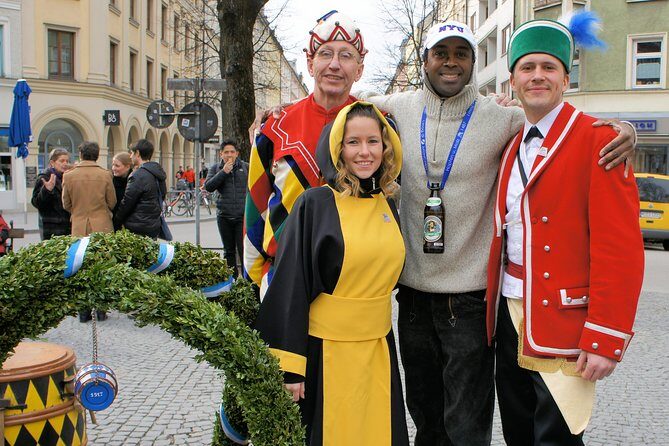
You’ll meet at Schützenstr 11, 80335 München, and then you begin moving through the historic core right away. The route is set up so you learn the city’s “center of gravity” early: churches, squares, and the kind of streets locals actually use.
That matters because Munich is easy to get wrong on your first day. Once you understand which plazas connect to which tram and U-Bahn lines, you stop feeling like you have to backtrack.
Frauenkirche: the twin towers and the Devil’s Footstep detail
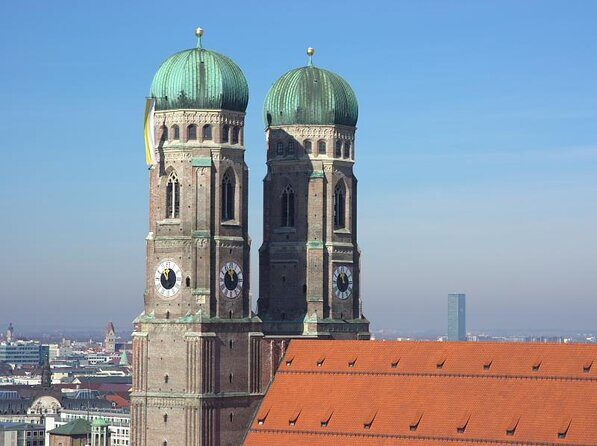
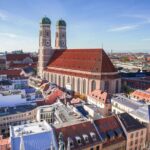
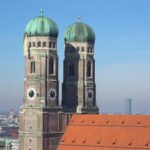
First stop is Frauenkirche, Munich’s famous twin-towered cathedral. Built in the 15th century, it’s still one of the best ways to understand how Munich’s identity forms around landmark buildings.
Inside, you’ll have a chance to look for the legendary Devil’s Footstep detail and explore the crypt area. Even if you don’t care about Gothic architecture, this stop gives you a mental anchor for the rest of the walk.
In cold weather, churches are a relief. In warmer months, they’re a good place to slow down and reset before you keep moving.
The German Hunting and Fishing Museum: weapons, wildlife, and Wolpertinger
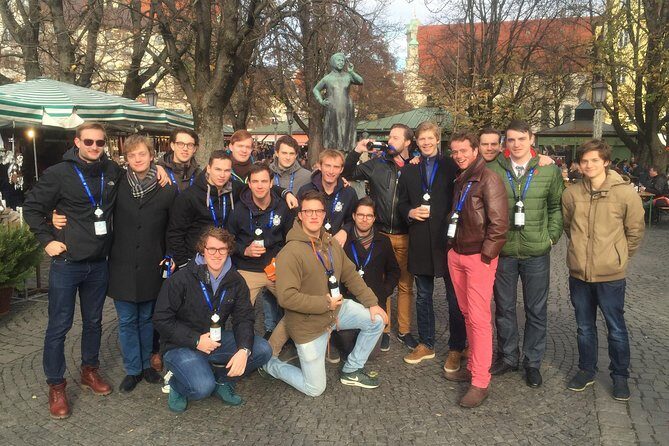
Next you’ll visit the German Hunting and Fishing Museum, in a former Augustinian church. It’s set up like a serious collection, but it has the kind of playful Bavarian surprises that make it memorable.
Expect exhibits over about 3,000 square meters, including stuffed wildlife, antique weapons, and the famous Wolpertinger creatures. This is the sort of stop that makes Munich feel less like a postcard and more like a place with strange traditions that are still alive in local storytelling.
The main “consideration” here is timing. You only get a short window, so you’ll want to pick a couple exhibits and focus, rather than trying to read everything.
Hofbräuhaus: beer hall history without the tourist fog
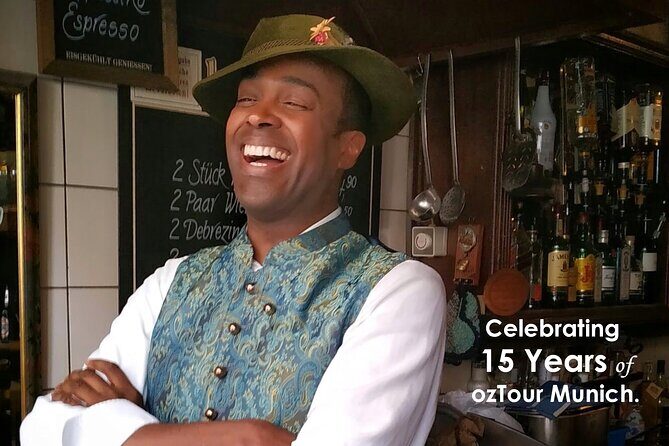
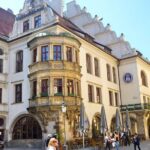
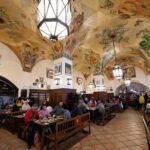
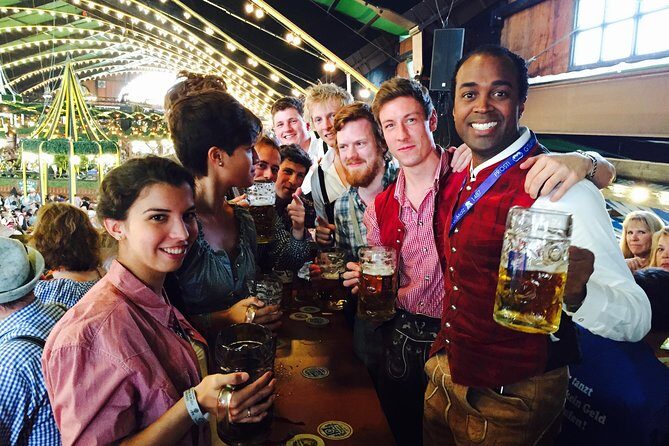
Then it’s on to Staatliches Hofbräuhaus, the legendary beer hall dating to 1589. It started as a royal brewery, and it still runs on that Bavarian mix of food, beer, and live traditional music.
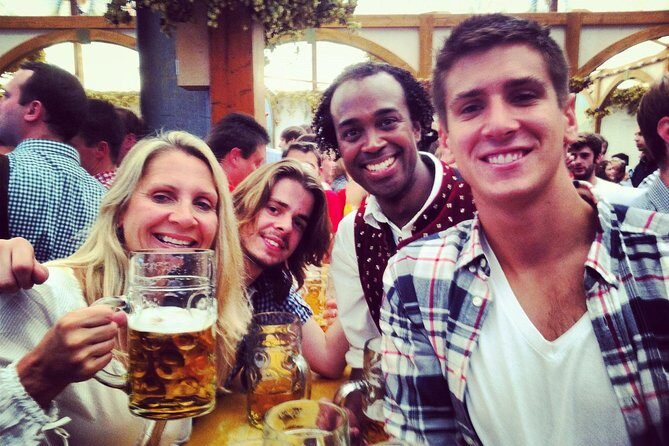
What I like about including Hofbräuhaus on a walking tour is that it gives you the cultural context of beer halls as a social institution, not just a souvenir stop. You get the energy of the place while also hearing how Munich’s public life works.
If you’re not a beer drinker, you can still enjoy the atmosphere and music. Just be ready: Hofbräuhaus is popular, so if it’s crowded you may feel more compressed than at the outdoor squares.
You can also read our reviews of more city tours in Munich

Isartor to Marienplatz: medieval gate, then city center control

From there you reach Isartor, one of Munich’s last medieval city gates. Built in 1337, it includes frescoes and links to the Valentin-Karlstadt Museum, which centers on Bavarian comedian Karl Valentin.
It’s a quick stop, but it teaches a useful skill: you start noticing the city’s layers. Munich didn’t “arrive” as a modern city; it grew by adding defenses, markets, and squares over centuries.
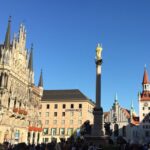
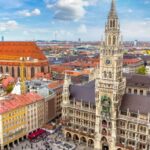
Then comes Marienplatz, the central square that’s been the heart of Munich since 1158. You’ll see key landmarks like the New Town Hall and its Glockenspiel, plus the Mariensäule.
If you time your visit well, the Glockenspiel can be a fun moment. If you don’t, it still helps to stand there and orient yourself—Marienplatz is the hub that pulls lots of streets toward it.
Max-Joseph-Platz and Odeonsplatz: palaces, theatres, and power
Next up is Max-Joseph-Platz, a grand square named after King Maximilian Joseph. This is where you’ll see neoclassical architecture connected to the National Theatre and the Munich Residenz area.
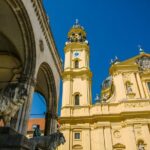
Then the route pushes to Odeonsplatz, designed in the early 19th century by Leo von Klenze. You’ll look at major monumental buildings like the Theatine Church and the Residenz environment, plus the Feldherrnhalle area, which makes the square feel like a city stage.
This is also where the tour title’s promise comes into play. The guide threads Third Reich context into what you’re seeing around you—so the city’s political history isn’t floating in space. It’s tied to real places, in real sightlines.
If you’re the type who likes to understand why a city looks the way it does, this part will land. If you want only neutral sightseeing, you may feel slightly more emotionally “in” the material.
St. Michael and Alter Peter: huge churches, and one tower for views
You’ll then move to St. Michael’s Church, described as Munich’s largest Renaissance church. It was built in the late 16th century for the Jesuit order, and it shows early Baroque influences in the facade and inside with its barrel-vaulted ceiling.
One highlight here is the royal crypt, which adds a layer of meaning beyond architecture. It’s the kind of stop that reminds you Munich wasn’t just about art and beer—it was also about institutions and dynasties.
After that, you’ll head to St. Peter’s Church—locals call it Alter Peter. It dates back to the 12th century, and its 91-meter tower is known for city views. Even if you don’t climb it, this stop helps you understand Munich’s older parish roots.
If you’ve got limited energy, church interiors can be a lot. A good strategy is to choose one thing to focus on: the tower, the altar, or the crypt area.
Wolfsbrunnen and Karlsplatz: small details that make Munich feel like a lived-in city
Not every stop needs to be a mega-attraction. Wolfsbrunnen is an Art Nouveau fountain built in 1904, with a bronze scene tied to Little Red Riding Hood and a wolf. It’s a fun break in tone, and it gives you something photogenic that isn’t just another cathedral angle.
Then you arrive at Karlsplatz—also called Stachus. This square grew after the medieval city walls were demolished, and you’ll see references to the historic Karlstor gate. In summer it’s centered on a fountain; in winter, an ice rink shows up, which can change the mood of the whole place.
These are the spots where your brain starts mapping shortcuts. You’ll begin to see how the city’s walkable grid connects.
Maximilianeum and Platzl: the Isar river view and old-town character
Next comes the Maximilianeum, perched above the Isar River. It began in 1852 to support gifted students and has housed the Bavarian State Parliament since 1949, which makes it a “today matters” stop, not just a pretty building.
Then you’ll pass through Platzl, a charming square in the historic center known for traditional Bavarian atmosphere. It’s closely associated with the Hofbräuhaus area and the ornate Orlandohaus, so you get that old-town texture while still staying in walking distance of the main action.
This part is good for learning where “old Munich” ends and where modern convenience starts. That helps later when you’re deciding where to wander without wasting time.
Viktualienmarkt: the food break that anchors the whole experience
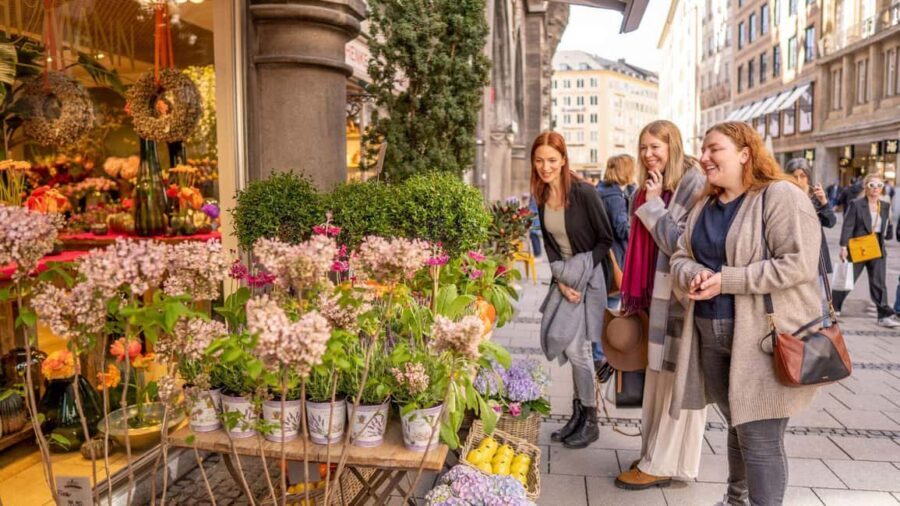
The tour’s middle stop is Viktualienmarkt, Munich’s historic open-air market that’s been going strong since the early 19th century. It’s a real food hub: fresh produce, Bavarian delicacies, artisanal goods, and a beer garden vibe that feels like part of daily life.
Your guided pace builds in a lunch break here. The menu options can include a Bavarian bratwurst (spicy, cheese, or regular), or a Bavarian potato salad with a pretzel, along with Bavarian beer. There’s also a reusable beer bottle holder offered with the beer option.
What I like is the emphasis on the kind of food choices people actually make in markets. The snack selections are described as avoiding artificial flavors, colors, preservatives, additives, fillers, and GMOs. Even if you don’t obsess over labels, that kind of detail is a clue that this stop is meant to feel authentic, not processed.
Practical tip: eat, then take a short walk around the stalls before you rejoin the group. You’ll remember the sights more, and you’ll be better oriented for the streets you’re moving through after.
Price and pacing: what $31.78 buys you in real terms
At $31.78 for about 3 hours 15 minutes, you’re paying for a guide plus route design. The “value” isn’t just the sites; it’s the time saved because the route hits landmarks in a logical flow.
The tour also lists free admission tickets for many stops, which helps keep the cost predictable. You’re not trying to figure out what’s pay-to-enter mid-walk.
Group size matters too. With a limit of 20 travelers, you’re less likely to lose the guide in a sea of elbows. That can make a difference when the walk is weather-dependent.
How to get the most from it (especially if it’s your first day)
I treat an early walking tour like a map lesson. I listen for patterns, not just facts. Where are the squares? Which buildings act as landmarks? What streets feel like they connect everything?
Here’s what this tour does well for that goal:
- You see Marienplatz, Odeonsplatz, and Karlsplatz—the three most useful mental reference points in central Munich.
- You get a marker for Bavarian beer culture at Hofbräuhaus.
- You get a market-based meal at Viktualienmarkt so the city’s food rhythm sticks.
One more thing I’d carry with me: the guide style in feedback is heavy on both history and present-day context. People mention the tour covering Munich history alongside how current realities connect back to the past, including the Third Reich subject handled with sensitivity.
Who this works for, and who might prefer something else
This is a great fit if you:
- want a first-day introduction to central Munich
- like walking tours with frequent stops and clear wayfinding
- want Bavarian food culture plus context, not just photos
If you’re traveling with kids, the tour includes interaction and keeps things lively. Still, it’s a lot of outdoor time in some seasons, so dress in layers.
If you’re someone who needs deep time and detail specifically on the Nazi era, you might wish for more focused attention in that area. This is better described as context plus orientation, not an all-day historical immersion.
Should you book this Munich City Walking Tour with Third Reich & Viktualienmarkt?
I’d book it if you want the fastest way to learn the center of Munich and start your trip with confidence. You get major landmarks, a serious-but-readable flow through the city’s story, and an actual food anchor at Viktualienmarkt.
Skip it only if you’re sensitive to cold walking or you need a very specialized history focus that spends more time on one period than a paced walking route allows. If that’s your goal, you may want a more targeted history tour.
FAQ
How long is the Munich City Walking Tour?
It lasts about 3 hours 15 minutes.
What does the tour cost?
The price is $31.78 per person.
Is the tour offered in English?
Yes, it’s offered in English.
How large is the group?
The tour has a maximum of 20 travelers.
Where do you meet and where does it end?
You meet at Schützenstr 11, 80335 München, Germany, and it ends at Odeonsplatz (Odeonspl. 3, 80539 München, Germany).
What’s included in the price?
The guided tour is included.
Is there a food stop during the tour?
Yes. The tour includes a mid-tour break at Viktualienmarkt for a freshly made Bavarian lunch. Options can include Bavarian bratwurst or Bavarian potato salad with a pretzel, plus Bavarian beer.
Is admission required for the stops?
Many of the stops listed on the route show admission ticket free, so you likely won’t have to buy tickets at every stop.
Can I cancel, and are service animals allowed?
Free cancellation is available if you cancel up to 24 hours in advance for a full refund. Service animals are allowed.