REVIEW · MUNICH
Best of Munich Electric Bike Tour
Book on Viator →Operated by Fat Tire Tours Munich · Bookable on Viator
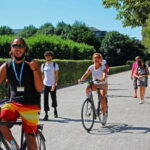
Munich on an e-bike feels like cheating, in a good way. This tour strings together top sights across Old Town, museums, and the English Garden without turning your legs into jelly. I especially love the guide-led route and clear explanations, and I love that the electric bike helps you keep a steady pace. The main trade-off: the stops are short, so you’ll get impressions and context, not hours inside every museum.
At $71.90 per person for about 4 hours, it’s a strong value if you want a fast, organized introduction to Munich’s highlights. You’re riding with a small group (max 20), you’ll hear history in plain language, and the itinerary includes a long, easy break at the beer garden. One note before you book: there’s at least one unhappy cancellation story out there, so I’d double-check your confirmation details and keep an eye on timing as your day gets closer.
In This Review
- Quick Takeaways: What Makes This Munich E-Bike Tour Work
- Why an Electric Bike Is the Right Speed for Munich
- Starting at Karlsplatz 4 and Getting Oriented in Minutes
- Karolinenplatz and Königsplatz: Neoclassical Munich in One Stretch
- The Führerbau: A Real World Reminder, Not a Museum Moment
- Alte Pinakothek and Pinakothek der Moderne: Art Stops Without the Waiting
- Siegestor and Odeonsplatz: Peace Made Visible, and Tragedy Remembered
- Residenz München and the Hofgarten: Where Royal Power Lives in Plain Sight
- English Garden to Chinesischen Turm: Beer Garden Time You’ll Actually Feel
- Eisbachwelle: A Standing Wave That Turns Tourists Into Surfers (From Afar)
- Friedensengel and Maximilianeum: Views, Parliament, and a Few Big Names
- Deutsches Museum and Viktualienmarkt: Science and Snacks in the Same Day
- Guides Make or Break It: Rob, Cannan, Susanna, Karl, Mark, Dan
- Price and Value: What $71.90 Buys in Four Hours
- Who Should Book This Munich E-Bike Tour (and Who Might Skip)
- Should You Book? My Bottom Line
- FAQ
- How long is the Best of Munich Electric Bike Tour?
- What does the tour cost?
- What’s included in the price?
- Are food and drinks included?
- Is the tour offered in English?
- Where does the tour start?
- How big is the group?
- Can I cancel for free?
Quick Takeaways: What Makes This Munich E-Bike Tour Work

- Short, well-timed stops give you a big-picture feel for Munich fast
- Electric assist keeps the ride comfortable even when the day is chilly or wet
- Museum quarter + royal sites + parks means you’re not stuck in one neighborhood
- English Garden and Chinesischen Turm deliver that classic Munich outdoor vibe
- Safety-minded guiding matters on busy roads and tight turns
- Big names from the past meet present-day Munich (including the Führerbau now used by the arts university)
Why an Electric Bike Is the Right Speed for Munich
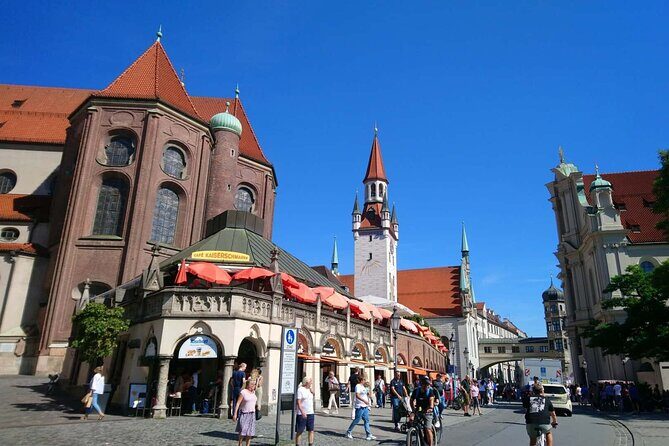
Munich is mostly flat in the parts you’ll ride, but flat still adds up when you’re marching from square to square. The electric bike turns that grind into something more fun: you can focus on what’s in front of you instead of fighting fatigue.
This matters because the route moves through a lot of highlights—fountains, neoclassical squares, palaces, a huge garden, and a food-and-beer market zone—within a 4-hour window. With the e-bike and helmet included, you’re not trying to “power through” the day. You’re simply keeping up with the group.
Also, the group size stays reasonable at up to 20 people. That’s big enough to meet fellow visitors, but small enough that a guide can still manage the pack. One practical tip: dress for the weather. I’ve seen how quickly cold rain can steal the fun on two wheels, so bring layers and gloves if the forecast looks sketchy.
You can also read our reviews of more cycling tours in Munich
Starting at Karlsplatz 4 and Getting Oriented in Minutes
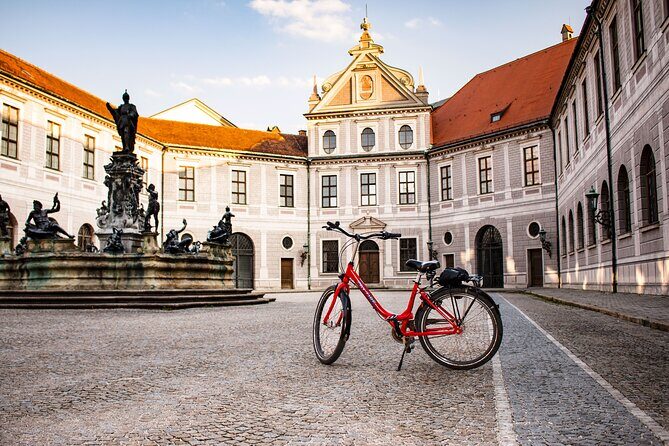
You start at Karlsplatz 4 (80335 München). It’s a central meeting point, and the tour notes that it’s near public transportation—which is handy if you’re juggling trains, trams, or just want an easy meetup.
The first stop is the Wittelsbacherbrunnen, a monumental fountain on the northwestern edge of the city center between Lenbachplatz and Maximiliansplatz. It’s built in the Neo-Classicist style and designed by sculptor Adolf von Hildebrand (1893 to 1895). Even if you don’t know the art terms, the idea is simple: it’s an allegory for the primal forces of water. It’s a dramatic way to begin because it signals the tour’s tone—Munich’s streets are full of meaning, not just scenery.
If you like to get your bearings fast, this early stop helps. It sets you up for the next wave of squares and monumental architecture—Königsplatz especially.
Karolinenplatz and Königsplatz: Neoclassical Munich in One Stretch
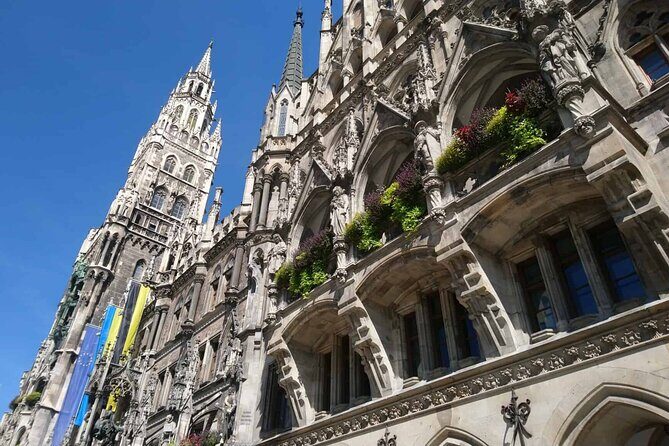
Next you hit Karolinenplatz in Munich’s Maxvorstadt district. This square is the first in Munich to use the Strahlenplatz motif, and it carries a specific symbolic link: it represents the early 19th-century relationship between Bavaria and France. It’s named after Queen Caroline of Bavaria. That’s the kind of detail a good guide turns into an easy story you can remember.
Then comes Königsplatz (King’s Square). It’s European Neoclassicism in a big, open setting, anchored by major cultural buildings: the Propyläen Gate, and across from each other the Glyptothek and the Staatliche Antikensammlungen. This area sits in the Kunstareal, Munich’s gallery and museum quarter.
What I like about riding through here on an e-bike: you can look around without constantly stopping to navigate. In a car or on foot, you’d lose some momentum. Here, you get to “see and move” at the same time.
The Führerbau: A Real World Reminder, Not a Museum Moment
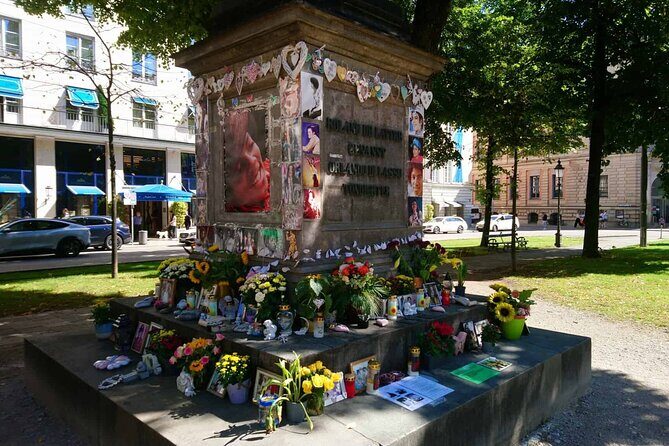
The tour also stops at the Führerbau, built between 1933 and 1937 during the Nazi period and used extensively by Adolf Hitler. Unlike many structures tied to that era, the building still stands. Today it houses the University of Music and Performing Arts Munich.
This stop is not comfortable, but it’s important. Munich isn’t just beer and gardens; it also carries 20th-century history you can’t wipe off a postcard. A careful guide can help you make sense of what you’re seeing without turning it into shock value. If you’re sensitive to difficult history, it’s worth knowing this is on the route.
One practical takeaway: you’ll likely pass by major buildings quickly. So if a history moment grabs you, jot down the name and come back later on your own time.
Alte Pinakothek and Pinakothek der Moderne: Art Stops Without the Waiting
From Königsplatz you move into the Kunstareal museum orbit with two very different art stops.
First, the Alte Pinakothek (Old Pinakothek). It’s one of the oldest galleries in the world and holds a significant collection of Old Master paintings. Even if you’re not going in for a long visit, the area matters. This museum quarter is one of those places where Munich’s cultural ambition becomes physical.
Then you reach Pinakothek der Moderne, which unites multiple collections: modern and contemporary art, works on paper, design and applied arts, and even an architecture museum component through the Technische Universität München. It’s described as one of the most important and popular modern art centers in Europe.
Here’s the trade-off: the tour times are short at each stop. You’ll get the setting and the big idea, but not a full museum experience. If one of these museums is your top priority, you’ll probably want a separate ticket day to slow down.
A few more Munich tours and experiences worth a look
Siegestor and Odeonsplatz: Peace Made Visible, and Tragedy Remembered
The Siegestor (Victory Gate) is a three-arched memorial arch crowned with a statue of Bavaria with a lion-quadriga. Originally, it honored Bavarian military glory. After World War II restoration, it now’s meant as a reminder to peace.
This is one of those “read the monument” moments. If you’re used to war memorials being purely solemn, the Siege Gate adds nuance: a structure that can change meaning over time.
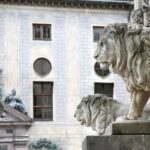
Then you roll into Odeonsplatz, a large central square developed in the early 19th century. The square is linked to the Odeon concert hall, and the area connects to major events around the Feldherrnhalle. Odeonsplatz was the scene of a fatal gun battle tied to the march ending during the 1923 Beer Hall Putsch.
That combination—peace monument nearby political violence—gives the tour an edge. You’re not just collecting pretty buildings. You’re building a timeline of how power, identity, and public memory show up in Munich’s layout.
Residenz München and the Hofgarten: Where Royal Power Lives in Plain Sight
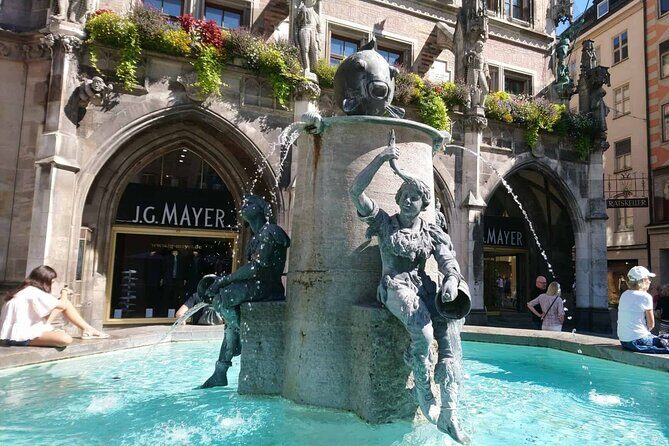
Residenz München is the former royal palace of the Wittelsbach monarchs of Bavaria. It’s the largest city palace in Germany, and today it’s open for visitors through architecture, room decorations, and displays from former royal collections.
The tour stop is brief, but the Residenz is huge. Even with a quick look, you’ll understand why the Wittelsbachs mattered. Munich’s royal story isn’t tucked away in a small museum; it’s built into the city’s bones.
Next comes the Hofgarten, between the Residenz and the Englischer Garten. Built from 1613 to 1617 in the style of an Italian Renaissance garden by Maximilian I, Elector of Bavaria, it also includes a pavilion for the goddess Diana built in 1615 by Heinrich Schön the elder.
For me, this is a great emotional reset. You go from heavy public history (Odeonsplatz) into calmer geometry and garden details. If you’re riding through on a cold day, the garden stop can feel especially comforting—more space, more open air.
English Garden to Chinesischen Turm: Beer Garden Time You’ll Actually Feel
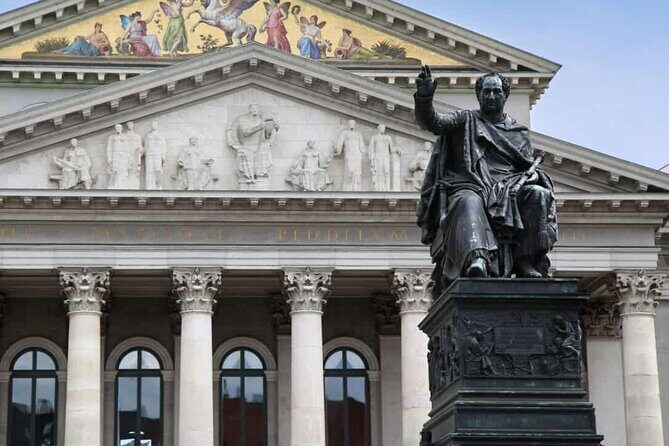
The Englischer Garten is one of the world’s largest urban public parks, listed at about 3.7 km² (370 hectares / 910 acres). Even if you don’t roam far, seeing its scale gives you perspective. Munich doesn’t just have a park; it has a whole world that lives inside the city.
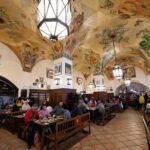
The tour then hits the beer garden at the Chinesischen Turm. Biergärten are Bavarian institutions—shared tables under trees, casual atmosphere, and a long tradition. This one is famous and has 7,000 seating places, described as the second largest in Munich after Hirschgarten. It sells Hofbräu beer.
This is where the tour earns its keep. You’ll likely appreciate the planned pace by now. Instead of rushing through every stop, you get real downtime—40 minutes is a serious break on a bike tour.
One more beer-related detail: the tour’s highlights mention sampling traditional German beer at a legendary beer hall as an extra expense. You should treat that as optional add-on territory. If beer is your priority, you can use this moment to decide how far you want to go beyond what’s already on the route.
Eisbachwelle: A Standing Wave That Turns Tourists Into Surfers (From Afar)
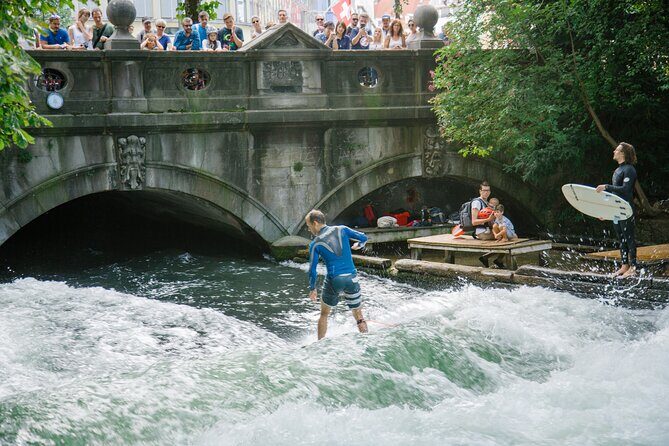
Right near the Haus der Kunst area, the river forms the Eisbachwelle, a standing wave about one meter high that locals treat like a surfing spot. It’s cold and sometimes shallow (sometimes around 40 cm deep), so it’s described as suitable only for experienced surfers.
You won’t be getting in the water, but you will see the odd magic of Munich street life blending into athletic ritual. On an e-bike tour, this is a nice change from stone monuments and palace rooms. It’s a living scene.
Friedensengel and Maximilianeum: Views, Parliament, and a Few Big Names
At Friedensengel (Angel of Peace), you get a point of view at the eastern end of a sight line along Prinzregentenstrasse. The area includes a fountain and a column topped by the Angel of Peace statue. It’s a replica of the Nike of Paeonius.
It’s not only a photo stop. From a design perspective, this is a reminder that Munich plans movement and sight lines like a theater set. The architecture leads your eyes.
Then the route reaches the Maximilianeum, a palatial building built as a home for a students’ foundation. Since 1949, it houses the Bavarian State Parliament. Even from outside, that tells you Munich’s political identity has serious real estate.
Deutsches Museum and Viktualienmarkt: Science and Snacks in the Same Day
The Deutsches Museum is the world’s largest science and technology museum, with around 125,000 exhibits across 50 fields. It gets about 1.5 million visitors per year.
On this tour it’s a short stop, so you won’t absorb the whole museum. But it’s worth seeing the scale of it from the city side. If you’re a science nerd, you’ll likely come back.
Viktualienmarkt is the opposite tempo. It started as a farmers’ market and grew into a gourmet marketplace. The tour describes 140 stalls and shops with everything from flowers and exotic fruit to spices, cheese, game, poultry, fish, and juices. If you want a quick snack idea for later, this is a great place to get your bearings.
Then there’s one more cultural stop that gives Munich added depth: Ohel Jakob Synagogue, built between 2004 and 2006 as the new main synagogue for Munich’s Jewish community. It was inaugurated on November 9, 2006, tied to the 68th anniversary of Kristallnacht.
That final sequence—science, food, faith—lands the tour in a more modern Munich. It helps you remember the city isn’t frozen in one era.
Guides Make or Break It: Rob, Cannan, Susanna, Karl, Mark, Dan
A big theme in the best-rated experiences is the guide. Many people praise guides like Rob, Cannan, Susanna, Karl, Mark, Suzanne, and Dan for being friendly, engaging, and able to answer questions on the spot.
Here’s why that matters to you: on a short tour with lots of stops, the facts alone don’t carry the day. The guide’s job is to turn the route into meaning. That’s what you see in comments about good explanations, fun personalities, and strong safety awareness while moving through busy areas.
If you get a choice (some tours let you request when possible), it’s worth aiming for the guides people rave about. But even without that, look for a guide who keeps the group together and gives practical recommendations. The tours that work best are the ones where you leave with a mental map plus food and museum ideas for later.
Price and Value: What $71.90 Buys in Four Hours
Let’s talk value. At $71.90 per person, you get:
- a live guide
- an electric bike and helmet
Most stops are marked as admission ticket free in the tour flow, which means you’re paying for guidance and access to the route, not individual entry fees at every point. You’re also getting a full sweep: squares, major buildings, garden space, and a long beer garden pause.
You’re not paying for lunch. Food and drinks aren’t included, and the tour highlights note that sampling beer at a legendary beer hall is extra cost. So think of this as a structured sightseeing day plus a chance to buy your own meals or drinks along the way.
Also, it’s booked about 61 days in advance on average. That tells me popular dates fill up. If your trip overlaps weekends or peak season, book early so you don’t end up with only awkward times.
Who Should Book This Munich E-Bike Tour (and Who Might Skip)
You’ll probably love this if:
- you want a fast overview of Munich’s big-name sights
- you like history stories tied to buildings, not just plaques
- you want beer garden time without planning it separately
- you’d rather ride than shuffle along busy sidewalks
You might want to skip or at least add your own follow-up days if:
- you want deep, slow museum visits (the stops are short)
- you prefer fewer stops and longer time in one neighborhood
- you need lots of quiet time; the group format and ride pace can feel “active”
One small caution I’d offer: confirm your plans close to departure time. There’s at least one account of a cancellation surprise and that’s the kind of headache you can avoid with a quick check.
Should You Book? My Bottom Line
If your goal is to get a strong handle on Munich in one organized day, this is a smart buy. The mix of architecture, squares, parks, and a real beer garden break hits the sweet spot between sightseeing and comfort. The e-bike is especially worth it if you’re coming with cold weather expectations, low energy, or just want your legs saved for later.
Book it if you want momentum with context. Skip it if you’re looking for long museum time or a slow stroll. Either way, plan to spend additional time later on whichever stops grabbed you most—because this tour is designed to show you where to look next.
FAQ
How long is the Best of Munich Electric Bike Tour?
It runs about 4 hours.
What does the tour cost?
The price is $71.90 per person.
What’s included in the price?
You get a live guide and an electric bike plus a helmet.
Are food and drinks included?
No. The cost of food or drinks is not included.
Is the tour offered in English?
Yes, it’s offered in English.
Where does the tour start?
The meeting point is Karlsplatz 4, 80335 München, Germany, and the tour ends back at the meeting point.
How big is the group?
The tour has a maximum of 20 travelers and the group may be mixed with non-e-bikes.
Can I cancel for free?
Yes. You can cancel up to 24 hours in advance for a full refund. If you cancel less than 24 hours before the start time, the amount paid is not refunded.