REVIEW · BERLIN
Modern Berlin Private Walking Tour: Diverse, Vibrant and Exciting German Capital
Book on Viator →Operated by Insider Tour Berlin · Bookable on Viator
Berlin changes fast, and so does this walk.
In just a few hours, you cover several neighborhoods and see how reunification shaped what you see today, from Wall remnants to street art to café-lined streets. With a private guide and optional pickup, the pace feels tailored and easy to follow.
What I like most is the focus on how Berlin reinvented itself after 1990, not just the postcard landmarks. I also like that the guide adds context you will not get from a typical “see-and-snap” tour. One thing to keep in mind: at this price point, you’re paying for a private, guided experience, so it’s best value when you’re coming with at least one travel partner.
In This Review
- Key Highlights You’ll Feel Immediately
- Why This Private Berlin Walk Works for Modern-City Fans
- Your Guide and the Context That Doesn’t Fit in a Guidebook
- Price and Value: What $179.84 Per Person Gets You
- Meeting Point, Pickup, and How the Timing Usually Feels
- Stop 1: Mitte and the Wall-to-Unified-City Story in One Neighborhood
- Stop 2: East Side Gallery, 1.3 Kilometers of Wall Reminders
- Stop 3: Prenzlauer Berg’s Gentrification Debate, in Plain Sight
- Stop 4: Kreuzberg’s Immigrant and Activist Identity Under Change
- Stop 5: Friedrichshain’s Creative Edge and the Neighborhoods Around It
- What to Do With the Information After the Tour
- Who This Tour Is Best For (and Who Might Want Something Else)
- Should You Book This Modern Berlin Private Walking Tour?
- FAQ
- How long is the Modern Berlin Private Walking Tour?
- Where does the tour start and end?
- Is the tour private and is it offered in English?
- Is hotel pickup included?
- Are there admission tickets or entry fees at the stops?
- Does the tour operate in bad weather?
- Is food and drinks included?
- What’s the cancellation policy for a full refund?
Key Highlights You’ll Feel Immediately
- Private group means the guide can adjust pace and questions to your interests
- Neighborhood-hopping in 3 to 4 hours saves you the planning hassle of doing it piece by piece
- Wall-to-city transformation shows up at every stop, not just at one monument
- Hotel pickup is offered, which makes this much easier on travel days
- All-weather operation keeps your day on track when Berlin weather has ideas
- Street art and everyday Berlin sit side-by-side, so the modern story feels real
Why This Private Berlin Walk Works for Modern-City Fans
This tour is built for people who like cities with layers. You’ll start in Mitte, then move across to the Wall’s long shadow in Friedrichshain-Kreuzberg, and keep stepping through districts that each show a different chapter of Berlin since 1990. Instead of treating history like a museum label, you’ll see it stitched into street life: architecture, commerce, graffiti, and the tone of the streets.
A private walking format matters more than you might think. Berlin can be confusing even when you can read the street signs, because neighborhoods don’t “announce” their boundaries. With one guide, you get the why behind the where. You also get to ask questions on the fly, especially when the discussion turns to gentrification and identity, which comes up in multiple parts of the route.
The route also does something smart: it doesn’t try to cram in every famous landmark. You check off multiple areas, but the tour stays focused on what makes Berlin feel unmistakably Berlin now—how old East and West stories continue to shape daily life.
You can also read our reviews of more walking tours in Berlin



Your Guide and the Context That Doesn’t Fit in a Guidebook
The biggest difference on this kind of tour is the guide’s lens. You’re not just walking through neighborhoods; you’re getting meaning attached to what you see. The tour is led by a local, professional guide, and the emphasis is on context—especially around reunification and the changes it triggered.
From guide stories shared in past experiences, I’ve seen clear examples of what that context can feel like. Guides such as Josh and Maria are described as personable and clearly able to explain modern Berlin in a way that even teens could follow. Joerg is noted for balancing intellectual discussion with a pace that works physically. Stefano was praised for offering an alternative feel when people had already done the usual big sights. And Juan Montiel was singled out as open to questions, which matters because Berlin rewards curiosity.
This matters for you if you’ve already read a few Berlin history books. You’ll still get the big picture, but the guide connects it to street-level details—why certain areas changed, what people argue about, and how art and activism left marks you can still read.
Price and Value: What $179.84 Per Person Gets You
The price is $179.84 per person for a 3 to 4 hour private walking tour. If you’re traveling solo, the cost can feel steep compared with big-group coach tours. But that’s not the right comparison.
You’re paying for three things that add practical value:
- Private time with a guide (not shared time with strangers)
- Hotel pickup offered, so you don’t burn a chunk of your day finding the start point
- A route that hits several neighborhoods and stays on-theme with modern Berlin, including places you may not reach on a standard bus-and-back day
Also, the tour is often booked about 61 days in advance on average. That’s a quiet hint that people plan this as a “main outing” rather than a filler activity. If your schedule is tight, it’s wise to lock in a departure time early so you can pick the rhythm that fits your day.
If you’re comparing value in your own head, ask yourself: would you rather pay for a guide to connect the dots across multiple districts, or pay less and do the connections yourself while trying to translate neighborhoods from a map?
Meeting Point, Pickup, and How the Timing Usually Feels
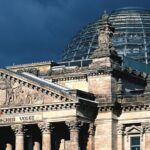
The tour meets at Reichstagufer 17, 10117 Berlin, and it ends back at the meeting point. Pickup is offered from your accommodation, or you can meet somewhere central. The tour also runs in all weather conditions, so your clothing matters.
Timing is short enough to keep energy up, but long enough to feel you actually moved through Berlin’s layers. Each stop has its own visit window, and the rest of the time is walking between districts. Plan for a day where you’ll be on your feet, because the whole point is moving through different textures of the city, not watching it from one vantage point.
Berlin has lots of public transportation options, and this tour is near public transport, so it’s not a “last-mile problem” either. Different departure times are available, so you can usually pick a slot that matches the rest of your itinerary.
Stop 1: Mitte and the Wall-to-Unified-City Story in One Neighborhood
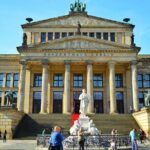
You start in Mitte, the district that transformed dramatically after 1990. The tour frames it as the core of a unified Berlin: a place that once stood in the shadow of division, then became a hub mixing big-history sites with modern everyday life.
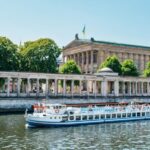
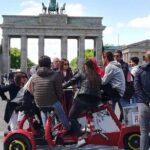
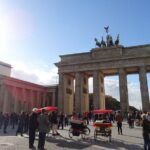
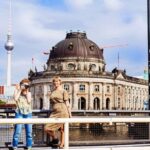
Expect to hear why Mitte is special. You’ll connect the story of the Brandenburg Gate and Museum Island to what’s happening right now: galleries, cafés, and boutiques moving into the same streets that carry major symbolic weight. The discussion doesn’t ignore comfort; it talks about gentrification too—how renewal can bring creativity and opportunity while also creating friction around identity and change.
This stop is about 30 minutes and is tied to free entry. The short window is perfect if you want a fast grounding in the themes of the whole tour. The tradeoff is that if you want to linger over specific buildings or sit down for a long coffee, you’ll have to save that for later, because the route keeps moving.
You can also read our reviews of more private tours in Berlin


Stop 2: East Side Gallery, 1.3 Kilometers of Wall Reminders
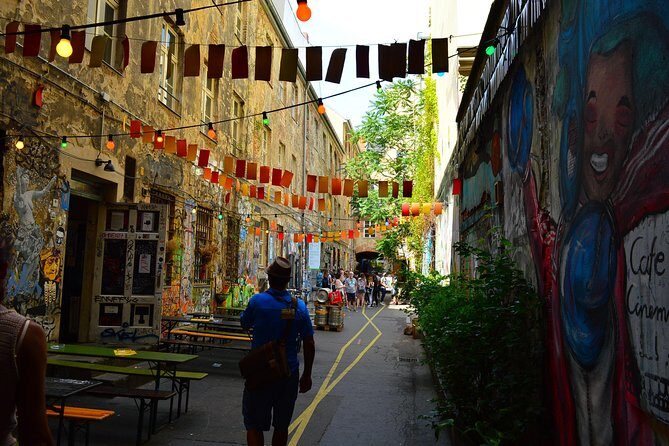
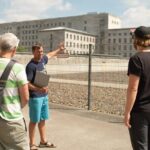
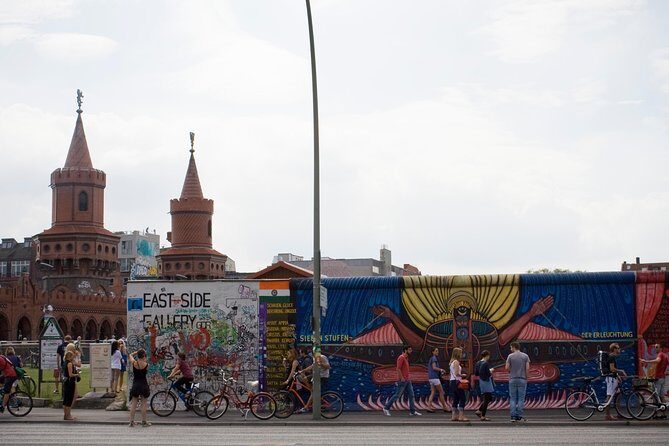
Next comes the East Side Gallery, along a 1.3-kilometer stretch of the former Berlin Wall. It’s located in Friedrichshain-Kreuzberg, and it’s often the kind of place where you can’t fully understand its impact until you walk it.
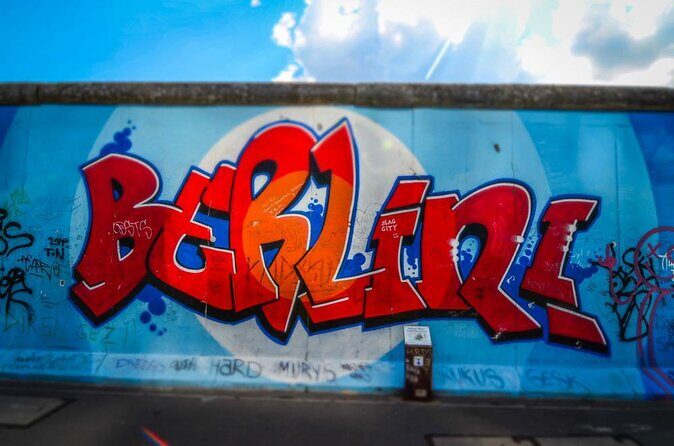
Here’s what makes this stop hit: the wall section that remains has been turned into an open-air gallery. Murals created in 1990 by artists from around the world carry messages of hope, peace, and change. You’re not just looking at art; you’re reading how Berlin’s past and present share the same surface.
The stop is about 20 minutes with free entry. That’s enough to see the range of messages and understand why the East Side Gallery stays emotionally charged even years after the murals appeared. If you’re an art lover and you tend to over-stay at wall paintings, consider taking a second pass on a different day—this stop is designed for momentum, not marathon viewing.
Stop 3: Prenzlauer Berg’s Gentrification Debate, in Plain Sight
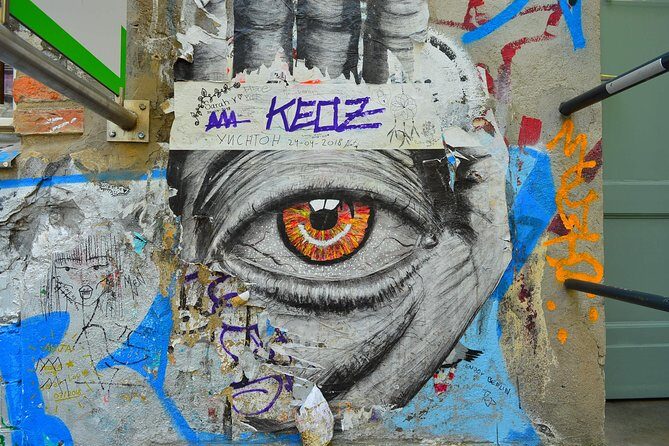
Prenzlauer Berg is next, and the tour treats it as a classic Berlin “before and after” case. Since 1990, it’s shifted from a bohemian stronghold in East Berlin—full of artists and students attracted by affordability—into one of the city’s most sought-after neighborhoods.
As you walk, you’ll see the signs of that change: restored historic buildings, and a lineup of chic cafés, boutique shops, and trendy restaurants. At the same time, the tour makes room for the idea that traces of the old identity are still present. Local galleries, cultural hubs, and community spaces still point back to its artistic and rebellious past.
This is about 40 minutes and is free to enter. That extra time compared with other stops suggests Prenzlauer Berg is where the guide slows down to help you read the neighborhood’s transformation. The possible drawback is that if you already know gentrification debates well, you might want more time on the specific cultural spaces themselves rather than the big-picture comparison.
Stop 4: Kreuzberg’s Immigrant and Activist Identity Under Change
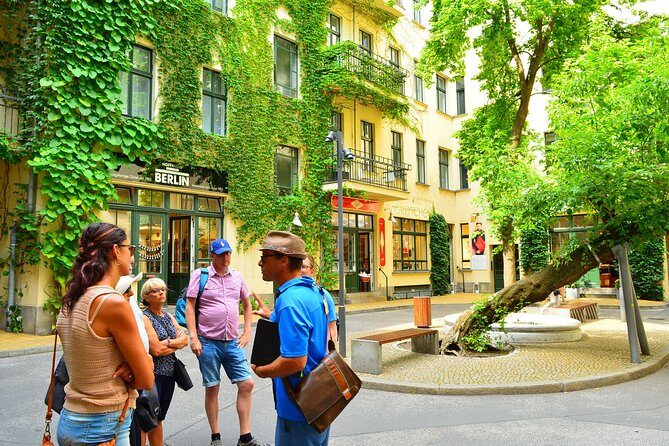
Kreuzberg is where Berlin’s independence becomes loud. The tour describes it as having evolved since 1990 from a gritty, alternative district on the edge of West Berlin into a culturally rich neighborhood with deep roots in immigration, artists, and activism.
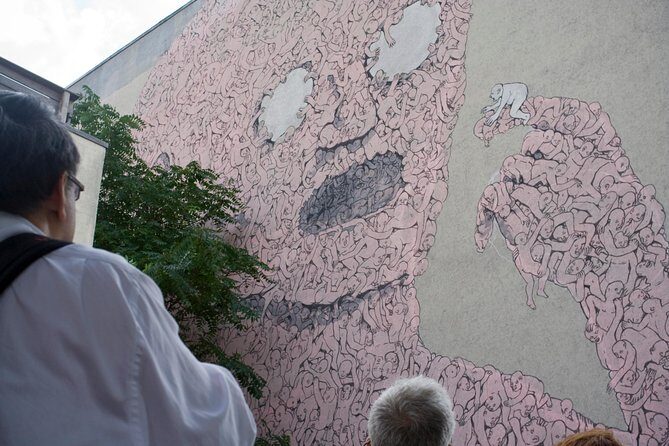
The walk stays honest about what happened after reunification. Yes, Kreuzberg has seen significant gentrification. Industrial spaces and historic buildings now host trendy cafés, art galleries, and international places to eat. But the guide also helps you see why Kreuzberg still feels like more than a makeover: street art, music, multicultural festivals, and a sense of creative stubbornness remain part of the neighborhood’s personality.
This stop is about 35 minutes with free entry. It’s long enough to absorb the big themes and pick up a feel for the streets. The tradeoff: Kreuzberg is huge in terms of culture, so you’ll only get a slice. If you want to go deeper later, this stop is a strong “taste,” not a full meal.
Stop 5: Friedrichshain’s Creative Edge and the Neighborhoods Around It
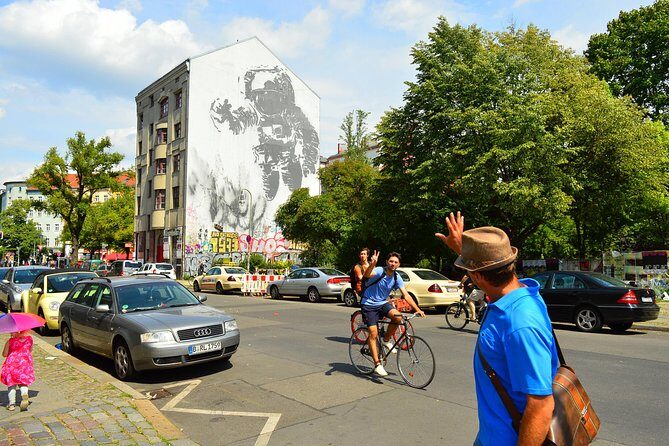
Your last stop is Friedrichshain, and the tour’s messaging circles back to the theme of Berlin’s post-1990 transformation. In this part of the walk, you’ll keep hearing how counterculture, street art, multicultural influences, and community activism show up in everyday life—even as districts change.
Because neighborhood edges in Berlin can feel fluid, this ending section helps you connect dots rather than treat Friedrichshain as an isolated chapter. You leave with a sense of how creativity and inclusion can survive modernization, especially when people keep building public spaces and cultural events.
This stop is about 35 minutes and is also free to enter. Like the rest of the route, it’s paced to give you a strong overview, then push you out with questions you can chase later on your own—whether you head back for more street art or simply start noticing what you used to walk past.
What to Do With the Information After the Tour
A good city walk changes how you look the next time you cross a street. After this one, you’ll likely start spotting patterns:
- Where symbolic sites blend into normal street life
- How art keeps showing up as a public language
- How the same renewal that brings new energy can also trigger debate
Also, because food and drinks aren’t included, you’ll want a plan for after the tour. The good news is this route ends where it started, so you can smoothly continue your day without hunting down your transport point.
If you’re the type who likes to “make your own walking map,” take a moment at the end to note the names of neighborhoods on your phone. Then pick one spot to return to later—Prenzlauer Berg for more slow strolling, Kreuzberg for longer street-side exploration, or the East Side Gallery if you want to linger over murals.
Who This Tour Is Best For (and Who Might Want Something Else)
This private walk is a strong match for you if:
- You want modern Berlin as a story of change, not only classic landmarks
- You like a guide who can explain context in a way that works for different ages (teen-friendly commentary has been reported)
- You’re open to discussing gentrification and identity, not just taking photos
- You’ve already seen the big tourist highlights and you want an alternative angle
It’s less ideal if you’re expecting a long museum-style deep dive or if you want lots of time parked in one neighborhood. This is designed to cover ground and connect themes, which means you won’t “max out” a single area.
Should You Book This Modern Berlin Private Walking Tour?
Yes, if you want a guided way to understand how Berlin became what it is since 1990, across multiple neighborhoods in only a few hours. The private format, the optional pickup, and the theme-driven route give it real practical value—especially when you’d rather not piece together modern context on your own.
I’d skip or rethink it only if the price feels too high for your group size, or if you prefer very slow pacing and deep time in one neighborhood. Otherwise, this is a smart way to get your bearings fast, then go back later with a clearer sense of what you’re seeing.
FAQ
How long is the Modern Berlin Private Walking Tour?
It runs for about 3 to 4 hours.
Where does the tour start and end?
It starts at Reichstagufer 17, 10117 Berlin, Germany, and it ends back at the meeting point.
Is the tour private and is it offered in English?
Yes. It’s a private tour/activity with only your group participating, and it’s offered in English.
Is hotel pickup included?
Hotel pickup is included, and you can also meet somewhere central if you prefer.
Are there admission tickets or entry fees at the stops?
The listed stops show admission ticket free.
Does the tour operate in bad weather?
Yes. It operates in all weather conditions, so dress appropriately.
Is food and drinks included?
No, food and drinks are not included.
What’s the cancellation policy for a full refund?
You can cancel up to 24 hours in advance for a full refund.