REVIEW · BERLIN
Love and War in Berlin: Self-Guided Story Puzzle Walk
Book on Viator →Operated by Questo · Bookable on Viator
Berlin has a talent for turning squares into stories.
This is a self-guided story-puzzle walk that lets you pace yourself while you pick up WWII-era context and key landmarks around central Mitte. I like the no-hassle freedom: you can start when you want during the opening window, pause whenever you like, and keep going. I also like how the route pushes you to notice details on the buildings and statues, so you’re not just “passing by” history. One possible drawback: the puzzle answers are sometimes very specific, and you may need to keep looking; if you’re easily frustrated by hard questions, bring patience.
You’ll spend about an hour doing it, and you’ll cover a string of famous-but-not-always-expected stops. Expect lots of “look around and find the clue” moments, with a route through major squares and memorial spaces. The upside is you avoid crowds and you don’t need a physical guide. The tradeoff is you won’t get real-time explanations from a human, so the experience works best if you enjoy learning by exploring.
In This Review
- Key highlights to know before you go
- A $6 self-guided Berlin story walk through WWII-era streets
- How the puzzle-walk works (and why it fits your pace)
- Alexanderplatz and the Urania World Clock: time zones with attitude
- Rathaus and Neptune Fountain: architecture as a message
- Marx-Engels-Forum and the Lustgarten: politics in the open air
- Neue Wache and Unter den Linden: a memorial with an architectural spine
- Bebelplatz and the 1933 book burning: when ideas were targeted
- Gendarmenmarkt, theatres, and the city’s political face
- The Memorial to the Murdered Jews of Europe: the emotional weight of the last clue
- Where the walk ends and how to plan your hour
- Who this puzzle walk is best for
- Should you book this Berlin puzzle walk?
- FAQ
- How long does the Love and War in Berlin puzzle walk take?
- Is this tour self-guided?
- Do I need internet to play?
- What language is the experience offered in?
- Where does the walk start and end?
- What’s included for the price?
- Are there admission fees at the stops?
- Are service animals allowed?
- What are the activity hours for starting?
Key highlights to know before you go
- Offline-friendly puzzle play: you do not need internet to run the city game.
- Private and low-contact: no human contact, just your group and the route.
- Start any time, pause any time: flexible pacing for your legs and your attention span.
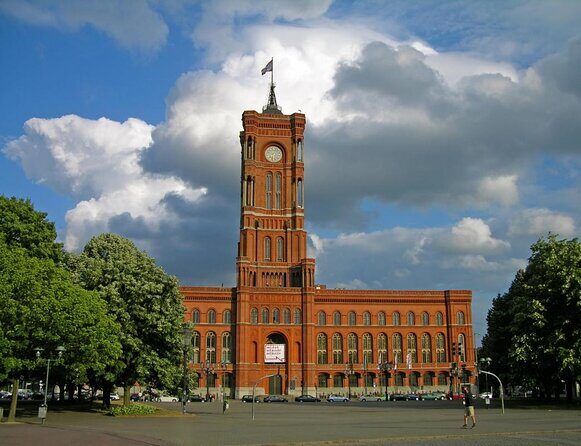
- Central Mitte hits: Alexanderplatz, Unter den Linden, Museum Island area, and more are in the mix.
- A heavy finale: the Memorial to the Murdered Jews of Europe is part of the walk, not an add-on.
- Great value for $6: one short session that combines walking + puzzle clues + WWII context.
A $6 self-guided Berlin story walk through WWII-era streets
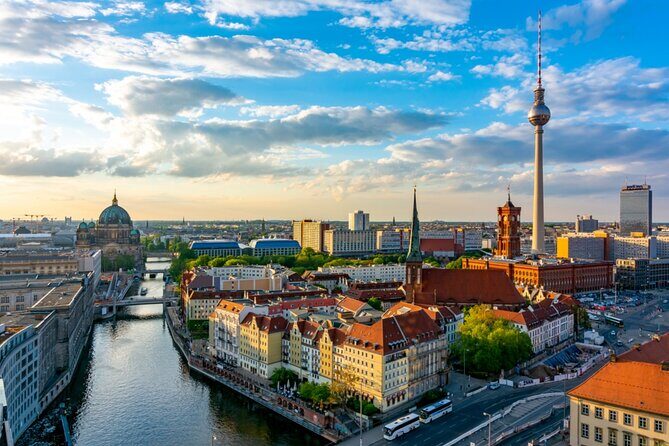
For $6 per person, you’re buying time with Berlin, not a lecture. The format is simple: you follow a route, answer puzzle prompts by looking around, and move to the next stop when you’re ready. Since it’s self-guided, you’re not tied to a group schedule or waiting for anyone else to find their courage and climb the stairs.
What makes it feel different from a standard walk is the “story puzzle” approach. Instead of reading long panels, you hunt for small visual details—then the game nudges you toward the meaning. That’s a nice way to learn WWII-linked history without turning your day into a classroom. It’s also a smart option if you’re visiting Berlin for the first time and you want a central overview fast.
The other practical win: this is private and designed to avoid crowds. If you hate the “herd herding” feeling, you’ll appreciate that you’re not stuck in a pack.
You can also read our reviews of more walking tours in Berlin



How the puzzle-walk works (and why it fits your pace)

You’ll play on your phone with a mobile ticket. The game is built so you can play offline, which matters in Berlin where signal can be spotty between big squares and buildings. You also get strong flexibility: start any hour, take breaks, and resume later, with the route typically taking about 1 hour.
Every stop follows the same pattern. You arrive, then the game asks you to look around to find the answer to the challenge and move forward. That means you’ll naturally slow down, tilt your head, and actually see things like inscriptions, architecture details, and statues—exactly the kind of attention that turns a “sight” into a memory.
The one thing I’d keep in mind: some questions can be straightforward, and some can be frustratingly specific. If you miss one tiny detail, the game won’t magically guess your intention. So bring a calm brain, and don’t treat each stop like a timed quiz.
Alexanderplatz and the Urania World Clock: time zones with attitude
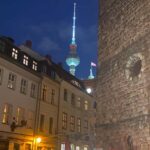
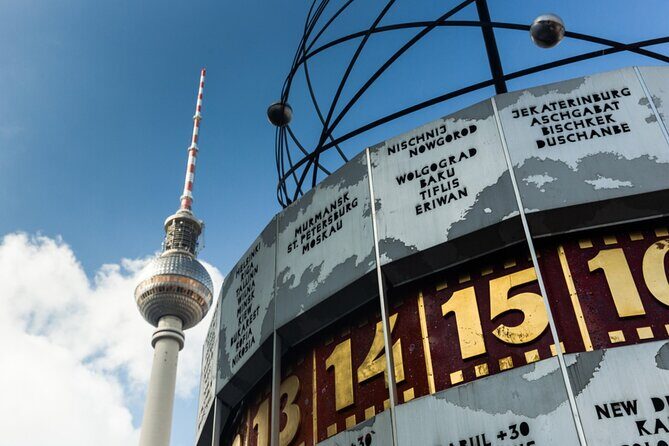
Your walk starts at Alexanderplatz near Alexanderpl. 1, where you’ll find the Urania World Clock (also called the World Clock). It’s a big turret-style clock, and the cool part is you can read the time across 148 major cities from markings around the metal rotunda.
Why does this matter for a walk called Love and War in Berlin? Because it quietly frames the city as connected and watched—Berlin doesn’t sit in isolation. Even the “simple” act of reading time becomes a reminder that governments, ideologies, and conflicts travel.
Practical tip: give yourself a minute to step back and scan the whole clock face rather than trying to focus on one tiny area. The game pushes you to locate the clue here, so you’ll want a quick orientation before you start hunting.
And because this is a public square, it’s easy to take a break without feeling like you’ve lost the route. If you’re doing this on a windy day, bundle up—open squares can be cold fast.
Rathaus and Neptune Fountain: architecture as a message
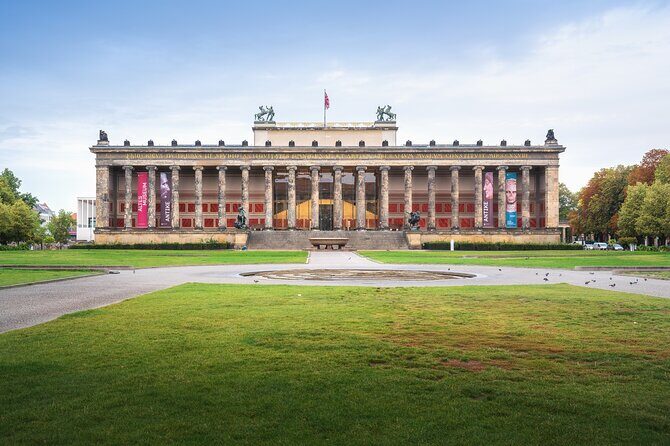
Next you head to the Berlin Rathaus, built between 1861 and 1869. It’s described as Northern Italy High Renaissance in style, credited to Hermann Friedrich Waesemann, and modeled on the Old Town Hall of Thorn (now Toruń, Poland). The tower echoes the cathedral tower of Notre-Dame de Laon in France.
Even if you’re not an architecture nerd, this stop gives you something useful: it shows how cities project confidence through design. In a game that later touches Nazi-era acts and memorials, it helps to first understand how power used to dress itself—stone, proportion, and formality.
Then you’re at Neptunbrunnen (Neptune Fountain), built in 1891 and designed by Reinhold Begas. The Roman god Neptune sits at the center. Again, it’s another reminder that public art isn’t only decoration—it’s symbolic. Mythology in a central city square is a way of putting culture on display.
The main “watch for this” point: the game will ask you to look around and find the answer at these stops. So keep your eyes up. Don’t just take photos; use the details to solve the puzzle.
Marx-Engels-Forum and the Lustgarten: politics in the open air
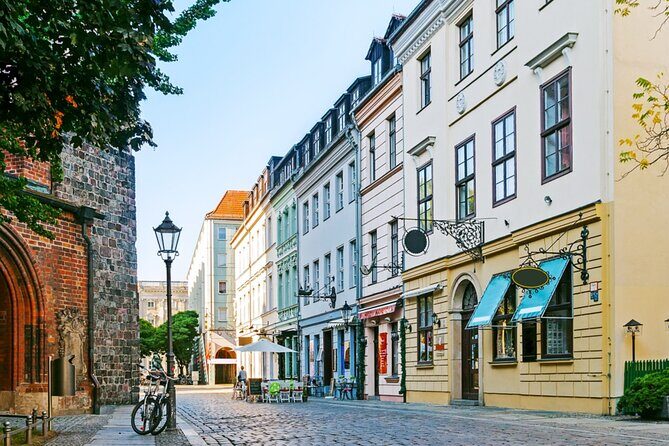
In the Mitte district, you’ll reach Marx-Engels-Forum, a public park created in 1986 by the authorities of the former German Democratic Republic (GDR). It’s named for Karl Marx and Friedrich Engels, authors of The Communist Manifesto of 1848.
This stop is powerful in a low-key way. It doesn’t scream history; it sits in daily life. In a walk that also covers Nazi atrocities and a Holocaust memorial, having the politics of the GDR in the mix makes Berlin feel more complete—this city didn’t just have one ideology and then stop. It cycled, argued, built monuments, and tried to shape public memory.
Then you move to Lustgarten on Museum Island, near the site of the former Berliner Stadtschloss (Berlin City Palace). The Lustgarten has been used at different times as a parade ground, a place for mass rallies, and a public park.
That list of uses is the big takeaway. This park isn’t just green space. It’s a stage. The game’s clue prompts help you connect the physical setting with how crowds and power were once organized there.
Possible drawback: because these are outdoor spaces, you’ll be exposed to the weather. If you’re walking in spring or fall, it’s worth bringing layers.
You can also read our reviews of more guided tours in Berlin





Neue Wache and Unter den Linden: a memorial with an architectural spine
On Unter den Linden, you’ll reach Neue Wache, a listed building erected from 1816 to 1818 based on plans by Karl Friedrich Schinkel. It began as a guardhouse for the Royal Palace and later became a memorial to the Liberation Wars.
This is one of those stops that can change your mood. The architecture has a formal, disciplined feel, and that matters when you’re moving from ideologies and propaganda sites to the act of remembering. Even though the building’s origin isn’t WWII-only, it fits the broader theme: Berlin uses buildings to mark grief, duty, and national storytelling.
The game will still ask you to look around for answers. That’s a good match here. If you’re paying attention, you don’t just see the facade—you start to notice how the building communicates seriousness.
Small practical note: Unter den Linden is a major boulevard. Expect foot traffic. The upside is you’re doing a private, self-paced route, so you can step aside when you need a breather.
Bebelplatz and the 1933 book burning: when ideas were targeted
At Bebelplatz, you’ll encounter one of Berlin’s darkest moments: the site of a Nazi book burning ceremony on 10 May 1933. These events happened across German university cities, initiated and hosted by the nationalist German Student Association, with the National Socialist German Students’ League getting mentioned in the context of who got ahead.
This stop works well inside the puzzle format. Instead of a generic speech, you’re prompted to find the clue and connect it to what happened here. It turns a public square into a specific historical moment, which is exactly what your brain needs after seeing architecture and fountains.
If you’re sensitive to heavy history, give yourself time. Don’t rush this one because the game moves on. Even if you’re doing it quickly for a one-hour plan, pause for a minute and let the meaning land.
Gendarmenmarkt, theatres, and the city’s political face
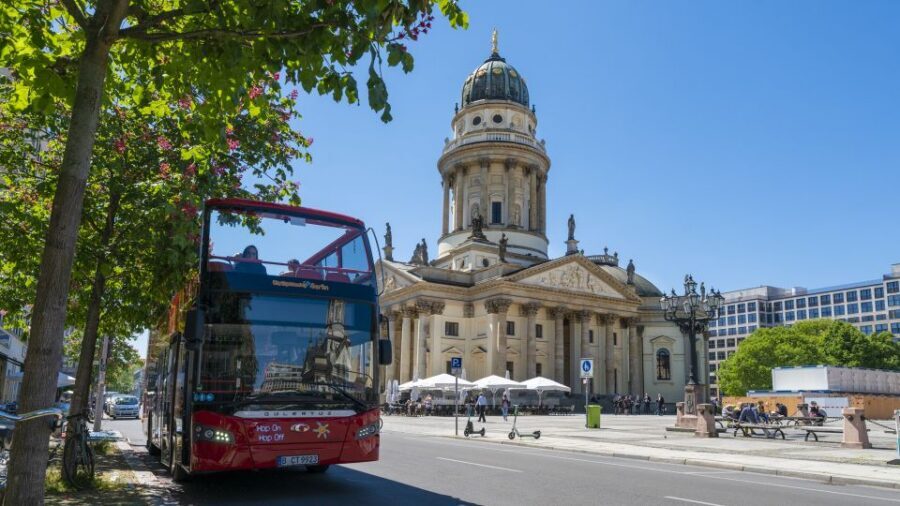
Next is Gendarmenmarkt, known for the “Gens d’armes” cuirassier regiment, whose stables were demolished by Friedrich II. Between the two churches, a new theatre—now Konzerthaus Berlin—was built.
This stop brings Berlin’s central charm into the storyline. It’s easier to talk about war and death on memorial sites, but Berlin also has a strong streak of civic pride and cultural ambition. That’s part of the context you need to understand how a city can shift from performance and art to propaganda and repression.
Then your walk reaches a block tied to modern governance: the state representation of the Free and Hanseatic City of Hamburg in Berlin. It’s described as hosting over 500 events and encounters each year in the government district, in a classicist town house on Jägerstraße. You’ll see how everyday politics actually happens in the capital.
The puzzle prompts help you look at an everyday political space and treat it as part of history’s long chain, not just a bureaucratic backdrop.
The Memorial to the Murdered Jews of Europe: the emotional weight of the last clue
The finale is the Memorial to the Murdered Jews of Europe. In 1999, the German parliament decided on a central memorial site; the design competition was won by architect Peter Eisenman, and it was opened ceremonially in 2005.
This is the heaviest stop on the route, and it deserves your full attention. The game’s approach still asks you to look around for an answer, but you should treat this as more than a puzzle checkpoint. This is where the theme of Love and War turns into grief and remembrance you can’t solve your way out of.
If you want a practical strategy, do it like this: take the photo quickly, then spend a little extra time just standing and noticing what the space does to your sense of scale. Even without a guide talking to you, you’ll feel the impact.
Where the walk ends and how to plan your hour
The walk starts near Alexanderplatz (Alexanderpl. 1, 10178 Berlin) and finishes at Cora-Berliner-Straße 1, 10117 Berlin. Plan it as a compact central route through Mitte: you’ll move between squares, boulevards, and memorial spaces without getting sent on a long detour.
Because it’s about 1 hour on average, I suggest you don’t schedule tight train connections right after the ending point. Instead, use the built-in flexibility. Take your “break time” while you can still see the route clearly, then return when your brain is ready for the next clue hunt.
Also, since some stops are near major central areas, you might run into seasonal crowds at certain times of year. The route is designed to stay manageable, but Berlin in peak season can still be lively around squares.
Who this puzzle walk is best for
This is a great fit if you:
- Want a short, structured Berlin experience without committing to a full-day tour.
- Like self-paced history where you learn by observation.
- Prefer something private with no human contact.
- Enjoy puzzle games and don’t mind looking closely at plaques, architectural details, and statues.
It’s less ideal if you:
- Want a live guide to answer questions on the spot.
- Hate puzzles and would rather read a straightforward narrative.
- Get stressed when a clue doesn’t feel immediately obvious.
Should you book this Berlin puzzle walk?
I’d book it if you want central Berlin history in a low-pressure, offline format. The combination of a tight route, strong flexibility, and puzzle-led learning is good value at $6. You also get a well-balanced mix: architectural and cultural landmarks up front, then the darker WWII-linked stops, ending at the Memorial to the Murdered Jews of Europe.
If you’re the type who loves wandering but also likes a gentle structure to keep you moving, this is a smart way to spend an hour. Start early or at a calmer time of day, bring patience for the puzzle clues, and let the route do its job: turning major Berlin sights into a story you actually remember.
FAQ
How long does the Love and War in Berlin puzzle walk take?
It takes about 1 hour on average.
Is this tour self-guided?
Yes. It’s a private, self-guided city game with no physical tour guide and no human contact.
Do I need internet to play?
No. You can play offline and you do not need an internet connection to run the game.
What language is the experience offered in?
The experience is offered in English.
Where does the walk start and end?
It starts at Alexanderpl. 1, 10178 Berlin, Germany and ends at Cora-Berliner-Straße 1, 10117 Berlin, Germany.
What’s included for the price?
You get full flexibility, a mobile ticket, the puzzle game experience, and group discounts. It’s also always available to book, with private play.
Are there admission fees at the stops?
Admission is listed as free at some points, such as Neptunbrunnen and Bebelplatz. The tour notes free admission where applicable, but it’s best to treat other stops as potentially variable based on what you choose to enter.
Are service animals allowed?
Yes, service animals are allowed.
What are the activity hours for starting?
The listed hours are Monday to Sunday, 5:00 AM to 9:00 PM.