REVIEW · BERLIN
Berlin: Hop-On-Hop-Off Bus with Boat Cruise Option
Book on GetYourGuide →Operated by Tours & Tickets · Bookable on GetYourGuide
Berlin gets big fast, so go in loops. This hop-on-hop-off bus tour uses a double-decker route with frequent departures, letting you hop off to see headline sights like Checkpoint Charlie and the Brandenburg Gate on your own schedule. I also like the optional Spree river cruise—it’s the same trip, but from water, which changes the feel of the city. The one thing to keep in mind is the “skip-the-line” experience can get messy if your ticket/verification isn’t in the exact form staff expect.
What makes the day work is the practical rhythm: buses come regularly, you get a city map plus GPS audio in 15 languages, and you can redo the route at your pace instead of being locked into one guided walk. One more consideration: audio volume can be uneven—some parts of the experience may feel harder to hear on the bus or boat depending on where you sit.
In This Review
- Key things to know before you board
- One-day Berlin coverage: why this hop-on-hop-off loop works
- From Wi‑Fi to GPS audio: the quality of on-board guidance
- The route start: where you board and what it sets you up for
- West-to-center sights: Kurfürstendamm through Potsdamer Platz
- Checkpoint Charlie, Gendarmenmarkt, and the classic center loop
- East Side Gallery and Ostbahnhof: where the city shifts
- DomAquarée, Lustgarten, Unter den Linden, and Brandenburg Gate
- Spree river cruise upgrade: the water-level perspective
- Ticket reality check: when “mobile voucher” isn’t enough
- Timing that makes sense: how to pace your day across stops
- Who this tour is best for (and who should skip it)
- Should you book this Berlin hop-on-hop-off with Spree cruise?
- FAQ
- How often do the buses depart?
- How long is the tour?
- What major stops are included?
- Is Wi‑Fi included?
- What languages are available for the audio guide?
- Can I add a river cruise on the Spree?
- Where do I start the bus?
- Do I need to print tickets for the boat if I book a combo?
Key things to know before you board
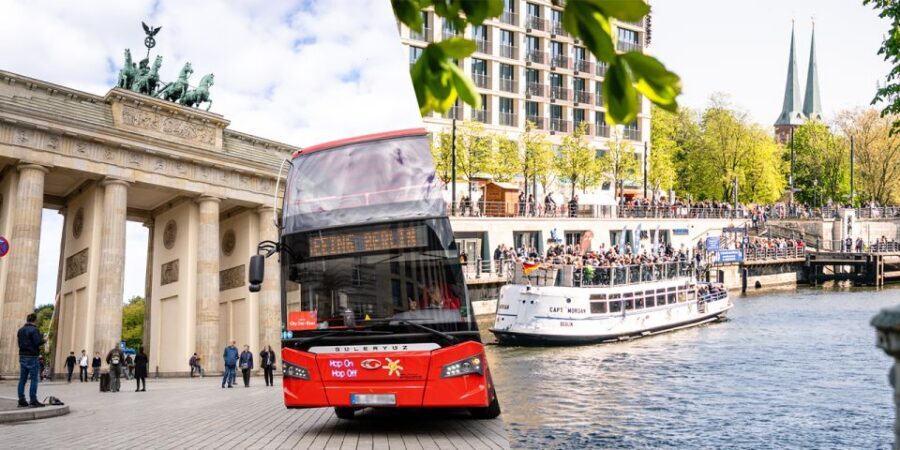
- Frequent departures (about every 25–35 minutes) mean less waiting and more flexibility
- GPS audio in 15 languages plus a city map help you connect streets to sights
- Free Wi‑Fi on board makes downtime useful (and keeps your day moving)
- Major sights on one route, including Checkpoint Charlie, Brandenburg Gate, and Alexanderplatz
- Optional 1-hour Spree cruise for a second angle on Berlin’s architecture
- One loop takes time, so plan a pace that matches how many stops you really want
One-day Berlin coverage: why this hop-on-hop-off loop works

If it’s your first time in Berlin, you’ll quickly learn there’s no single “perfect” route. Neighborhoods sprawl, and major landmarks are spread out. This tour solves that by giving you a double-decker bus loop built around big, recognizable stops. You can sit upstairs, watch streets roll by, and then jump out when you spot what you came to see.
The departures are frequent—every 25–35 minutes—so you don’t have to commit to a strict timeline. That matters because Berlin is a walking city, but it’s also a city where you can lose time standing in one spot, hunting for the right entrance, or trying to decide whether a museum is worth it today. With hop-on-hop-off, your “decision” becomes transportation, not stress.
A realistic note: completing a full loop takes a while (some people report around 2.5 to 3 hours). That’s not a bad thing. It just means you’ll get better results if you don’t try to treat the day like a checklist. Pick a few stops you care about most, and use the rest for orientation and photos.
You can also read our reviews of more boat tours in Berlin


From Wi‑Fi to GPS audio: the quality of on-board guidance
The experience includes GPS audio guidance plus a city map tied to the route and stops. Audio is provided in a long list of languages: Spanish, Chinese, English, French, German, Italian, Japanese, Polish, Portuguese, Russian, Turkish, and Hebrew. If you like to understand what you’re seeing without following a group, this format is ideal.
I like that the narration is designed around the drive itself: you don’t have to be studying signage to figure out where the bus is turning or why a stop matters. In a city where history can feel dense, having a running story helps you make sense of the geography.
The catch is sound. Some people find the audio device narration volume can be too low—audible on the bus, but harder to hear on the boat. If you’re sensitive to audio clarity, plan to choose your seat thoughtfully and be ready for a little straining at certain moments.
Also helpful: free Wi‑Fi on the bus. Even if you’re not streaming, it’s handy for checking your next stop on the map and reducing the time you spend hovering over your phone.
The route start: where you board and what it sets you up for
Your first bus stop is listed at Kurfürstendamm 238. There are also two starting location options: Tauentzienstraße 16 or Kurfürstendamm 238. That western start matters because it gives you an easy “launch point” into Berlin’s most tour-heavy streets.
A small practical wrinkle from real use: at least some stops don’t feel like a classic, obvious bus stop. People have had to use the map to work out where to stand. Translation: don’t arrive at the curb with zero context. Have your route map open (or downloaded) so you can spot the right boarding point quickly.
West-to-center sights: Kurfürstendamm through Potsdamer Platz
The tour begins in the Kurfürstendamm area, then moves through Tauentzienstraße and KaDeWe. This cluster is useful because it drops you near shopping and “main street” energy right away. If you’re arriving to Berlin and want an early feel for the city’s rhythm, it’s a good first stretch.
Next you reach Lützowplatz (Kulturforum Tiergarten), which functions like a gateway into central Berlin’s larger cultural zones. Even if you don’t step off, the bus route gives you a moving vantage point for street layout—helpful for building your mental map.
Then comes Potsdamer Platz and nearby sights, including Kolhoff-Hochhaus and a stop at Potsdamer Platz 10 (Balzac Coffee). Potsdamer Platz is one of those areas where you can stop, orient, and reset your legs. I’d treat the Potsdamer Platz area as your mid-route “decision point”: if you’ve felt like skipping less-interesting stops, this is where you can choose a break without derailing the whole day.
There’s also a stop for Martin-Gropius-Bau and Gropiusbau in this central run. These are good anchors if you want to check one cultural venue without taking time to figure out transit.
Checkpoint Charlie, Gendarmenmarkt, and the classic center loop
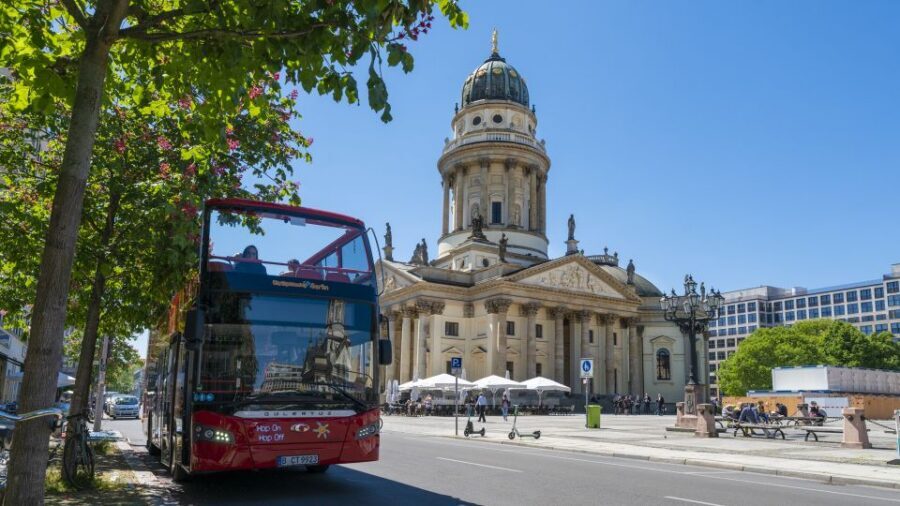
As the bus heads deeper into the historic core, you’ll hit Checkpoint Charlie (Friedrichstraße 45) and then Gendarmenmarkt. These are major names on Berlin’s sightseeing map, and having them on the same route is the whole point of hop-on-hop-off convenience. The benefit isn’t only photos—it’s saving time. Instead of planning a day of transit juggling, you get repeatable access.
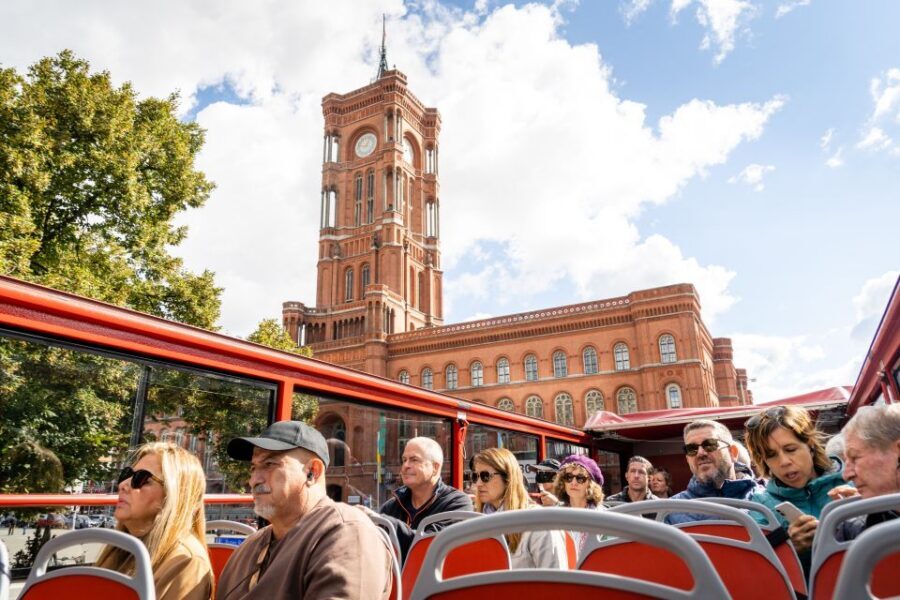
After that, the route passes Neptunbrunnen / Rotes Rathaus at Rathausstraße 1, listed as Neptun Fontaine in the stops. This is a helpful stop for those who want the feeling of central city landmarks without committing to one long walking path.
Then you move toward Alexanderplatz / Park Inn, followed by Karl-Marx-Allee. This is one of the ways the route prevents you from only seeing one side of Berlin. The bus gives you a visual sweep, and the hop-off option lets you stop if the area feels worth more time to you.
A drawback to know: at least one issue reported is that the narration doesn’t always seem tightly matched to the exact position of the bus. If you notice that, don’t panic. Use the city map and follow the stop names on screen or in your materials.



East Side Gallery and Ostbahnhof: where the city shifts
The route continues into the east with East Side Gallery and then Ostbahnhof. This is a smart section for anyone who wants to understand Berlin as more than one postcard view. The bus keeps you moving through the bigger distances, and hop-off gives you a chance to spend time where you’re most interested.
Because East Side Gallery is on the route, you don’t have to restructure your entire day around it. You can pass by, decide on the spot, and hop off for whatever time you want—then ride onward without worrying about how to get back.
Ostbahnhof is also a practical stop. Stations are naturally good “re-entry points” for planning your day because they’re so central to transport. Even if you don’t plan to transfer elsewhere, it helps you understand Berlin’s layout.
DomAquarée, Lustgarten, Unter den Linden, and Brandenburg Gate
From the east side, the route swings back toward central landmarks with stops including DomAquarée (Karl-Liebknecht-Straße), Lustgarten (Unter den Linden 1), and Unter den Linden / Friedrichstraße.
This run is especially valuable if you want a classic, landmark-dense corridor. The bus route effectively creates a moving “spine” through the city center. You can hop off at Lustgarten if you want a breather, then decide later whether you want to linger longer along Unter den Linden.
Then you reach Brandenburg Gate (Brandenburger Tor) at Ebertstraße / Pariser Platz. Having it at a named stop is the real win. You can time your visit based on your energy level, not the schedule of a guided group.
Finally, the route continues to Berlin Central Station (Hauptbahnhof), followed by Victory Column (Siegessäule) stops and then to Zoo / Elephant Gate (Elefantentor) and Café Kranzler near Kurfürstendamm. This means your day ends in areas that feel like “getting back out into the city” instead of vanishing into the same neighborhood you started from.
Spree river cruise upgrade: the water-level perspective
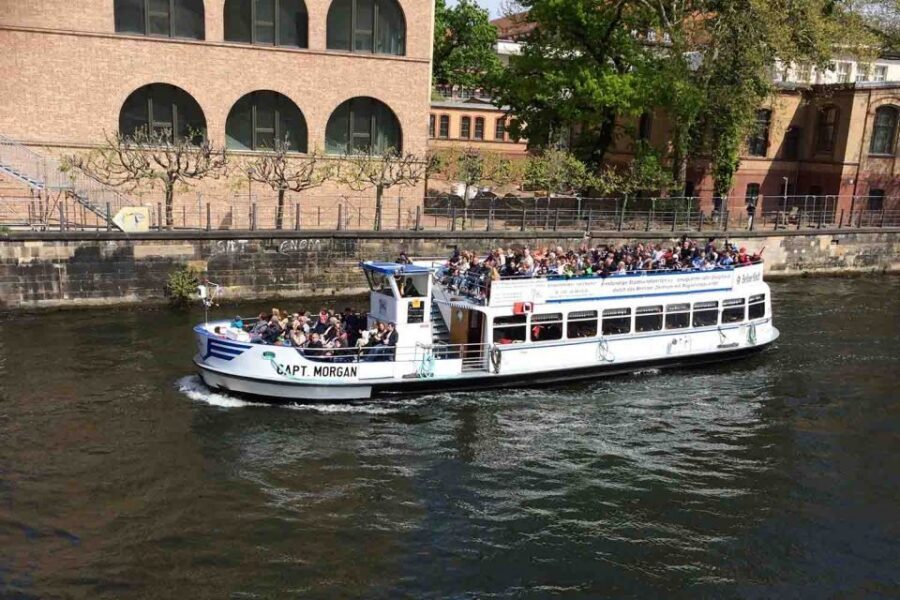
If you add the Spree cruise option, you get a 1-hour river cruise that’s designed to “glide around Berlin’s river” and show architecture from a different angle. It’s a strong pairing with the bus because it gives you two forms of orientation: street-level landmarks from the bus, then the river as a visual connector.
The boat-related meeting point direction is specific. You’ll pass by the Marx-Engels-Forum park at Karl-Liebknecht-Str. 1a, and you’ll find the stop right by the river Spree. That’s useful because it reduces wandering—especially if you’re arriving close to check-in time.
One thing you absolutely must plan for: if you book a ticket combination, it’s mandatory to print your boat tickets and present them for check-in. If you show up with only a phone voucher, you can hit friction. So treat printout as part of your prep, not a nice-to-have.
Also note the earlier sound issue. Some people say the boat narrator can be nearly inaudible compared to the bus. If you want the narration, pick a seat where you can hear clearly, and don’t rely on the audio alone for the big moments.
Ticket reality check: when “mobile voucher” isn’t enough
The tour includes GPS audio and a city map, but the real-world experience can hinge on ticket verification. The price is listed as $51 per person, but the big variable is how you present your ticket.
A few issues have popped up in actual use:
- Some people found staff were cautious when tickets were booked through a third party, even needing confirmation from a colleague.
- There’s a recurring theme that staff may expect a PDF copy confirming your booking, and that a mobile voucher alone didn’t satisfy them for entry.
- In those situations, phone support was reportedly helpful in getting the right document.
So here’s my practical advice: when you book, make sure you can access both your confirmation email and the downloadable document they send. Even if mobile ticketing works for most people, having a PDF ready can save you a stressful start.
Boat-ticket printing is separate, and that one is non-negotiable per the info given. If you’re doing the cruise upgrade, print your boat ticket and bring it with you.
Timing that makes sense: how to pace your day across stops
Because buses run frequently, you can build a day around breaks. Use this logic:
- Do one “long ride” segment between clusters (so you can see the route and understand where landmarks sit).
- Then hop off for 30–90 minutes at the stops you care about most.
- Catch the next bus instead of rushing.
It also helps to understand how the stops repeat in different areas—your route includes stops like Neptun Fontaine and others listed more than once in the overall stop lists. That repetition is useful because it increases your flexibility: if you miss one approach to a sight, another bus pass might still line up with your plan.
If you’re traveling in cooler months, plan for less time standing still. Berlin can feel breezy near open areas and river views, and your comfort affects how much you’ll actually enjoy sitting through audio.
Who this tour is best for (and who should skip it)
This bus-and-boat option is a great fit if:
- You want an easy overview of Berlin’s layout without locking yourself into a tight walking itinerary
- You value hop-on-hop-off freedom and like having the map and audio to guide you
- You want the combo option—bus viewpoints plus a river perspective
It can also help if you have limited mobility, since the bus lets you access many major sights without long transfers and walking stretches.
It might be less ideal if:
- You’re the type who wants highly detailed guided storytelling at every stop. This tour is built for orientation and self-paced sightseeing, not deep museum-style narration.
- Audio clarity is a big deal for you. If you’ve had trouble hearing narration on tours before, this is a spot where you might want to plan accordingly, because volume has been reported as inconsistent.
For families: child tickets are available for ages 6 to 15, and kids under 5 travel free on buses with a paying adult (up to two children per adult).
Should you book this Berlin hop-on-hop-off with Spree cruise?
I’d book it if you want a low-effort, high-flexibility day where the transportation is handled and the main sights are within reach. The combination of frequent buses, GPS audio in multiple languages, free Wi‑Fi, and the 1-hour Spree cruise makes it a practical way to see Berlin even if you only have a day.
Before you click confirm, do two things: plan your day around a few “must stop” locations, and prepare your ticket documents. If you choose the boat option, print the boat tickets. If you’re using a third-party booking method, make sure you can access the confirmation PDF, not just the phone voucher.
If you’d rather build a detailed schedule with walking tours and museums, you might find this style too broad. But for a first-time orientation day, it’s hard to beat.
FAQ
How often do the buses depart?
Departures run every 25 to 35 minutes, so you can hop off and catch another bus with minimal waiting.
How long is the tour?
It’s a 1-day ticket. You can check starting times based on availability.
What major stops are included?
The route includes well-known sights such as Checkpoint Charlie, Brandenburg Gate, Alexanderplatz, East Side Gallery, and stops near major transit like Ostbahnhof and Berlin Central Station (Hauptbahnhof).
Is Wi‑Fi included?
Yes. There is free Wi‑Fi on board.
What languages are available for the audio guide?
The GPS audio guide is available in Spanish, Chinese, English, French, German, Italian, Japanese, Polish, Portuguese, Russian, Turkish, and Hebrew.
Can I add a river cruise on the Spree?
Yes. There’s an optional 1-hour Spree river cruise that comes with the combo ticket.
Where do I start the bus?
The first bus stop is at Kurfürstendamm 238. There are also two starting options listed: Tauentzienstraße 16 and Kurfürstendamm 238.
Do I need to print tickets for the boat if I book a combo?
Yes. If you book the boat ticket combination, it is mandatory to print your boat tickets and present them at check-in.