REVIEW · BREMEN
Bremen: City Center Guided Walking Tour
Book on GetYourGuide →Operated by Bremen Tourismus · Bookable on GetYourGuide
Bremen hides big stories in a small center. This 2-hour walk strings together the market square, UNESCO town hall and Roland, then flows toward Böttcherstraße and the old Schnoor quarter.
I love the way the guide turns key landmarks into clear stories, especially the Bremen Town Musicians sculpture and its Grimm fairytale connection. I also like getting up close to St. Petri Cathedral, which helps you see how trade-era Bremen shaped everyday life.
One drawback to plan for: the roughly 2 km route can include uneven cobbles and tram tracks, so you’ll want stable shoes and a bit of patience if the group hits detours.
In This Review
- Key highlights to look for
- Where to Start: Glockenspiel House and the Smart Route
- Market Square, Roland, and the Town Hall That Defines Bremen
- St. Petri Cathedral: The Religious Landmark With Trade-Era Meaning
- The Bremen Town Musicians Sculpture and the Grimm Connection
- Böttcherstraße: From Coopers’ Work to Expressionist Drama
- Schnoor Quarter: Old Bremen’s Lanes, Crafts, and Good Food
- Pacing, Terrain, and What the 2 km Actually Means
- The Guide Matters: Herman, Eric, Pierre, Rima, and Their Story Style
- Price and Value: Is $14 a Good Deal?
- Who Should Book This Walk—and Who Should Skip It
- Should You Book This Bremen City Center Walking Tour?
- FAQ
- How long is the Bremen city center walking tour?
- Where is the meeting point?
- How much does the tour cost?
- What language is the guide?
- Is the tour wheelchair accessible?
- Is cancellation free?
- Is the tour route flat and smooth?
Key highlights to look for
- UNESCO market-square anchors: Town Hall sights plus Roland the stone sentinel
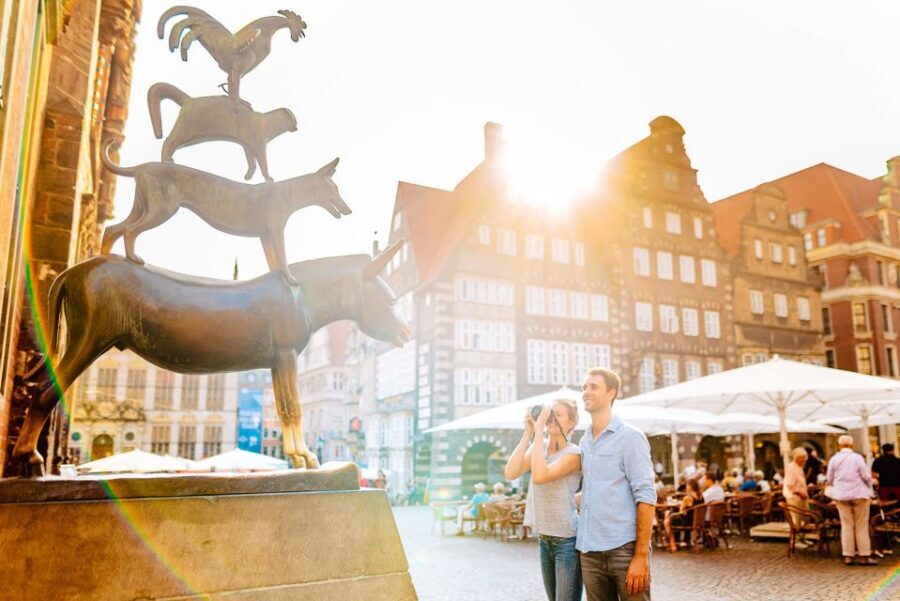
- Fairy-tale art stop: the Bremen Town Musicians sculpture
- Böttcherstraße contrast: red-brick tradition with Expressionist architecture
- Schnoor quarter lanes: Bremen’s oldest streets for browsing cafés and artisan shops
- Guide-led momentum: strong pacing and humor from guides such as Herman, Eric, and Pierre
Where to Start: Glockenspiel House and the Smart Route
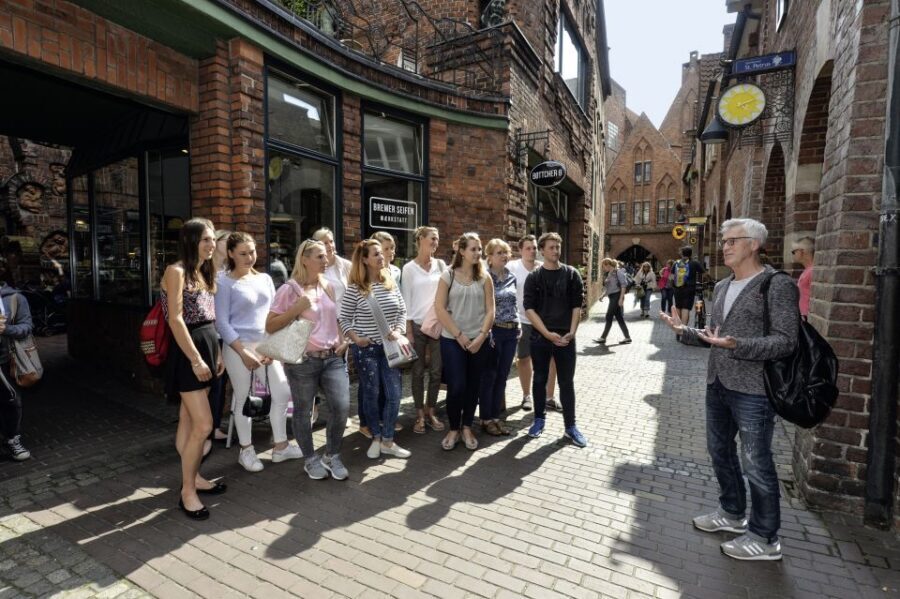
The tour kicks off at a very practical spot: on the right side in front of the Tourist Information at Glockenspiel House, Böttcherstraße 4. If you’re staying around the central hotels or main sights, this meeting point makes it easy to show up, get oriented, and get moving.
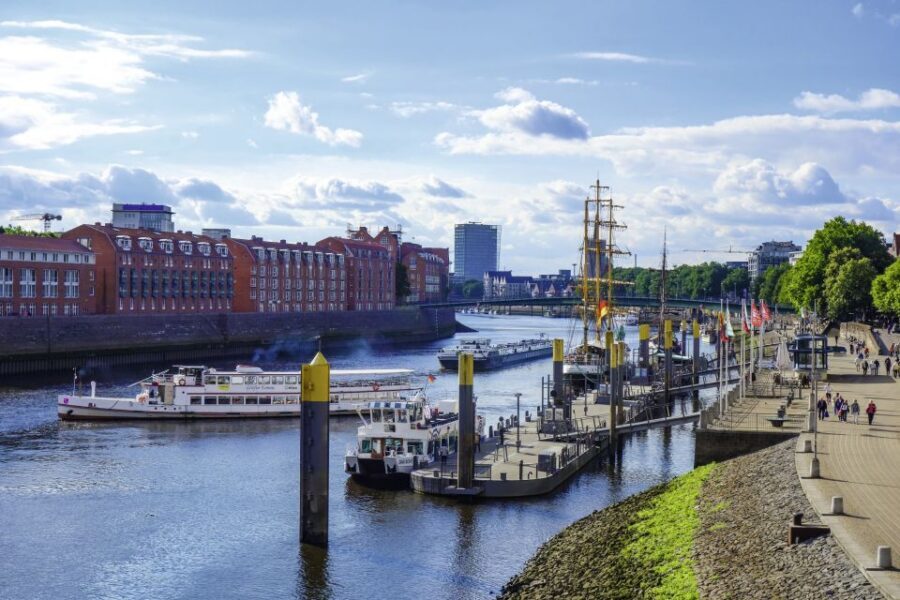
From the first minutes, the best part is how the route is designed for context. You’re not just checking off photos. You’re walking in an order that explains why these buildings matter to Bremen’s identity, from civic power in the market square down toward the Weser river area.
It’s also a good length for a day plan. Two hours is long enough for real stories, but short enough that you can still keep an afternoon open for independent exploring, coffee, or a second walk on your own.
You can also read our reviews of more walking tours in Bremen



Market Square, Roland, and the Town Hall That Defines Bremen
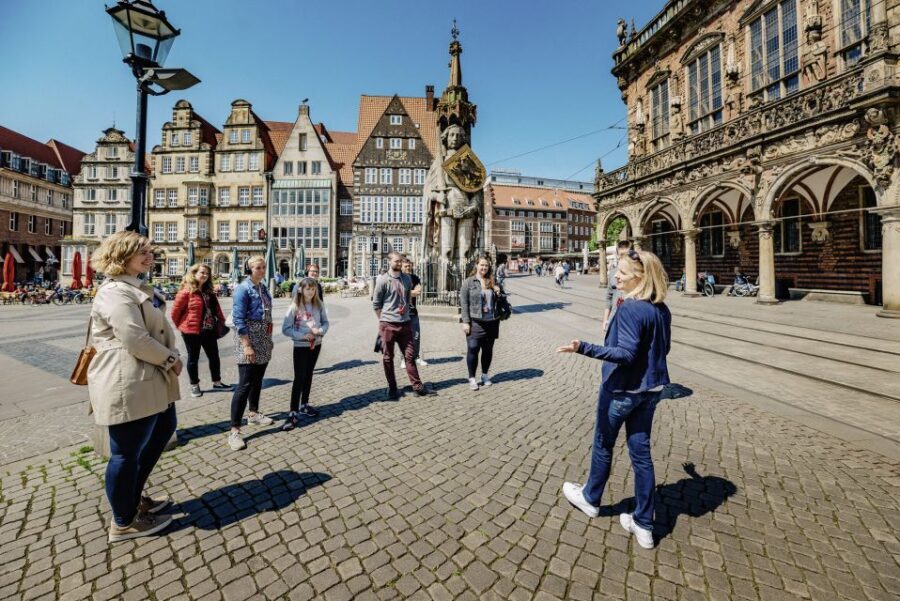
The heart of the walk is Bremen’s market square, a place that feels instantly “old city” the moment you arrive. It’s one of the prettiest squares in Germany for a reason: you get the sense that this was the stage for civic life, commerce, and public rituals for centuries.
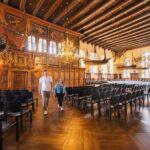
The big landmark you’ll focus on is the UNESCO World Heritage listed town hall. It’s the kind of building that becomes easier to understand once you hear what it represented and how Bremen’s trading status shaped its confidence. Instead of treating it like a backdrop, you learn what to look for while you’re standing there.
Then there’s Roland, the stone statue that marks the civic spirit of Bremen. Roland is famous enough that you’ll likely spot him quickly, but the guide’s explanation is what makes him click. You’ll come away seeing him as more than a statue—think of him as a symbol of a city that wanted rights, structure, and recognition.
Why this stop is worth it: the market square sets the tone for everything else. After this, Böttcherstraße and the Schnoor quarter stop feeling random and start feeling connected.
St. Petri Cathedral: The Religious Landmark With Trade-Era Meaning
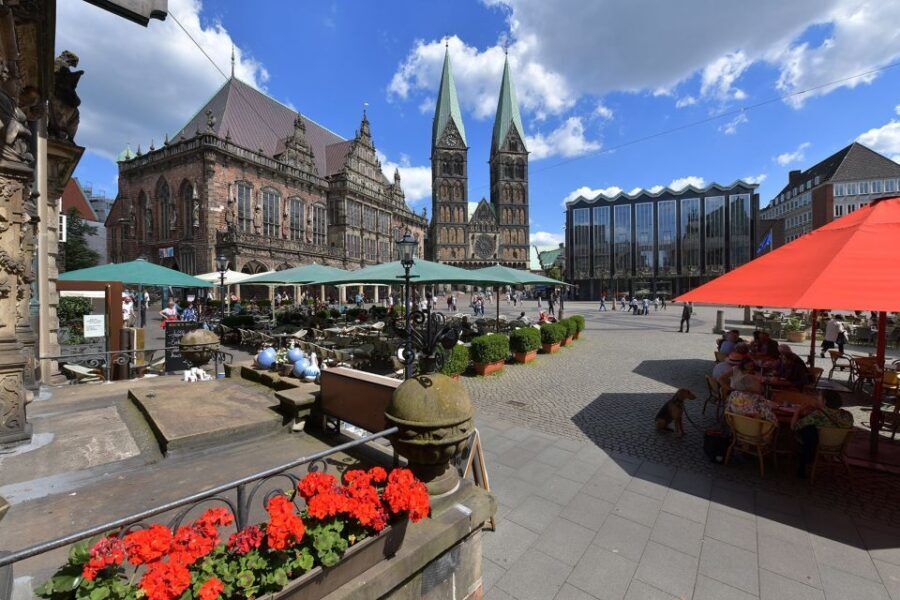
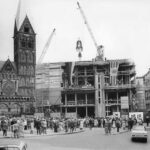
Next, you’ll encounter St. Petri Cathedral, another anchor for understanding Bremen. Even if you’re not the type who gets excited about architecture for its own sake, this stop helps you connect the city’s practical wealth to its public faith.
Cathedrals often risk becoming “just another old church” on a tight trip. Here, the guide’s job is to point out what you’re actually seeing and why it mattered in a city shaped by trade routes and merchant decisions. You’ll get a clearer sense of the timing and the social role these religious spaces played.
A helpful detail: guides tend to keep the group moving but also give you moments to look up and slow down. If you’ve only ever passed major buildings quickly, this kind of slow, guided attention makes the cathedral feel less like a photo and more like a lived-in place.
What you’ll likely enjoy: the way the guide ties this landmark into the larger story of Bremen—so you can keep the big picture in your head while you walk.
The Bremen Town Musicians Sculpture and the Grimm Connection
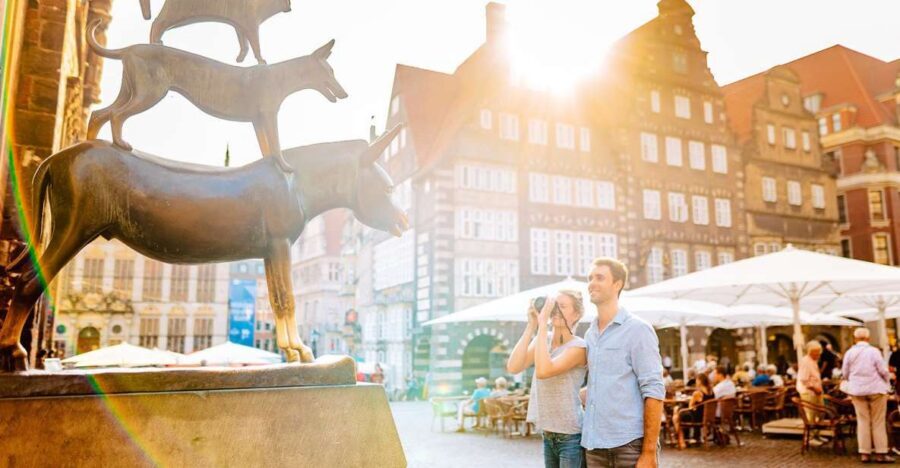
One of the most fun stops is the sculpture of the Bremen Town Musicians. It’s tied to a Brothers Grimm fairytale, and the guide makes that connection feel natural instead of forced.
What I like about this moment is that it shows Bremen’s talent for mixing culture with self-identity. The sculpture is playful, yes, but it also points to the city’s habit of turning stories into public symbols. It’s art you can react to right away, even if you don’t know anything about Bremen beforehand.
As you stand near it, you’ll likely notice how the guide uses the fairytale to explain the vibe of the city—its humor, its traditions, and the way people have always made meaning through local legends. Guides such as Herman and Eric are especially noted for bringing energy and story flow, which helps you absorb the background without turning the tour into a lecture.
If you like storytelling: this is one of your best stops.
Böttcherstraße: From Coopers’ Work to Expressionist Drama
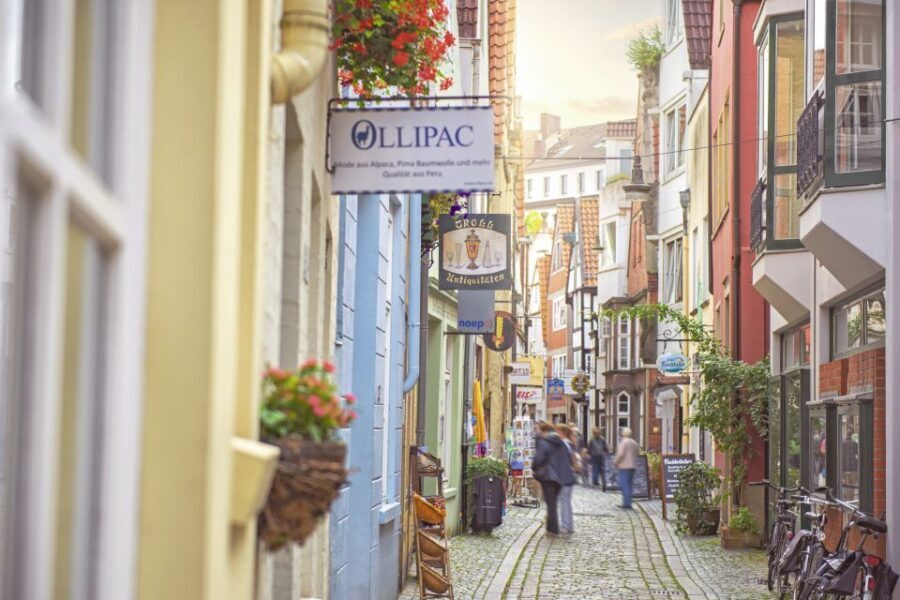
Böttcherstraße is where Bremen shows its personality in a different way. It’s a pedestrian alleyway bursting with tradition, linked to the böttcher (coopers) who once made barrels here—an everyday craft that mattered to a trade city.
The walk along Böttcherstraße also shows a different architectural side of Bremen: historical red-brick buildings combined with Expressionist architecture. That contrast is part of the appeal. You’re literally walking through layers of time where tradition and stylistic modernity coexist.
You’ll also learn that Böttcherstraße leads down toward the Weser river. That direction matters. This isn’t just a pretty lane—it’s connected to movement, goods, and the city’s relationship to water. Once you understand the setting, the alley feels purposeful instead of simply scenic.
Possible downside to keep in mind: the alley streets can be busy and narrow. If you don’t like crowds, you might want to keep your expectations realistic and focus on the stop-by-stop highlights rather than expecting wide open spaces.
You can also read our reviews of more guided tours in Bremen




Schnoor Quarter: Old Bremen’s Lanes, Crafts, and Good Food
The Schnoor quarter is the oldest part of Bremen, and it shows. The lanes feel rambling and intimate, like a small maze you can actually enjoy walking through. This is where the city’s past becomes tangible in a way that’s easier to picture than reading about it later.
As you move through, you’ll get a sense of how fishermen, artisans, and sailors once lived here. The guide’s value is in translating the past into what you’re actually seeing now. You’ll look at the street lines and buildings differently once you understand what types of work and daily rhythms would have filled these spaces.
Today, you’ll also find cafés, top-notch restaurants, and handicraft stores lining the streets. This part of the tour is a great match for travelers who want more than sightseeing—they want atmosphere.
Some guides also add small stops for tasting local treats from shops along the way, which makes the Schnoor section feel more like a genuine afternoon in the city rather than a checklist stroll. If you want a little taste of Bremen with your walking tour, this is the section to pay attention to.
Pacing, Terrain, and What the 2 km Actually Means
The tour covers about 2 km over two hours, so it’s not a long hike. But it does involve uneven ground in places—cobblestones and tram tracks show up. That detail matters. If your feet get sore quickly on irregular surfaces, you’ll be happier with supportive shoes and slower steps than with fancy footwear.
Route changes can happen due to events, so don’t treat the exact flow like a timetable you can control. The good news is that the tour still focuses on the same major landmarks, so you shouldn’t feel lost if the group takes a slightly different path for a bit.
A big plus: the tour is wheelchair accessible. That doesn’t mean every paving choice is magically smooth, but it does mean the provider has planned for access as part of the experience.
My practical advice: if weather is poor, plan to dress for it. The walk is outdoors and the streets can get slippery.
The Guide Matters: Herman, Eric, Pierre, Rima, and Their Story Style
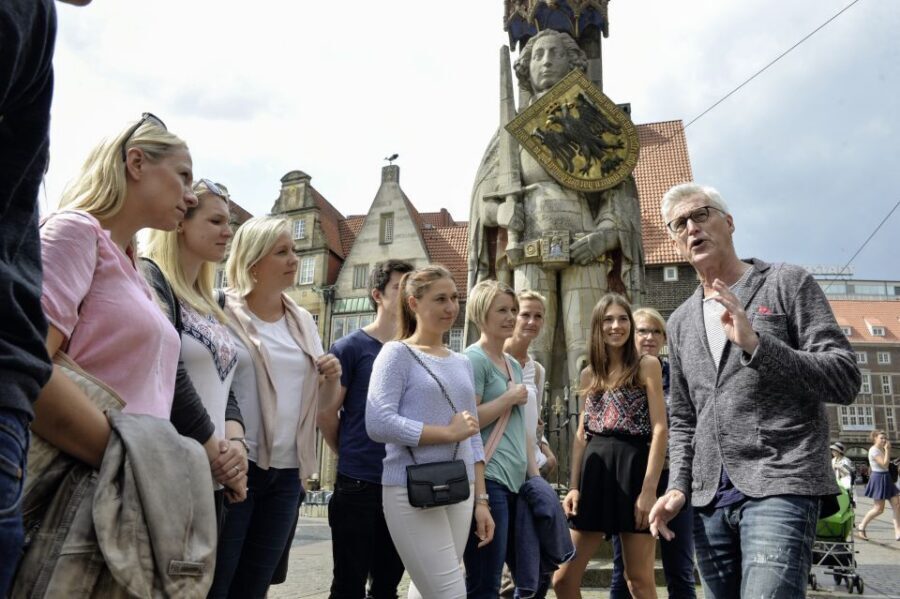
This tour lives or dies by the guide’s ability to connect dots fast. The format works because the guide brings the sights to life with stories, architectural cues, and plenty of time to ask questions.
You may meet guides such as Herman, Eric, Pierre, Rima, and Viveka, and the common thread is clarity plus personality. Many guides are also known for a strong sense of humor and energy. That matters because Bremen is full of detail, and a good guide helps you notice the details without making you feel rushed.
Some guides even use visuals like photos to explain what the city looked like in the past. Others keep group pacing tight so you cover the key sights without losing the fun along the way.
If you like tours where the history has a human voice—how people lived, worked, and joked in a city like Bremen—this one tends to deliver.
Price and Value: Is $14 a Good Deal?
At $14 per person, this is a strong value for Bremen’s city center sights. You’re paying for an organized path through several major landmark zones in just two hours, with a live guide who helps you interpret what you’re seeing.
Here’s the value logic I’d use: the tour saves time and prevents the usual wandering. Instead of spending your first afternoon trying to connect market square → cathedral → Böttcherstraße → Schnoor on your own, you get that route framed with explanations as you go.
Is it perfect for everyone? Not always. If you’re the kind of visitor who wants long stays in one museum or wants a slow, photo-heavy stroll with no structure, you might prefer independent wandering. But for getting your bearings fast, learning why Bremen looks the way it does, and still leaving time to eat, shop, and explore, the price fits the job.
Who Should Book This Walk—and Who Should Skip It
Book this if:
- You’re in Bremen for a short time and want a tight orientation to the city center.
- You care about architecture and want help reading what you see (not just where to find it).
- You enjoy story-driven stops, like the Town Musicians fairytale connection.
You might skip it if:
- Uneven cobbles and tram-track areas are a dealbreaker for your mobility.
- You’d rather spend two hours slowly browsing one neighborhood without a set route.
- You’re already deeply familiar with Bremen and only need independent time.
Should You Book This Bremen City Center Walking Tour?
I think this is a smart booking for most first-timers. For $14 and two hours, you get the kind of guided structure that makes Bremen feel understandable instead of just pretty. The blend of civic landmarks (town hall, Roland), cultural storytelling (Town Musicians), architectural contrast (Böttcherstraße), and the character-rich Schnoor quarter is a nice mix that works even when the weather is typical Northern Germany grey.
If you like cities best when a guide helps you see patterns—and you’re comfortable with a bit of uneven walking—this tour is a good fit.
FAQ
How long is the Bremen city center walking tour?
It lasts 2 hours.
Where is the meeting point?
Meet on the right side in front of the Tourist Information at Glockenspiel House, Böttcherstraße 4.
How much does the tour cost?
The price is $14 per person.
What language is the guide?
The tour includes a live guide, with English being available. Depending on the option you select, you may also be able to choose an English or German-speaking guide.
Is the tour wheelchair accessible?
Yes, the tour is listed as wheelchair accessible.
Is cancellation free?
Free cancellation is available up to 24 hours in advance for a full refund.
Is the tour route flat and smooth?
The route is about 2 km and can include uneven ground such as cobblestones and tram tracks. Short-term route changes due to events are also possible.