REVIEW · HAMBURG
Hamburg: Ticket for the Paradox Museum
Book on GetYourGuide →Operated by Paradox Museum Hamburg · Bookable on GetYourGuide
Your eyes will argue with you. That’s the whole point of the Paradox Museum Hamburg, where optical tricks and interactive art are packed into 14 colorful rooms. I love that it’s built for real participation, not passive looking, and that most moments are naturally photo-friendly with a charged smartphone.
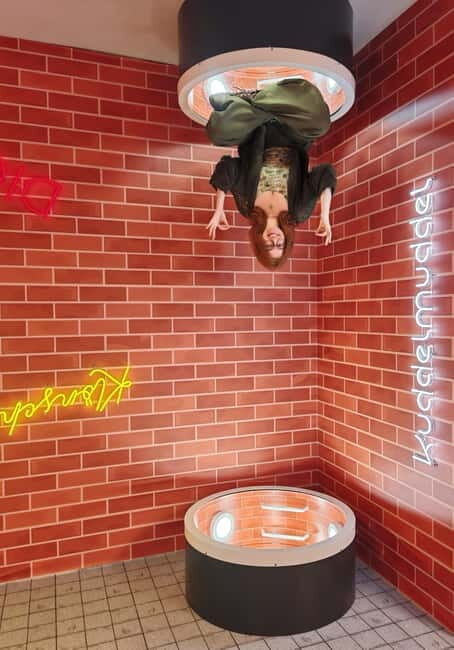
The Zero Gravity Room delivers the kind of weightless illusion that feels playful and a little magical, and the mirror spaces are genuinely disorienting in a fun, low-stress way. One consideration: some exhibit content is shown in its original language, so if you need full explanations in English, you may have to rely on visuals and your own curiosity.
In This Review
- Key things I think you’ll like
- Paradox Museum Hamburg: what it is (and why it feels worth it)
- Your starting step: ticket validation at reception
- How the 60–90 minutes usually works inside 14 rooms
- The room types you should look for (and what each one is really testing)
- The scale and perspective illusions: when your brain misfires
- The Zero Gravity Room: a weightlessness illusion with real fun payoff
- The mirror rooms: the friendly version of getting turned around
- Interactive exhibits tied to physical and mathematical phenomena
- Art meets science: why the Hamburg artist angle is more than a marketing line
- Smartphone and camera strategy: make photos without killing the fun
- Price and value: is $27 reasonable for 14 rooms?
- Best for families, teens, and curious adults
- Practical tips so your visit goes smoothly
- Bring the right basics
- Know the payment rule on site
- Plan for a souvenir stop at the end
- When you might want to skip it
- Should you book Paradox Museum Hamburg?
- FAQ
- How long is the Paradox Museum Hamburg ticket valid for?
- Where do I go first when I arrive?
- Is the museum wheelchair accessible?
- Is it possible to take photos inside?
- What payment types are accepted on site?
- What should I bring with me?
- Are the exhibits in English?
- Can I cancel if my plans change?
Key things I think you’ll like
- 14 colorful rooms / 1,300 sqm: plenty of space to move around while you test your senses
- 50+ interactive exhibits: you can touch, pose, and experiment instead of just watching
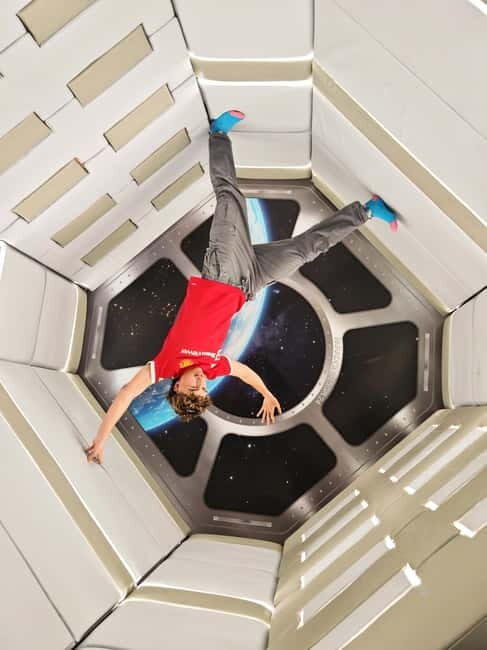
- Zero Gravity Room effects: weightlessness-style fun that works for kids and adults
- Mirror rooms that disrupt direction: a safe way to get visually “lost” for laughs
- Staff help with photo spots: you’re not left guessing where the best shots happen
- Art plus science: Hamburg artist works connect creativity with physical and mathematical ideas
Paradox Museum Hamburg: what it is (and why it feels worth it)
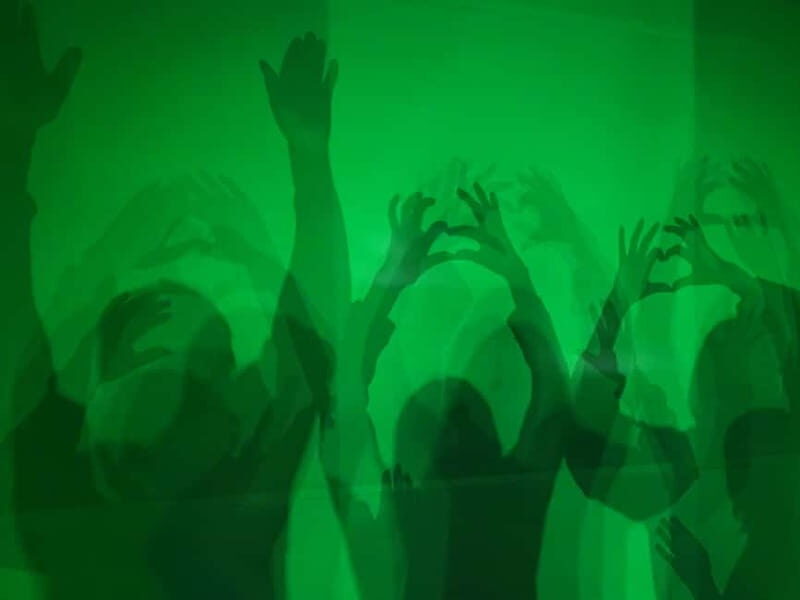
The Paradox Museum Hamburg is a modern optical illusion museum that treats perception like a playground. You’ll move room to room through interactive installations that use physics, math, and clever design to create effects that don’t behave the way your brain expects.
This matters because “optical illusion” can mean two things: a wall poster with a trick, or a space that makes you part of the trick. Here, it’s the second one. The museum is spread across 1,300 sqm with more than 50 interactive exhibits, so the experience has room to breathe and the pacing feels like a series of mini challenges instead of one long performance.
And it’s not only about the visuals. The museum also leans into the why behind the effects by playing with physical and mathematical phenomena. Even if you don’t want to think too hard, you’ll still get something out of it: your eyes learn new habits, and you’ll start noticing how often everyday life assumes things that aren’t guaranteed.
A few more Hamburg tours and experiences worth a look



Your starting step: ticket validation at reception

Your ticket doesn’t work like a timed-entry theater seat. The practical first step is simple: go to reception and have your ticket validated.
That’s worth doing calmly, because once you’re in, the museum is designed for you to wander, stop, test, and take photos. If you rush the first five minutes, you’ll miss the easiest chance to orient yourself and spot the most “can’t-fake-this” areas for pictures.
How the 60–90 minutes usually works inside 14 rooms

The museum experience is designed for about 60 to 90 minutes. You don’t need a formal tour guide leading you from stop to stop. Instead, the layout across 14 rooms encourages a natural flow: you’ll enter, try the first illusions, get pulled into the next setup, and then notice you’re already halfway through.
Here’s how to make the most of that time:
- Pick a few “must-do” effects early (like weightlessness or mirror rooms), so you don’t end up hunting for them near the end.
- Treat photo stops as part of the exhibit, not an extra task. The staff actually help point you toward the best spots for pictures in hallways.
- If you’re with kids, plan more pauses than you think. Interactive spaces tend to slow down automatically once the fun starts.
If you’re the type who likes to read every label, 90 minutes can feel tight. If you like experimentation first and explanations second, you’ll probably land comfortably in that 60–75 minute zone.
The room types you should look for (and what each one is really testing)
The museum is intentionally built as a sequence of sensory experiments. While the exact order can vary as you wander, these are the standout categories you should actively hunt for.
The scale and perspective illusions: when your brain misfires
Some of the most fun optical effects in the Paradox Museum style rely on forced perspective—places where size and distance don’t match what your body expects. That’s why you might see yourself looking like you became a giant or like you can float.
What you’re learning (without turning it into homework) is that perception isn’t a camera recording. It’s a prediction system. Your brain uses cues—edges, spacing, focus—and when the cues get scrambled, your interpretation changes.
Photo tip: stand exactly where the illusion “wants” you. A small shift can turn a perfect trick into an obvious mismatch.
You can also read our reviews of more museum experiences in Hamburg






The Zero Gravity Room: a weightlessness illusion with real fun payoff
The Zero Gravity Room is one of the clearest examples of how the museum turns concept into experience. The setup aims to make you feel weightless—at least visually and physically enough to create that “how is this possible?” reaction.
This room also tends to be a strong family pick because the goal is not precision. It’s participation. You’re not trying to perform perfectly; you’re trying to make the effect happen, laugh, and try it a couple times from different angles.
If you’re traveling with multiple ages, this is a great anchor stop. It’s exciting without requiring long attention spans.
The mirror rooms: the friendly version of getting turned around
Mirror rooms are where your confidence gets challenged. The museum’s mirror spaces are designed to confuse your sense of direction so that walking straight ahead can feel surprisingly hard.
This is a big deal for two reasons:
1) It creates a clear “moment” you can share immediately—people can see the effect even if they don’t know the theory.
2) It’s an easy way to test how much you rely on visual certainty in everyday life.
Keep it light and safe: move slowly, hold hands if you’re with kids, and let the room do the trick for you. The museum experience is meant to feel playful, not like a hazard.
Interactive exhibits tied to physical and mathematical phenomena
One of the most valuable parts of the Paradox Museum Hamburg is that it doesn’t treat science like a lecture. It treats science like a set of toys.
You’ll encounter experiences that connect to physical laws and mathematical ideas—often through movement, angles, patterns, or interactive setups. Even when the explanations are not fully in English for every label, the core “try it, see what happens” learning method still lands.
That’s why the museum works for different personalities:
- If you’re curious, you’ll enjoy the intellectual satisfaction.
- If you’re just there for fun, the cause-and-effect still feels rewarding.
- If you like art, you’ll appreciate the way the installations look designed rather than built like lab equipment.
Art meets science: why the Hamburg artist angle is more than a marketing line
The museum experience also includes works by Hamburg artists that combine art and science. That matters because pure optical tricks can become repetitive if the installation doesn’t feel like it has a creative identity. Here, the visual style and the idea behind the objects are part of the appeal.
So you’re not only chasing illusions. You’re also stepping through spaces that feel like contemporary art environments—places where concepts are translated into color, form, and interactive “rules.”
If you’re an art lover who often finds science exhibits too technical, this hybrid approach is one of the reasons the museum holds attention.
Smartphone and camera strategy: make photos without killing the fun
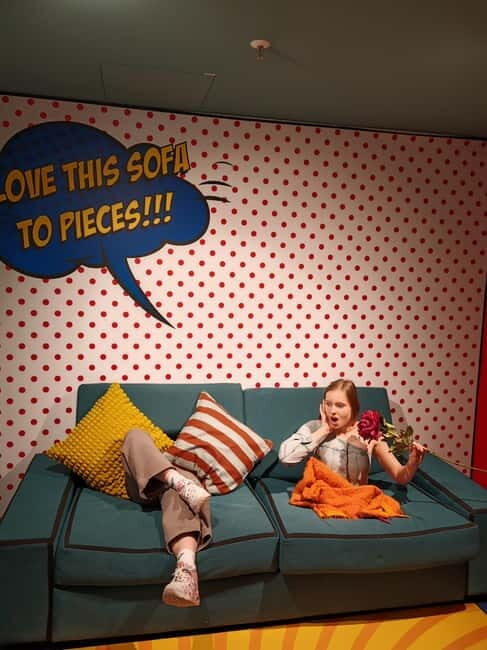
The museum is built with instant sharing in mind. You’ll see that in the way many setups are visually dramatic from common angles, and also in the fact that staff help you find the best photo spots.
A practical approach that keeps the experience enjoyable:
- Charge your smartphone fully and keep it handy from the start. The museum recommends a charged phone, and you’ll want it ready for quick rounds.
- Don’t stop posing in the middle of an illusion. Finish the effect, then step back to review your shot.
- If you’re bringing kids, set a quick rule: one photo per exhibit, then play again. This keeps the pace moving.
You’ll get more from the museum if you treat the camera as a tool for remembering the moments—rather than a substitute for experiencing them.
Price and value: is $27 reasonable for 14 rooms?
At about $27 per person, the Paradox Museum Hamburg is priced like an attraction where you’re buying time, access, and interactive content—not a single “show.”
What makes the value feel fair is the combination:
- 60–90 minutes of built-in activity
- 14 rooms and 50+ interactive exhibits, which means you’re not spending your visit staring at one installation
- A layout big enough (1,300 sqm) that the museum doesn’t feel cramped
- Photo-oriented design plus staff help for good angles
Would it be worth it if it were only mirrors and tricks? Maybe not. But the museum adds hands-on science-style experiences and art-science works, which broadens appeal. If you like interactive museums, this price sits in a sensible range for a full “experience hour” that works across ages.
Best for families, teens, and curious adults
This is one of those places that’s easy to recommend without forcing your group into one shared interest. It’s playful, visual, and built for participation.
It’s especially good if you’re traveling with:
- kids and teens who like hands-on stuff and quick rewards
- multigenerational groups, where adults may enjoy the science angle while kids focus on photos and effects
- adults who enjoy optical illusion experiences and contemporary art spaces
One review detail that supports this broad appeal: a family outing included children ranging from a young toddler age up through older kids, and everyone was excited. That points to the museum’s “come in and try” design rather than something that requires long walking comprehension.
Practical tips so your visit goes smoothly
A few things will make your experience easier from the first room onward:
Bring the right basics
The museum suggests bringing:
- a camera
- a charged smartphone
- a credit card (more on payment below)
If you rely on your phone for photos, don’t wait until you’re inside to discover your battery is low.
Know the payment rule on site
Only card payments are accepted on site. That matters because the museum has a boutique afterward where you may want to buy souvenirs, games, books, T-shirts, umbrellas, or other items.
If you’re trying to avoid awkward moments, bring a card you’re comfortable using.
Plan for a souvenir stop at the end
After your walk through the exhibits, you can head to the boutique. This is a nice way to extend the fun without needing extra planning. If you’ve enjoyed the science-art theme, you’ll likely find something you’ll actually use back home—like small games or books.
When you might want to skip it
This is low-risk fun, but it’s still an interactive optical experience. Consider skipping if:
- you strongly dislike optical confusion or you’re sensitive to disorienting visual effects (mirror rooms are the obvious example)
- you’re looking for a quiet museum with heavy reading and deep historical context
- you need everything fully explained in English in every room (some content is shown in its original language)
If you can treat it like a playful experiment space, though, it’s hard to not have a good time.
Should you book Paradox Museum Hamburg?
Yes—if you want a fun, modern break that mixes hands-on optical illusions, smartphone photo moments, and interactive science-style learning. The strongest reasons to book are the scale (14 rooms / 1,300 sqm / 50+ exhibits) and the fact that it’s built for participation, not just viewing.
I’d especially book it if you’re traveling with mixed ages or you want something that feels current and shareable without being all gimmick. The visit time is short enough to fit into a Hamburg day, and the experience is structured so it doesn’t demand prior knowledge.
FAQ
How long is the Paradox Museum Hamburg ticket valid for?
The experience time is listed as about 60–90 minutes.
Where do I go first when I arrive?
Go to reception to have your ticket validated.
Is the museum wheelchair accessible?
Yes, it is wheelchair accessible.
Is it possible to take photos inside?
Yes. The museum experience is designed with interactive, photo-friendly moments, and staff can help you find good photo spots.
What payment types are accepted on site?
Only card payments are accepted on site.
What should I bring with me?
Bring a camera, a charged smartphone, and a credit card.
Are the exhibits in English?
Some content is shown in its original language.
Can I cancel if my plans change?
Free cancellation is available up to 24 hours in advance for a full refund.