REVIEW · HAMBURG
Hamburg: Line A Sightseeing Hop-On Hop-Off Bus Tour
Book on GetYourGuide →Operated by Hamburger Stadtrundfahrt - · Bookable on GetYourGuide
Hamburg from the top of a double-decker feels like a shortcut. This Line A hop-on hop-off route gives you a big-picture view of the harbor, Speicherstadt, and HafenCity, with GPS audio through headphones in 11 languages. Two things I especially like are the clear, guided narration you can follow at your own pace and the freedom to get off at major sights (then jump back on later). One thing to watch: some seats have limited headroom, and the German loudspeaker on board can sometimes compete with the headset audio.
You’ll start near the Elbe at Landungsbrücken, then work your way through the waterfront and city-center highlights before ending back where you began. In decent weather, the open-top setup can make the views along the Elbe and canal edges much more enjoyable than looking through glass.
In This Review
- Key points before you ride
- Why the Line A red double-decker makes sense for one-day Hamburg
- Starting at Landungsbrücken: the view that sets the tone
- Speicherstadt and HafenCity from the bus: two Hamburgs in one ride
- Alster Lakes villas and Park Planten un Blomen: the calmer city moments
- City Hall area and St. Michael’s: classic landmarks without the navigation stress
- Reeperbahn and the Red Light district: see it, respect it, don’t get stuck
- Audio guide in 11 languages: great tool, watch for one common snag
- Price and how long it takes: what you’re really paying for
- Where to board and how to avoid the most common boarding headaches
- Who this tour fits best
- Should you book Line A on your Hamburg day?
- FAQ
- How long is the Hamburg Line A sightseeing bus tour?
- What stops does Line A include?
- Does the tour include a guided audio system?
- Which languages are available on the audio guide?
- Where can I board the bus?
- Is the bus wheelchair accessible?
- Is the open-top option available in all seasons?
Key points before you ride
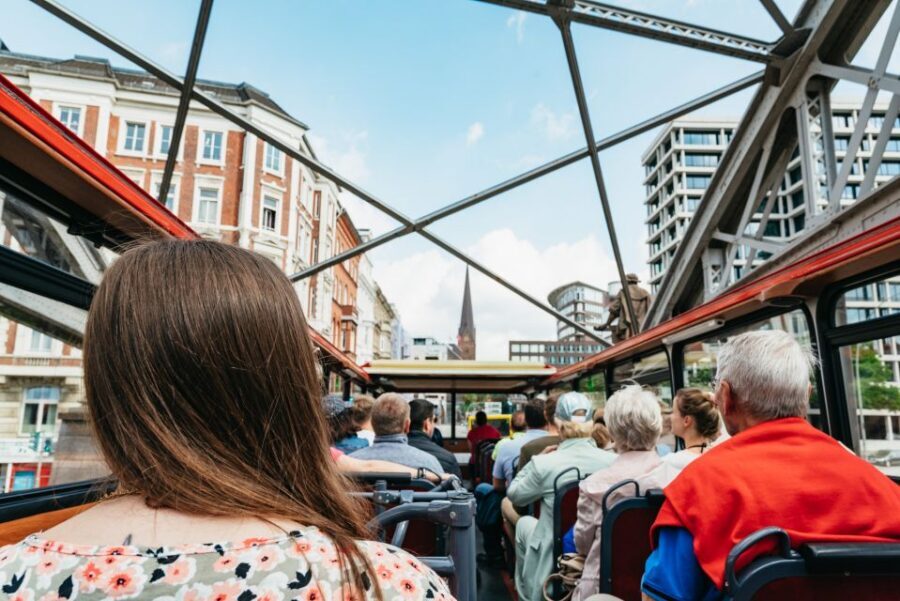
- Hop-on hop-off at 20 stops with a 1-day ticket, so you can skim highlights or slow down for photos
- GPS-controlled audio in 11 languages via provided headsets, with commentary timed to what you’re seeing
- Harbor-to-city-center route that hits Speicherstadt, HafenCity, City Hall area, St. Michael’s, and Reeperbahn
- Open-top option in nice weather, useful for skyline and canal views
- Easy meeting points at Central Station/Kirchenallee and St. Pauli Landungsbrücken 1–2, or any stop along Line A
- A few practical quirks: occasional audio mixing with the onboard speaker and tight headroom on the upper deck
Why the Line A red double-decker makes sense for one-day Hamburg
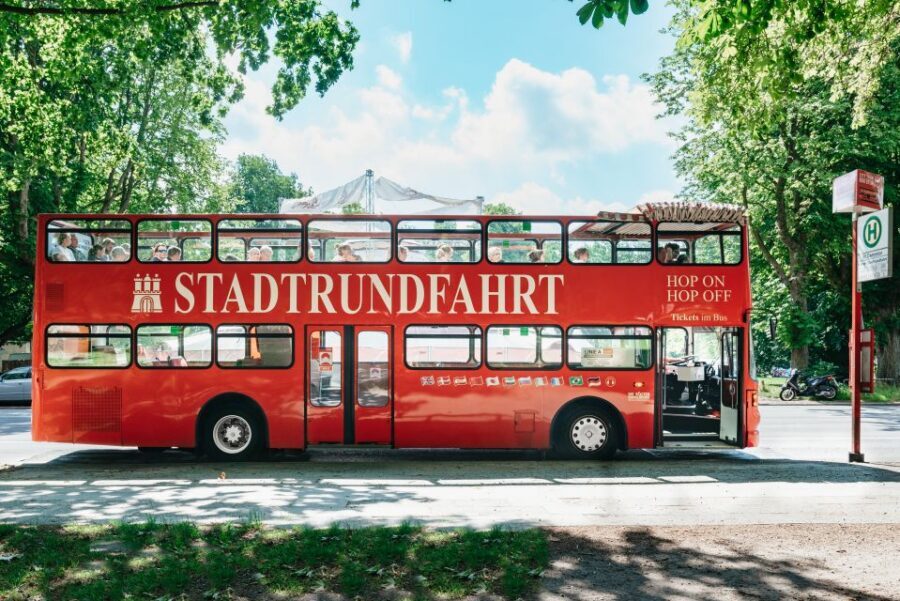
If your time in Hamburg is tight, this bus tour does something most walking plans can’t: it strings the city’s biggest “picture moments” together with minimal effort. You get a ride on a high, double-decker vantage point, plus a route designed around the city’s core areas—from the working port and canal-style neighborhoods to the historic center and the famous St. Pauli street scene.
I like that you’re not forced into a rigid tour rhythm. With a 1-day hop-on hop-off ticket, you can ride the whole line for context, then hop off for one or two stops that you actually want to explore. That’s a smart way to avoid the classic tourist mistake: spending too long at the first “interesting” place and then rushing the rest.
The value isn’t only the sightseeing. You’re also buying headset audio guided by GPS, so you don’t have to guess what you’re seeing out the window. For a city like Hamburg, where neighborhoods feel distinct, that guided pacing helps you connect dots fast.
You can also read our reviews of more tours and experiences in Hamburg.



Starting at Landungsbrücken: the view that sets the tone
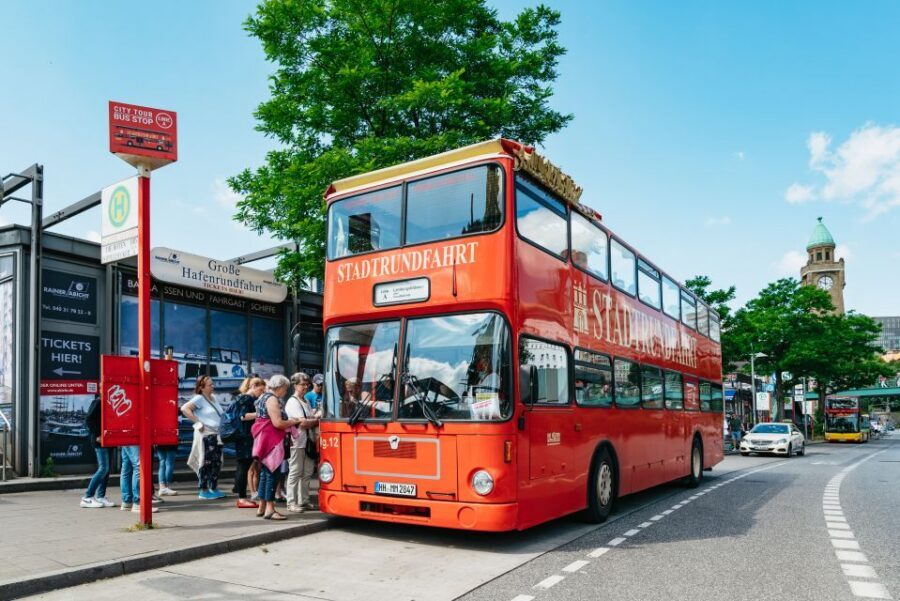
The tour begins at U S Landungsbrücken, which is a great anchor point. This area is close to the action on the Elbe side, and it puts you near the port atmosphere that Hamburg is famous for. From here, the bus quickly shifts from “harbor vibe” into architecture and waterfront districts.
Even if you don’t hop off immediately, the early stretch is useful. You’ll pass the Elbphilharmonie, then move through areas linked to the city’s modern waterfront identity, including Überseequartier and HafenCity. From the top deck, these quick passes help you understand how Hamburg layers old shipping history with newer design-forward development.
If you want the best first impression, I’d plan to stay on the upper deck at the start. You’ll catch more angles, and the skyline views make the rest of the route feel connected instead of random.
Speicherstadt and HafenCity from the bus: two Hamburgs in one ride
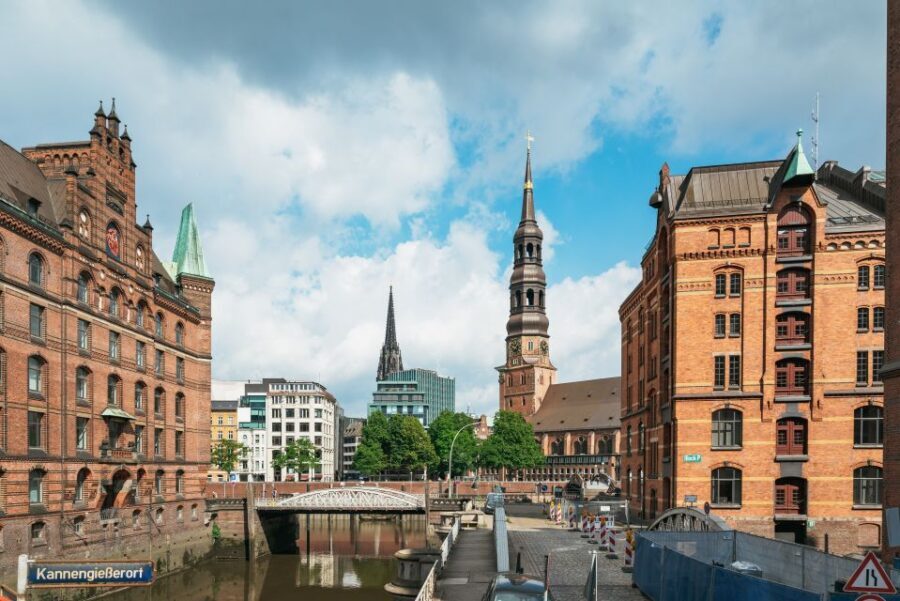
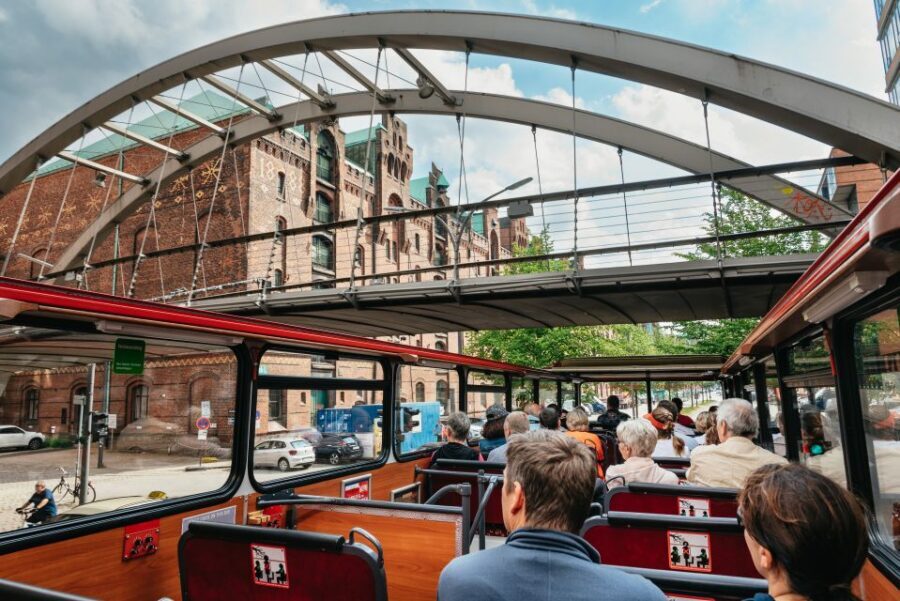
Hamburg’s waterfront story is basically old warehouses meeting new districts, and Line A is built to show you both. On this route you’ll pass through Speicherstadt (the famous warehouse complex) and HafenCity (the newer port-city expansion).
What works well from the bus: you get a continuous “timeline” feeling. Speicherstadt is the compact, historic quarter where the city’s trading and storage past shows up in brick-and-water style. HafenCity, on the other hand, reads as the forward-looking side—wider streets, cleaner lines, and a more modern skyline rhythm.
What’s harder from the bus: the finest details. Speicherstadt’s charm is partly in narrow streets and canal edges you can’t fully appreciate at highway speed. So if one of these neighborhoods is your must-see, plan one real stop—not just a pass-through. Jump off at the stop that fits your interests best, then give yourself enough time to walk a bit.
This is also where audio matters. The GPS narration helps you connect why these areas look the way they do and what role they’ve played in Hamburg’s growth.
Alster Lakes villas and Park Planten un Blomen: the calmer city moments

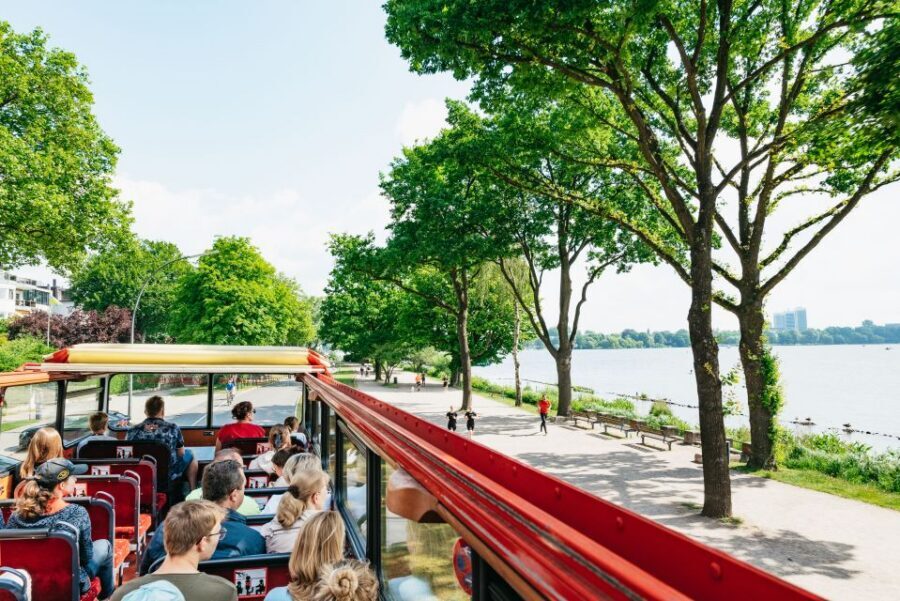
After the harbor sweep, the route leans into Hamburg’s more residential and park-side identity. You’ll pass the outer Alster lake area (including Harvestehude villas) and then head toward green space and museum-country scenery.
The Alster Lakes stretch is one of those “wait, Hamburg has a soft side” surprises for first-timers. From the bus, you’ll see how the city’s water geography shapes neighborhoods. Even if you don’t get off, you’ll get the layout in your head for later.
Then there’s Park Planten un Blomen, a major park space that’s worth at least a quick window-exploration if you have time. From the bus, you’ll get a sense of how Hamburg uses parks as part of everyday life, not just as weekend scenery.
This section is also a practical benefit for you: it breaks up the trip so you’re not stuck in constant “look out the port window.” It’s easier to absorb information when the scenery shifts.
City Hall area and St. Michael’s: classic landmarks without the navigation stress
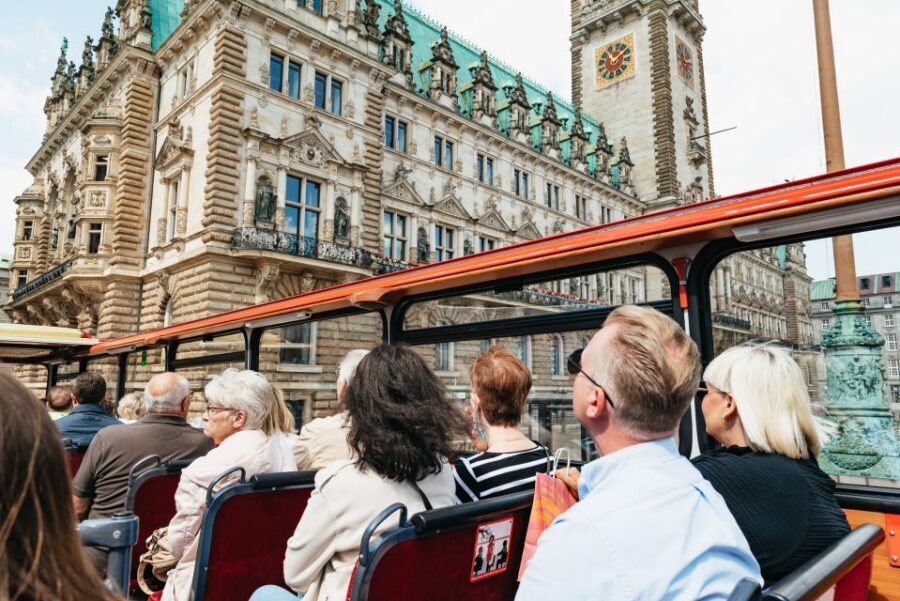
As the route approaches the city center, you’ll pass high-profile landmarks like the Townhall (Rathaus area) and St. Michael’s Church (St. Michaelis). These are the kind of places you’d otherwise have to plan around carefully on foot, tram, or taxi. Here, the bus gives you the quick orientation.
From a tour-planning standpoint, this is where the hop-on option becomes useful. If you’re the type who likes to grab a few iconic photos and keep moving, you can step out near the downtown stops, take your shots, and get back on.
If you’d rather explore deeper, use the bus as your “landing pad.” Ride past first so you know what you want to return for. Then hop off at a stop that matches your walking comfort and your interests.
One more note: on crowded days, upper-deck seating can fill quickly. If you want unobstructed views near landmarks, consider being near the front of the boarding line at major stops.






Reeperbahn and the Red Light district: see it, respect it, don’t get stuck
Line A includes the famous Reeperbahn, the area tied to St. Pauli nightlife and the city’s infamous red light district. This is one of those sights that can feel intense if you’re not prepared. But on a bus route, you also get a key advantage: you’re seeing it from a comfortable distance without having to navigate the crowds on your first day.
From the top deck, you’ll get the “street energy” as context. If you decide to hop off, keep it purposeful. Don’t wander with no plan and end up losing half your day in a maze of side streets.
I also think this stop is a good cultural checkpoint. Hamburg isn’t only warehouses and museums. It’s a working, nightlife city, and Reeperbahn is part of that story. Seeing it from the bus helps you place it within the wider city map you’ve built on the ride.
Audio guide in 11 languages: great tool, watch for one common snag

The standout feature here is the GPS-steered audio system delivered through headphones. It’s offered in 11 languages: English, German, French, Italian, Spanish, Portuguese, Japanese, Russian, Chinese, Arabic, and Danish.
This matters because you’re not just getting facts. The narration is tied to what you’re passing, which helps you avoid the dreaded “I heard words but I didn’t connect them to buildings” problem. For a city with distinct zones, it’s a real quality-of-life upgrade.
That said, there’s one practical snag that comes up often: the onboard German commentary through the speaker can sometimes be loud enough to interfere with the headset audio. If you’re listening in English (or another language), keep your headset volume comfortably high and be ready for a little overlap, especially in louder sections of the ride.
Two small physical notes from real-world experience:
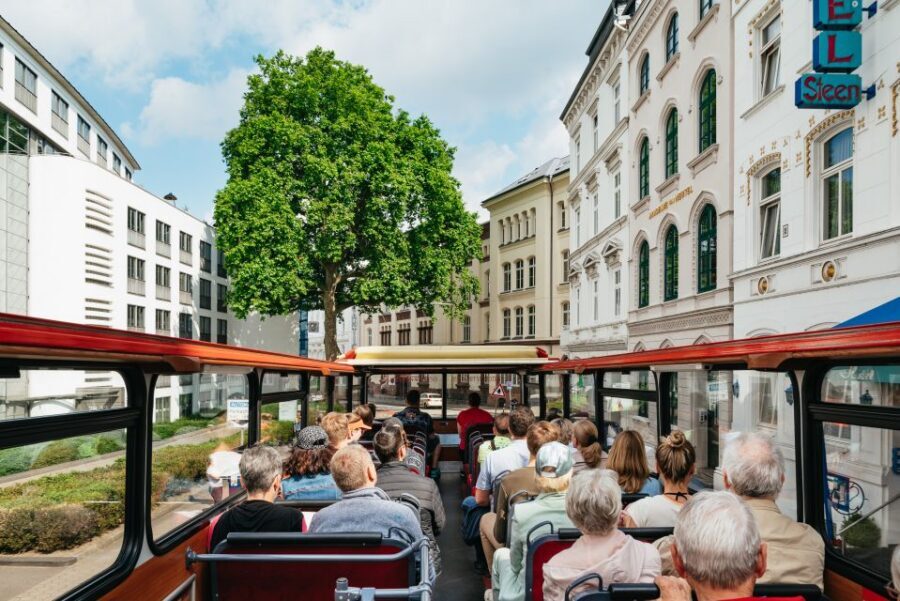
- Upper deck headroom can feel tight if you’re quite tall.
- Audio can be affected by headset fit and whether the headphones are seated properly.
A simple strategy: test your headset audio early at the start of the route. If it isn’t clear, adjust immediately while the bus is still loading.
Price and how long it takes: what you’re really paying for
The price is listed at $24 per person for a 1-day ticket. That sounds simple, but the value comes from what’s included.
You’re not only paying for transportation. Your ticket includes:
- access to the hop-on hop-off service along the Line A loop
- headphones
- GPS narration in 11 languages
That combination is what makes this work for many travelers. If you’re trying to cover harbor areas, historic quarters, and nightlife-adjacent streets in one day, the time saved on figuring out transit routes is part of what you’re buying.
How long does it take in real life? The full loop isn’t extremely long when you don’t hop off, and many people treat it as a “first pass.” Expect the full ride to take roughly 1.5 to 1.75 hours if you stay on board. Add time for stops, photos, and walking, and the day becomes flexible in a way that’s very forgiving.
Season affects frequency too. From November to April, departures are:
- Monday–Thursday: every 60 minutes
- Friday–Sunday: every 30 minutes
In other months, the service can feel more frequent in practice, but don’t assume it will always be identical day to day. If timing is tight, check the operator schedule before you build the rest of your day around it.
Where to board and how to avoid the most common boarding headaches
Your main choice points are:
- Central Station / Kirchenallee area
- St. Pauli Landungsbrücken 1–2
- or any of the other stops along Line A (20 stops total)
I recommend starting from one of the two easiest-to-find hubs if you’re new to the city. They’re straightforward for first-day navigation and reduce the chance you miss the next bus.
You’ll want to look for the red double-decker Hamburger Stadtrundfahrt bus. And because routes can shift due to local conditions, it’s smart to check the operator’s site for timetable changes and stop relocations before you go. That single habit can save you from standing around at the wrong spot.
If you arrive with a tight connection (like a ship schedule), it’s worth asking ahead if there’s any shuttle help from your arrival point. Some people have reported that assistance was possible by request.
Who this tour fits best
This is a strong match if you:
- have limited time in Hamburg and want the big sights lined up
- prefer to explore at your own pace instead of following a strict group plan
- like using guided audio so you can connect what you see with the story behind it
It may feel less ideal if you:
- want a deep, slow walking exploration of one neighborhood (you’ll likely want to hop off and extend time in just a few areas)
- are very sensitive to audio overlap from onboard speakers
- need extra headroom on the upper deck
Should you book Line A on your Hamburg day?
I’d book this if you want an efficient, low-stress way to understand Hamburg quickly. The combination of hop-on hop-off stops, GPS audio in 11 languages, and the route’s hit list (harbor districts, Speicherstadt/HafenCity, downtown landmarks, and Reeperbahn) makes it a practical “first day” tool.
Skip it only if you already know exactly where you’re going, plan to focus on one small neighborhood for hours, or you’re trying to avoid any audio interference. For most first-timers, though, this is a smart way to get your bearings fast and then decide what deserves your next, slower visit.
FAQ
How long is the Hamburg Line A sightseeing bus tour?
It’s offered as a 1-day ticket experience.
What stops does Line A include?
Line A allows hop-on hop-off at 20 bus stops across the route.
Does the tour include a guided audio system?
Yes. It includes a GPS-controlled audio guide with headphones and narration in 11 languages.
Which languages are available on the audio guide?
The audio guide languages listed are English, German, French, Italian, Spanish, Portuguese, Japanese, Russian, Chinese, Arabic, and Danish.
Where can I board the bus?
You can board at Central Station/Kirchenallee, St. Pauli Landungsbrücken 1–2, or any of the other Line A stops.
Is the bus wheelchair accessible?
Yes, the tour is listed as wheelchair accessible.
Is the open-top option available in all seasons?
The bus can be open top in nice weather for better views, so comfort and visibility are better when conditions are good.