REVIEW · HAMBURG
Down Town to Speicherstadt, HafenCity and Elbphilharmonie
Book on Viator →Operated by Schoenes Hamburg · Bookable on Viator
Hamburg tells its story at street level. This 2-hour walk links Rathausmarkt to Speicherstadt, HafenCity, and finally the Elbphilharmonie, with a guide explaining how the port shaped daily life and the city’s reinvention.
What I really like is that you spend your time on big, recognizable places instead of vague “nice views,” and the guide keeps the thread moving from ship to warehouse to modern design.
Second, I like the practical value: most stops are free to see as you go, so you’re paying for the professional guide and the flow, not ticket after ticket. One consideration: it’s short, so you’ll be on your feet and the guide can only give quick hits at each stop rather than long lingering.
In This Review
- Quick Reasons This 2-Hour Hamburg Loop Works
- Start at Rathausmarkt: Where Hamburg’s Power Shows Up Fast
- Hygieia-Brunnen and the Town Hall: More Than Pretty Stone
- Trostbrücke: The Port’s Origin Point in Plain Language
- Deichstraße’s 17th-Century Merchant Life
- St. Nikolai Memorial and the Operation Gomorrha Exhibition
- HafenCity: Europe’s Largest Urban Planning Story in 157 Hectares
- Speicherstadt: UNESCO-Listed Red Brick Warehouses on Wooden Piles
- Elbphilharmonie Finish: Harbor Views and the Acoustics Story
- Price and Value: What $30.04 Really Buys You
- Who Should Book This Walk (and Who Might Skip It)
- Should You Book This Tour?
- FAQ
- How long is the Hamburg walking tour?
- Where does the tour start and end?
- What is included in the price?
- Is the tour offered in English?
- Do I need to pay entry fees at the stops?
- What if it rains?
Quick Reasons This 2-Hour Hamburg Loop Works
- A tight route from Rathausmarkt through the port area to the Elbphilharmonie area
- Speicherstadt and HafenCity in one pass, so you see the old warehouse world and the new redevelopment story
- Named landmarks you can later find again on your own, like Trostbrücke and St. Nikolai
- War history is included via the St. Nikolai memorial and the Operation Gomorrha exhibition under the ruins
- End with harbor views: you can visit the Elbphilharmonie platform for a look over the port
- Small group feel with a max of 15 people, plus a minimum of 8 for the booking to run
Start at Rathausmarkt: Where Hamburg’s Power Shows Up Fast
Your tour begins at Rathausmarkt, right by the Hamburg Town Hall. This is a good opening point because the building isn’t just pretty. The neorenaissance facade (from 1897) signals how much this city relied on trade and wealth—Hamburg wanted its civic center to look like a heavyweight.
Behind the Town Hall, you’ll spot the Hygieia-Brunnen fountain. It’s a reminder that a thriving port isn’t only ships and warehouses; it also needs the basics to keep people healthy. The fountain represents the importance of fresh water, and that theme—practical life—shows up again as the walk continues.
Don’t expect a slow, photo-only start. This is a guided route designed to get your bearings quickly and point you toward what matters along the way.
You can also read our reviews of more tours and experiences in Hamburg.

Hygieia-Brunnen and the Town Hall: More Than Pretty Stone
At the Town Hall, you’ll hear how the facade ties to Hamburg’s identity as a rich trader city. Even if you’re not a “history building” person, it helps you read the streets around you. When you understand the city’s priorities, the architecture stops feeling random.
Then the Hygieia-Brunnen gives you a different angle: water as a lifeline. A lot of tourists walk past these details. Here, your guide gives you the meaning, so the fountain becomes more than a snapshot.
If you’re traveling with limited time, this part is a strong warm-up. You’ll be learning while you’re still fresh, which makes the port-era stops land better later.
Trostbrücke: The Port’s Origin Point in Plain Language
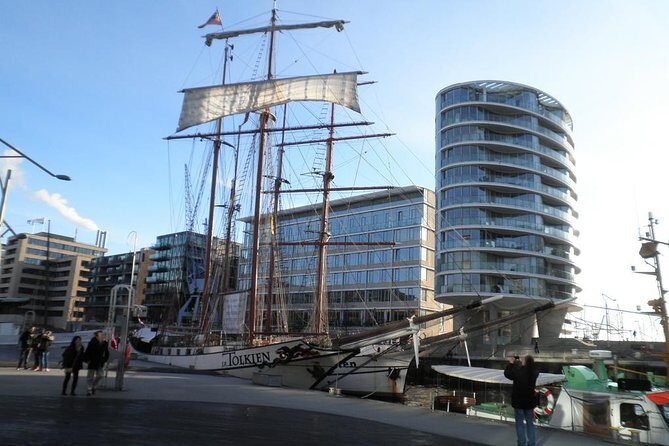
Next comes Trostbrücke, a bridge that connects the city center to its maritime roots. The big idea is simple: sailing ships brought goods into Hamburg’s center, and merchants waited for them. It’s a picture of how commerce used to work—faster than you might assume, but still slow by today’s standards.
Your guide also explains how that changed. Steam ships and later container vessels transformed the port completely. That shift is key, because it explains why Hamburg eventually needed massive redevelopment and new urban planning—exactly what you’ll see at HafenCity and Speicherstadt.
This stop is short, so don’t wander off searching for the perfect angle. Use the moment to understand the story the guide is telling. You’ll carry it with you when you reach the warehouses.
Deichstraße’s 17th-Century Merchant Life
Then you’ll walk through Deichstraße, where historic houses from the 1600s show how merchants lived and worked in the same place. Instead of imagining trade happening somewhere far away, you’ll get the more grounded picture: storing goods, daily living, and working all under one roof.
A practical detail your guide covers is resilience. The street survived a major fire in 1842 and also survived World War II. That makes the preserved houses feel less like museum props and more like evidence that ordinary people had to rebuild and keep going.
One drawback: because the tour is time-limited, you won’t be doing a deep architectural reading here. Instead, you’re getting the essentials so you can notice what matters if you pass this way again on your own.
St. Nikolai Memorial and the Operation Gomorrha Exhibition
At Mahnmal St. Nikolai, the tone shifts. The steeple dates to 1874, and the site serves as a memorial for victims of WWII. Under the ruins, there’s an exhibition about Operation Gomorrha.
This is the kind of stop that gives context. Hamburg wasn’t just “rebuilt for beauty.” It was rebuilt after devastation. Even if you prefer lighter travel, I think this moment is worth including because it helps you understand why so much of the city’s modern form feels like intentional recovery.
If you get sensitive to heavy topics, plan how you want to handle it. The walk is only about two hours total, but this is the portion most likely to feel emotionally intense.




HafenCity: Europe’s Largest Urban Planning Story in 157 Hectares
Now you’ll move into the future with HafenCity, one of the biggest city planning projects in Europe. The scale is hard to grasp until you hear it: 157 hectares of former industrial area transformed into a brand-new district.
Your guide explains the transformation story as you pass through, so you don’t just see new buildings—you learn what replaced what. This matters because HafenCity is often photographed as modern architecture, but it’s also about redevelopment decisions made after the port economy shifted over time.
A practical plus here: your route keeps moving. You get variety without the logistical mess of arranging separate visits. In a short stay, that’s a win.
Speicherstadt: UNESCO-Listed Red Brick Warehouses on Wooden Piles
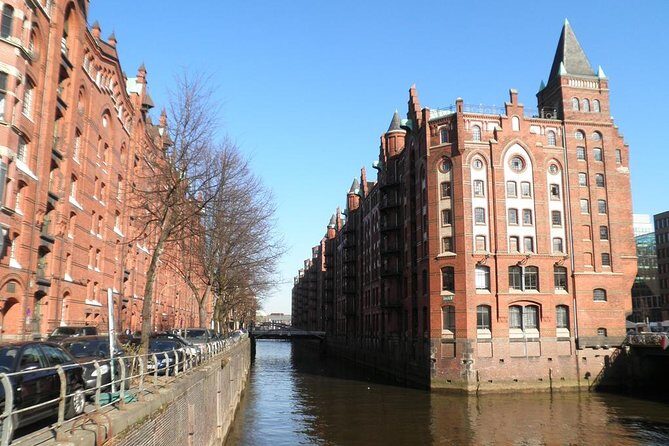
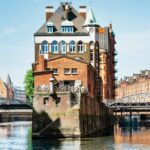
Next is Speicherstadt, the world’s largest warehouse district, known for its red brick buildings built on wooden piles. It was inaugurated in 1888, and after WWII damage, it was restored. It’s also part of UNESCO World Heritage.
What makes this stop special is that Speicherstadt doesn’t feel generic. It’s industrial heritage with a specific construction logic—wooden piles, brick rows, and canal-like waterways that match the port world that created it.
Your guide connects the earlier port story to this warehouse area. When you understand Hamburg’s shipping shifts, the warehouses make more sense. They aren’t just old buildings; they’re the infrastructure of a trading system.
Keep in mind: you’re in Speicherstadt for about 15 minutes in this format. That’s enough for the main feel and key landmarks, not enough for a full museum-style visit. If you want deeper exploring, consider pairing this walk with your own time afterward in the district.
Elbphilharmonie Finish: Harbor Views and the Acoustics Story
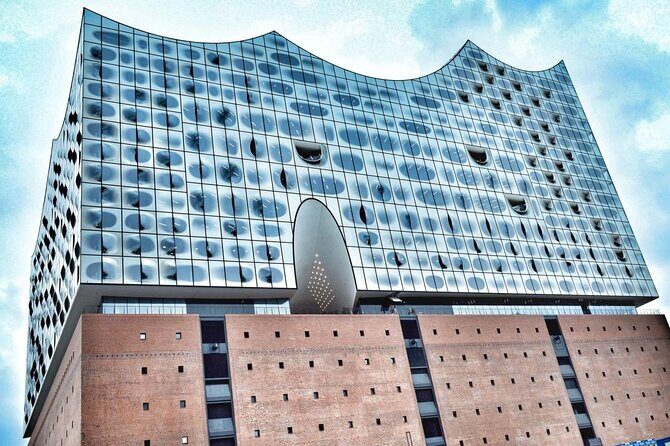
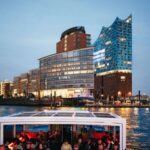
The tour ends at the Elbphilharmonie area, at Elbphilharmonie HamburgPlatz d. Deutschen Einheit 4. The stop is timed so you can connect the port past to the city’s cultural image today.
Your guide tells the hall’s timeline: it was inaugurated in 2016, and the first concert took place on 11 January 2017. You’ll also hear why people talk about the acoustics—there’s a long-running reputation for a near-perfect sound experience.
Even better, you’ll have the chance to visit the platform and enjoy views over the port. That’s a smart way to end a walk like this: you finish with a skyline-and-water perspective, not just a final curb photo.
One note: the Elbphilharmonie area is where you might want extra time. If you’re the type who hates being rushed at the end, plan a buffer before or after the tour so you can linger.
Price and Value: What $30.04 Really Buys You
At $30.04 per person for about 2 hours, you’re paying for three things: a professional guide, a concentrated route across major Hamburg landmarks, and a story that connects port commerce, reconstruction, and modern planning.
The value gets stronger because many stops are free to enter as part of the experience: Town Hall, the fountain area, and the sights along the way. Add in the fact that the group is capped at 15 and you’re getting a more personal walking pace than you would with a huge crowd tour.
If you’re already comfortable walking and you want to understand what you’re seeing, this price is reasonable. If you’re mainly after a long, slow wander with lots of free time at each building, you might feel slightly rushed. But for focused sightseeing with context, it’s a solid deal.
Who Should Book This Walk (and Who Might Skip It)
I’d book this if you want a single guided thread through Hamburg’s most important waterfront stories: the trading center around Rathausmarkt, the port-connected bridges and streets, WWII memory at St. Nikolai, and then the modern makeover with HafenCity and Speicherstadt.
It also fits well if you like practical context. For example, learning that steam ships and container vessels changed the port helps you make sense of why redevelopment happened where it did.
You might choose something else if you’re traveling with very young kids who need longer breaks, or if you want a museum-heavy day. This is a walking and viewing tour—short stops, clear highlights.
And one small human detail: guides seem to matter here. In past experiences, Jutta has been praised for being funny, knowledgeable, and great company, which is exactly what makes a short walk like this feel memorable rather than just factual.
Should You Book This Tour?
Yes, if you want a high-impact, time-saving Hamburg sampler that still includes meaning—trade, rebuilding, and modern urban change—without dragging you across the city. The free-to-see stops and the guided flow are a strong combo.
If you hate standing for a bit, or you prefer long stays at fewer places, you might find the pace a touch tight. But for most first-timers, this is one of the better ways to see Hamburg’s “why” along with its “wow.”
FAQ
How long is the Hamburg walking tour?
It’s about 2 hours.
Where does the tour start and end?
It starts at Rathausmarkt, 20095 Hamburg and ends at the Elbphilharmonie HamburgPlatz d. Deutschen Einheit 4, 20457 Hamburg.
What is included in the price?
You get a professional guide. The tour includes the guided sightseeing stops along the route.
Is the tour offered in English?
Yes, it’s offered in English.
Do I need to pay entry fees at the stops?
The stops listed for the tour are marked with free admission.
What if it rains?
It operates in all weather conditions, so you should dress appropriately.