REVIEW · HAMBURG
Citybeering – Walk with funny and interesting stories while having local beers
Book on Viator →Operated by Jolly Tours · Bookable on Viator
Beer meets history on foot in Hamburg. This Citybeering walk pairs fun stories with local beers while you trace Hamburg’s biggest sights, from the grand Town Hall to the harbor edge. You also get an English-speaking guide and a small group size, so the walk stays personal instead of chaotic.
The main thing to consider is that it’s still a proper walking route. Plan on being on your feet for 2–3 hours, and keep your pace steady—especially if you’re starting early in the day.
In This Review
- Citybeering Hamburg in 6 quick hits
- Why this Hamburg beer walk works: Rathaus to St. Pauli without backtracking
- Entering Hamburg Town Hall: Rathausmarkt’s neo-Renaissance power
- From Rathausmarkt to Jungfernstieg: city design you can actually feel
- Deichstraße and old Hamburg houses: small scale, big meaning
- St. Michaelis (Michel): the shipping symbol you can spot from far away
- The Portuguese Quarter angle: from harbor pubs to café streets
- St. Pauli Landungsbrücken: where passenger ships meet the city mood
- The Alter Elbtunnel: a technical sensation still doing its job
- St. Pauli: red light district, bars, and the daytime reality check
- Park Fiction: ending with art and a socio-political project
- Price and value: is $46.13 a fair deal for a 2–3 hour beer walk?
- Guide style and group size: why it feels manageable
- Timing tip: why afternoon can feel easier than a late-morning start
- Practical tips so you enjoy every stop
- Should you book Citybeering Hamburg?
- FAQ
- How long is the Citybeering Hamburg tour?
- What language is the tour offered in?
- Where does the tour start and end?
- Is there a mobile ticket?
- How large is the group?
- Is the tour suitable for most people?
- Are service animals allowed?
- What do you do during the walk besides sightseeing?
- What is the cancellation policy?
- When do you get confirmation after booking?
Citybeering Hamburg in 6 quick hits
- Small group, big coverage: up to 15 travelers, with stops that feel like a best-of sampler
- Alster-to-harbor route: you go from the Inner Alster core out to St. Pauli
- Real landmarks, not just photos: Rathaus (Town Hall), St. Michaelis (Michel), St. Pauli piers, and the Elbtunnel
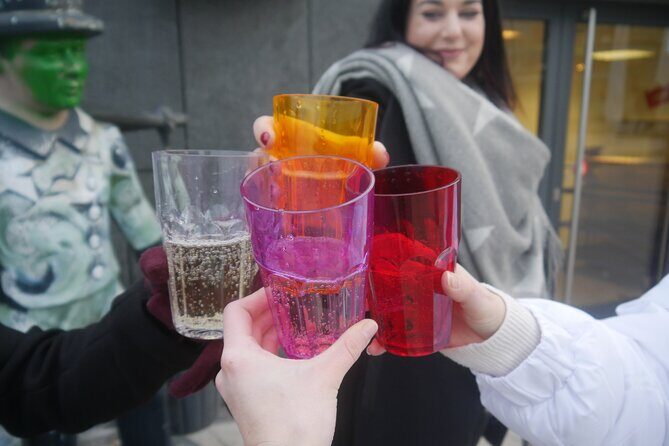
- Beer as part of the storytelling: you’re drinking local beer while your guide explains what you’re seeing
- Neighborhood flavor: the walk works in the Portuguese Quarter and the St. Pauli atmosphere
- An artsy finale: it ends near Park Fiction with a harbor view
Why this Hamburg beer walk works: Rathaus to St. Pauli without backtracking
This tour is built like a “one-direction” day. You start in the city’s civic heart near the Hamburg Town Hall, then you keep moving toward the harbor, with stops that gradually shift from official and elegant to working-port and edgy.
What I like is how the route matches the stories. You’re not just viewing buildings; you’re walking through Hamburg’s identity—Hanseatic power, city planning, shipping symbolism, and the nightlife district at the end.
The other big win is pacing. The tour clocks in at about 2 to 3 hours, with short stop times that keep you moving while still giving you enough time to look closely.
You can also read our reviews of more walking tours in Hamburg


Entering Hamburg Town Hall: Rathausmarkt’s neo-Renaissance power
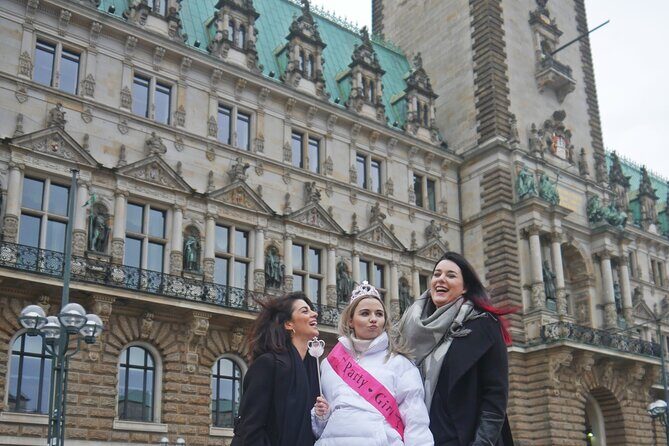
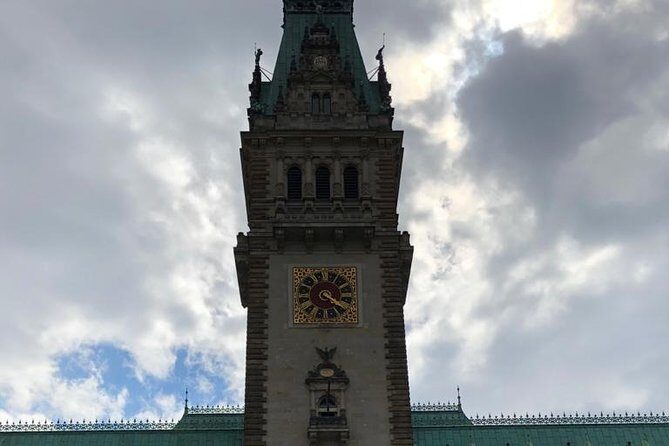
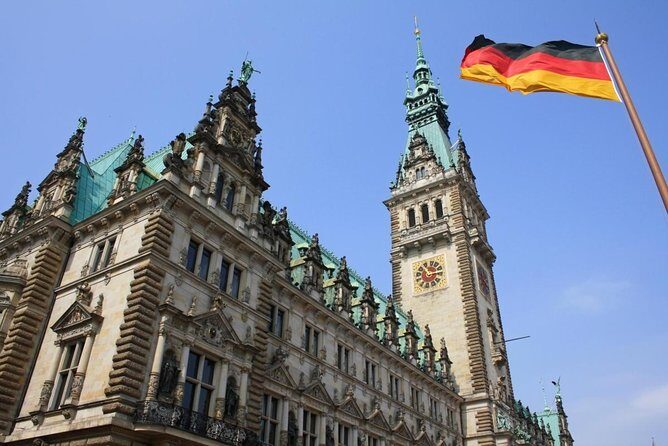
Your first major landmark is Hamburg Town Hall on the Little Alster. This building is a big deal: it’s the seat of Hamburg citizenship and the Senate, built from 1886 to 1897 in a Neo-Renaissance historicist style.
If you like architecture, you’ll probably slow down here. The Town Hall’s presence is the whole point—this is where Hamburg’s civic story gets its physical backbone.
The stop is about 15 minutes, and the good part is that the timing makes sense for a first stop. You get oriented early, so later streets and waterfront views feel connected instead of random.
From Rathausmarkt to Jungfernstieg: city design you can actually feel

Next you head to Rathausmarkt, the town hall square. This ensemble is designed as a model for how St. Mark’s Square in Venice can open to water, and the overall plan dates to 1842.
Even if you’re not an architecture nerd, you’ll get the practical value. The square-to-water relationship is part of how Hamburg wants you to see the city center—open, staged, and visually linked to the Alster.
Then it’s on to Jungfernstieg, a street on the southern bank of the Inner Alster. It runs from Reesendammbrücke to Gänsemarkt, and the vibe here is classic: seeing and being seen.
This is a quick stop (around 5 minutes), so don’t expect a long pause. Instead, treat it like a “read the city” checkpoint—watch how people move, how the waterfront frames the scene, and how the tour’s tone shifts from grand civic to everyday Hamburg.
Deichstraße and old Hamburg houses: small scale, big meaning
Deichstraße is one of those streets that rewards attention. It’s in the city center and preserves the last remaining ensemble of old Hamburg town houses, which is exactly why it matters.
There’s also a detail across the water: the Cremon’s storage group preserved on the other side of the Nikolaifleet. In a short time, you get the feeling of old trade Hamburg still influencing the modern street map.
This stop is only about 5 minutes, so the goal isn’t sightseeing overload. It’s more like the guide gives you a mental bookmark: old Hamburg is still here, but you have to know where to look.
St. Michaelis (Michel): the shipping symbol you can spot from far away
Now you pivot to St. Michael’s Church, popularly called Michel. It’s Hamburg’s most famous evangelical church and considered one of the most important baroque church buildings in northern Germany.
If you’ve ever seen a big church silhouette and wondered why it’s such a city symbol, this is that moment. Michel’s architecture is visible from afar, and it’s tied to shipping on the Elbe—a reminder that this city grew with trade routes, not just local life.
The stop is about 5 minutes, which is short but reasonable. You’re not just looking at a facade; you’re learning why it’s a landmark for a port city, then moving on to where the port stories get louder.




The Portuguese Quarter angle: from harbor pubs to café streets

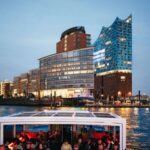
Between the church and the harbor, the walk takes you through the Portuguese Quarter story. This is where the “funny and interesting stories” side really has room to play, because the neighborhood history is colorful.
In earlier decades, the quarter had a strong small-business presence, especially gastronomy. Harbor pubs helped give this area the name The Coast in the 1950s and 1960s.
Then the shift: in the 2000s, more food-and-drink spots appeared, and by 2011 there were around 40 cafés and restaurants. That’s a useful detail because it explains why the area feels like a lived-in food zone instead of just a themed district.
You’ll likely enjoy this segment even if you don’t plan to eat right away. It helps you understand what you’re seeing when you pass shops and terraces later in the day.
St. Pauli Landungsbrücken: where passenger ships meet the city mood
The tour’s harbor chapter starts with St. Pauli Piers (St. Pauli Landungsbrücken). This is a major landing stage for passenger ships on the northern edge of Hamburg’s port.
The jetties sit in St. Pauli between Niederhafen and St. Pauli Fischmarkt along the Elbe. That geographic detail matters, because you can “read” the port geography as you move.
Expect about 20 minutes here, which is enough time to absorb the atmosphere without rushing. Look for how the area mixes working-port practicality with tourist energy.
The Alter Elbtunnel: a technical sensation still doing its job
Next comes one of the most memorable walking moments: the St. Pauli–Elbtunnel, often called the Alter Elbtunnel. It opened in 1911 and runs under the Norderelbe for 426.5 meters.
This tunnel connects the northern harbor edge at the St. Pauli landing bridges with the Elbe island Steinwerder. It’s used by pedestrians and cyclists, plus motor vehicles to a limited extent—so it’s not just a museum stop.
The stop is about 10 minutes, but the value is big because it’s a rare chance to walk through something that used to be a technical headline. It’s listed since 2003, and it even received an engineering landmark recognition in 2011.
If you like seeing infrastructure as part of culture, this is a highlight. Even at a quick pace, the tunnel gives you a strong sense of Hamburg’s engineering confidence.
St. Pauli: red light district, bars, and the daytime reality check
After the tunnel, the tour moves to St Pauli, Hamburg’s world-famous entertainment area. It’s known for bars, pubs, clubs, strip clubs, brothels, and more.
The practical point here is: this area is not just postcards. You see the “nightlife built environment” during daylight, which can be a helpful way to understand how the city markets itself—and how locals keep living alongside it.
You get about 15 minutes, so this isn’t a deep dive into social topics. It’s more like getting your bearings in a district that can feel confusing if you don’t know the geography.
Park Fiction: ending with art and a socio-political project
The final stop is Park Fiction, an artistic and socio-political project in Hamburg since the mid-1990s. The tour ends at the edge of the harbor near Schauermanns Park, with a picturesque harbor view.
You spend about 15 minutes here. That’s a nice way to end, because you leave the more intense city scenes behind and land on something reflective—public art tied to real issues, not just decoration.
Price and value: is $46.13 a fair deal for a 2–3 hour beer walk?
At about $46.13 per person, the big question is what you’re getting for your time. Here’s the honest value read: you’re paying for a guided route that combines (1) multiple major sights, (2) local beer as part of the experience, and (3) a story-driven pace that keeps you moving through neighborhoods you’d otherwise treat like separate destinations.
What makes it feel worth it is the structure. This isn’t a long museum crawl. It’s a walk with stops timed so you get variety—civic Hamburg, religious symbol, port engineering, and the St. Pauli atmosphere—without needing multiple tours.
If you want a day that’s active but not exhausting, this price can make sense. If you’d rather spend money on one big paid attraction, then this style might feel lighter. But for people who love walking, beer, and context, it’s a solid match.
Guide style and group size: why it feels manageable
The tour runs with a maximum group size of 15 travelers. In a city walking format, that’s a sweet spot. You can hear the guide, ask quick questions, and still keep a steady rhythm.
It’s offered in English, which is helpful if you’re navigating Hamburg and want story explanations without guessing. And because the tour includes short stops, the group doesn’t feel stuck waiting around in one place.
One extra detail worth knowing: guides sometimes adjust the route if there’s a special event affecting the streets. That matters in Hamburg, where port-area foot traffic and city events can change fast.
Timing tip: why afternoon can feel easier than a late-morning start
One practical note from the real-world experience side: the time of day changes how the walk feels. An early start around 10 a.m. can be a tougher fit for some people, especially if you prefer not to jump into beer right away.
If you can choose your slot, consider going later in the day. You’ll likely feel more relaxed, and the pacing often matches the rhythm of the waterfront better after the morning rush.
Practical tips so you enjoy every stop
Wear comfortable shoes. The itinerary is short-stop, long-walk energy, and Hamburg’s streets around the center and port can take more effort than they look like on a map.
Bring layers. The waterfront area can feel cooler, and harbor breezes are a real thing.
If you plan to try the beer, drink responsibly and keep water handy. You’re walking between major landmarks, including the tunnel area, where you’ll want your energy steady.
And don’t treat the St. Pauli section as an official “sightseeing zone.” It’s more about atmosphere and orientation, so keep an open mind and avoid expecting a classic museum-style visit.
Should you book Citybeering Hamburg?
Book it if you want a guided Hamburg beer walk that strings together top landmarks in a logical route. It’s especially good for first-time visitors who want civic history, church symbolism, and port-city character in one afternoon.
Skip it if you dislike drinking as part of a tour or you want only the most famous interior attractions. This experience is about stories, streets, and landmarks—so your enjoyment will depend on whether you like walking with context.
If your travel style is active and you value explanations over just snapshots, this one is a strong pick.
FAQ
How long is the Citybeering Hamburg tour?
It runs about 2 to 3 hours.
What language is the tour offered in?
The tour is offered in English.
Where does the tour start and end?
It starts at Hamburg Townhall / Rathausmarkt 1, 20095 Hamburg, Germany. It ends at Park Fiction, Schauermanns Park, Pinnasberg 27, 20359 Hamburg, Germany.
Is there a mobile ticket?
Yes, the tour uses a mobile ticket.
How large is the group?
The tour has a maximum of 15 travelers.
Is the tour suitable for most people?
Most travelers can participate.
Are service animals allowed?
Yes, service animals are allowed.
What do you do during the walk besides sightseeing?
You walk with a guide who shares funny and interesting stories while having local beers.
What is the cancellation policy?
Free cancellation is available up to 24 hours before the experience’s start time for a full refund.
When do you get confirmation after booking?
You receive confirmation at the time of booking.