REVIEW · HEIDELBERG
Heidelberg: 2-Hour Crime Tour with Costumed Guide
Book on GetYourGuide →Operated by H&B Tour Conception · Bookable on GetYourGuide
A costumed Commissar makes Heidelberg look different. This 2-hour crime tour turns romantic facades into a trail of real-sounding cases, guided with period character work and props, while you stop at the city’s best-known landmarks. I liked how the stories are built around Heidelberg’s archives, not just vague folklore.
You’ll also walk through the Old Town with a clear sight-by-sight rhythm, so you come away with a stronger mental map: Town Hall, Market Square, the Church of the Holy Spirit, the Jesuit Church, Old and New University, St. Peter’s Church, the Old Bridge, and Marstall. The catch is simple: if you’re hoping for nonstop scares, you may find the experience closer to a theatrical walking tour than a heavy-horror production, and the performance style won’t land the same for everyone.
In This Review
- Key things to know before you go
- Finding the story start at Kornmarkt
- The Commissar’s tour style: spooky stories tied to place
- How the tour makes Heidelberg’s “dark past” feel real
- Town Hall and Market Square: the “public stage” of crime
- Church of the Holy Spirit and Jesuit Church: faith, power, and tension
- Old University and New University: students, rumors, and consequences
- St. Peter’s Church and the Old Bridge: the story keeps moving
- Marstall: where the tour lands its final feel
- Price and value: $435 per group can be either great or pricey
- Who this tour is best for (and who should be cautious)
- A balanced reality check: performance style can vary
- Booking checklist: make the experience smoother
- Should you book this Heidelberg crime tour?
- FAQ
- FAQ
- How long is the Heidelberg crime tour?
- Where do I meet the guide?
- How much does the tour cost?
- What’s included in the price?
- Are transfers included?
- What languages is the tour offered in?
- Is the tour wheelchair accessible?
- What should I bring?
- Can I pay later or cancel?
Key things to know before you go
- Archive-backed crime stories: you’re meant to hear authentic crimes tied to Heidelberg records
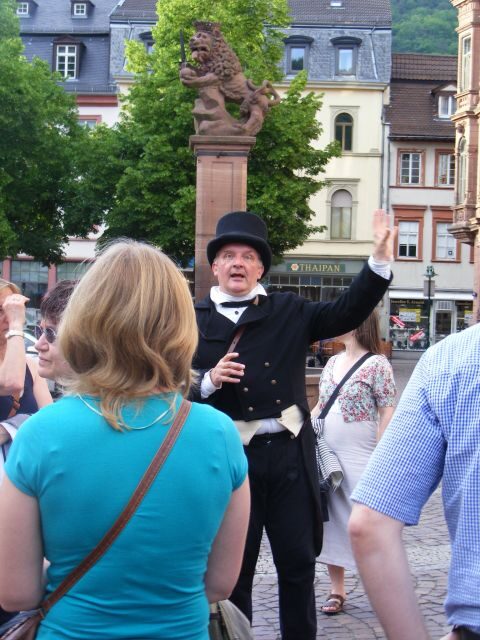
- Costumed Commissar character: storytelling is the main engine of the tour
- Major Old Town stops: you hit key landmarks instead of wandering randomly
- Dark anecdotes with a wink: cat-meat tales, a guardsman killing, and the sword-of-Hölzerlips story get used to frame the sights
- Two hours is the sweet spot: enough time to connect places to plot without dragging
- Private group up to 25: ideal if you want something more interactive than a standard group tour
Finding the story start at Kornmarkt
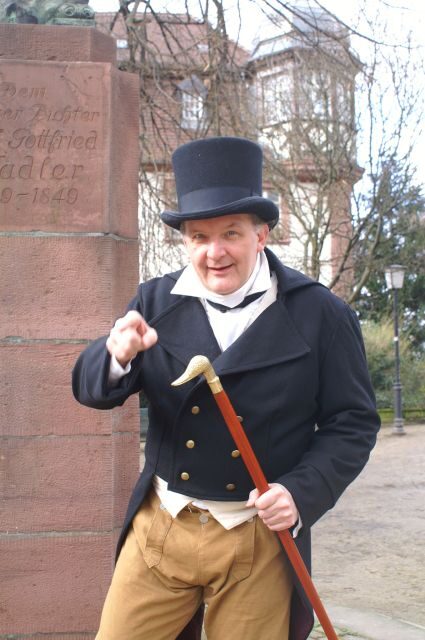
The tour kicks off in Heidelberg Old Town (69117) at the Statue of Madonna at Kornmarkt. That matters because it’s one of the easiest places to orient yourself: you’re starting inside the area most first-time visitors want to see anyway, so you don’t lose time on “getting somewhere.”
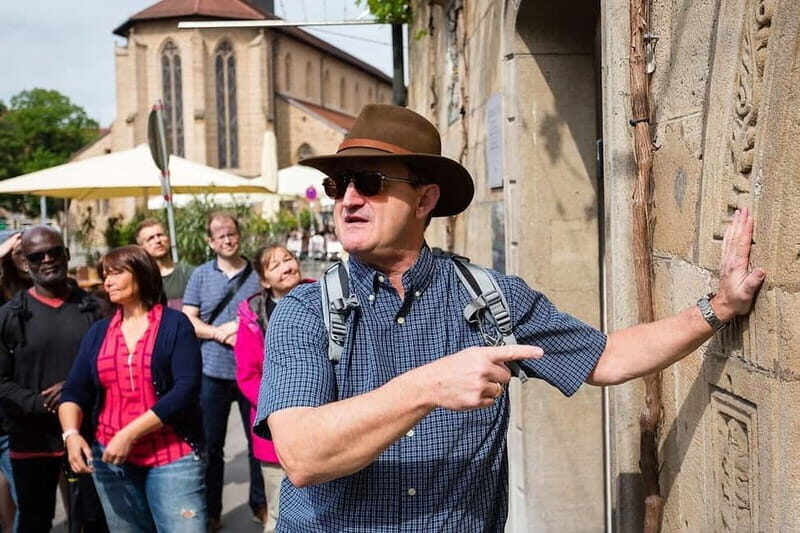
Once you meet your guide in costume, the tone becomes clear right away. This isn’t a museum lecture. It’s a narrative walk where the character leads the pacing and the sights are used like chapter headings.
Practical tip: bring comfortable shoes. You’re on foot for two hours, and the tour moves through multiple landmark stops.
You can also read our reviews of more guided tours in Heidelberg


The Commissar’s tour style: spooky stories tied to place
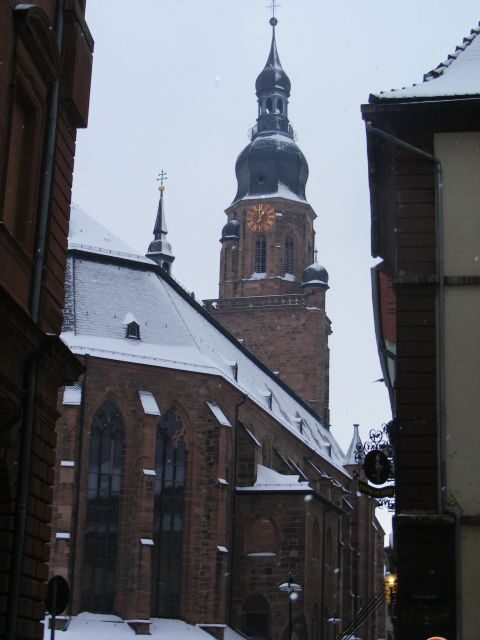
The “crime” part is front and center. You’ll explore the dark side of romanticism, with the guide acting as a Commissar and pointing out how Heidelberg’s pretty surfaces can hide human problems and criminal plots. The tour leans into “behind the facade” storytelling, so the buildings you see become part of the crime web.
What makes this approach work is that it gives you a reason to look harder. Instead of treating sights as checklist items, you’re told why a place matters within a story—sometimes through shocking anecdotes, sometimes by framing how institutions and everyday life could turn ugly.
You’ll also notice the presentation uses high-quality props alongside the costumed guide. In other words, the tour isn’t only spoken. The staging is meant to help the story stick.
If you prefer straightforward sightseeing with minimal theater, this may feel like too much performance. But if you like your history with a bit of theatrical bite, you’ll probably have more fun here than on a standard city walk.
How the tour makes Heidelberg’s “dark past” feel real
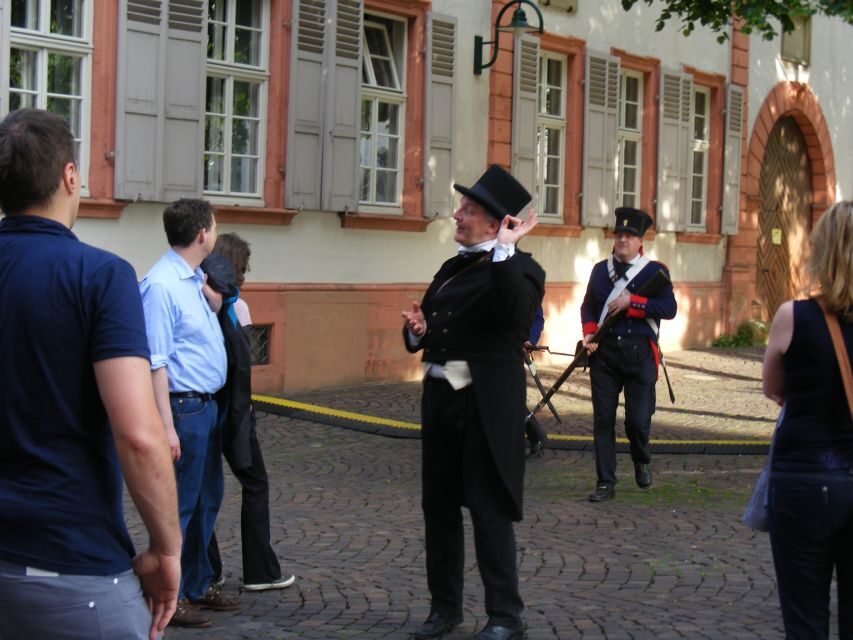
A big selling point is that the anecdotes are presented as authentic crimes from Heidelberg’s archives. That’s a key difference. Random ghost stories can be entertaining, but they don’t give you much to hold onto. Archive-based stories give you something firmer to connect to the place.
Here are a few of the kinds of tales you can expect the guide to bring up during the walk:
- Old ladies who slaughtered cats and sold them as meat
- Students who killed a respectable guardsman
- An antique dealer who supposedly sold the sword of the Hölzerlips dozens of times to unsuspecting tourists
Each one of these stories is designed to do two jobs at once. First, it shocks or unsettles you enough to keep attention. Second, it gives you a human lens for places that might otherwise feel only “pretty” or only “important.”
And yes, some stories come with a slightly dramatic edge, the kind that makes you feel you’re hearing a case file read aloud with flair. That’s part of the point.
Town Hall and Market Square: the “public stage” of crime
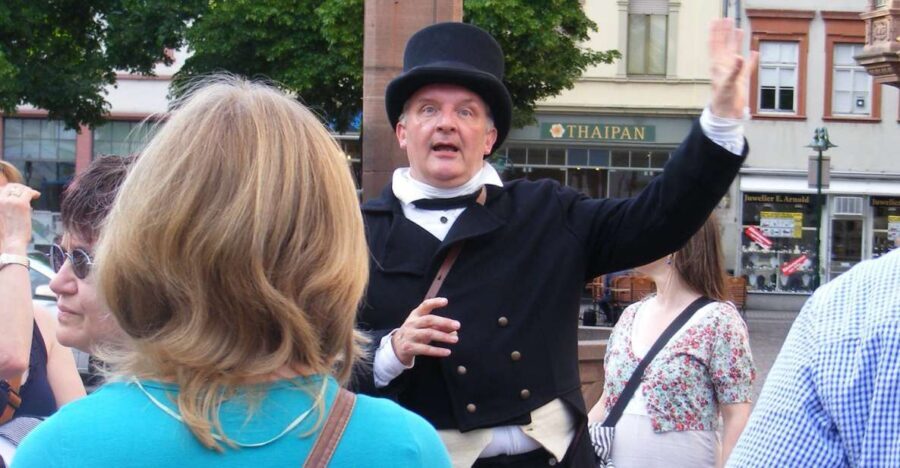
When the tour hits the Town Hall area and then Market Square, it’s using the heart of civic life as the first big backdrop. These are the kinds of places where everyday decisions, public power, and crowds naturally overlap. That’s ideal real estate for the guide’s theme: behind the official look, messy things can happen.
Expect the narration to connect what you see with the idea of public life as a stage for conflict. Market Square is the kind of stop where you’ll likely get the most contrast: the open, central feel of a public square set against darker stories meant to make you question what people actually kept quiet.
If you’re the type who enjoys learning how a city “worked” day-to-day, this section tends to land well. If you only care about architecture facts, you may want to treat the architectural viewing as secondary and let the storytelling guide your attention.
Church of the Holy Spirit and Jesuit Church: faith, power, and tension
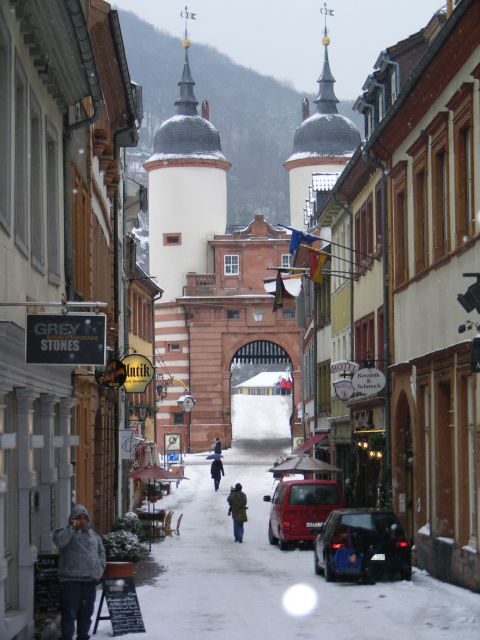
Next come two religious landmarks: the Church of the Holy Spirit and the Jesuit Church. Rather than presenting them like standalone monuments, the tour uses them to support the idea that crime and morality debates lived right alongside everyday devotion and authority.
This is where a costumed Commissar style really earns its keep. A character-driven storyteller can make “institutions” feel less abstract. Instead of seeing churches as only spiritual buildings, you start hearing the story angles around order, discipline, and what happens when people cross lines.
A consideration here: if you were hoping for a strictly chronological history of Heidelberg, the tour is not built that way. It’s built like a set of linked case stories across different landmarks. That makes it fun and memorable, but it also means the topic shifts from place to place to keep the narrative moving.
A few more Heidelberg tours and experiences worth a look



Old University and New University: students, rumors, and consequences
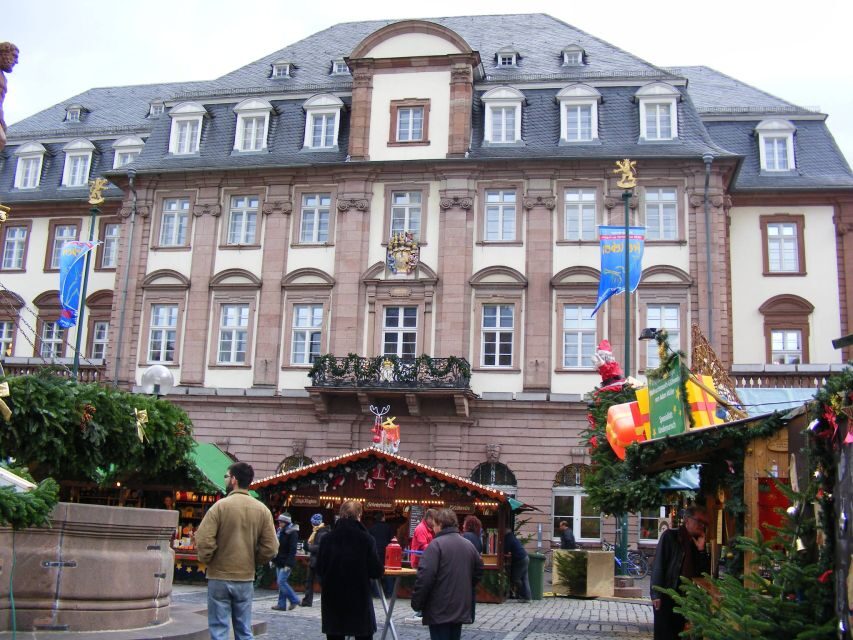
Then the walk turns academic with Old and New University stops. Universities are loaded with story potential because students are young, systems can be strict, and reputations move fast. The guide’s crime theme naturally fits those ingredients, and it’s here that you may hear tales tied to violence and wrongdoing by people who should have been under protection or authority.
If you like how the tour forces you to think about everyday roles—student, guard, merchant, authority—this part is one of the best. It takes the setting you might otherwise see as “just universities” and makes it part of the darker social puzzle.
One practical upside: university areas tend to give clear sightlines for group pacing. That matters on a guided walk because two hours goes quickly.
St. Peter’s Church and the Old Bridge: the story keeps moving
After the university stops, you’ll reach St. Peter’s Church and then the Old Bridge. These are the kinds of landmarks that help you reset your eyes and your energy, since bridges and main thoroughfare zones change the feel of the walk.
The Old Bridge is especially useful in a narrative tour because bridges are naturally “transition zones.” The guide can shift from one type of crime tale to another while you visually move through the old-city flow.
If you’re someone who likes to take photos, this is a good area to slow down briefly during the stop. Just keep an eye on the guide’s pacing so you don’t get separated at the next landmark.
Marstall: where the tour lands its final feel
The last stretch brings you to Marstall. You’ll finish this part of the Old Town loop with a sense that the city’s architecture isn’t separate from its human mess. The Marstall stop acts like a concluding beat in the walk: you’re not leaving Heidelberg’s “story world,” you’re just stepping out of it.
By the end, the tour’s structure will click. Even if the stories are shocking or strange, they’re arranged across landmarks that represent different parts of society: civic life, markets, faith institutions, education, public spaces, and older urban corners.
That’s the value. You don’t just see a list of sites. You leave with a connected mental map where the sights have narrative weight.
Price and value: $435 per group can be either great or pricey
The price is $435 per group up to 25, with the tour lasting 2 hours. The value depends on how you’ll use “private group.”
If you can fill the group size, you’re effectively buying a guided experience that feels like it’s tailored to your party rather than a fixed, impersonal mass tour. In that best-case scenario, the cost becomes much easier to justify because you’re splitting the group price across more people.
If you’re going as a small group and you’re paying close to the full group rate, it can feel steep compared with typical per-person tours. In that case, it’s worth asking yourself what you want most: standard sightseeing, or a theatrical crime-narrative that turns your two hours into a story you’ll remember.
My practical take: this is a smart pick for team events or groups who want a shared activity with a character. For solo travelers or couples who just want quick landmark facts, you might find better value elsewhere.
Who this tour is best for (and who should be cautious)
This tour fits you if you want:
- A two-hour guided walk that’s more than just facts
- A costumed character and archive-based criminal anecdotes
- A way to understand Heidelberg’s Old Town through stories, not only stone and statues
- A group activity that can feel coordinated and fun, including for teams
Be cautious if:
- You dislike theatrical performance and want minimal acting
- You’re expecting horror-movie intensity rather than “crime stories with spooky showmanship”
- You prefer a deep historical lecture over narrative case storytelling
A balanced reality check: performance style can vary
One of the most honest things you can plan for is variability in presentation. Some people love the over-the-top character energy and high-quality props; others find it overdone and want more straightforward connection to the theme.
So go in with the right expectation: this is a guided walk where the character experience drives the rhythm. If that’s your thing, you’ll likely feel the tour hits harder. If you want only information and no performance, you may feel the “crime tour” label is a bit too theatrical for what you hoped for.
Booking checklist: make the experience smoother
You’ll likely have an easier time if you plan for a few basics:
- Wear comfortable shoes (listed and smart)
- Show up at the meeting point at Kornmarkt, Statue of Madonna
- Expect 2 hours on your feet
- Remember it includes the tour and guide only
- Arrange your own transfers, since they aren’t included
If you’re trying to match language needs, note that the live guide operates in German and English. If language comfort is important, choose the time slot that matches your preference.
Should you book this Heidelberg crime tour?
Book it if you want Heidelberg Old Town with a storyline: a costumed Commissar, spooky case tales, and major landmarks connected to crime. It’s especially good for groups who want something shared and a little theatrical, not just another walk with a map and a script.
Skip it if you want a calm, purely historical tour or you’re sensitive to performance style. Since the experience can feel more like narrative city guiding than nonstop scare content, it’s best when you’re excited by the storytelling part.
FAQ
FAQ
How long is the Heidelberg crime tour?
The tour lasts 2 hours.
Where do I meet the guide?
You meet in Heidelberg Old Town (69117) by the Statue of Madonna at Kornmarkt.
How much does the tour cost?
It costs $435 per group, up to 25 people.
What’s included in the price?
The tour and a live guide are included.
Are transfers included?
No, transfers are not included.
What languages is the tour offered in?
The guide offers the tour in German and English.
Is the tour wheelchair accessible?
Yes, it is wheelchair accessible.
What should I bring?
Wear comfortable shoes.
Can I pay later or cancel?
You can reserve now and pay later. Free cancellation is available up to 24 hours in advance for a full refund.