Berlin changes fast on this guided walk. I love the way Hitler’s bunker and the Holocaust Memorial are placed into clear context as you stand in the city itself. I also love the quick, high-impact stops at Brandenburg Gate and Checkpoint Charlie that make 20th-century Berlin feel real, not textbook-only. The catch: it is a brisk three hours with plenty of pavement, so it can feel long if you tire easily.
Meet your guide outside Friedrichstraße station and expect a story that stays question-friendly from the start. Guides like Hannah earn praise for keeping a steady pace with short breaks, which matters when you want to hear details without rushing. This tour also stays small, capped at 25 people, so it is easier to stay oriented while the city keeps moving around you.
For the price of $24.07, you get an English-speaking local guide plus a walk that strings together Nazi Germany, the Berlin Wall remnants, and the government quarter near the Reichstag. Some big museum stops are viewed from the outside or on short looks, and tickets for places like Pergamonmuseum are not included. Wear comfortable shoes, since you will be on your feet for much of the tour.
In This Review
- Key highlights you will feel on the walk
- Starting Outside Friedrichstraße: the orientation advantage
- Palace of Tears (Traenenpalast) to Checkpoint Charlie: the Cold War border you can walk
- Neue Wache, Bebelplatz, and the Holocaust Memorial: heavy places, clearly explained
- Museum Island quick circuit: Berliner Dom, Pergamonmuseum, and the museum row
- Staatsoper, Konzerthaus, and Gendarmenmarkt: Berlin’s style and tolerance
- Checkpoint Charlie to Topography of Terror: the Wall made physical
- Aviation Ministry to Fuhrerbunker: tracing regime layers on one route
- Reichstag quarter to Brandenburg Gate: a strong ending at Pariser Platz
- Price and value: why $24.07 works for many first-time visitors
- Who should book this Berlin walk, and who should think twice
- Should you book Explore Berlin: Iconic Sights and a lot of 20th-century context?
- FAQ
- How long is the walking tour?
- What is the price per person?
- Is the tour offered in English?
- Where does the tour start and where does it end?
- Is admission included for all stops?
- What’s included in the price?
- Do I need a physical ticket?
- How early should I arrive?
- How large is the group?
- Can I cancel for a full refund?
Key highlights you will feel on the walk
- A tight 3-hour sweep of Cold War landmarks and Nazi-era sites in central Berlin
- Stop-to-stop context that connects what you see to what happened in the Third Reich and during the division of Germany
- Photo-friendly anchors like Checkpoint Charlie and Brandenburg Gate, with enough time to reset
- Memorials handled in a thoughtful way, including the Book Burning Memorial at Bebelplatz
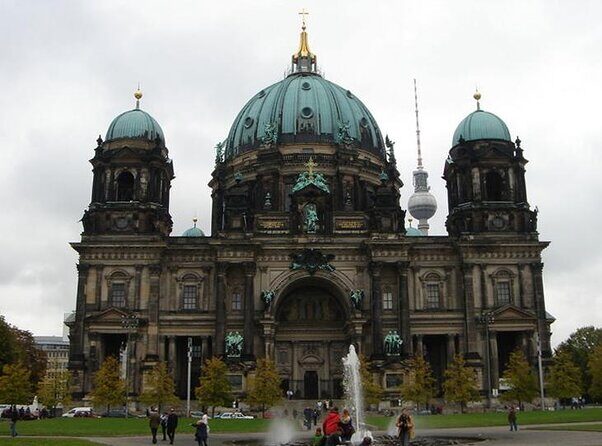
- Museum Island quick hits, including views around Berliner Dom and the museum row (optional entries cost extra)
Starting Outside Friedrichstraße: the orientation advantage
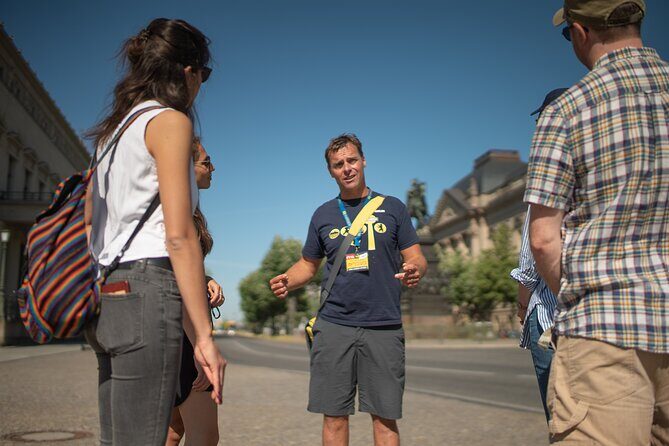
The tour begins in central Berlin around Friedrichstraße, a smart choice because it places you right at a crossroads of modern Berlin and the city’s political center. You will want to arrive early—this experience specifically asks you to be at the meeting point 15 minutes before the start. It keeps the group from breaking into little clusters, which is how people end up missing a key explanation.
You are walking with a local English-speaking guide for about three hours. The group size is capped at 25, so you are not being herded like a school trip. Still, you should plan for real walking time; one review specifically noted the distance can feel like about three miles, and another mentioned it can feel long for seniors.
Bring basic walking gear: comfy shoes, water, and a layer you can manage if the weather swings. Berlin weather is Berlin weather, and the pacing includes short stops, which helps you reset before moving on.
You can also read our reviews of more tours and experiences in Berlin.


Palace of Tears (Traenenpalast) to Checkpoint Charlie: the Cold War border you can walk
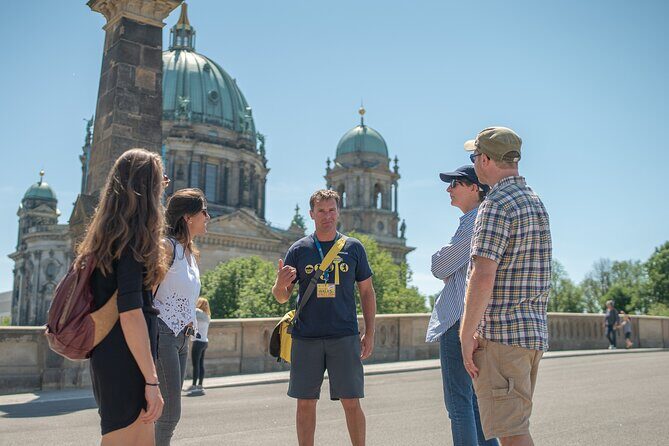
This is the part where the city turns into a stage set. You start with the Palace of Tears, a Cold War checkpoint known as the Traenenpalast, and the guide explains what that kind of border meant for everyday people. Even if you have read about the era, standing near the places where East and West Berlin interacted lands differently.
Checkpoint Charlie comes next, and the tour treats it as more than a famous photo stop. You learn what it represented as the best-known crossing point between East and West Berlin during the Cold War, plus the 1961 tank stand-off between Soviet and American armed forces. That detail gives the site weight, because it shows how close the Cold War could feel to open conflict.
After you cross from one iconic point to the next, you also get a sense of how Berlin’s geography and bureaucracy shaped people’s lives. You are not just seeing a sign; you are seeing the idea of a border made physical.
Neue Wache, Bebelplatz, and the Holocaust Memorial: heavy places, clearly explained
Berlin does not handle its 20th-century traumas with soft focus, and this walk follows that approach. You begin with Neue Wache, a national memorial site that reflects on war and tyranny. It is one of those stops where the guide’s framing matters, because the building and surrounding space change what you think about when you look at it.
Then you reach Bebelplatz, an elegant 18th-century square, where the tour slows down for a darker counterpoint: the Book Burning Memorial. You stand where the Nazis burned tens of thousands of books in 1933, and the guide’s explanation links culture and censorship to the way the regime tightened its control. It is a difficult stop, but it is also one that helps you understand how ideology enters everyday life.
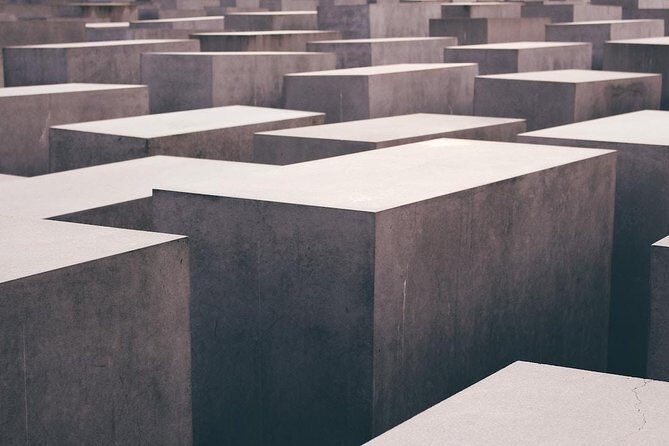
The Holocaust Memorial—officially the Memorial to the Murdered Jews of Europe—comes later on the route. The experience here is more than a quick walkthrough: you actually walk through the memorial dedicated to the victims. If you prefer tours that keep politics at arm’s length, this is where your comfort level will matter most. Go with the expectation that the tour addresses genocide directly, and plan for a slower mental pace than the rest of the walk.
Museum Island quick circuit: Berliner Dom, Pergamonmuseum, and the museum row
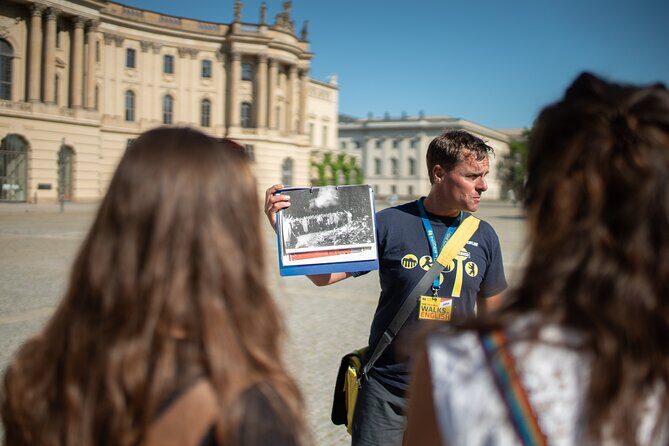
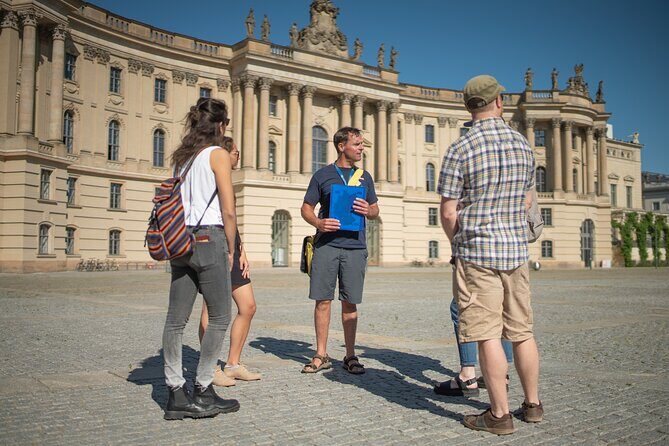
After the memorial weight, you get a stretch of city landmarks that show how Germany built identity through architecture and collections. You pass Humboldt University, where Marx, Engels, and Einstein studied and taught—an eye-opening pairing of political theory, science, and education in one stop. It helps you see that Berlin’s story is not only about power struggles; it also includes intellectual life.
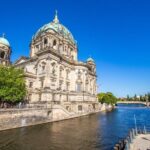
Next comes Berliner Dom, the biggest church in Berlin. You will see Lustgarten, City Palace (Stadt Schloss), and the Humboldt Forum nearby, giving you context for the Museum Island and its surrounding power center. Tickets are not included for this stop, so think of it as a close look around one of the city’s most recognizable shapes rather than a full interior visit.
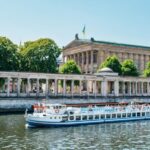
The tour continues by pointing out major museum landmarks: Pergamonmuseum, Neues Museum, and Altes Museum. Here is the practical reality: admission tickets are not included for these museums, so you are not getting guaranteed entry. Still, the guide helps you understand what the places are known for, including Islamic art at Pergamonmuseum and the famous Ishtar Gate and Market Gate of Miletus.
You also hear about Neues Museum and its Ancient Egyptian collection on a UNESCO Heritage World site. Altes Museum gets attention too, including that it was the first museum built in Berlin and designed by Karl Schinkel. Even with a short stop at each location, this kind of orientation helps you decide what to return to later if you want more time inside.
If your ideal day in Berlin is mostly museums, you may wish you had longer than three hours here. If your goal is to connect major sites with the city’s 20th-century story, the short looks work well because the guide moves you efficiently between eras.
Staatsoper, Konzerthaus, and Gendarmenmarkt: Berlin’s style and tolerance
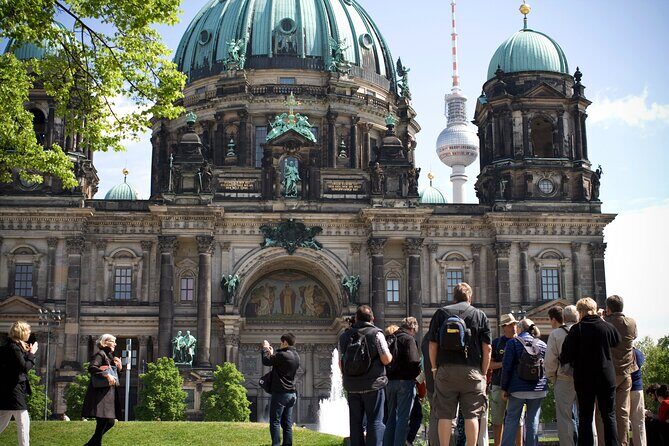
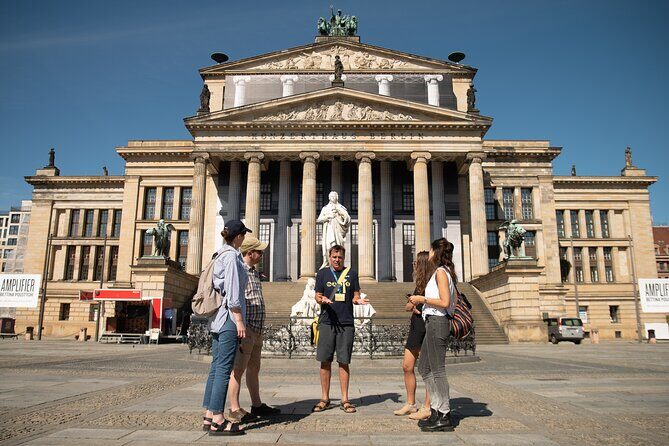
Berlin loves symmetry, and this section shows it. You pass Staatsoper, an opera house built under Friedrich the Great in 1743. Nearby, you also see Konzerthaus, completed in 1821, which the tour presents as part of the city’s cultural architecture.
Then comes Gendarmenmarkt, a square associated with the period of Berlin’s religious tolerance. The French Cathedral and the German Cathedral anchor your understanding of how different religious communities were given space in the city’s design. It is one of the more calming parts of the route because it reads like an intentional civic plan, not a reaction to crisis.
This is also a good moment to check your energy. The walk keeps moving, but the sites here give you wide-open sightlines for photos and a chance to breathe.



Checkpoint Charlie to Topography of Terror: the Wall made physical
The tour keeps the Cold War theme going with a shift from border drama to the Wall’s physical presence. After Checkpoint Charlie, you reach Topography of Terror, where you can see a 200-meter piece of the Berlin Wall. That length matters—this is not a token remnant, it is a visible slice of what East and West separation looked like in real scale.
Topography of Terror is also tied to how the city processed terror and repression after the fact. Even if you have visited other memorial spaces, having the Wall’s material presence in your day changes how you interpret everything else you saw earlier.
By the time you move toward the next stops, you are already carrying a mental timeline. That makes the later Nazi-era site connections easier to follow.
Aviation Ministry to Fuhrerbunker: tracing regime layers on one route
Some Berlin streets feel like they have multiple eras stacked on top of each other. The tour leans into that reality at the Aviation Ministry area, tied to Hermann Göring’s air force ministry. It also notes how the building’s role shifted later, including the East German house of ministers and the German Finance Ministry. It is a reminder that power systems often reuse the same real estate.
Then you reach the Fuhrerbunker area. You stand above the location where Hitler spent the last days of World War II—site of the Führerbunker. This is another stop where the guide’s framing matters, because the location itself is not dramatic in a movie-set way. The meaning is in why it mattered, and how Berlin carried the aftermath.
If you are sensitive to the subject matter, plan for this to be the emotional peak of the route. If you are curious about how history happens in layers—architecture, bureaucracy, ideology—this stop delivers exactly that feeling.
Reichstag quarter to Brandenburg Gate: a strong ending at Pariser Platz
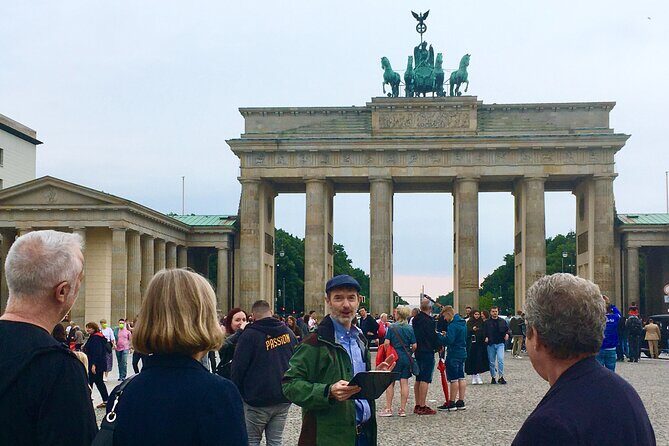
After the bunker and memorial sequence, you move into the government quarter and the world-famous political symbols. You see the German house of Parliament and the surrounding government area, and the walk closes at the Brandenburg Gate near Pariser Platz.
Brandenburg Gate is presented as a national symbol of peace and unity now, even though it used to reflect division. The guide also points out the surrounding landmarks you will likely recognize: the American Embassy, French Embassy, Hotel Adlon, and the Academy of Fine Arts are all visible from this area. It is a satisfying finish because you end where Berlin feels most like it wants to tell its future story.
Pariser Platz also gives you a sense of the international scale of the area, with the American and French embassies and Hotel Adlon right there. If you still have energy after the walk, this is a good location to wander a bit on your own and compare what you just heard with what you see.
Price and value: why $24.07 works for many first-time visitors
At $24.07 per person for about three hours, this tour is a value play if you want structure and context. You are paying for the guide’s ability to connect scattered landmarks into a single story about Nazi Germany, World War II, and the Cold War division of Berlin.
What you get for the money is not ticket access to everything. Several stops are clearly marked as not including admissions for major museums and major interior attractions, like Berliner Dom, Pergamonmuseum, Neues Museum, and Altes Museum. Still, many of the most important political and memorial sites can be experienced at street level, and the tour fills in what the sites mean.
If you were doing this on your own, you would still see the sights, but you would likely miss the exact political connections the guide highlights—like the 1961 tank stand-off at Checkpoint Charlie, the role of Traenenpalast as a Cold War checkpoint, and the idea of regime layers at the Aviation Ministry location.
Who should book this Berlin walk, and who should think twice
This is a great fit if you want an efficient first pass through central Berlin with a strong focus on 20th-century events. It also works well if you like asking questions during a tour, because guides such as Joseph and Tom have been praised for answering questions and keeping things engaging.
It may be less ideal if you have limited mobility or stamina. The walk can feel like about three miles, and one person flagged that it can be long for seniors. It is also best for people who can handle difficult topics, since the route includes the Holocaust Memorial, book burning at Bebelplatz, and the Fuhrerbunker location.
If you only want art museums and want to spend hours inside, you may prefer a different format. This one is built for movement and explanation rather than deep museum time.
Should you book Explore Berlin: Iconic Sights and a lot of 20th-century context?
Book it if you want your first Berlin day to make sense fast—Nazi Germany, the Berlin Wall, and the Cold War border all tied together in one guided loop. The price-to-time ratio is strong, and the small group size helps the guide keep control of the pacing.
Skip it or pair it with a second day if you dislike long walks or you want long museum interiors. Also, if you get overwhelmed by heavy subject matter, mentally prepare for several intense memorial stops in one outing.
FAQ
How long is the walking tour?
It lasts about 3 hours.
What is the price per person?
The tour costs $24.07 per person.
Is the tour offered in English?
Yes, it is offered in English.
Where does the tour start and where does it end?
The experience lists a start point at Reichstagufer 17, 10117 Berlin, Germany and an end point at Brandenburg Gate, Pariser Platz, 10117 Berlin, Germany. The overview also says to meet your guide outside Friedrichstrasse train station.
Is admission included for all stops?
No. Several major sites list admission as not included (for example, Berliner Dom and the museum stops). Many other stops are listed with admission ticket free.
What’s included in the price?
You get the 3-hour walking tour and a local English-speaking expert guide.
Do I need a physical ticket?
You get a mobile ticket.
How early should I arrive?
You should arrive at the meeting point 15 minutes before the tour begins.
How large is the group?
The maximum group size is 25 travelers.
Can I cancel for a full refund?
Yes, you can cancel for a full refund if you cancel at least 24 hours before the experience starts.