REVIEW · LEIPZIG
Federal Administrative Court Leipzig: A journey into the heart of German justice
Book on GetYourGuide →Operated by Leipzig Food Tours · Bookable on GetYourGuide
Justice rooms sound dry—this one isn’t. This certified tour takes you into the heart of German administrative justice, connecting real courtroom decisions with the building that helped frame them. I especially like how it turns law into something you can see: historic meeting rooms, big ceremonial spaces, and stories tied to turning points in German legal history.
Two things I really enjoy: the stop in the large courtroom, where you get up close with national coats of arms and imperial paintings, and the way the guide makes the legal past feel concrete through the examples highlighted on the route. You’ll also learn about the official dress still associated with federal judges, including the crimson robe and beret—small detail, big “wait, that’s still real?” effect.
One possible consideration: the tour is held in German, and some content is shown in its original language, so if your German is limited you’ll want to confirm English support in advance. Also, at 1.5 hours, it’s packed, so if you want a slow, meandering look at every corner, you may feel the time is tight.
In This Review
- Key highlights you’ll remember
- Federal Administrative Court Leipzig: what you’re really stepping into
- The building’s makeover across eras: 1879 to today
- Courtroom photography you won’t need: imperial art, coats of arms, and symbols
- Landmark cases, explained in the rooms they belong to
- Judges’ official dress: the small detail with big meaning
- Historic meeting rooms: where procedure feels real
- The former presidential apartment: a quieter contrast
- Why this is good value at about $14 per person
- Who should book this tour (and who might not)
- Practical tips for making the most of the 90 minutes
- Should you book the Federal Administrative Court Leipzig tour?
- FAQ
- Where is the meeting point for the tour?
- How long is the guided tour?
- What is the tour price per person?
- What language is the tour conducted in?
- What will I see during the tour?
- Are children allowed?
- Is the building accessible for wheelchair users?
- Are pets allowed?
Key highlights you’ll remember
- Reichstag fire trial context (1933) and other landmark cases brought to life in actual judicial spaces
- Historic meeting rooms and courtrooms with heavy ceremonial architecture
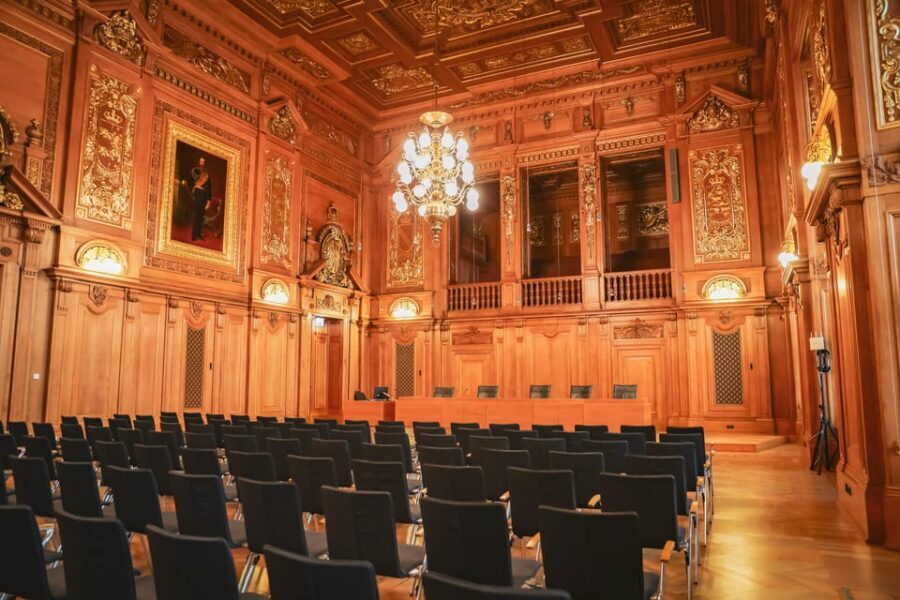
- Imperial courtroom visuals like coats of arms and imperial paintings in the main hall
- Judges’ recognizable official attire, including the crimson robe and beret
- A practical history of the building’s changing role, from court to museum (GDR era) and back again
Federal Administrative Court Leipzig: what you’re really stepping into
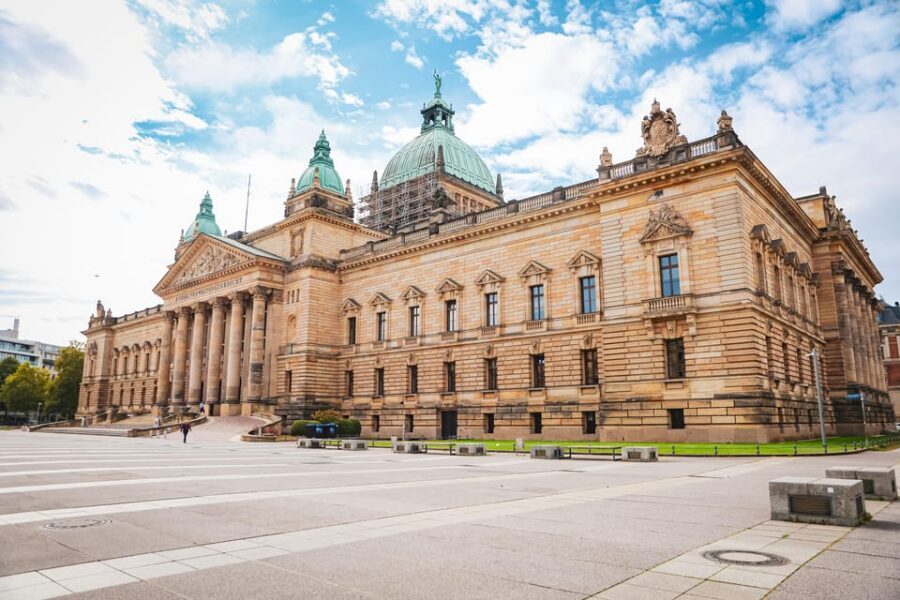
The Federal Administrative Court Leipzig sits at the top of Germany’s administrative court system. That matters, because the disputes handled here are not just “general politics in wig form.” In 14 senates, judges decide conflicts in administrative law and help shape how that law evolves over time.
On this tour, you feel that hierarchy quickly. You’re not wandering a random historic building where “maybe someone important worked here.” Instead, the visit keeps circling back to how judges and courts function, and how the state’s idea of justice has changed across eras.
You also get a sense of what kind of visitor this is built for. The spaces are formal. Even the way the courtrooms are presented feels designed for ceremony: heavy architecture, official insignia, and rooms made for weighty decisions. If you like history you can read with your eyes—rather than history you only hear about—this is your kind of stop.
You can also read our reviews of more tours and experiences in Leipzig.


The building’s makeover across eras: 1879 to today
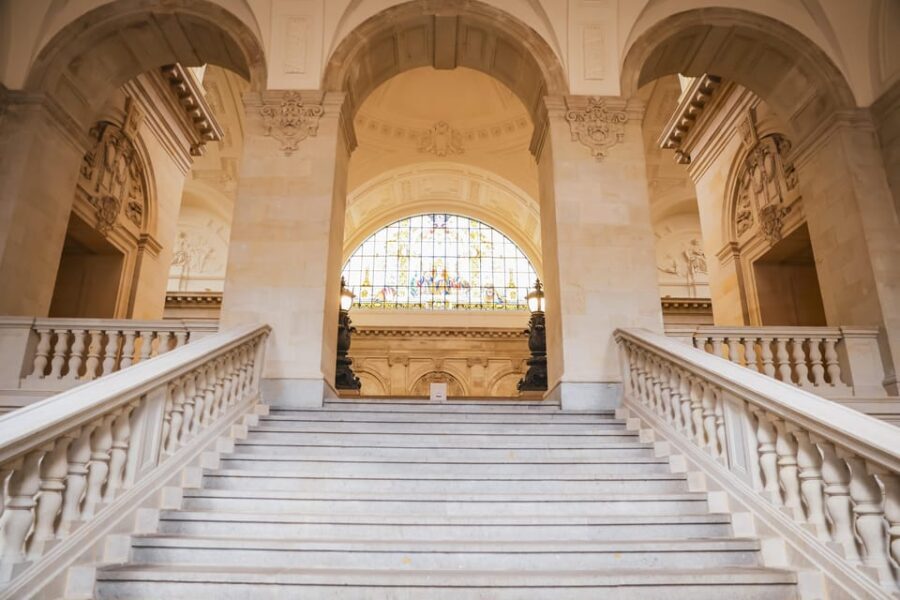
The court building was built in 1879 during the Wilhelmine era, originally as the Imperial Court of Justice. That’s the first big story the tour brings into focus: justice in Germany wasn’t just traveling through time in paper form. It moved through space, too—through buildings that carried symbols, styles, and priorities.
Here’s what I like about how this history is handled on the route. The guide doesn’t treat the building like an art object only. You connect the architecture to the function: the way authority looks, the way court power is displayed, and the way public legitimacy is expressed through official design.
Then the story pivots. During the GDR era, the building was used as an art museum. That’s a surprising twist, and it changes how you see the same walls. You start imagining how a place built for legal authority can be “reprogrammed” for display and culture, and how meanings shift without the building itself changing much.
Finally, the building returns to its judicial role when it becomes the seat of the Federal Court in 2002. That timeline gives the tour an extra layer of value. You’re not only learning “what happened in Germany.” You’re learning how Germany re-used its spaces—how institutions adapt, repurpose, and reassert their functions after major political changes.
Courtroom photography you won’t need: imperial art, coats of arms, and symbols
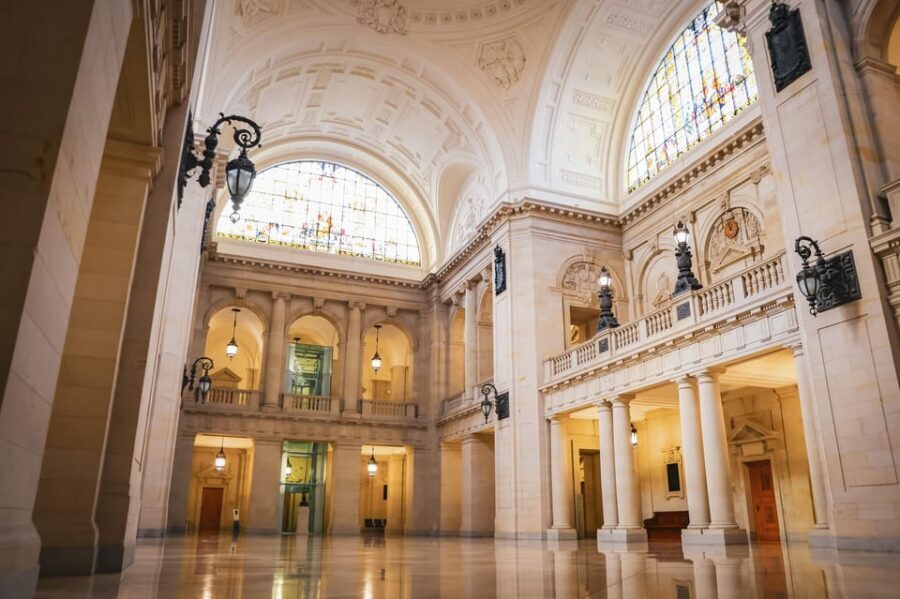
If you’ve ever wondered why courts look so serious, this stop answers it. In the large courtroom, you get the full visual message: impressive national coats of arms and imperial paintings line the setting. The effect is immediate. Even without knowing the exact details of each piece, you understand this room was designed to project authority.
This is one of the best parts of the tour because it turns “symbol spotting” into something useful. The guide ties what you’re seeing to the broader idea that law has always depended on legitimacy. The courtroom isn’t only where decisions happen; it’s also where the state communicates: we are official, we are organized, we follow procedure.
Practical note: the grandeur can make you want to rush. Don’t. Give yourself a minute to let the room settle in your mind. You’ll get more out of the explanation when you’re not already mentally moving to the next room.
Landmark cases, explained in the rooms they belong to
The tour uses famous legal moments to show how administrative justice connects to larger German history. Two examples are specifically highlighted.
First up: the infamous Reichstag fire trial of 1933. Even if you know the headline version of that case, hearing about it in a court setting changes the tone. It’s no longer just history text—it’s the reminder that trials and legal procedures can be used, manipulated, or contested, depending on the context.
Next: the October 1907 trial involving Karl Liebknecht. In that case, the focus is on defending himself for the publication of his writings. This is a different kind of legal story than the 1933 trial. It’s about expression, legal responsibility, and how the courts handled controversial speech. Hearing this in the context of an institutional court building helps you understand how “law as a system” can shape what society is allowed to say.
What I like is that the tour doesn’t treat these moments like museum labels. It frames them as steps in an ongoing story—how courts interpret disputes, how legal reasoning develops, and how institutions survive political shifts.
Judges’ official dress: the small detail with big meaning
One of the tour’s cleverest teaching tools is the official attire. You’ll find out more about the official dress that still makes federal judges recognizable today: a crimson robe with a beret.
This could have been a quick line. Instead, it works because it’s visual and human. It gives you a direct way to “anchor” your understanding of the court’s role. When you know how judges are identified by uniform, you start noticing how courts maintain continuity—appearance, authority, and tradition—even as laws and political environments change.
It also makes the tour feel current. You’re learning about the past, but you’re not stuck in old photographs. You’re seeing how the modern court still carries recognizable symbols from the world of formal justice.


Historic meeting rooms: where procedure feels real
The itinerary includes visits to historic courtrooms and meeting rooms. This part matters because court life isn’t only about dramatic headlines. A huge part of justice is procedure: how rooms are arranged, how decisions are formed, and how official communication takes place.
In these rooms, the architecture does more than look impressive. It tells you something about workflow and authority. You can sense that these are spaces built for order—places where formality isn’t decoration. The guide’s explanations help you understand what those spaces were meant to do.
If you like architecture, don’t just stare at the details. Listen for the “why.” Why would this meeting room be shaped this way? Why would this arrangement make sense for legal deliberation? When you connect the space to function, you get a lot more out of the visit than sightseeing alone.
The former presidential apartment: a quieter contrast
One of the tour inclusions is a visit to the former president’s apartment. This is a smart contrast to the grand public spaces.
Instead of ceremonial courtroom symbolism, you get a sense of the human scale of office life inside a major court institution. It helps you understand that even the top layer of judicial leadership lived within the same complex—within the same formal architecture designed for authority.
If you enjoy “inside details” that aren’t just exterior highlights, this stop is worth paying attention to. It gives the tour texture: justice isn’t only performed in courtrooms; it’s also administered, managed, and lived with.
Why this is good value at about $14 per person
At around $14 per person for a 1.5-hour guided experience, this tour is strong value if you care about history, architecture, and how institutions work. You’re paying for more than access to a building. You’re buying context: the tour connects famous legal moments (like 1933 and 1907) with the actual spaces where judicial authority is presented.
The “value math” here is simple: in a short time window, you cover multiple high-impact areas—historic meeting rooms, the large courtroom with major symbols, and the former president’s apartment. If you’re the kind of traveler who gets bored by long explanations with no payoff, you’ll likely like the structure: you see something first, then understand why it matters.
The one trade-off is time. A 90-minute tour won’t satisfy the person who wants a slow museum-style pace. If you’re that traveler, consider it an introduction. You can always follow up around Leipzig afterward with your own reading and wandering.
Who should book this tour (and who might not)
This tour suits you best if you:
- Want a history and architecture stop that actually explains the function of the spaces
- Like German legal history, especially moments connected to trials and legal defense
- Enjoy the small, concrete details that make institutions feel real (like the judges’ official attire)
You might skip it (or at least confirm language support) if you:
- Rely on English throughout and don’t want any content in original language
- Travel with kids under 14, since it’s not suitable for them
- Prefer casual, low-structure sightseeing over a guided route with explanations
Practical tips for making the most of the 90 minutes
Plan to arrive 10 to 15 minutes early at Simsonplatz 1 in front of the court. That small buffer helps you avoid the stress of getting oriented right as the tour begins.
Since the tour is led in German (with English available on request), decide your language strategy before you go. If your German is decent, lean in—you’ll get the full experience. If it’s not, reach out early so you’re not stuck hoping.
Also, be aware of the on-site rules. Pets aren’t allowed (assistance dogs are fine). Alcohol and drugs are not permitted. And the tour isn’t meant for party groups or bachelor and bachelorette party groups. If you show up as a serious visitor, the whole experience will feel more respectful and focused.
Should you book the Federal Administrative Court Leipzig tour?
Yes, if you want a compact, high-context look at German justice. The combination of historic courtrooms, symbolic interior details, and clear explanations of landmark legal moments makes this far more than a pretty building stop. It’s also priced in a way that feels fair for what you get.
If your priority is casual sightseeing or you need fully English content with no original-language material, then do a bit of homework before you commit. But for most visitors who enjoy history that you can stand inside and see, this is an easy recommendation.
FAQ
Where is the meeting point for the tour?
Meet at Simsonplatz 1 in front of the Federal Administrative Court.
How long is the guided tour?
The tour lasts 1.5 hours.
What is the tour price per person?
The price is $14 per person.
What language is the tour conducted in?
Tours are held in German, and English may be available on request.
What will I see during the tour?
You’ll visit historic courtrooms and meeting rooms, including the large courtroom with national coats of arms and imperial paintings, and you’ll also visit the former president’s apartment.
Are children allowed?
The tour is not suitable for children under 14.
Is the building accessible for wheelchair users?
Yes, the tour is wheelchair accessible.
Are pets allowed?
Pets are not allowed, but assistance dogs are allowed.