REVIEW · BERLIN
East Berlin: City of Shadows Walking Tour
Book on GetYourGuide →Operated by insightcities.com · Bookable on GetYourGuide
Cold War Berlin hits you fast. This tour connects monuments to what life felt like under communist rule.
What I like most is the historian-led storytelling and the tight focus on East Berlin’s “why,” not just the “what.” I also love that you move through key places tied to real rules, real fear, and real escape attempts—so the city’s layout starts to make sense. One drawback: parts of the route are emotion-heavy (families torn apart, the Wall’s deadly consequences), and you’ll want to pace yourself if you’re sensitive to that.
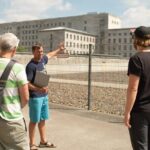
You’ll meet at Unter den Linden 42 and spend about 3 hours walking and using public transport. The group format is private or small-group, and the guiding team is made up of professors, doctoral students, historians, journalists, art critics, or published authors.
In This Review
- Key highlights before you go
- Why East Berlin still feels like a puzzle
- Starting at Unter den Linden: getting oriented the right way
- Brandenburg Gate area and the “Stalin’s ambition” detail
- Friedrichstrasse station: the crossing where families got split
- Palace of Tears: why an office can feel like a heartbreak
- The Berlin Wall memorial and the Death Strip stories
- Stasi headquarters: the surveillance network behind daily life
- Alexanderplatz: 1960s rebuilding to 1989 demonstrations
- How the 3-hour format works (and what it means for your schedule)
- Price and value: is $153 worth it?
- What kind of guide you’ll be hoping for
- Practical notes so you enjoy it more
- Who this tour suits best
- Should you book East Berlin: City of Shadows?
- FAQ
- Where is the meeting point for the tour?
- How long is the East Berlin City of Shadows tour?
- Is the tour in English?
- What sites are included on the route?
- Do I need public transport during the tour?
- Are public transport tickets included in the price?
- How much does the tour cost?
- What cancellation options are available?
- Can I reserve without paying right away?
Key highlights before you go
- Brandenburg Gate to Friedrichstrasse: start at a Soviet-era statement and move toward the border of two worlds
- Palace of Tears: learn how immigration and separation worked in everyday life
- Wall memorial and the Death Strip: understand what “security” cost human beings
- Stasi headquarters context: hear how surveillance was organized and why it mattered
- Alexanderplatz demonstrations: connect 1960s rebuilding to the 1989 turning point
Why East Berlin still feels like a puzzle
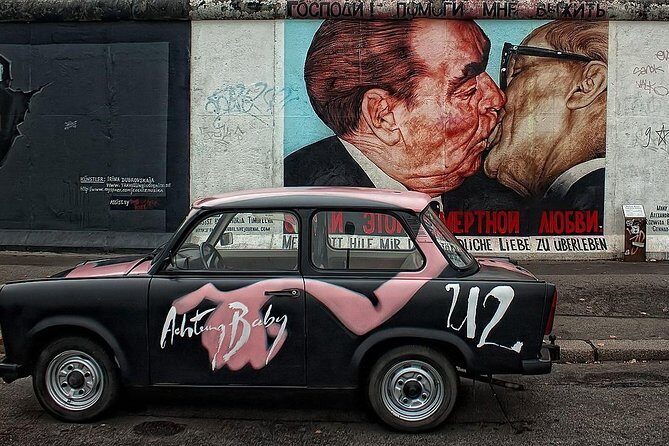
East Berlin can feel like a movie set if you only skim the big names. But the city’s structures and streets were built with political goals—control, monitoring, and control of movement. This tour is built to help you read those clues.
I love the way the experience links modern Berlin’s layout to the darker machinery underneath. You’re not just seeing plaques. You’re being taught how to look at space itself: where people could go, where they couldn’t, and how the system used everyday routines to keep power.
One more thing: the guides for this experience are serious about research. You’re not getting a casual history talk. You’re getting an explanation that stays tied to the real places you’re standing in.
You can also read our reviews of more walking tours in Berlin



Starting at Unter den Linden: getting oriented the right way
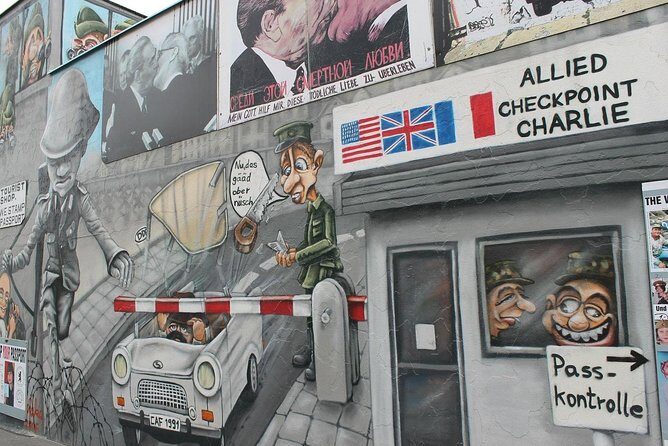
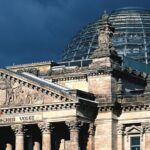
You begin at Unter den Linden 42, near the grand old spine of the city where Berlin’s story keeps repeating itself. The first stop on the tour flow is the Brandenburg Gate area, which matters because it anchors the early Cold War mood in stone and symbolism.
From there, your guide points you toward the former Soviet Embassy monument, built from rubble left after World War II. That detail isn’t just trivia. It shows how the postwar landscape was used to project authority—turning destroyed material into a visible claim of power.
This is a good opening because it sets expectations for the rest of the walk. You learn to look for the political message in the architecture before you even reach the tighter East-West boundary zones.
Practical tip: wear shoes that can handle uneven sidewalks. Berlin can be walkable, but this route also includes public transport segments, and you’ll want to stay comfortable between them.
Brandenburg Gate area and the “Stalin’s ambition” detail
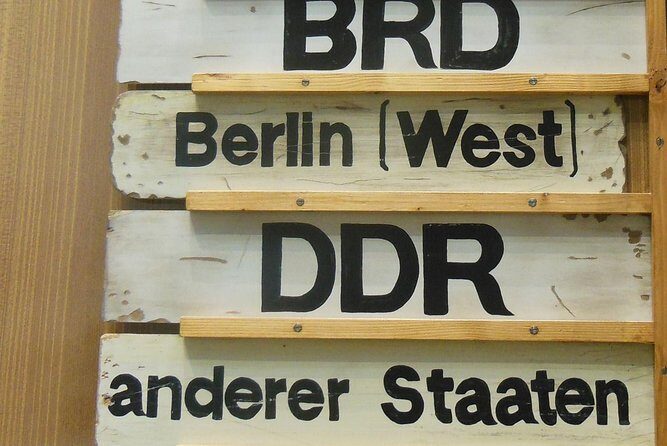
The Brandenburg Gate is famous, but here it’s used as a framing device. Your guide connects it to the Soviet presence and the message of domination that followed WWII.
Why this matters: when you later see East Berlin’s controlled spaces—rail crossings, memorial strips, and surveillance offices—you’ll understand that the Cold War wasn’t only political. It was physical. It was built into the city’s geometry.
The Soviet Embassy monument detail—rubble turned monument—also helps you understand how people in the region experienced reconstruction. It wasn’t only rebuilding homes. It was rebuilding narratives.
Friedrichstrasse station: the crossing where families got split
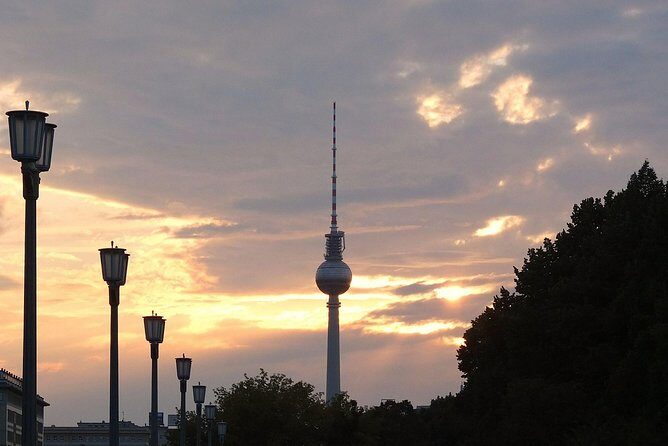
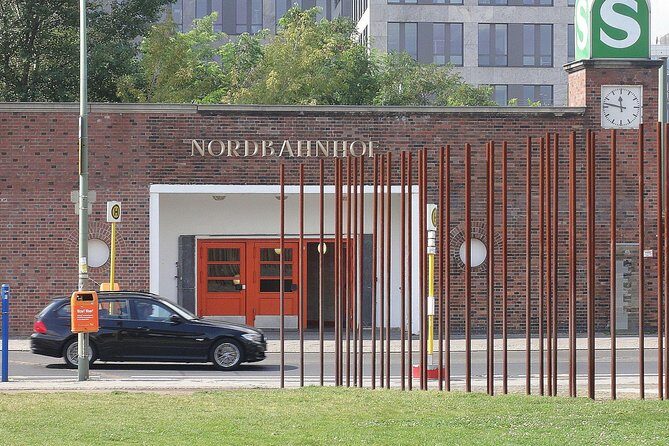
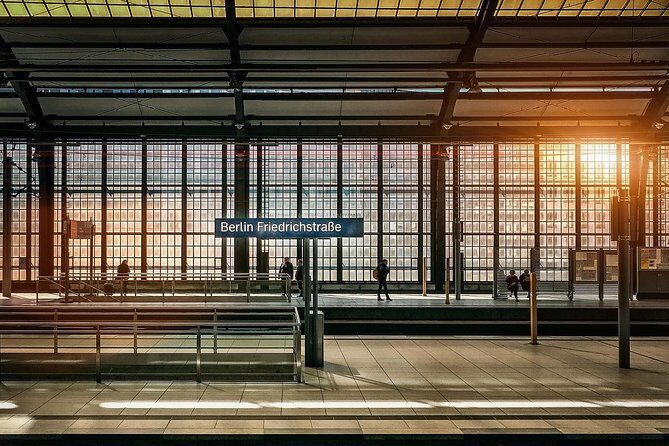
Next you head toward Friedrichstrasse train station, one of the key crossing points between East and West Berlin. This part of the tour is where the history starts to feel personal.
Your guide takes you to the area connected with the Palace of Tears. The name alone tells you the tone, but the tour explains what it was: an office where families said goodbye under the pressure of East Germany’s strict immigration rules.
This stop works because it turns a political system into a human moment. Instead of only hearing about border policy, you understand how policy became paperwork and procedures—then turned into separation.
If you’re the type who likes history with real stakes, this is likely the most memorable moment for you. It also sets up the Wall segment later, because you start seeing the same theme: movement tightly controlled, consequences kept out of sight until they’re too late.
Palace of Tears: why an office can feel like a heartbreak
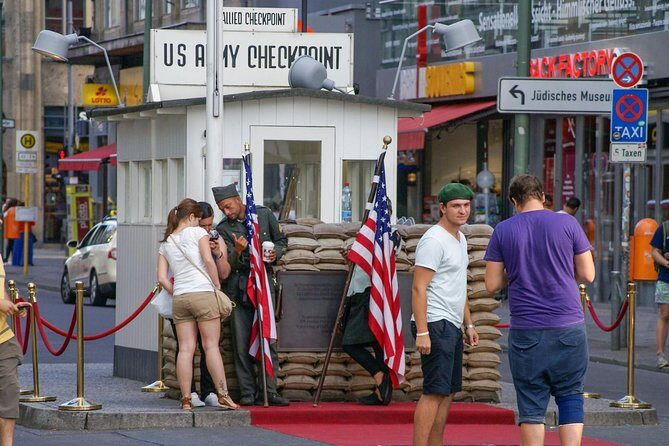
The Palace of Tears visit isn’t just a place name. It represents the routine heartbreak caused by a system designed to regulate who could leave and who could reunite.
Even if you know Berlin’s broad Cold War story, you’ll probably be surprised by how the tour frames the process: families weren’t only blocked by guards or fences. They were blocked by rules enforced through specific institutions.
That’s a key value of this tour. You’ll leave with a clearer mental map of how power operated—from the street level up to the administrative level.
You can also read our reviews of more city tours in Berlin



The Berlin Wall memorial and the Death Strip stories
Farther along, you visit the Berlin Wall memorial area. This is where the tour focuses on the infamous Death Strip—the zone associated with deadly escape attempts.
Your guide explains what it was like and shares stories about people whose efforts to escape ended tragically. This is the kind of history that doesn’t stay abstract because you’re standing near remnants and memorial markers that keep the story in view.
What I find effective here is the emphasis on cause and effect. The Wall isn’t treated like a random barrier. It’s treated like a system with tools: controlled boundaries, watched areas, and lethal outcomes.
Consideration: this is heavy material. If you’re prone to getting overwhelmed, bring a mental plan—take breaks, look away for a moment, and keep your pace slow. You’ll absorb more and leave steadier.
Stasi headquarters: the surveillance network behind daily life
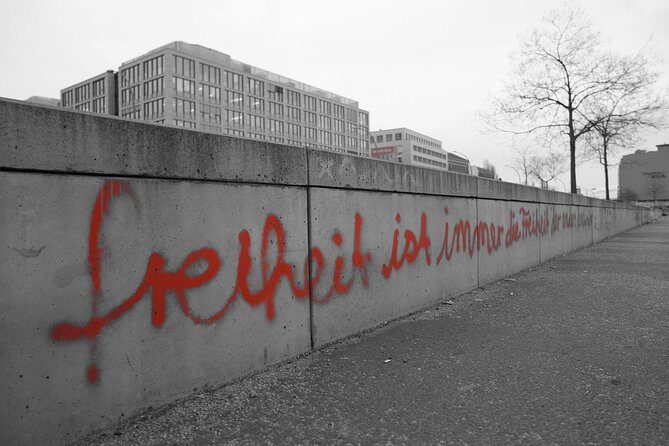
After the Wall memorial segment, you move to the former Stasi headquarters area. This is another turning point because it shifts from physical control to information control.
Your guide ties the experience to Eric Mielke, explaining how he recruited a large network of spies and how the Stasi developed innovative surveillance techniques. You’ll hear how monitoring worked as a living system—not just an idea.
Why it helps you: once you understand surveillance as a daily method, you start noticing how fear changes behavior. People don’t need to be constantly watched if they believe they might be. That’s what makes this part of the tour unsettling in a practical way.
Also, you’ll likely appreciate the guide’s approach to linking the built environment to the hidden history. Places connected to the Stasi are not only historical artifacts. They’re clues about how people were kept inside the rules—socially as much as politically.
Alexanderplatz: 1960s rebuilding to 1989 demonstrations
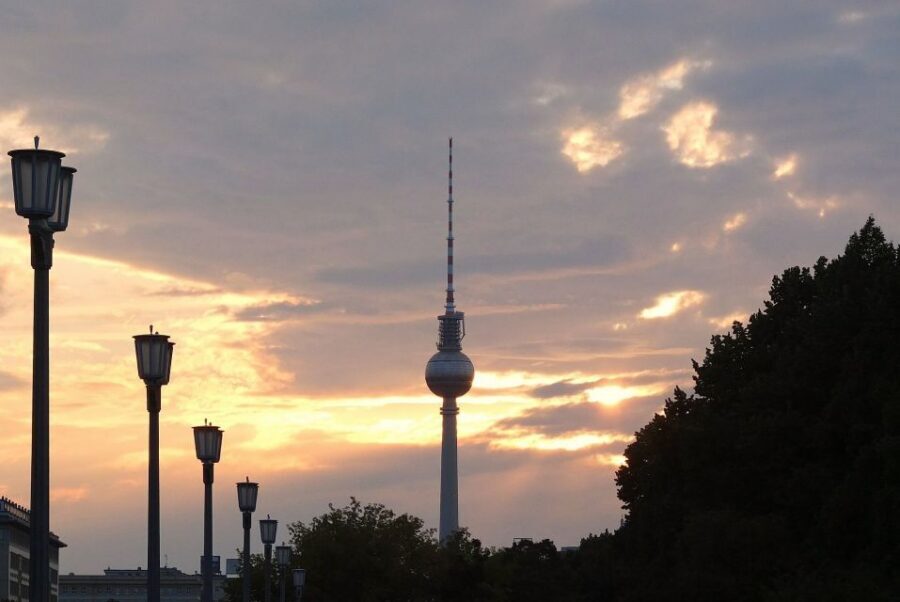
Finally, you reach Alexanderplatz, the center of public life in East Berlin. This stop adds contrast. After the heavy stops, the tour brings you to a place meant for crowd life and civic identity.
Alexanderplatz was rebuilt in the 1960s, and it became a symbol of East German pride. But it also became the setting for the mass demonstrations in 1989—the events that helped end 40 years of Communist rule.
I like this finale because it doesn’t end in only sorrow. It ends with people pushing back, using public space where the regime expected loyalty and predictability.
This is also a smart structure for the whole tour. You start with the symbolism of power, move through separation and lethal boundaries, then get to surveillance, and finally land on the public square where that power was challenged.
How the 3-hour format works (and what it means for your schedule)
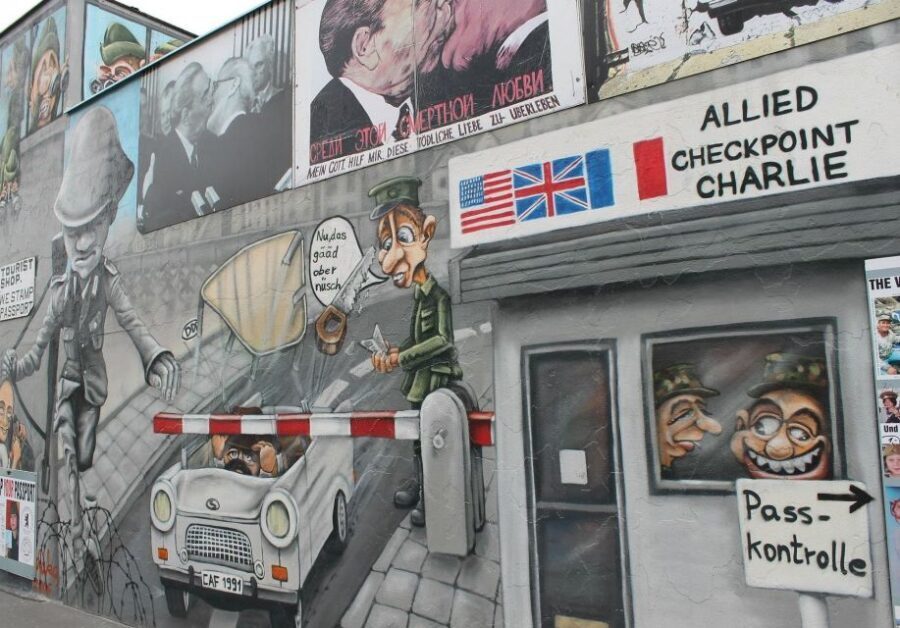
This experience is built for a 3-hour window, which means you get a concentrated story without spending your entire day on one topic.
You should plan for some movement between sites. The tour uses public transport because distances between key points are longer. Importantly, transport ticket costs are not included in the tour price. So budget a little extra and have a plan for transit during the day.
Value-wise, the time-to-sites ratio is good. You’re not wandering randomly across Berlin. You’re going from one Cold War anchor to the next with context layered in as you arrive.
If you’re building a Berlin itinerary, this tour makes a strong “backbone” when you want history that explains the city you’ll keep seeing the rest of your trip.
Price and value: is $153 worth it?
At $153 per person for a 3-hour guided tour, you’re paying for three things that matter here:
- A historian guide (not just a general guide), with research-level framing.
- Multiple high-impact sites tied to East Berlin’s political machinery: the crossing zones, the Wall memorial, the Stasi headquarters context, and Alexanderplatz.
- Time efficiency, since the tour handles the sequence so you don’t have to stitch the story together yourself.
Where you should adjust expectations: transport tickets aren’t included, so your final “all-in” cost will be a bit higher than the base price. Still, compared to doing this with only guidebooks, you’re paying to avoid the guesswork and to get explanations tied to what you see in front of you.
Who gets the best value? People who want the story behind the monuments and who appreciate guided context more than self-paced wandering.
What kind of guide you’ll be hoping for
The tour emphasizes that guides are academics and writers—professors, doctoral students, historians, journalists, art critics, or published authors. That matters because it tends to translate into clearer structure and more precise wording about complicated systems.
From participant feedback, guides such as Martin and Dan have been praised for making hidden aspects of pre-1990 Berlin understandable, while Mark has been described as especially helpful. The names vary, but the theme stays consistent: you should expect serious, thoughtful explanations.
If you prefer history that stays grounded in places and avoids vague lecture mode, this setup tends to fit well.
Practical notes so you enjoy it more
A few things to do before you set out:
- Dress for Berlin weather. This is a walking + transit day, and your comfort will shape how much you absorb.
- Bring a small attention strategy. Pick one theme to focus on as the tour moves: separation, escape, surveillance, or public protest. You’ll remember more.
- Keep your questions ready. If something doesn’t click—why a rule mattered, how a system worked—your guide can connect it back to the next stop.
Also, because the content can be emotionally heavy, don’t treat this like a casual stroll. Give it the respect it deserves, and you’ll get a better experience.
Who this tour suits best
This is a great fit if you:
- Want East Berlin history with place-based context
- Like understanding systems (borders, surveillance, public control), not just dates
- Prefer small-group or private pacing over big crowds
It may be less ideal if you:
- Want a purely scenic walk
- Don’t handle difficult topics well
- Are looking for a light, mostly entertainment-style tour
Should you book East Berlin: City of Shadows?
Yes—if you want to understand what you’re looking at in Berlin, not just photograph it. The biggest reason to book is the story chain: Brandenburg Gate symbolism → Friedrichstrasse separation (Palace of Tears) → Wall memorial consequences (Death Strip) → Stasi surveillance mechanics → Alexanderplatz turning point in 1989.
The tour is focused, timed well, and guided by people with serious credentials. Just go in knowing the topic is heavy at points, plan for public transport tickets, and wear shoes that can handle the day.
If that fits your travel style, this one is worth your time.
FAQ
Where is the meeting point for the tour?
You meet your guide at Unter den Linden 42, Berlin, Germany.
How long is the East Berlin City of Shadows tour?
The tour lasts 3 hours.
Is the tour in English?
Yes, the live tour guide is English.
What sites are included on the route?
You visit key East Berlin sites including the Brandenburg Gate area, Friedrichstrasse station area and the Palace of Tears, the Berlin Wall memorial, the former Stasi headquarters, and Alexanderplatz.
Do I need public transport during the tour?
Yes. Due to longer distances between some sites, you will need to take public transport as part of the tour.
Are public transport tickets included in the price?
No. The cost of transport tickets is not included in the tour price.
How much does the tour cost?
The price is $153 per person.
What cancellation options are available?
The tour offers free cancellation up to 24 hours in advance for a full refund.
Can I reserve without paying right away?
Yes. The tour offers reserve now & pay later, so you can book your spot and pay nothing today.
If you tell me your travel month and what other Berlin stops you have planned, I can help you slot this tour in for the best pacing.