REVIEW · FREIBURG
Freiburg im Breisgau: old town privat walking tour Italian
Book on GetYourGuide →Operated by Irene Friburgo · Bookable on GetYourGuide
Freiburg looks different when someone guides you. This private Italian walking tour strings together the city’s big landmarks and the smaller details you’d miss on your own, with stops built around the Freiburg Minster, Habsburg architecture, and the stories of the old streets. I like that the pacing is tight for just 90 minutes and that you get practical guidance for what to look at, especially the cathedral’s glass windows. The one thing to consider: because it’s a guided walk, you’ll want comfortable shoes and you’ll need to plan any food tastings separately since meals and drinks aren’t included.
I also appreciate how the tour balances “then and now.” You get the medieval atmosphere, traditions, and architectural clues, but the guide also points you toward modern Freiburg life—especially the Black Forest flavors that make this region famous. In the end, you’re left with a clearer sense of where everything fits, not just a list of sights.
This is the kind of experience that works best if you want a guided route through central Freiburg rather than a self-guided wandering day. With Irene running the tour in Italian, you’ll likely come away with better context and a few smart suggestions for where to eat and what to do next.
In This Review
- Key highlights you’ll actually feel on the walk
- A Private Italian Old-Town Walk That Fits Real Schedules (90 Minutes)
- Rathausplatz to Haus zum Walfisch: Starting in the Center and Getting a Story Hook
- Martin’s Gate and the Towers: Spotting Habsburg Clues Without Needing a Textbook
- Münsterplatz and Freiburger Münster: The Stained Glass Moment That Changes Your Perspective
- Historical Merchants’ Hall: Trade-Era Architecture That Explains the Streets
- Freiburger Bächle and Schwabentor: Freiburg Details You’ll Want to Spot Later
- Augustinerplatz Finish: Where to Go Next Without Feeling Lost
- Black Forest Flavors and Schwarzwälder Kirschtorte: How to Handle Food Without Confusion
- Price and Value at $53 per Person: When Private Makes Sense
- Who This Freiburg Tour Fits Best (And Who Might Skip It)
- Should You Book This Freiburg im Breisgau Private Italian Walking Tour?
- FAQ
- FAQ
- What language is the tour guide using?
- How long is the Freiburg old town private walking tour?
- Where does the tour start and where does it end?
- Is food or drinks included in the tour?
- Is this a private group tour?
- Can I cancel close to the tour date?
Key highlights you’ll actually feel on the walk
- Rathausplatz start: easy-to-find launch point for a 90-minute stroll
- Haus zum Walfisch (Whale House): Erasmus of Rotterdam’s connection gives the stop meaning
- Habsburg architecture details: you’ll learn what to look for as you move between towers and gates
- Freiburger Münster stained glass windows: a focused photo-and-notes moment
- Freiburger Bächle and Schwabentor: old-town character in the spaces between the biggest monuments
- Augustinerplatz finish: a natural place to continue on foot after the tour ends
A Private Italian Old-Town Walk That Fits Real Schedules (90 Minutes)
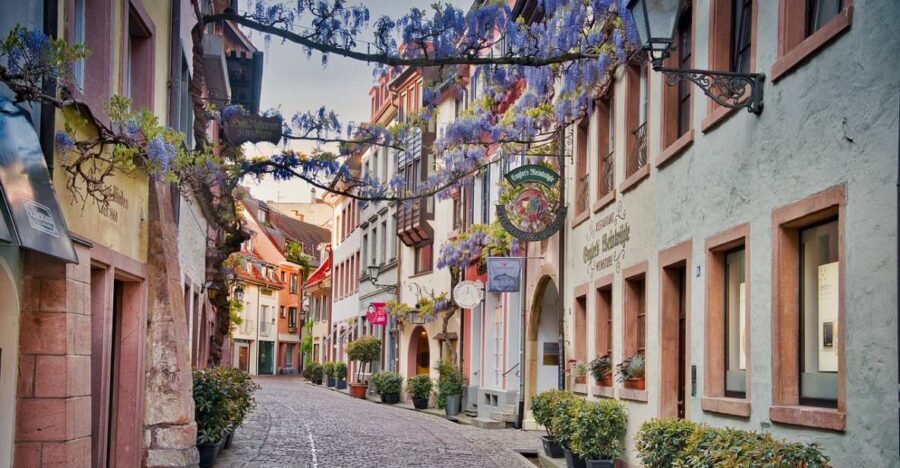
A 90-minute tour can be a sweet spot. It’s long enough to cover meaningful ground through the historic center, but short enough that you’re not stuck “on a tour” all day. What makes this one work is the way the route is designed around major visual anchors—cathedral, gates, landmark buildings—while still keeping the vibe medieval and human.
You also get real language value: the tour is in Italian with a live guide. That matters because architectural and historical sites can turn into memorized facts fast. Here, the guide’s job is to connect what you’re seeing to why it mattered to the city, so it lands in a way that feels understandable, not like a lecture.
The private-group format is another practical plus. Even if your group is small, you’re more likely to get answers to questions and the chance to move at a comfortable speed. For a city like Freiburg im Breisgau, where the charm is in details, that flexibility helps.
You can also read our reviews of more walking tours in Freiburg

Rathausplatz to Haus zum Walfisch: Starting in the Center and Getting a Story Hook
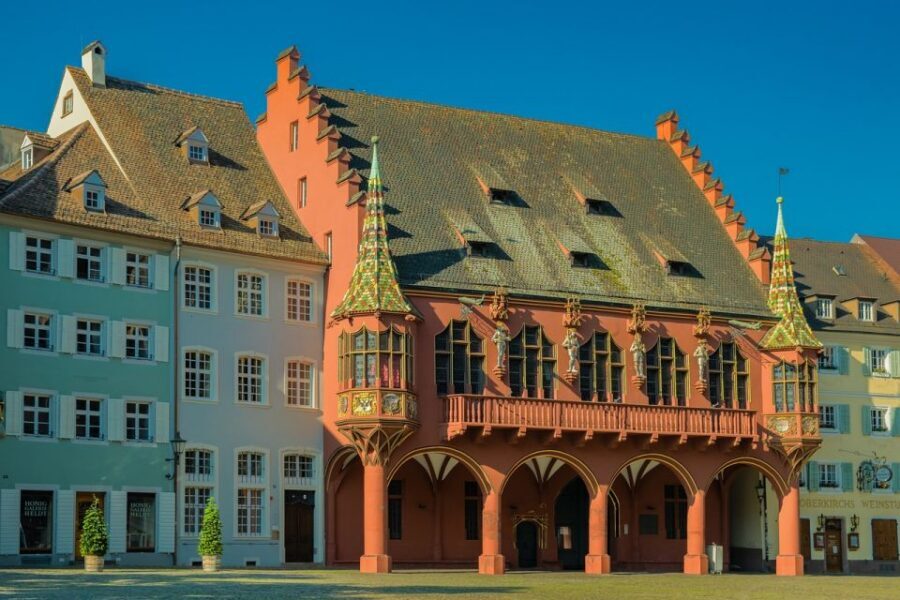
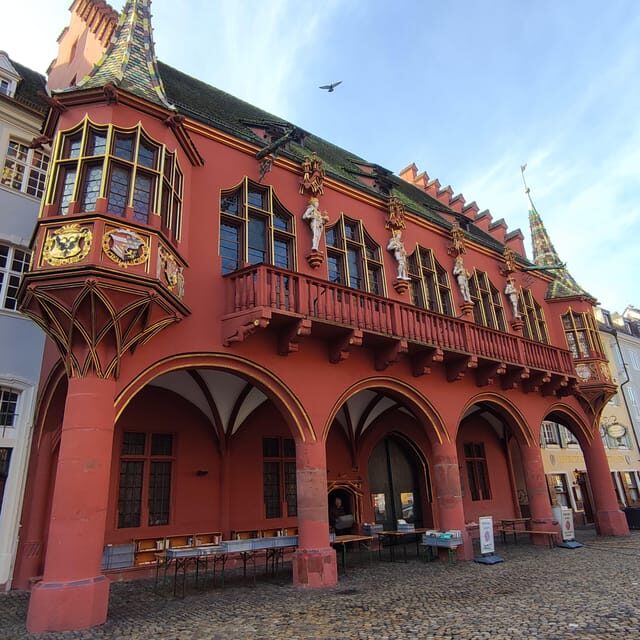
The walk begins at Rathausplatz, at a meeting point described as close to a red building. That’s helpful because it keeps the start straightforward, especially if you’re arriving earlier and want to get your bearings first.
From there, the route heads to Haus zum Walfisch. This stop is memorable because it ties a distinctive local landmark to Erasmus of Rotterdam—so you’re not just looking at a building; you’re learning why the name and place matter in Freiburg’s timeline. A good guide makes a difference here. When the story clicks, the architecture stops being “pretty old stuff” and becomes an evidence board for how people once lived, studied, and moved through the city.
I also like how this opening phase sets expectations. You’re prompted early to think like a visitor who notices. That makes later stops—especially the cathedral and the gate/tower areas—feel more connected, rather than separate photo ops.
Martin’s Gate and the Towers: Spotting Habsburg Clues Without Needing a Textbook
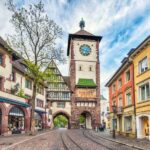
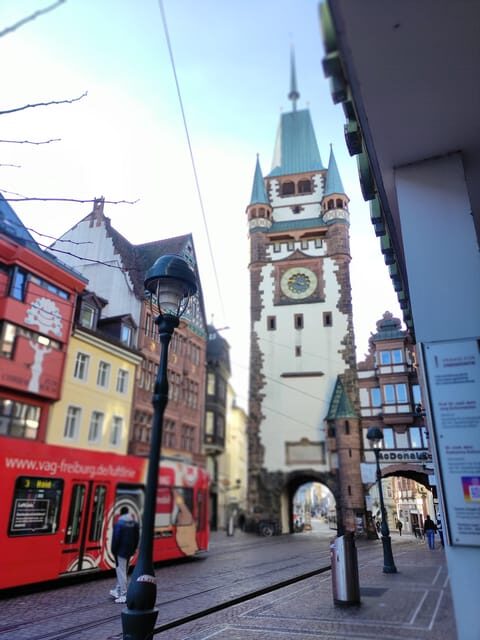
Next comes Martin’s Gate and then the broader gate/tower zone tied to the city’s older identity. This is where the tour’s Habsburg architecture angle becomes more than a buzzword. Instead of treating history like a timeline, the guide helps you read the buildings as you walk past them: what features you should pay attention to, and how these structures relate to the city’s past.
The tour also highlights tower landmarks associated with Saint Martin and the Swabians. If you’re the type of traveler who likes your sightseeing with a bit of direction, this part is for you. You’ll start noticing how gates and towers act like bookmarks in the old town—places where the city’s power and identity show up in stone and shape.
One practical note: gates and towers can be visually impressive, but they’re not always the easiest places to take photos if you’re surrounded by other pedestrians. Keep your pace smooth and expect a couple of short pauses rather than long standstills.
Münsterplatz and Freiburger Münster: The Stained Glass Moment That Changes Your Perspective
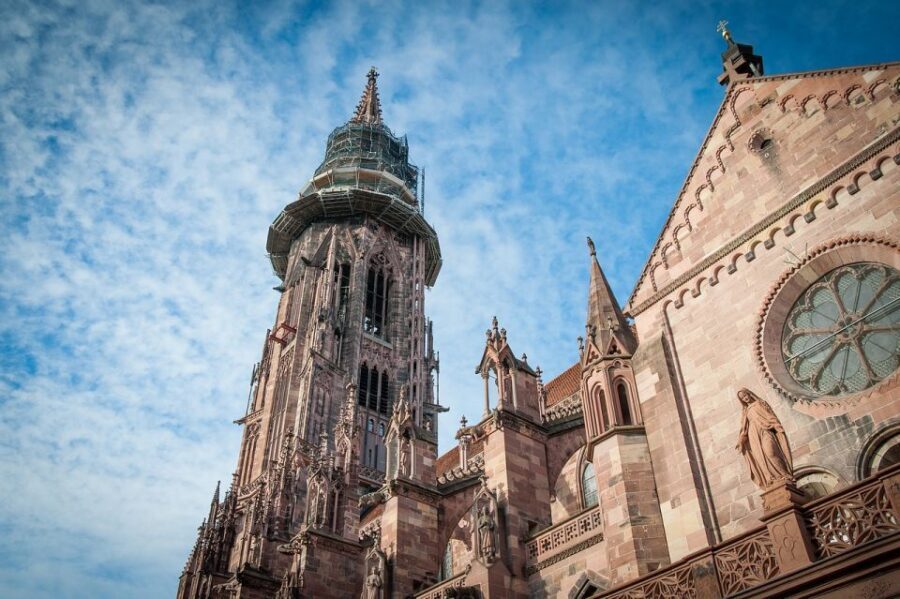
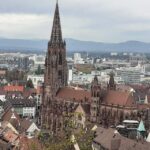
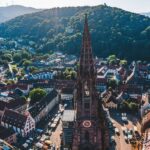
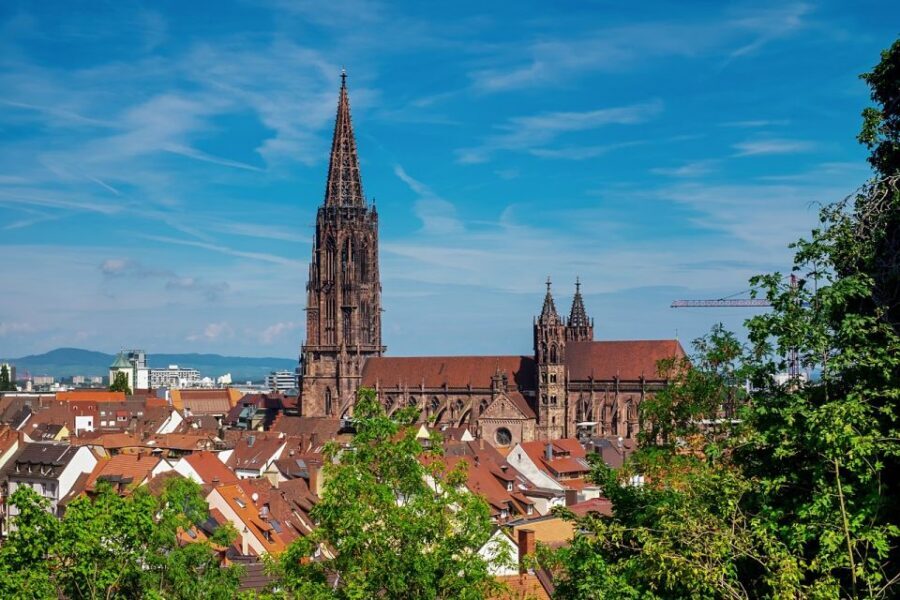
The itinerary brings you to Münsterplatz Freiburg and then the Freiburger Münster. This is the centerpiece, and the tour gives it a clear purpose: you’ll learn about the cathedral’s glass windows. That detail is important. Lots of cathedral tours focus on height, exterior views, or big-picture religious architecture. Here, the emphasis on the stained glass pushes you to look closer at how light and design communicate mood and meaning.
Even if you don’t consider yourself “a cathedral person,” this is a strong stop because the guide’s focus is narrow and visual. You know what to look for before you arrive, so you’re not left guessing how to appreciate what you’re seeing.
This part also helps you connect the earlier stops. When the route goes from gates and landmark buildings to the cathedral, it creates a sense of gravity: these places weren’t random; they were arranged into a city plan that guided daily life, belief, and civic pride.
Historical Merchants’ Hall: Trade-Era Architecture That Explains the Streets
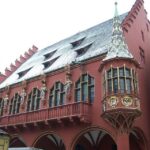
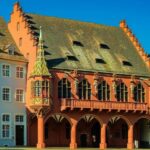
After the big monument, the tour moves to the Historical Merchants’ Hall. This stop is valuable because it shifts you away from “top sights only” and toward the structures that supported everyday power: commerce, jobs, and movement. Freiburg’s look makes more sense once you understand that trade helped shape how the city functioned and how buildings were used.
You’ll get guided context for what this building represents in the city story, which is a huge advantage if you’re trying to see more than just the obvious. The best walking tours don’t just show you where famous buildings are. They teach you what role each building played, and this is one of those stops.
If you like architecture explained in plain language, this is also a good moment to ask questions. A private Italian guide like Irene (Italian, based in Freiburg) is well-positioned to answer in a way that’s easy to follow and not stuck behind jargon. One review note that people appreciated how clear and thorough her explanations were, and that kind of communication style really matters in stops like this.

Freiburger Bächle and Schwabentor: Freiburg Details You’ll Want to Spot Later
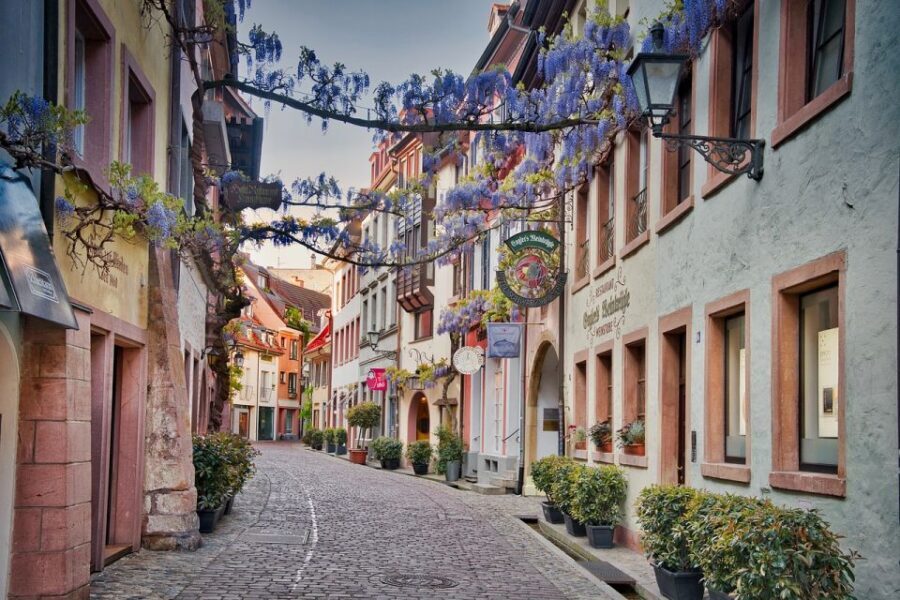
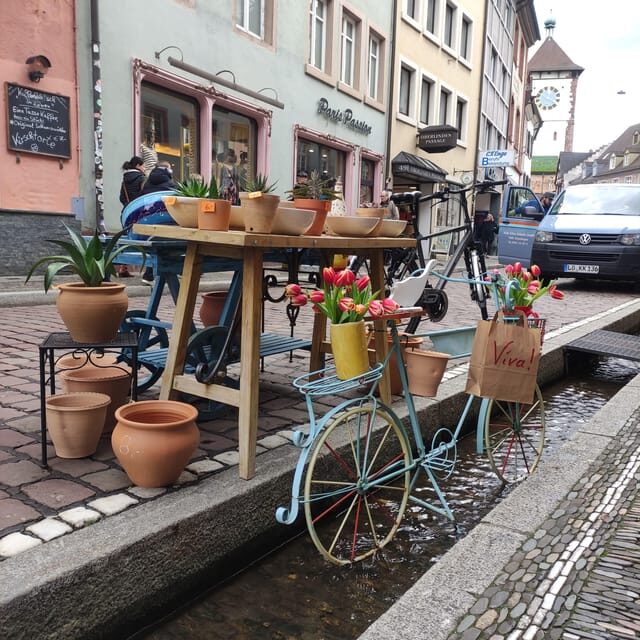
The route continues through areas tied to Freiburger Bächle and then to Schwabentor before finishing back at Augustinerplatz. These stops can be underrated on a first visit because travelers often focus only on the cathedral and the most famous squares. But the walk here is designed to keep you noticing the city in between.
The Bächle stop helps you understand Freiburg as a living city rather than a museum. It’s an example of how local features and everyday spaces get wrapped into the old-town identity. And Schwabentor brings you back to the “city boundary” feeling you get from gates—places where the old town still feels enclosed and specific.
This segment is also where the walking rhythm matters. You’re moving, looking, and stopping just enough to learn what you’re seeing. That balance is what makes the full route feel like a story instead of a string of sights.
Augustinerplatz Finish: Where to Go Next Without Feeling Lost
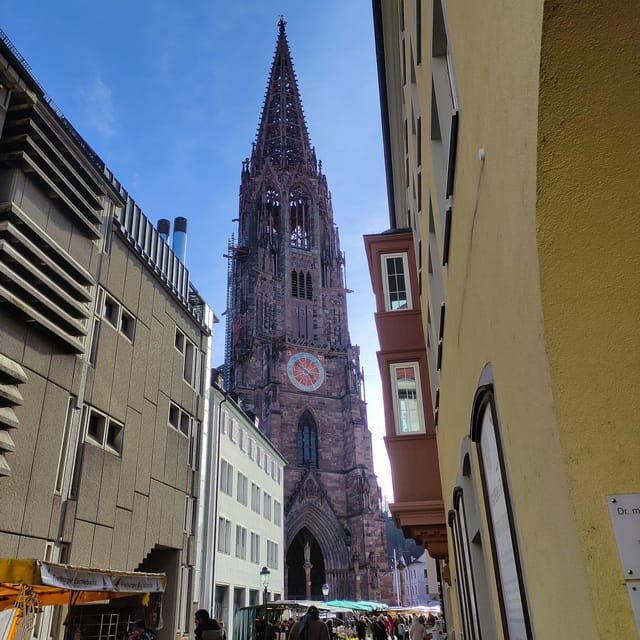
The tour ends at Augustinerplatz. That matters because it’s a practical finish point. After 90 minutes, you’ll likely want food, coffee, or a bit more wandering, and finishing in a central area makes it easier to continue without stress.
If you’ve been paying attention to what you learned about the old streets and landmark buildings, you’ll also notice how the city’s blocks connect. The tour doesn’t just show you highlights; it gives you a map in your head. That makes the rest of your day easier to plan.
And since this is a private tour with a guide who can answer questions, you can ask what to do next—especially if you want to keep the old-town vibe going with a food stop.
Black Forest Flavors and Schwarzwälder Kirschtorte: How to Handle Food Without Confusion
One of the tour’s stated themes is the blend of tradition and modern life, including Black Forest food culture. Schwarzwälder Kirschtorte (Black Forest cake) gets called out as the classic reference point.
Here’s the practical way to think about it: meals and drinks are not included. So the value is in the guidance and timing. You’ll likely be pointed toward where you can satisfy that craving without guessing for an extra hour.
I like this approach because it keeps the tour from turning into a rushed restaurant stop. Instead, you learn about the city and then you can choose your own pace for cake and coffee. That way, you don’t feel pressured into a specific place just to make the schedule work.
Price and Value at $53 per Person: When Private Makes Sense
At $53 per person for a 90-minute private walking tour in Italian, you’re paying for three things: the private guide experience, the targeted route (cathedral, gates, landmark buildings), and the language. If you’re traveling as a pair or a small group, private tours can feel more reasonable because you’re not splitting the cost across strangers.
The biggest value factor isn’t the price tag itself; it’s what the tour spends time on. This one focuses on concrete, teachable moments: cathedral glass windows, Habsburg architecture clues, and a landmark story tied to Erasmus of Rotterdam. Those are the kinds of stops where a guide’s interpretation can seriously change how much you get out of the visit.
One consideration: if you already know you only want general sightseeing with no deep explanations, a guided tour might feel like extra cost. But if you like history explained in a clear, personable way, the price makes sense for what you’re actually doing on the ground.
Who This Freiburg Tour Fits Best (And Who Might Skip It)
This tour is ideal if you:
- want a structured old-town walk rather than trying to piece together Freiburg on your own
- prefer learning in Italian (or you’re traveling with someone who does)
- like city stories tied to real places: Minster windows, gates, landmark houses, and merchant-era buildings
- care about getting local guidance for what to eat after you finish
It might be less ideal if:
- you only want a quick photo walk with minimal stops and explanations
- you’re not interested in architectural/history context and mostly want independent browsing
- you’re traveling with strict timing that can’t handle a 90-minute route
The big advantage here is that it feels tailored to how people actually travel: a short, guided loop that sets you up to enjoy the rest of the day.
Should You Book This Freiburg im Breisgau Private Italian Walking Tour?
If you’re choosing between guessing your way through Freiburg or getting help from someone who knows what to point out, I’d book it. The route focuses on high-impact stops, and the guide approach described in the experiences you provided—prepared, punctual, kind, and clear with answers—sounds like the exact style that makes a short tour worth your time.
If you’re excited by the Freiburger Münster stained glass window focus and you want the old-town story connected to places like Haus zum Walfisch, this tour is a strong fit. Also, because it’s private and in Italian, you’re more likely to get a better match for your questions and pace.
FAQ
FAQ
What language is the tour guide using?
The tour is conducted in Italian, with a live guide.
How long is the Freiburg old town private walking tour?
The duration is 90 minutes.
Where does the tour start and where does it end?
It starts at Rathausplatz, near a red building, and finishes at Augustinerplatz.
Is food or drinks included in the tour?
No. Food and drinks are not included, even though local Black Forest specialties like Schwarzwälder Kirschtorte are part of the tour’s theme.
Is this a private group tour?
Yes, it’s listed as a private group tour.
Can I cancel close to the tour date?
You can cancel up to 24 hours in advance for a full refund.