REVIEW · BERLIN
Berlin Private Street Art Tour – Off The Grid
Book on Viator →Operated by Alternative Berlin Tours · Bookable on Viator
Berlin street art has rules, and you learn them. This private off-the-grid walk turns Berlin’s walls into a classroom, using real street scenes to explain the history, culture, and technique of graffiti and street art across Kreuzberg, Friedrichshain, and Schöneberg. Expect to move at a human pace through neighborhoods where paint is part of the nighttime soundscape.
I love how you’re not just looking at cool walls. You get guided context for tags, throw-ups, stencils, paste-ups, stickers, and even the ideas behind trainbombing. I also like the Urban Nation gallery inclusion, since it helps you connect what you saw on the street to a real place that treats street art seriously.
One thing to consider: it’s a 3-hour walking tour, so you’ll want comfortable shoes and warm layers. Also, the AB Metro Ticket isn’t included, so you’ll need to handle transit on your own.
In This Review
- Key highlights worth planning for
- Street art in Berlin: what this tour actually does for you
- Following the walls: Kreuzberg, Friedrichshain, and Schöneberg on foot
- What you’ll see: murals, tags, throw-ups, and other wall languages
- The techniques lesson: trainbombing, stencils, paste-ups, stickers
- Why the tour spends time on the rules of graffiti culture
- Urban Nation: the gallery stop that anchors what you saw outside
- Private tour energy: what it means for your time
- Price and value: what $432.15 buys you in Berlin time
- Timing, getting there, and how to prepare for a 10:00 am start
- Who should book this tour, and who might prefer something else
- Final call: should you book Berlin’s off-the-grid street art tour?
- FAQ
- FAQ
- How long is the Berlin Private Street Art Tour – Off The Grid?
- Where does the tour start and end?
- What time does the tour begin?
- Is this tour private?
- What’s included in the tour price?
- Do I need an AB Metro Ticket?
- Is the tour physically demanding?
- What happens if there aren’t enough passengers to run the tour?
Key highlights worth planning for
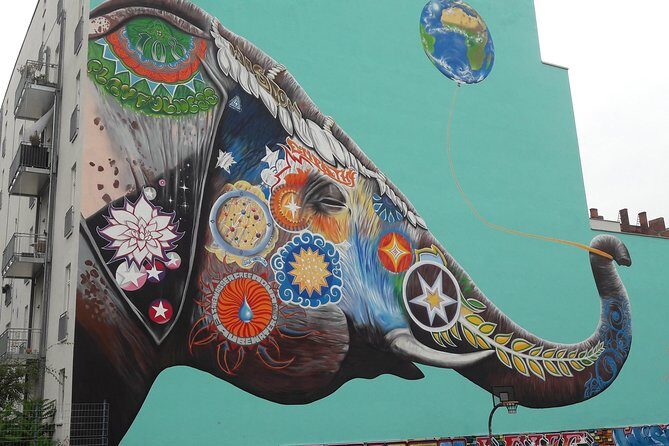
Off-the-grid coverage in 3 neighborhoods: Kreuzberg, Friedrichshain, and Schöneberg, with the guide steering you toward newer work and standout pieces.
Technique talk that meets the wall: you’ll hear about how artists approach tagging, stenciling, paste-ups, stickers, and trainbombing.
Culture and rules, not just aesthetics: the tour focuses on what graffiti means and how writers interpret the city.
You’ll see multiple types of art styles: from large murals to quicker marks like tags and throw-ups.
Urban Nation is part of the route: the gallery stop adds perspective and gives you a concrete reference point.
It’s truly private: only your group joins, so questions and pace can match your interests.
Street art in Berlin: what this tour actually does for you
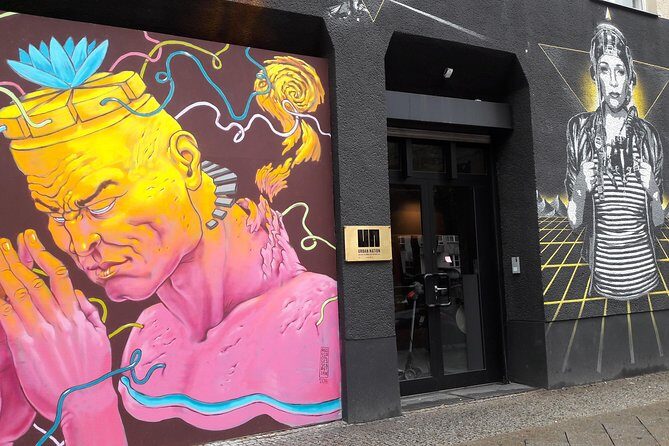
Berlin has a way of making street art feel less like chaos and more like communication. This tour leans into that idea hard. The point isn’t to crown a single mural as best-in-show. It’s to teach you how the city reads graffiti—what artists are trying to say, how crews work, and why certain styles show up where they do.
I especially like the way the tour treats street art as craft. You hear about techniques and tools, then you see the results in place. The “aha” moment is when the same wall type makes sense in two layers: what it looks like, and what it’s doing socially and culturally.
You’ll also get a sense of timing. Street art isn’t static. The tour is designed to show you the best and latest work, which means you’ll spend your attention where Berlin is currently talking back to itself.
Possible drawback: because this is street-focused and includes an Urban Nation stop, you should be ready for an itinerary that’s more “follow the story of the walls” than “check boxes.” If you want only iconic, postcard-ready murals, this might feel a bit more like a guided field trip.
You can also read our reviews of more private tours in Berlin

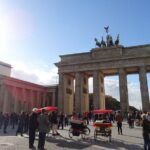
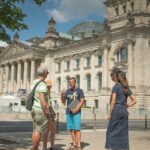
Following the walls: Kreuzberg, Friedrichshain, and Schöneberg on foot
The route is built around three neighborhoods that each bring a different flavor to the street art conversation. You start in Wursthain (Warschauer Str. 54) and finish in Wrangelkiez, close to the U1 line. That matters because it helps you plan your day: you can usually pair the tour with a later meal or museum visit without having to fight across the city afterward.
Expect most of your time outdoors. The moderate physical fitness note isn’t about being a hardcore hike. It’s about being able to walk steadily for a few hours while stopping often to look closely at small details. Berlin’s weather can add friction, too. One review specifically called out doing the tour despite the cold, which is a good reminder: bring real layers, not just one brave jacket.
The neighborhood mix also means you get variety. You’re not stuck in a single zone of murals. You’ll see how street art language shifts as you move through different city spaces, and you’ll come away with a stronger sense of how Berlin organizes its public “canvas.”
What you’ll see: murals, tags, throw-ups, and other wall languages
This tour promises more than a handful of photos. You’ll look for multiple kinds of street art in the streets of Berlin: huge murals, smaller and faster pieces like tags, and other in-between forms like throw-ups. You’ll also hear the tour’s vocabulary as you go, so the visuals start “translating” themselves.
Here’s why this matters. If you only see one mural style, it’s easy to think graffiti is just visual noise. But Berlin’s wall culture is layered. The tour’s approach makes you notice how different marks can carry different intent—quick statements versus bigger compositions, bold gestures versus careful placement.
The guide also talks through the idea of “heaven spots.” You’ll learn how artists think about visibility, reach, and impact—without needing a technical art degree. It’s a practical way to understand why certain spots become magnets for certain styles.
You should also expect to spot changes as you walk. Street art isn’t a museum display behind glass. It’s responsive. So the tour is built to help you read what’s currently happening, not only what used to be there.
The techniques lesson: trainbombing, stencils, paste-ups, stickers
One reason street art tours in Berlin can feel hit-or-miss is that some focus only on the final look. This one includes a real techniques and culture thread. You’ll cover major categories named right in the tour description:
- Trainbombing (yes, that’s talked about)
- tagging
- stencils
- paste-ups
- stickers
You’ll also hear about how “rules” work in graffiti culture, plus the personal stories behind what you see. That combination is powerful. Technique helps you understand the mechanics. Stories help you understand the motivation.
A fun detail from the tour overview is how different tools can create different expressions—like how a blast from a high-pressure fire extinguisher can show up as a bold kind of mark, not just as an accident or stunt. Even if you don’t see that exact effect every day, the tour frames the idea that Berlin’s street art isn’t locked into one method.
If you like spotting process—watching how artists build a look from layers—this is a strong fit. And if you’re more casual, don’t worry. The guide’s job is to connect technique to what you’re seeing on the wall in front of you, not to throw jargon at you.
Why the tour spends time on the rules of graffiti culture
Graffiti culture has its own internal logic. This tour treats it as culture, not vandalism-only. Artists themselves share the secrets, history, and techniques, along with the personal stories that explain why writers choose what they choose.
That “rules” piece is what turns a regular photo walk into a more satisfying experience. It gives you a way to interpret placement and style. You start thinking like a reader of the city, not just a spectator.
Also, the tour is described as a comprehensive history of graffiti and its culture, with Berlin positioned as a modern-day hub for urban art. Whether you’re brand new to the subject or you’ve spent time in Berlin before, you’ll likely find at least one or two concepts that click—especially around how tags and murals can carry stories that aren’t obvious at first glance.
A few more Berlin tours and experiences worth a look
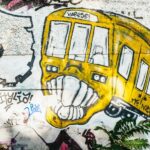

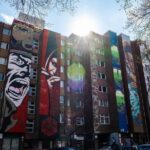



Urban Nation: the gallery stop that anchors what you saw outside
Urban Nation is included, and that’s a big deal for your learning curve. The street scenes teach you how the art lives in the city. The gallery stop gives you a second lens—one that’s easier to process without cold hands and shifting sidewalks.
Think of it like this: on the street, you’re catching the art in motion, in context, in real public space. In a gallery, you slow down. You can connect what you learned from the guide’s street explanations to curated presentation.
Even if you’re not a museum person, this stop can make your street photos more meaningful. You’ll know what you were looking at and why it matters beyond just color and scale.
Private tour energy: what it means for your time
This is a private tour/activity, so only your group participates. That changes the feel in a practical way. Instead of waiting for a big group to catch up, the pace can match your curiosity. If you want more time at a wall with small details, you can usually get it.
It also tends to improve the quality of the conversation. When the guide is an artist voice—sharing technique, history, and personal stories—questions come faster and answers stick better.
If you’re going with friends or family, private also helps with photography and timing. You can take your time when you see something that feels worth one more look, and you don’t have to “move on” because another group is catching up.
Price and value: what $432.15 buys you in Berlin time
At $432.15 per person, this isn’t a cheap casual activity. So the value question is simple: are you buying expert guidance and focused time, or are you buying a few sights?
This tour’s case for value is the combination:
- a dedicated guide who talks technique and culture
- a route that hits key neighborhoods tied to Berlin’s street art scene
- multiple styles of street art, not a single highlight
- an included stop at Urban Nation
- private-group attention
If street art is a real interest of yours—especially if you like understanding what you’re looking at—this price can feel justified. If you’re mainly chasing a “cool walk” and you don’t care about the culture behind it, you might decide it’s more than you want to spend.
My practical advice: if you’re visiting Berlin for only a short time and you want one guided way to decode the city’s wall language, private can be a smart use of limited time.
Timing, getting there, and how to prepare for a 10:00 am start
The tour starts at 10:00 am at Wursthain (Warschauer Str. 54). You finish in Kreuzberg near the U1 line. Ending near a line is helpful because it makes it easier to continue your day without guessing too much.
You’ll want to plan for the fact that the AB Metro Ticket isn’t included. That’s not a big deal, but it’s also not something to forget. Build transit into your morning so you don’t arrive flustered.
You’ll also want real outdoor readiness. This is an “out on the streets” experience, and Berlin mornings can shift quickly. If you’re thinking about photos, bring a camera strap you can keep comfortable and keep an eye on your batteries. Cold weather can drain them faster than you’d expect.
Who should book this tour, and who might prefer something else
This tour fits best if you like:
- street art as culture and communication, not just decoration
- learning how different styles work—tags, throw-ups, stencils, paste-ups, stickers
- a guided walk that connects what you see to why it exists
- a private setting where you can ask questions and move at your pace
It might not be ideal if you want:
- only the most famous, instantly recognizable murals with minimal stops
- a non-walking experience
- a strictly museum-style route with minimal street context
Also, the “moderate physical fitness” note matters. You don’t need to be an athlete, but you should be comfortable walking steadily for around three hours while stopping to look.
Final call: should you book Berlin’s off-the-grid street art tour?
If you want your first Berlin street art experience to feel like an education, not a random wall tour, I think this is worth serious consideration. The off-the-grid focus, the mix of graffiti styles, and the inclusion of Urban Nation give you both street-level context and a grounded point of reference indoors.
If you do book it, show up ready to read walls. You’ll get more out of it if you slow down, ask questions, and treat the city like a living message board.
FAQ
FAQ
How long is the Berlin Private Street Art Tour – Off The Grid?
It runs for about 3 hours.
Where does the tour start and end?
It starts at Wursthain, Warschauer Str. 54, 10243 Berlin and ends in Wrangelkiez (Kreuzberg area), close to the U1 line, at around 10997 Berlin-Friedrichshain-Kreuzberg.
What time does the tour begin?
The start time is 10:00 am.
Is this tour private?
Yes. It’s a private tour/activity, so only your group participates.
What’s included in the tour price?
The tour includes a tour guide and includes a stop at Urban Nation gallery.
Do I need an AB Metro Ticket?
Yes. An AB Metro Ticket is not included, so you’ll need to have your own for transit.
Is the tour physically demanding?
It’s noted as requiring moderate physical fitness, since it’s an outdoor walking tour for about three hours.
What happens if there aren’t enough passengers to run the tour?
The experience requires a minimum number of travelers. If it’s canceled for that reason after confirmation, you’ll be offered an alternative or a full refund.