REVIEW · BERLIN
Berlin: Karl-Marx-Allee 2-Hour Tour
Book on GetYourGuide →Operated by Sonderweg-Berlin · Bookable on GetYourGuide
Berlin’s most famous socialist boulevard starts here. Karl-Marx-Allee is a long, almost theatrical lesson in how the city rebuilt itself, with architecture you can actually walk up to. I love the way the tour ties the street to Berlin’s big name changes over time, and I also like how you’ll get concrete stops like Frankfurter Tor and the Kosmos cinema instead of vague talking points. One thing to consider: it’s a steady walking route, so wear comfortable shoes.
If you’re into architecture, this is a very efficient hit list in two hours. You’ll see the apartment blocks in Friedrichshain with their arcade-style rhythm, plus major high-rises like Hochhaus an der Weberweise, and you’ll even pass the partial ruins of the Church of the Resurrection. The main drawback is that the focus stays on urban form and historical context, so if you’re looking for museums or lots of indoor time, you may want to plan other stops after.
In This Review
- Key highlights at a glance
- Walking into Berlin’s socialist boulevard story
- Why Frankfurter Tor is more than a photo stop
- Friedrichshain arcades: the street’s residential backbone
- Kosmos cinema and Josef Kaiser: culture in built form
- Hochhaus an der Weberweise: when the boulevard tilts upward
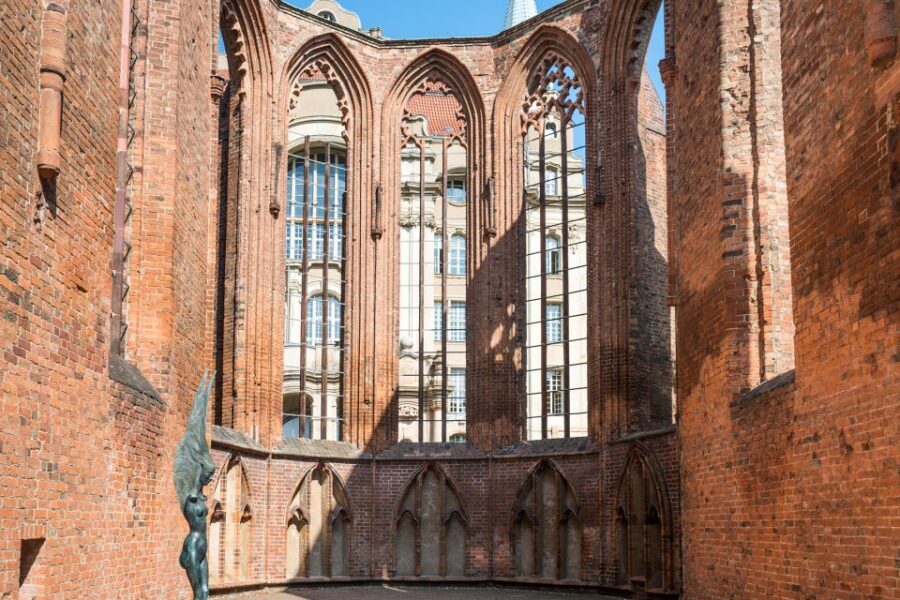
- The Church of the Resurrection ruins: power of what’s left behind
- Strausberger Platz: the gateway feeling into the socialist city center
- The guide experience: what makes the two hours feel complete
- Price and value: is $23 worth it for a two-hour walk?
- Who this tour suits best
- Quick planning tips before you go
- Should you book Karl-Marx-Allee for $23?
- FAQ
- FAQ
- How long is the Karl-Marx-Allee walking tour?
- What is the price per person?
- What’s included in the tour?
- Is hotel pickup or drop-off included?
- Where do I meet the guide?
- What languages are offered for the live tour guide?
- What cancellation options are available?
Key highlights at a glance
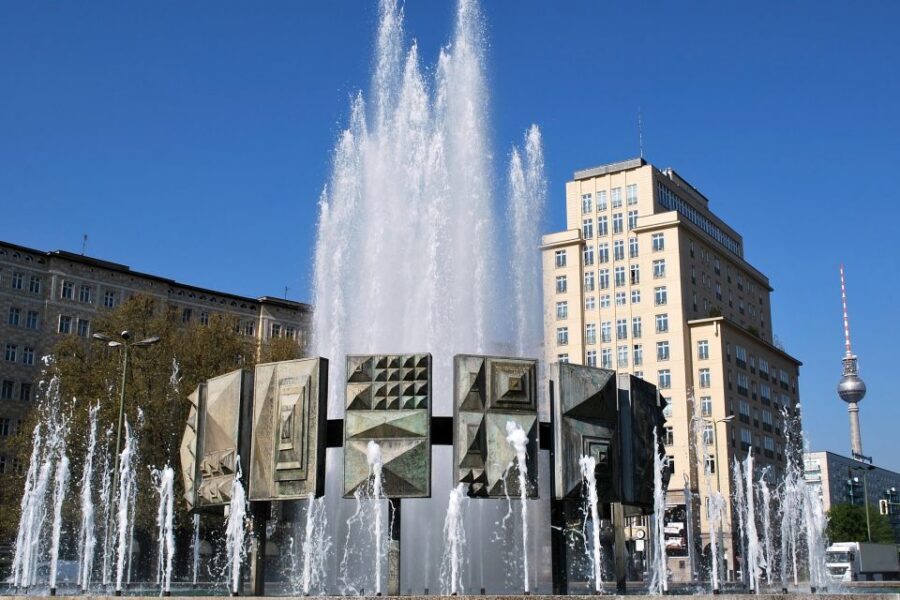
- Frankfurter Tor’s towers: a signature postcard view with real architectural punch
- Friedrichshain arcades: apartment living blocks with old-world order and repetition
- Kosmos cinema by Josef Kaiser: a standout cultural site along the boulevard
- Stalinallee to Karl-Marx-Allee: how politics literally rewired street identity
- Hochhaus an der Weberweise: a dramatic high-rise moment on the walk
- Strausberger Platz: a gateway feel into the socialist city center
Walking into Berlin’s socialist boulevard story
Karl-Marx-Allee is the kind of street that rewards attention. It’s not just a place to pass through. It’s a public design project you can read while you walk—wide lanes, strong building lines, and blocks laid out for the everyday life of a huge city.
This tour frames it as a transformation journey. The boulevard you see today has a past identity too: it was Frankfurter Allee, then became Stalinallee, and finally got its current name. That means the walk isn’t only about buildings. It’s also about how power, ideology, and city planning got stamped onto everyday streets.
You’ll also learn a practical mental trick: when you look at the buildings along Karl-Marx-Allee, try to track the rhythm. Some sections feel monumental and formal. Others feel more residential, with arcades and repetitive facades. That shifting “feel” is part of why the route works in just two hours—it gives you variety without bouncing you across the city.
A few more Berlin tours and experiences worth a look

Why Frankfurter Tor is more than a photo stop
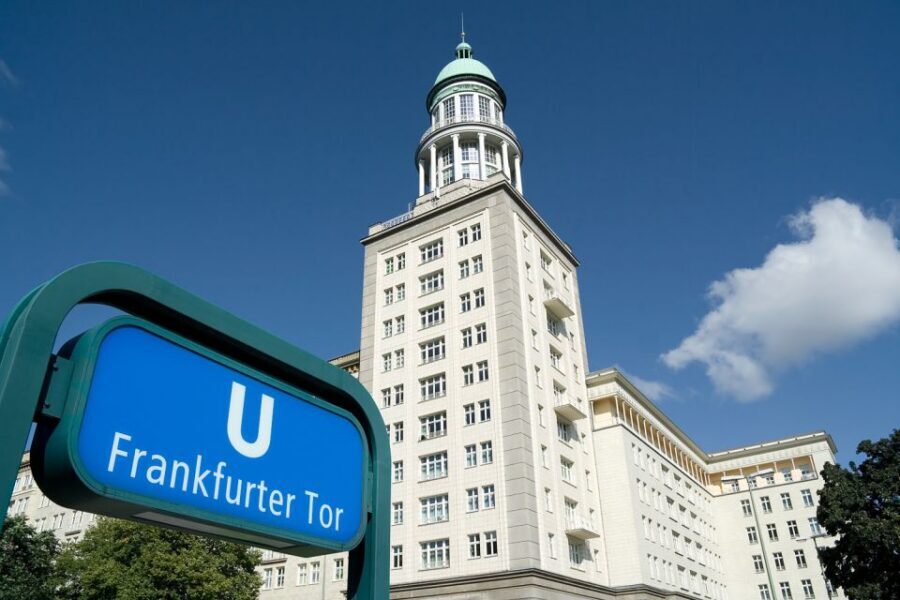
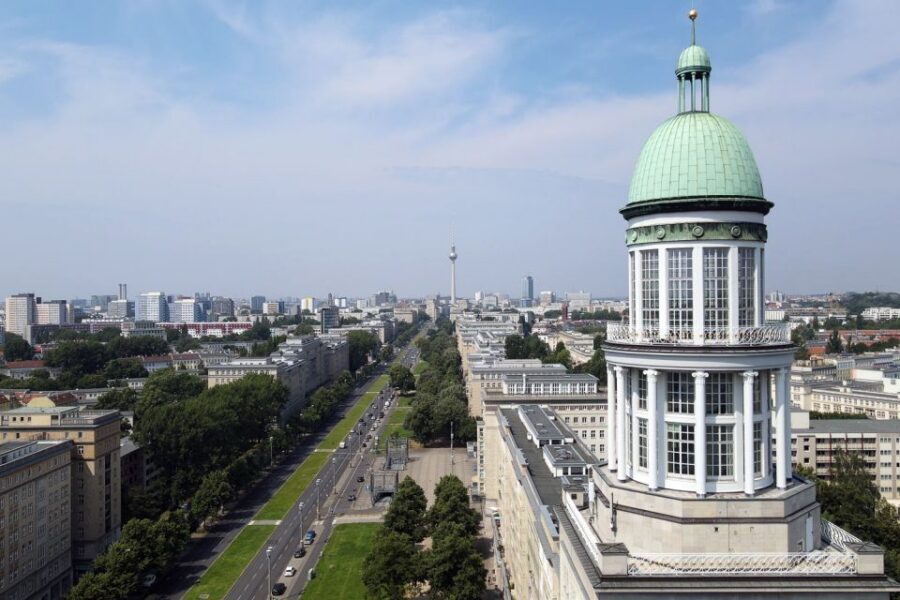
Frankfurter Tor is the opening act, and it earns the attention. The distinctive towers are hard to miss, and that’s the point. This is Berlin showing off a “grand entrance” vibe, the kind of place where a city wants you to realize you’ve entered something important.
On this tour, you’ll look at Frankfurter Tor with historical context in mind: what it represents, why that kind of gateway mattered, and how the street’s identity was shaped around it. Even if your Berlin background is light, you’ll leave with a clear visual anchor—this is where the boulevard’s story feels official.
A small practical tip: stand back for a second. Get the full view of the towers before you start moving along. Then, as you walk, watch how the street’s scale shifts around you. That contrast—street width, building height, and the way the facades pull your eye—helps the architecture make sense.
Friedrichshain arcades: the street’s residential backbone
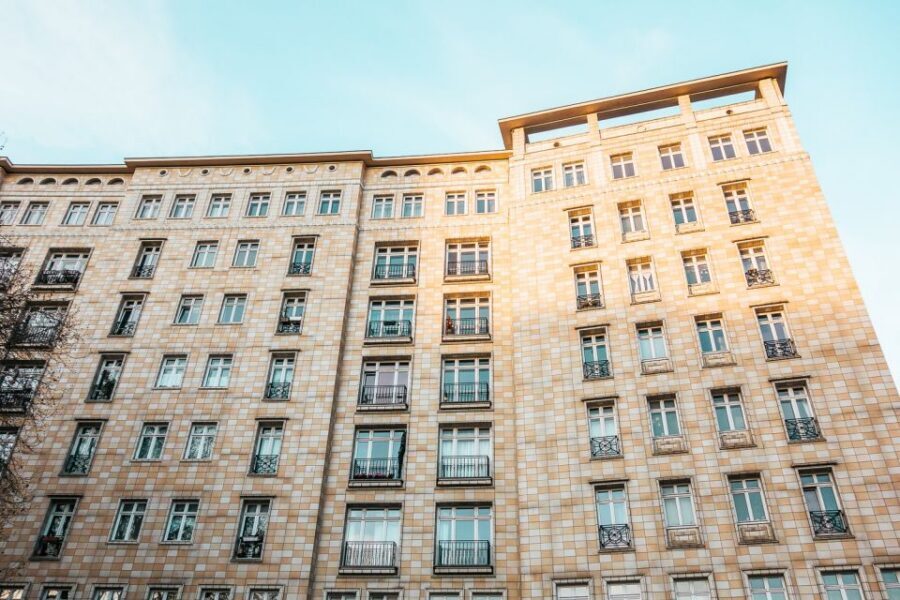
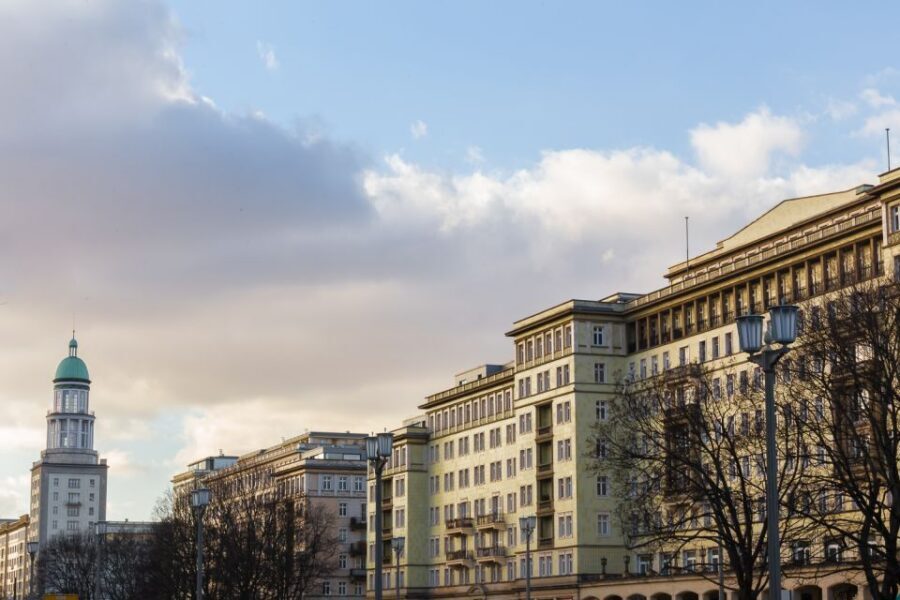
After the gateway, the tour steers you toward the apartment buildings in Friedrichshain. This is where Karl-Marx-Allee stops feeling like a grand poster and starts feeling like lived-in city planning.
The arcades are the feature to watch. They create a sheltered, semi-public edge—partway between inside and outside. That design choice changes how the street feels at ground level: you’re not just looking at tall buildings; you’re seeing how people would move, wait, and linger along the edges of daily life.
This stop also gives the tour its emotional balance. Not everything is monumental. Some of the appeal comes from the orderly repetition and the practical logic of housing blocks laid out on a major boulevard. You’ll start to understand that post-war urban development wasn’t only about big statements—it was also about creating workable neighborhoods.
If you like neighborhoods as much as landmarks, this is the segment that tends to win people over. The architecture has a human scale even when the overall street is huge.
Kosmos cinema and Josef Kaiser: culture in built form
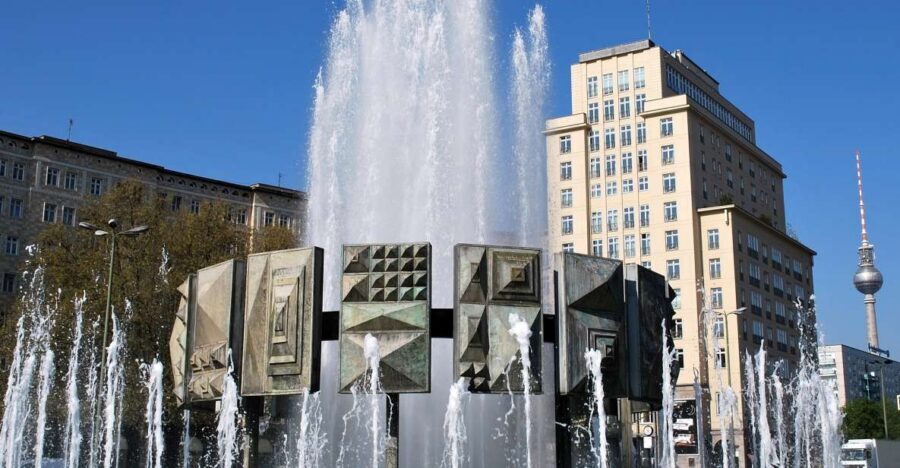
One of the most specific named stops is the Kosmos cinema, designed by Josef Kaiser. That matters because it prevents the tour from becoming generic. Kaiser’s cinema isn’t just an exterior you pass; it’s a reminder that the boulevard included leisure and culture, not only administration and housing.
As you look at the cinema within the flow of Karl-Marx-Allee, you’ll get a sense of how a major planned street functions as a whole system. People didn’t just commute on a statement boulevard. They also went to theaters, gathered, and spent time in public-facing places.
I like this kind of stop because it connects architecture to behavior. You can see a building and ask: What role did it play? For a cinema, the answer is easier to feel. It makes the street’s planning feel more real.
Hochhaus an der Weberweise: when the boulevard tilts upward
Then comes a high-rise moment: Hochhaus an der Weberweise. This building pushes the vertical emphasis, and it changes how you read the street. Up to this point, Karl-Marx-Allee can feel rhythmic—long, steady, horizontal. A high-rise adds a different kind of drama.
On the tour, this is used as a viewpoint for understanding post-war development—how the city incorporated skyline ambition into an axis that was already monumental. It’s also a reminder that “socialist street design” wasn’t necessarily one uniform style. It included experimenting with scale and prominence.
Practical note: if you spot a good angle, take a moment. High-rises can be hard to photograph from the wrong distance. Walking a few steps can help you frame the tower against the boulevard’s long lines.


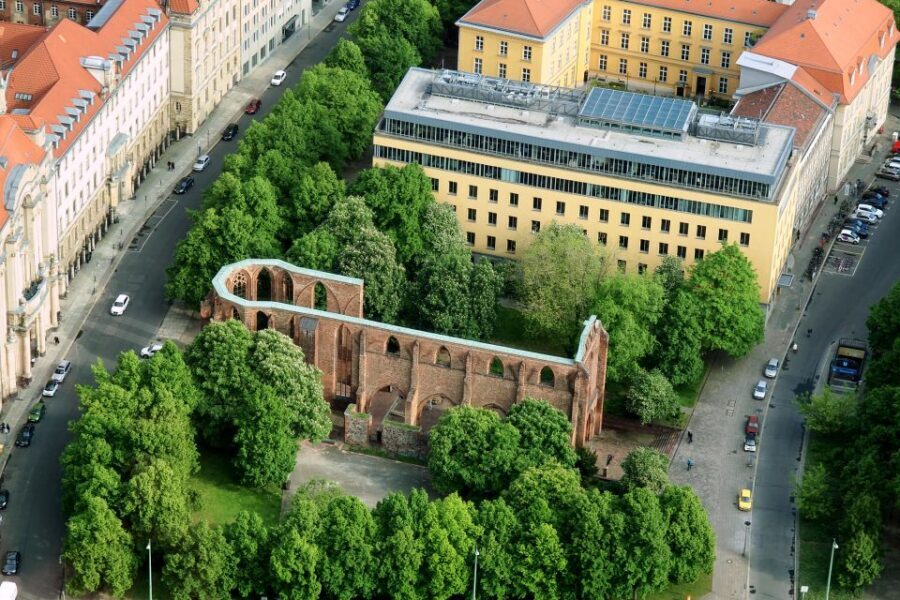
The Church of the Resurrection ruins: power of what’s left behind
You’ll also see partial ruins of the Church of the Resurrection. Ruins on a tour like this are not a random side quest. They add friction to the story, which is exactly what makes them important.
Architecture is usually presented as an intact plan: buildings rise, streets open, history moves on. But ruins disrupt that neat narrative. They show interruption—war damage, transformation, and the fact that reconstruction isn’t always a clean reset.
On this tour, this stop helps you understand the boulevard’s context in a more honest way. Karl-Marx-Allee isn’t only about style. It’s about rebuilding in a city that had to deal with real loss.
This is one of those moments where you don’t need extra facts to feel the meaning. You can stand there, look at what’s missing, and connect it to the idea of a street as a political and social project that had to be rebuilt from messy reality.
Strausberger Platz: the gateway feeling into the socialist city center
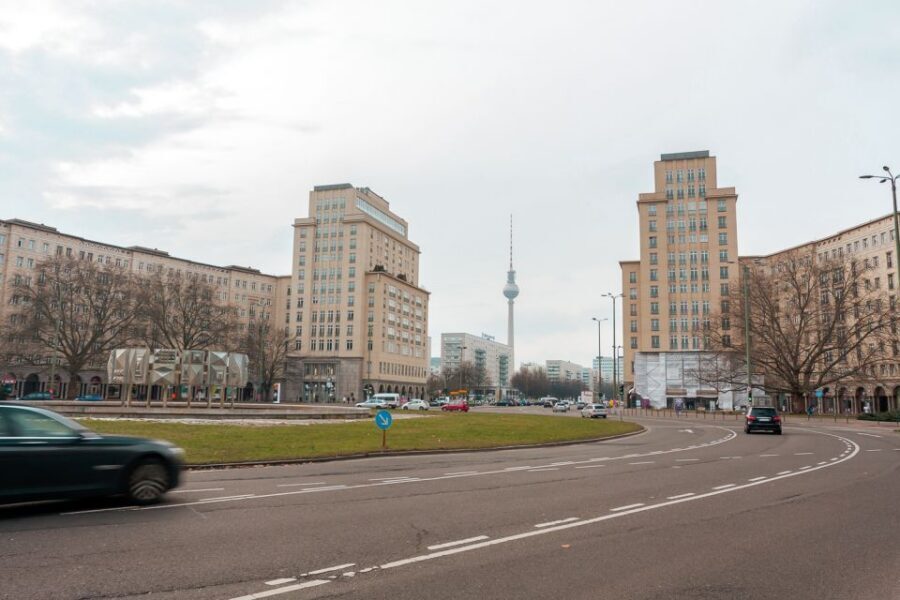
Strausberger Platz is where the tour leans into the “gateway” idea. You’ll stroll through the area and focus on the distinctive high-rise buildings there, described as a gateway to the socialist city center.
That phrase matters because it changes how you walk through the space. A gateway isn’t only an entry point—it’s a staging area. It’s where the city signals: this is where you’re supposed to go next, and this is what kind of place you’re heading into.
Strausberger Platz also helps you connect multiple pieces of the boulevard’s design language. By this point, you’ve seen towers, arcades, cultural architecture, and vertical emphasis. Now you see how they can combine into an urban “threshold” zone.
If you’re the kind of traveler who likes to understand how cities organize human movement—where people enter, gather, and disperse—this stop is a satisfying wrap-up.
The guide experience: what makes the two hours feel complete
The tour is led by a live guide, with German and English available. The vibe matters here because two hours can easily turn into a hurried checklist. The best part is that the interpretation tends to feel like a guided conversation, not a lecture.
One guide name that comes up strongly is Tobias, known for being passionate and communicative. In the route style he’s associated with, you get historical photos, old posters, and lots of anecdotes along the way. That detail is more than entertainment. It helps you “see” what the street looked like during different eras, which is crucial for understanding changes like Frankfurter Allee to Stalinallee to Karl-Marx-Allee.
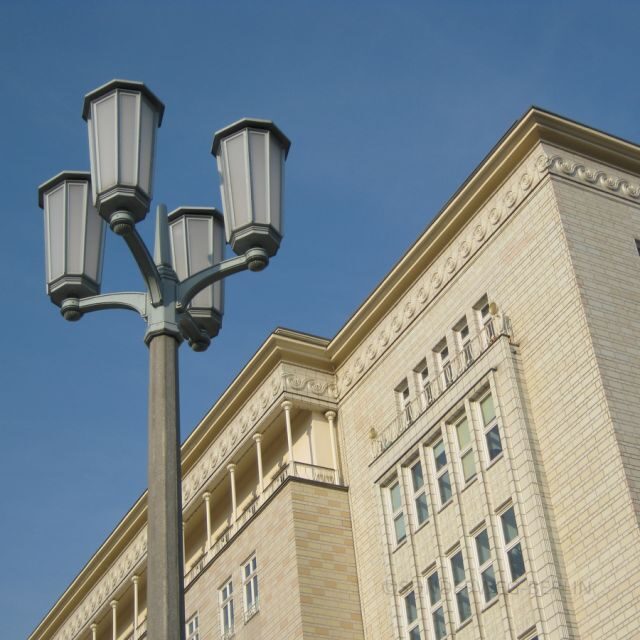
I also like that the tour can point out artwork and quieter corners—small details you’d probably miss on your own. Karl-Marx-Allee is big and dramatic, but the meaningful parts are often at human height: entrances, arcades, and the small visual cues in facades.
Price and value: is $23 worth it for a two-hour walk?
At $23 per person for a 2-hour walking tour, the price is pretty fair for what you get. You’re paying for:
- an expert guide
- a focused route with multiple named architectural stops
- context that helps you understand why these buildings matter
Because the boulevard is long and visually complex, self-guided walking can turn into a “see cool stuff” experience without the storyline. This tour compresses the learning curve into a couple of hours and keeps the route pointed.
No hotel pickup is included, so you’ll want to factor in getting to the meeting point on your own. But once you’re there, the structure is tight: a manageable walking timeframe with a sequence that builds understanding from gateway to residential blocks to high-rises and finally the Platz area.
Who this tour suits best
This tour fits best if you like any mix of these:
- post-war architecture and urban planning
- Cold War-era city changes and street identity
- a walking route that’s more than sightseeing selfies
- architecture plus storytelling in a single package
It’s also a good choice if you’re in Berlin for a short stay. Karl-Marx-Allee covers a lot of visual themes in a compact stretch, so you can get a strong sense of one major slice of the city without hopping neighborhoods all day.
If you’re more into museums, art galleries, or detailed interior exhibits, you’ll likely treat this as a grounding experience first, then add museum time after.
Quick planning tips before you go
A couple of practical things will make your two hours smoother:
- Wear comfortable shoes. It’s a walking tour and the boulevard is long enough to feel it.
- Bring a phone or camera, but also take time to look up. The towers and high-rises are where the street scale makes the biggest impression.
- If you’re interested in the name changes—Frankfurter Allee to Stalinallee to Karl-Marx-Allee—arrive ready to connect that timeline to the buildings you’re seeing.
Meeting point may vary depending on the option booked, so double-check before you head out. Also remember there’s no hotel pickup, so plan your arrival like a normal city walk.
Should you book Karl-Marx-Allee for $23?
I’d book it if you want a guided way to understand one of Berlin’s most distinctive urban design corridors. The route hits major architectural identifiers—Frankfurter Tor, Friedrichshain arcades, the Kosmos cinema by Josef Kaiser, Hochhaus an der Weberweise, partial ruins of the Church of the Resurrection, and Strausberger Platz—and ties them into the boulevard’s shifting identity.
Skip it only if you mainly want indoor stops, or if you don’t care about architectural context and prefer purely scenic wandering. For the rest of you—especially first-timers who want a high-impact orientation to post-war Berlin—this is a solid, efficient use of time.
FAQ
FAQ
How long is the Karl-Marx-Allee walking tour?
It lasts 2 hours.
What is the price per person?
The price is $23 per person.
What’s included in the tour?
It includes a walking tour and an expert guide.
Is hotel pickup or drop-off included?
No, hotel pickup and drop-off are not included.
Where do I meet the guide?
The meeting point may vary depending on the option booked.
What languages are offered for the live tour guide?
The tour guide is available in German and English.
What cancellation options are available?
You can cancel up to 24 hours in advance for a full refund.