REVIEW · BERLIN
Berlin: Historical Walking Tour with Live Music
Book on GetYourGuide →Operated by Axel Glorvigen · Bookable on GetYourGuide
Songs turn Berlin’s big sights into a living map. On this Berlin city-center historical walking tour, you visit major landmarks and hear a live song at each stop, so the Cold War and cultural history land faster than a textbook ever will.
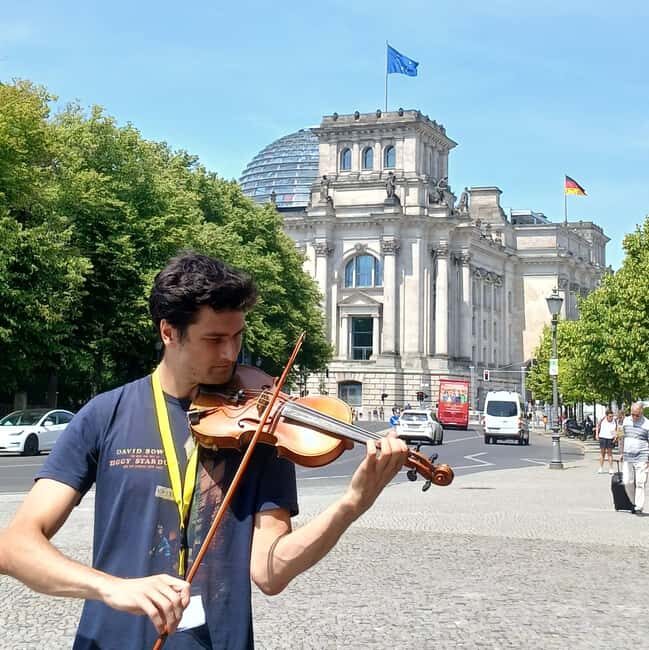
I especially love the way the music connects to what you’re seeing, from Nazi propaganda bands to David Bowie’s 1970s Berlin inspiration and how East German songwriters resisted through song. I also love that the guide, Axel Glorvigen, performs live with guitar, singing, and violin right alongside the landmarks.
One thing to plan for: it’s a fully walked route for about 2.5 hours, so bring good shoes and check the weather before you go.
In This Review
- Quick Key Points
- A Two-and-a-Half-Hour Berlin Story Walk With Live Music
- Pariser Platz Meeting Point: What to Do First
- Brandenburg Gate Stop: When Pop, Power, and Song Intersect
- Holocaust Memorial Stop: A Place Where the Music Has to Be Careful
- Berlin Wall Stop: East-West Tension Told in Guitar, Singing, and Violin
- Checkpoint Charlie Finish: Getting Your Bearings at the Cold War’s Crossroads
- Price and Value: Is $12 Worth 2.5 Hours of Music and History?
- Who This Tour Suits Best (and Who Might Want Something Else)
- Accessibility and Practical Tips That Actually Matter
- Should You Book This Live-Music Walking Tour?
- FAQ
- How long is the Berlin Historical Walking Tour with Live Music?
- Where does the tour start?
- Where does the tour end?
- What is included in the tour price?
- What languages is the tour offered in?
- Is the tour wheelchair accessible?
- Is there live music during the tour?
- What should I bring?
- Is free cancellation available?
- Can I reserve and pay later?
Quick Key Points
- Live music at every major landmark, not just at the start
- History tied to specific songs and eras, including propaganda and resistance
- Axel Glorvigen performs live with guitar, singing, and violin
- A compact city-center route that starts at Pariser Platz and finishes at Checkpoint Charlie
- Wheelchair accessible, and it avoids any need for transport during the tour
A Two-and-a-Half-Hour Berlin Story Walk With Live Music
This tour is built around a simple idea: Berlin’s history is easier to remember when you can hear it. You walk through the city center and, at key points like the Brandenburg Gate and the Holocaust Memorial, you’ll get a live song that connects the scene to the era.
What makes it work is the mix of styles and topics. You’re not only hearing music as decoration. You learn why certain music mattered during Nazi rule, how 1970s Berlin shaped pop culture (with Bowie coming into the story), and how music became a tool for people under East Germany’s regime. It’s a smart way to take sites you may have seen in photos and turn them into a sequence of cause-and-effect.
The live element also keeps you alert. With guitar, singing, and violin happening at the stops, the tour doesn’t feel like a lecture while you walk. It feels like you’re getting a guided soundtrack for a city that changed fast.
You can also read our reviews of more walking tours in Berlin



Pariser Platz Meeting Point: What to Do First
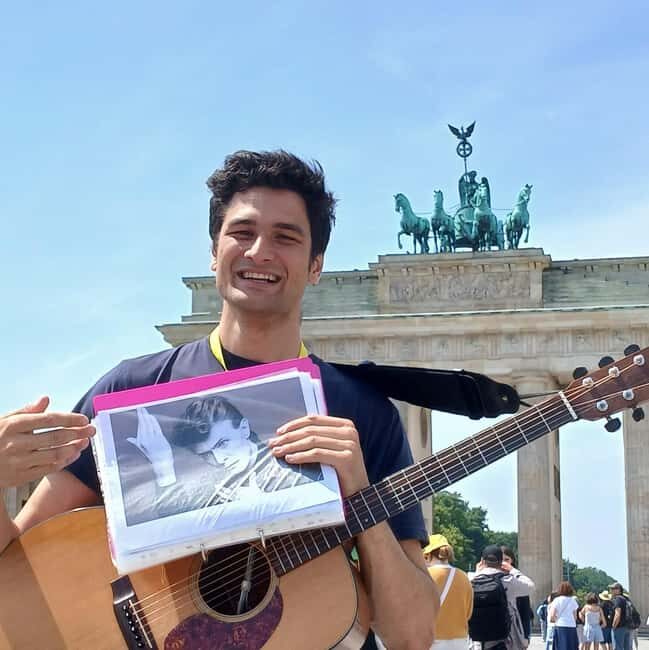
You’ll start at Pariser Platz, in front of Starbucks. The guide is carrying a guitar, which makes the meetup easy—you don’t have to wonder who’s with the group.
Because the tour is fully walked, you should think of this as a “no extra planning” activity. There’s no need to arrange transport between stops or budget for anything beyond the ticket. You’ll just line up, put on your walking shoes, and follow along to the next landmark.
It’s also in English. That matters here because the tour is about connecting history, names, and themes to what you’re hearing. If you’re traveling from another country and want the story clearly spoken as you go, this is a straightforward fit.
Brandenburg Gate Stop: When Pop, Power, and Song Intersect
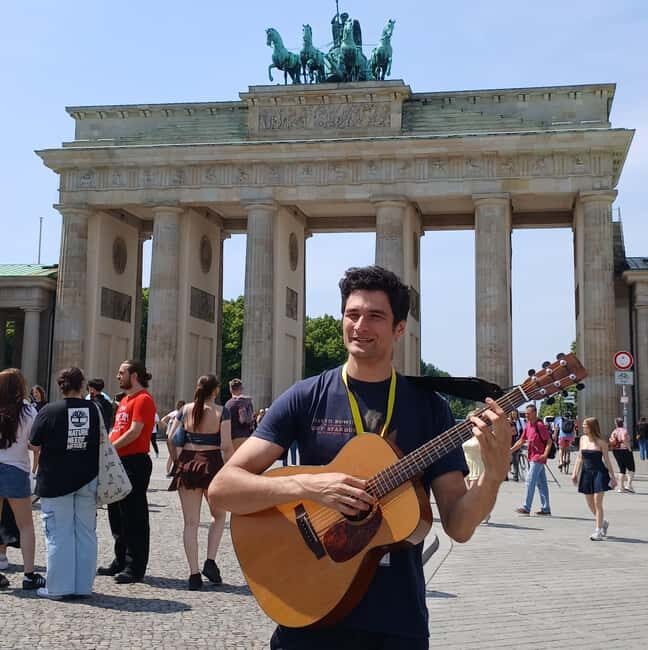
The tour’s first major landmark is the Brandenburg Gate, with about 20 minutes for sightseeing and the musical portion.
This is a great choice for a starting anchor. The Gate is one of Berlin’s most recognizable symbols, so even if you’re a first-timer, you’ll quickly have the visual reference points. Then the music helps you shift from “I’ve seen this before” to “I get why this mattered.”
You’ll also start hearing the tour’s central theme: how Berlin’s public life, politics, and culture overlap. The guide sets the tone by linking eras to songs, including the role music played under authoritarian systems. The goal isn’t to turn you into an expert in one stop—it’s to help you notice patterns as you move deeper into the city’s timeline.
A small practical consideration: with only 20 minutes, you won’t have a long, slow photo session here. If you’re planning on getting lots of pictures, aim to do that quickly and keep your attention on the story as the song plays.
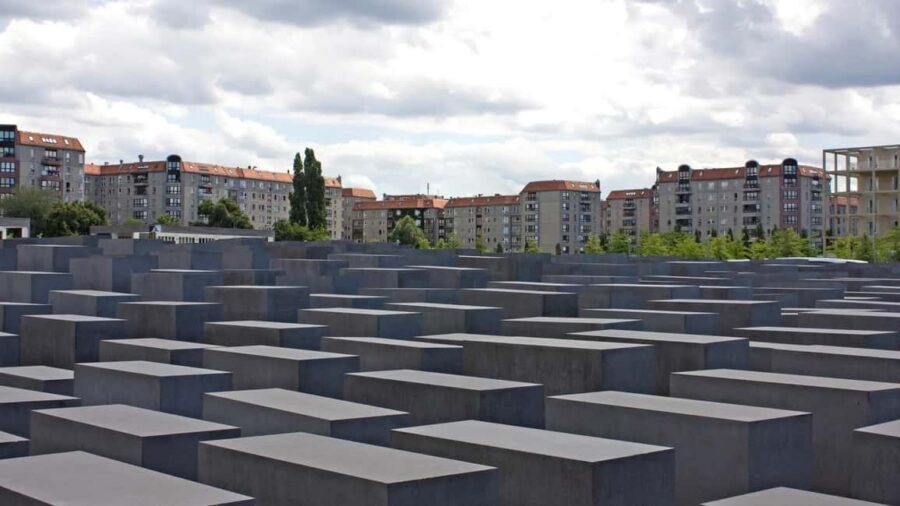
Holocaust Memorial Stop: A Place Where the Music Has to Be Careful
Next up is the Holocaust Memorial, also with around 20 minutes for the visit and the musical component.
This stop is serious. You’re not going to treat it like a normal sightseeing photo stop, and the tour approach reflects that by tying the moment to the broader story of the era. The live song element can feel different here than it would at, say, a stadium or a theater, and that’s part of the impact. It pushes you to slow down and listen for meaning rather than treating the music as background.
Why this stop is valuable on a guided walk: the Holocaust Memorial doesn’t come with an easy “one explanation.” It’s easier to process when someone gives you context in clear language while you’re standing in front of it. The music adds a human thread that helps the information stick.
Possible drawback: if you’re the kind of traveler who prefers silence at memorials, the live singing might not be your ideal format. You can still benefit from the context, but the sound element is a core part of the experience.
Berlin Wall Stop: East-West Tension Told in Guitar, Singing, and Violin
After that, you move to the Berlin Wall segment, again with about 20 minutes for sightseeing and storytelling with live music.
This is where the tour’s concept really clicks. The Berlin Wall is a physical reminder of division, and the live music helps you understand the emotional and political weight behind it. The guide explains how songwriters and musicians lived under pressure in East Germany and how music could resist, even when people weren’t allowed to say certain things openly.
You’ll also hear how the Nazi era fits into the bigger story of propaganda and controlled messaging through music. The tour doesn’t treat music as separate from politics. Instead, it shows music as a tool—sometimes forced, sometimes used to push back.
The violin and singing add another layer. Hearing different tones while you’re standing at a landmark makes the moment feel more immediate, and it keeps the story from being only verbal. If you learn best when you have both audio and visual input, this stop is a strong one.
One more practical note: because you’re walking between stops and spending a set amount of time at each, you won’t linger for long. That’s fine for most people, but if you want deep time at the Wall area, you may want to do an extra independent stop afterward.
You can also read our reviews of more historical tours in Berlin




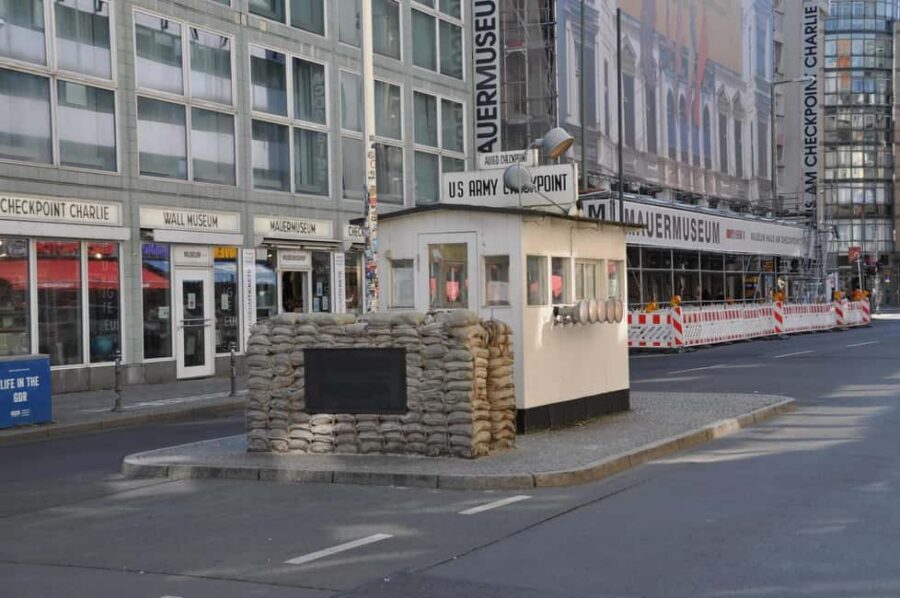
Checkpoint Charlie Finish: Getting Your Bearings at the Cold War’s Crossroads
The tour ends at Checkpoint Charlie. This is an excellent finishing point because it’s a location many visitors already associate with the Cold War. By the time you reach it, you’ll have walked through a line of stories that explain why this area became so symbolic.
As a final stop, Checkpoint Charlie does two jobs:
- It gives you a clear, dramatic endpoint for the walk.
- It lets you connect the earlier themes (propaganda, resistance, cultural influence) to what this place represented—an edge where power and people collided.
By finishing here, you also set yourself up nicely for what comes next. Once the tour ends, you can keep exploring the area on your own with better context, rather than staring at a famous spot and wondering what you’re looking at beyond the basics.
Price and Value: Is $12 Worth 2.5 Hours of Music and History?
At $12 per person for about 2.5 hours, this tour is priced like a bargain relative to what you’d expect for a standard guided walking experience—and it’s more than just a guide telling you where to stand. You’re paying for three things at once:
- a guided walk through major Berlin sights
- contextual historical storytelling
- live performance elements (guitar, singing, and violin)
In other words, you’re not only buying information. You’re buying a format that helps the information stick. The fact that everything is included and it’s fully walked matters too. No transport costs, no extra tickets, no “pay later for the fun part.” You show up and the tour delivers.
Is it perfect for everyone? Not necessarily. If you prefer silent, self-paced museum time or you want extremely detailed, stop-by-stop deep history, you might feel the pacing is quick. But if you want a strong overview with a memorable twist, the value is hard to beat.
Who This Tour Suits Best (and Who Might Want Something Else)
This tour fits best if you want:
- a city-center walking experience focused on key landmarks
- clear English explanations
- live music tied directly to what you see
- a timeline approach that moves from broader political themes to cultural impact
It’s also a good pick if you like when guides bring personality into the job. Axel Glorvigen plays music himself, so the tour doesn’t feel like a separate performer dropped in for a few minutes. The music is part of the storytelling structure.
You might consider a different tour format if:
- you strongly dislike walking for about 2.5 hours
- you prefer memorials and heavy sites to be strictly silent
- you want a purely lecture style with no songs involved
Accessibility and Practical Tips That Actually Matter
This tour is listed as wheelchair accessible, and it’s fully walked. That combination suggests the route is planned to work for mobility needs, but you’ll still want supportive footwear because you’re spending time on your feet outdoors.
Weather matters here. Since it’s a walking tour with live music stops at landmarks, check the forecast and dress for the day. You don’t want to be thinking about discomfort while you’re trying to hear the songs and follow the guide’s explanation.
Should You Book This Live-Music Walking Tour?
I’d book it if you’re visiting Berlin for the first time or if you want a fresh way to see the big sites without turning your day into a museum marathon. The price is low, the route hits major landmarks, and the live guitar, singing, and violin do real work in making the history memorable.
I’d think twice if you want a quiet, slow, reflective pace at every stop or if long walking time is a problem. The tour is designed to move, and the music is not an optional add-on—it’s woven into each landmark visit.
If you’re the type who likes your sightseeing with a point of view, this one is built for you.
FAQ
How long is the Berlin Historical Walking Tour with Live Music?
The tour lasts 2.5 hours.
Where does the tour start?
It starts at Pariser Platz, in front of Starbucks.
Where does the tour end?
The tour finishes at Checkpoint Charlie.
What is included in the tour price?
Everything is included, and the tour is fully walked, so you do not need transportation or any other additional costs.
What languages is the tour offered in?
The tour guide speaks English.
Is the tour wheelchair accessible?
Yes, the tour is wheelchair accessible.
Is there live music during the tour?
Yes. You’ll hear live music with guitar, singing, and violin at major stops.
What should I bring?
Wear good shoes and check the weather beforehand since it is a walking tour.
Is free cancellation available?
Yes. You can cancel up to 24 hours in advance for a full refund.
Can I reserve and pay later?
Yes. You can reserve now and pay later, with the option to pay nothing today.