Berlin rewards people who look twice. This walk makes the Gendarmenmarkt area feel alive. I like that you get both major landmarks (German Cathedral, French Cathedral, Konzerthaus) and the people tied to them (E.T.A. Hoffmann, Josephine Baker, Marlene Dietrich, Claire Waldoff, plus the Mendelssohn family). One thing to consider: the tour is German-only and it’s not set up for visually or hearing-impaired guests.
You’ll also get practical context for how Berlin shifted over time, from culture and banking to fashion and the city’s 1989 “freedom to travel” moment. The group stays small (max 15), and the route focuses on short, walkable distances around Berlin-Mitte, so it’s easy to follow without sprinting across town.
In This Review
- Key takeaways
- Why the Gendarmenmarkt area feels different after this walk
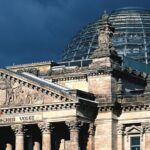
- Start at Gendarmenmarkt: the three buildings that run the show
- The square’s history: glories, chaos, and why it keeps changing
- The 1989 moment: standing where freedom to travel was proclaimed
- Meet the names behind the stone: Hoffmann, Baker, Dietrich, Waldoff, and the Mendelssohns
- Hausvogteiplatz: how the fashion story grew near Gendarmenmarkt
- Jägerstraße: banking, ideas, and a meeting place for the famous
- Tour logistics that affect your experience (without getting in the way)
- Price and value: what $20 buys you in 2 hours
- Who this tour suits best
- Should you book this Gendarmenmarkt walking tour?
- FAQ
- Where does the tour start?
- How long is the walking tour?
- How much does it cost?
- Is the tour in German only?
- How big is the group?
- Is it wheelchair accessible?
- Where does the tour end?
- What’s included in the price?
- Is it suitable for people with visual or hearing impairments?
Key takeaways
- Gendarmenmarkt’s “most beautiful square” story explained through the buildings that define it
- Three landmark stops: German Cathedral, French Cathedral, Konzerthaus
- A 1989 turning-point visit tied to the proclaimed freedom to travel
- Fashion and finance in one loop via Hausvogteiplatz and Jägerstraße
- Big names, real connections: Hoffmann, Josephine Baker, Dietrich, Waldoff, Mendelssohns
Why the Gendarmenmarkt area feels different after this walk
The Gendarmenmarkt isn’t just a photogenic square. It’s a shortcut through centuries of Berlin, told in plain street-level terms. I like how this tour treats the area as a changing stage: architecture sets the mood, and the stories explain why the mood kept changing.
You’ll start with what you can see right in front of you, then you’ll be guided into what you might miss if you only wander on your own. You learn why the square became known as Berlin’s most beautiful, how it fits into the city’s cultural power, and how it connected to shifting politics and ideas. The result is that you leave with a map in your head, not just a few pictures on your phone.
One practical note: you’re walking for about 2 hours, and the tour is in German. If you don’t feel strong in German, you’ll still enjoy the architecture, but the deeper storytelling will pass you by faster than you’d like.
You can also read our reviews of more walking tours in Berlin



Start at Gendarmenmarkt: the three buildings that run the show
The tour’s opening point is Gendarmenmarkt / opposite Französische Straße 44. From there, it makes you look at the square like a designer, not just a tourist. The first big payoff is that you don’t treat the German Cathedral, French Cathedral, and Konzerthaus as separate “pretty buildings.” You see them as one coordinated message.
Here’s what the tour focuses on at the landmarks:
- German Cathedral (Deutscher Dom): you get the background on what makes it architecturally notable and why it mattered to Berlin’s self-image.
- French Cathedral (Französischer Dom): you learn how it ties into the square’s identity and the broader idea of Berlin as a place of outside influence and internal ambition.
- Konzerthaus: you connect the performance-house purpose to the square’s cultural role, so it doesn’t feel like an empty venue from a distance.
What I find smart about this approach is that you’re not stuck with facts only. You’re given significance. The guide helps you understand what these buildings were meant to communicate, and how the square became a symbolic center.
If you enjoy architecture but often get bored by dry descriptions, this format tends to land better. You can watch the details while also grasping why someone cared enough to build and rebuild.
The square’s history: glories, chaos, and why it keeps changing
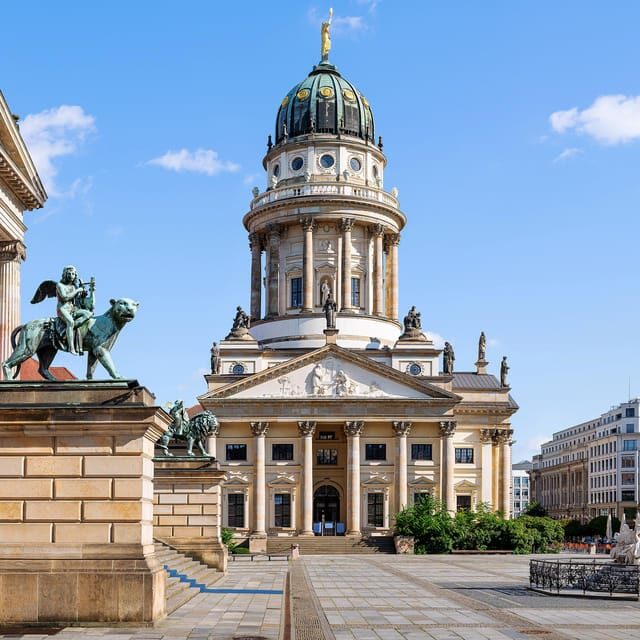
A big part of the tour is the idea that Gendarmenmarkt is a “history machine.” The buildings look stable, but the meaning has never been stable.
You’ll hear about past glories and eventful times, and you’ll also get attention on the more recent layer: the tour mentions that the area has been a major construction site since 2023. That detail matters more than it sounds. It reminds you that city centers keep evolving, even when they look finished to casual visitors.
The tour also connects the square to surrounding streets like Mohrenstraße, Hausvogteiplatz, and Jägerstraße. That’s important because Berlin-Mitte can feel like a blur if you’re only following big sights. Here, those nearby streets become clues: they show you where commerce, ideas, and culture used to cluster, and why the square was positioned where it was.
The 1989 moment: standing where freedom to travel was proclaimed
One of the tour’s strongest emotional beats comes when you reach the place where the freedom to travel was proclaimed in 1989. Even if history is something you’ve read before, this is different because it’s anchored to a specific atmosphere in the city space.
What you’re likely to appreciate is the way the guide frames this as a turning point, not just a date. Berlin is full of reminders of division, movement restrictions, and the long wait for change. Here, the focus shifts to the moment when travel freedom became part of everyday life for many people.
If you’ve ever felt that Berlin’s history can be heavy, this part can feel grounding. It explains why so many monuments and street names matter: they’re tied to real life, real decisions, and real consequences.
Meet the names behind the stone: Hoffmann, Baker, Dietrich, Waldoff, and the Mendelssohns
A walking tour becomes memorable when it gives people a reason to exist in the real world. This one does that by walking you through connections to major figures who shaped Berlin’s cultural DNA.
You’ll meet:
- E.T.A. Hoffmann, tied in as writer and composer
- Josephine Baker, connected to dance and performance icon status
- Marlene Dietrich, acting legend and Berlin-era cultural influence
- Claire Waldoff, cabaret star in the city’s entertainment story
- the Mendelssohn family, whose influence threads through the area’s arts and institutions
One reason I like this segment is that it changes your attention while you’re walking. Instead of only scanning buildings, you also look for why a place would attract a certain kind of person. The guide helps you place artists and thinkers into the geography of Berlin-Mitte, so the square feels less like a museum and more like a living crossroads.
Also, you might hear references that make the guides themselves feel like part of the experience. One named guide connected with this tour series is Susanne, and the tone noted in feedback is that the guiding is friendly and competent, not just recitation.
You can also read our reviews of more guided tours in Berlin




Hausvogteiplatz: how the fashion story grew near Gendarmenmarkt
The route doesn’t stop at theaters and cathedrals. It pivots into a different kind of power: fashion.
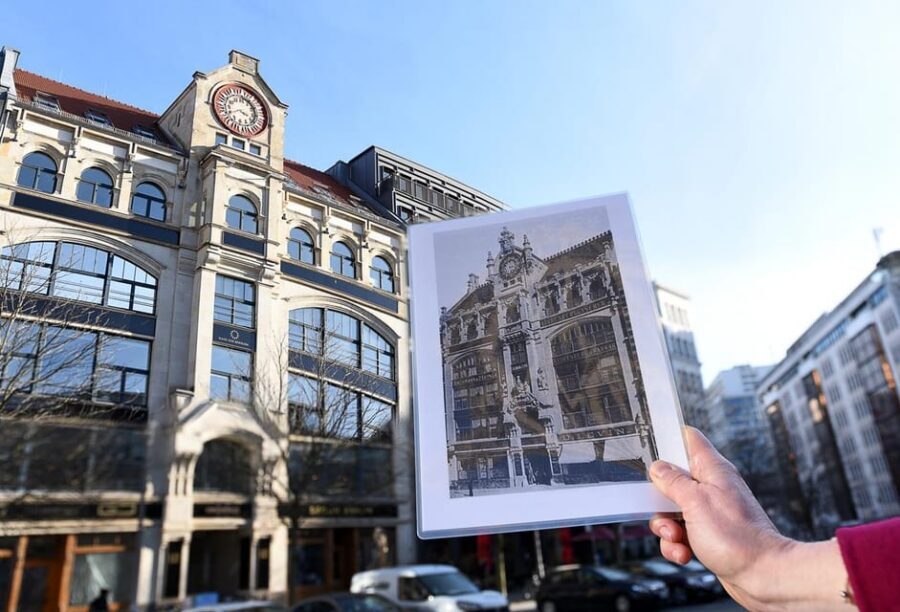
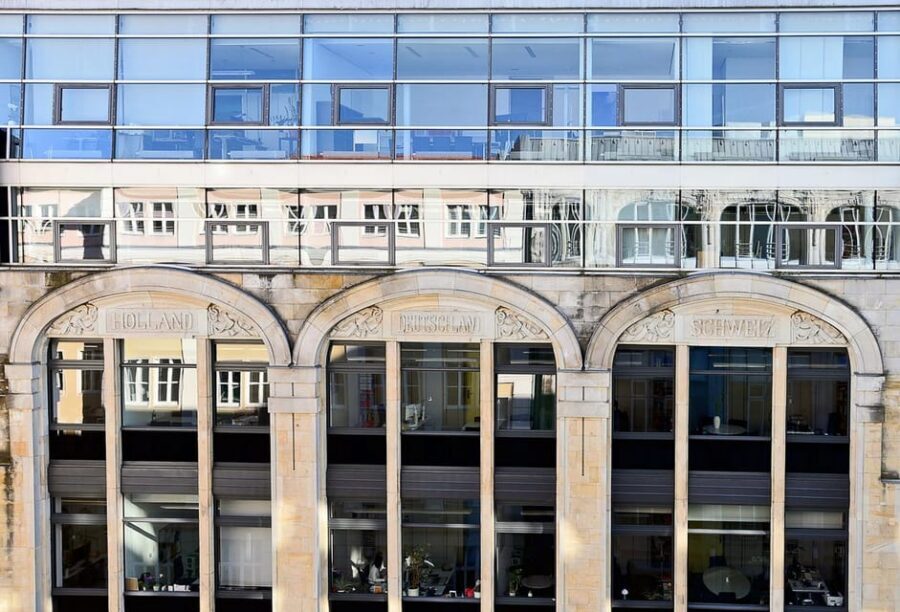
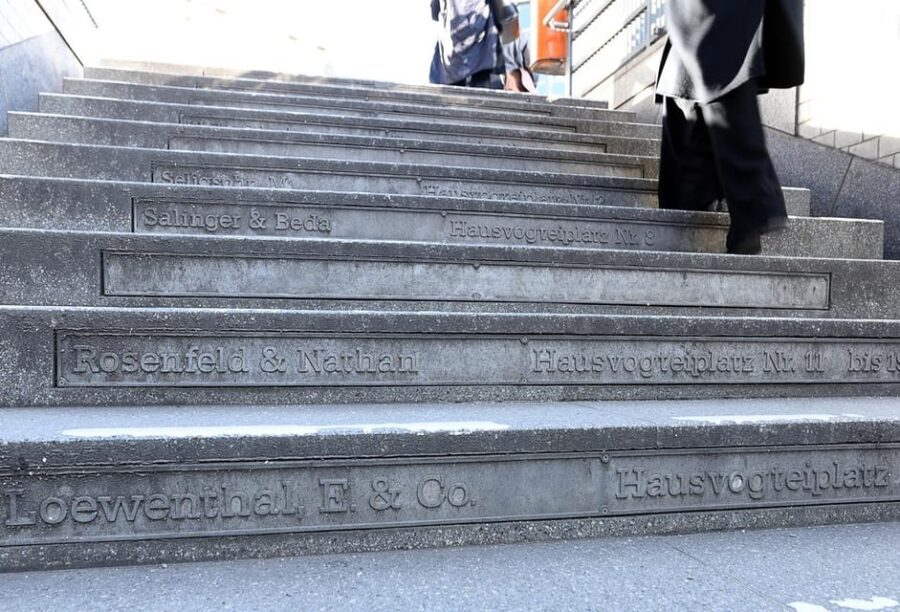
At Hausvogteiplatz, the tour treats the area like a forgotten chapter of Berlin’s style leadership. You’ll learn that this part of the neighborhood was once the center of Berlin’s fashion industry, and you’ll connect it to how Berlin became a fashion metropolis.
The value here isn’t just learning that fashion mattered. It’s understanding why this location mattered. When you see how fashion and culture overlap in a city center, you start noticing patterns: studios, performance venues, salons, and the kind of people who traveled between them.
For you, this is a great segment if you like cultural history but don’t want a lecture. You get walking momentum, and the story changes direction enough to keep you awake in a good way.
Jägerstraße: banking, ideas, and a meeting place for the famous
Next comes Jägerstraße, and this is where the tour gets extra interesting if you like Berlin’s intellectual vibe. The tour frames Jägerstraße as a former heart of the financial world, including the Mendelssohn Bank.
Then it adds a second layer: this wasn’t only money. It was also where intellectual life met practical influence. The guide brings in major thinkers associated with the area, including:
- Alexander von Humboldt
- Rahel Varnhagen van Ense
- Moses Mendelssohn
That combination is the point. Berlin, at its best, often mixes disciplines. When ideas, institutions, and culture sit close together, you get faster cross-pollination. Walking this stretch with that lens makes it easier to understand why Berlin repeatedly produced artists, thinkers, and influential families.
If you tend to think of “old Berlin” as either arts-only or politics-only, this segment helps you see the overlap. It’s one of the reasons the tour feels like more than a sightseeing loop.
Tour logistics that affect your experience (without getting in the way)
This is a guided walking tour in a small group (max. 15 people). That group size matters. With smaller groups, you generally get better pacing and more chance to ask questions, and you’re less likely to be herded like a crowd.
The tour runs for about 2 hours, and it ends back at the meeting point. That round-trip structure is handy because it keeps your “where am I” stress low. You can also pair the rest of your day with other sights in Berlin-Mitte without feeling trapped by transit.
The guide is live and German-speaking. The tour is listed as wheelchair accessible, but it’s also noted as not suitable for visually impaired people and not suitable for hearing-impaired people. If you fall into either of those categories, it’s worth planning carefully and checking whether your needs can be accommodated during the walk.
And yes, wear comfortable shoes. The tour is short, but it’s still a walk where your feet do the work.
Price and value: what $20 buys you in 2 hours
At $20 per person for a 2-hour small-group guided walk, the value comes down to two things: the density of story and the focus on a compact area.
You’re not paying for a long transit day. You’re paying for interpretation: architecture plus context, plus a mix of arts, finance, fashion, and a key 1989 moment. For many visitors, that’s exactly what makes tours worthwhile: saving you time trying to connect the dots on your own.
Also, the small group setup helps the price feel more reasonable. You’re not fighting for attention, and the guide can keep the discussion moving at a human pace.
If you love Berlin’s big sights but want something that goes beyond postcards, this is a solid use of a couple hours.
Who this tour suits best
This tour fits you if you want a structured walk through Berlin-Mitte that still leaves room for curiosity.
It’s especially a good match if you:
- like architecture stories, not just photos
- enjoy cultural history with named figures
- want a manageable time block that still feels meaningful
- prefer small-group walking over large-group bus-tour energy
It’s less ideal if you rely on a non-German explanation during the whole experience. The tour data specifies German as the language, so your enjoyment will depend on your comfort level.
Should you book this Gendarmenmarkt walking tour?
I’d book it if you’re looking for a focused way to understand why Gendarmenmarkt matters, and you want the surrounding streets to make sense, too. The mix of major landmarks, people tied to the area, and the 1989 freedom-to-travel moment gives you both atmosphere and context, without requiring a full day of museum time.
Skip it if German-only guiding is a dealbreaker for you, or if your needs fall into the categories noted as not suitable. Otherwise, it’s a strong pick for a first-time or returning visitor who wants Berlin to feel personal, not just impressive.
FAQ
Where does the tour start?
It starts at Gendarmenmarkt, opposite the house Französische Straße 44.
How long is the walking tour?
The duration is about 2 hours.
How much does it cost?
The price is $20 per person.
Is the tour in German only?
Yes. The tour guide speaks German.
How big is the group?
The tour runs as a small group with a maximum of 15 people.
Is it wheelchair accessible?
It is listed as wheelchair accessible.
Where does the tour end?
The tour ends back at the original meeting point.
What’s included in the price?
You get a guided walking tour. A tip is not included.
Is it suitable for people with visual or hearing impairments?
The tour data says it is not suitable for visually impaired people and not suitable for hearing-impaired people.