REVIEW · BERLIN
Berlin: Guided walking tour of the must-see sights
Book on GetYourGuide →Operated by Direction Berlin · Bookable on GetYourGuide
Berlin’s political heart is concentrated.
This guided walking tour strings together the big sights and the stories around them—Reichstag, Brandenburg Gate, Holocaust memorials, and Wall traces—so you leave with a cleaner mental map of how modern Berlin got here.
What I liked most was the tight 2-hour format and the way it keeps moving without feeling rushed. The guide focus on juicy anecdotes alongside the monuments made the stops click fast. Still, one thing to consider: you’ll be walking outdoors in all weathers, so pack for wind and rain.
In This Review
- Key things to know before you go
- Starting at the Swiss Embassy: an easy launch into Berlin’s history
- German Chancellery and Reichstag: power buildings with human context
- Brandenburg Gate and Tiergarten: where Berlin feels like Berlin
- Memorial to the Homosexuals Persecuted Under Nazism: learning beyond the obvious
- The Holocaust Memorial: respectful time that changes how you look at the street
- Hitler’s bunker site and the Wall traces: seeing division in the city layout
- Finishing at Potsdamer Platz: a smart landing point
- Group size, timing, and price: why $23 feels fair here
- Who this tour suits best (and who might want a different option)
- Should you book this Berlin guided walking tour?
- FAQ
- What is the duration of the Berlin guided walking tour?
- What language is the tour guide?
- Where does the tour start?
- What are the main stops on the route?
- How big are the tour groups?
- Is the guide included in the price?
- Is the tour wheelchair accessible?
- Is there a private group option?
- Will the tour run in bad weather?
Key things to know before you go
- French-speaking guide, small groups (max 15): easier questions and more back-and-forth during key moments
- Memorial time matters: the Holocaust Memorial gets real attention, not just a quick photo stop
- Wall traces included: you’ll connect the political buildings to the physical division of the city
- Clear starting point near the Bundestag U5: look for a guide with a white cap/bonnet and a Direction Berlin sign
- Ends at Potsdamer Platz: a handy finish point if you want to keep exploring right after the tour
- Wheelchair accessible: this route is designed to be workable for mobility needs
Starting at the Swiss Embassy: an easy launch into Berlin’s history
Your tour begins at the Schweizerische Botschaft, by the Swiss Embassy, along Otto-von-Bismarck-Allee near the Bundestag U5 subway station. It’s a good meeting spot because the area is straightforward to navigate, and you’re already in the zone where Berlin’s government buildings concentrate.
The guide is easy to spot—a white cap or bonnet plus a Direction Berlin sign. That little detail sounds minor, but it saves time when you’re standing around with a coffee and wondering which group is yours.
From the start, you’re not doing sightseeing in the abstract. You’re walking into the exact stretch of Berlin where the city’s major political eras sit close together, which is the whole point of a short guided introduction.
You can also read our reviews of more walking tours in Berlin



German Chancellery and Reichstag: power buildings with human context
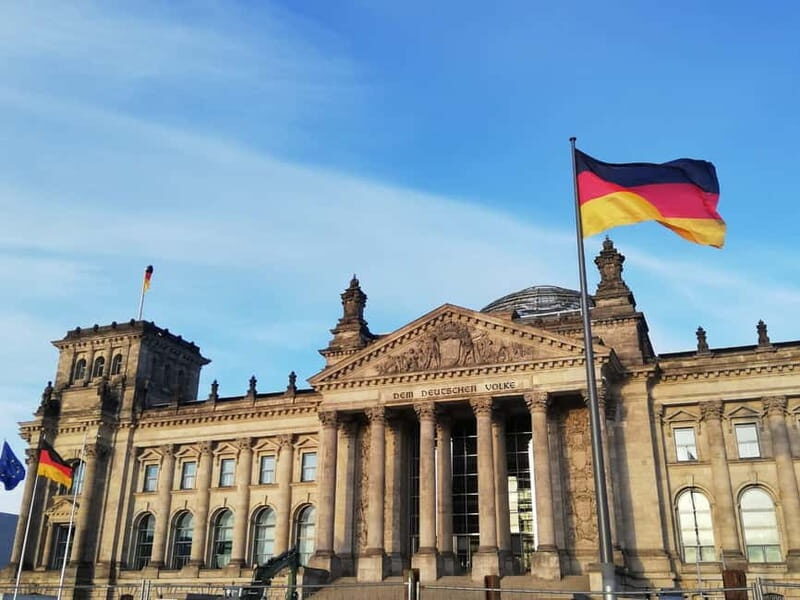
First you’ll cover the institutions around the government district. The German Chancellery stop gives you a quick orientation to the political “center of gravity,” so later architecture and monuments land more clearly in your mind. Five minutes here isn’t about ticking a box—it’s about teaching you what you’re looking at.
Then comes the Reichstag, a place many people visit for its famous profile, but fewer people understand without guidance. You get a short guided stop that helps explain what this building represents in Berlin’s political story. Even if you’ve read about Germany’s modern history, it helps to hear the logic in a walking sequence rather than in a book.
Practical tip: bring a phone camera if you like, but don’t let it eat the guide’s explanations. The most useful details are often the ones you won’t remember if you keep bouncing to take photos.
Brandenburg Gate and Tiergarten: where Berlin feels like Berlin
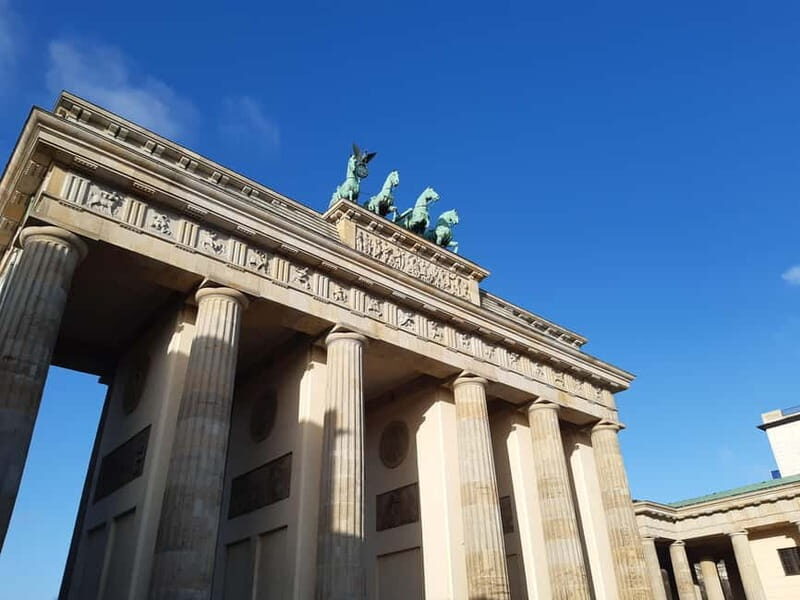
After the Reichstag, the walk reaches the Brandenburg Gate. This is one of those spots where the setting does half the work: the gate sits in an area that draws you in, even if you’re not a history buff. The guide connects it to the city’s turning points, which makes the monument feel less like a postcard and more like a marker on a timeline.
Next is Tiergarten, a quick stop that’s more helpful than you might expect in a 2-hour tour. Green spaces in big capitals aren’t just “nice scenery.” Here, Tiergarten helps you see how Berlin balances grandeur and everyday movement. It’s also a bridge in the story, moving you from political buildings toward the memorial landscape and the Wall era.
This is a good moment to shake off any museum-fatigue. You’re still learning, but you’re also catching your breath.
Memorial to the Homosexuals Persecuted Under Nazism: learning beyond the obvious
One of the most meaningful parts of this walk is the visit to the Memorial to the Homosexuals Persecuted Under Nazism. It’s easy to come to Berlin and assume the main memorial focus is only on one tragedy, but this stop widens your understanding of Nazi persecution.
In a short tour, memorials can sometimes feel like rapid photo stops. Here, the stop is guided enough that you get context about what the memorial is marking, and why it matters to include it in the story of Berlin and Germany.
If you like your sightseeing with honesty and precision, this is the kind of stop that earns its place in the itinerary.
The Holocaust Memorial: respectful time that changes how you look at the street
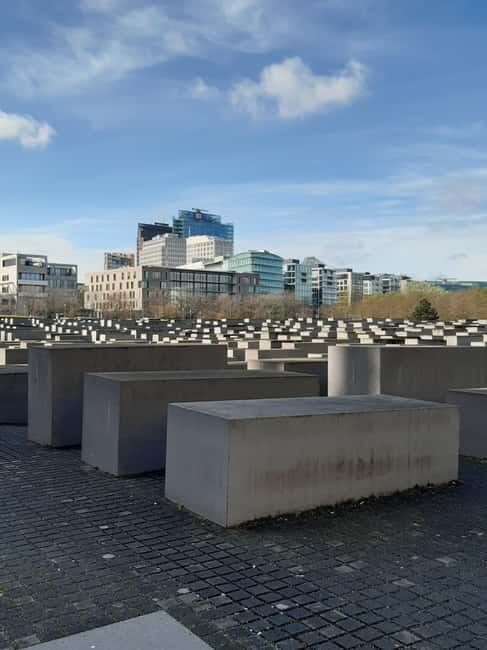
The walk then reaches the Memorial to the Murdered Jews of Europe. This is the emotional anchor of the route. You don’t just see the memorial—you get help reading it, which matters because the space can feel abstract at first glance.
What makes this stop valuable on a guided tour is how it’s handled: you’re given enough time to slow down mentally and connect what you’re seeing to the larger history. You also get a clear explanation of the significance of the memorial in modern Berlin’s public memory.
I really appreciate that this tour treats the Holocaust Memorial as more than a landmark. You leave with a better sense of how Berlin chooses to remember, and how those choices shape your experience of the city around it.
You can also read our reviews of more guided tours in Berlin




Hitler’s bunker site and the Wall traces: seeing division in the city layout
Next is Hitler’s Bunker, often discussed in connection with the final days of the Third Reich. In a walking tour, this kind of stop can be tricky—some tours either over-sensationalize or rush past it. Here, the stop is brief but pointed, which helps you connect the political story to the geography without turning it into a spectacle.
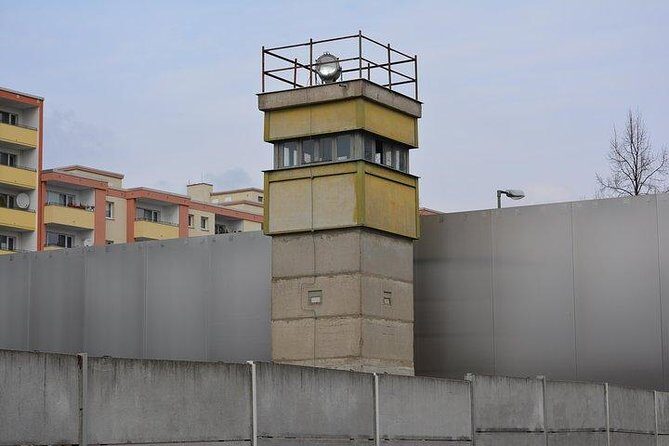
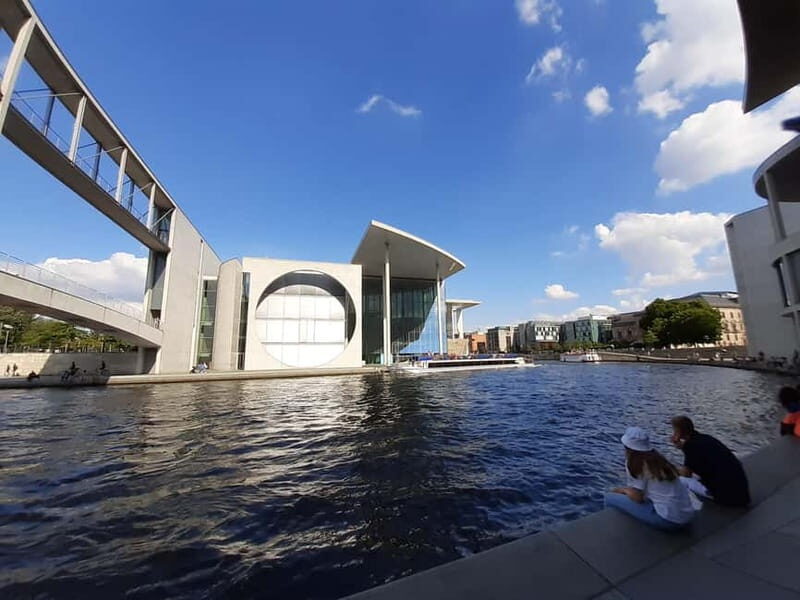
After that, the tour includes traces of the Wall as part of connecting the eras. You’ll also visit the Bundesrat of Germany, which adds a modern-government layer after the heavier topics. That sequencing matters. It shows the contrast between what the city went through and what Germany built afterward.
If you’ve ever felt confused by Berlin—like the different historical layers are too close together to sort out—this is one of the best ways to organize it in your head.
Finishing at Potsdamer Platz: a smart landing point
The tour ends at Potsdamer Platz. This is practical for a couple of reasons. First, it’s easy to move on afterward—cafes, transport connections, and plenty of things to see without having to backtrack through the government district.
Second, Potsdamer Platz is a fitting finish. It’s the kind of Berlin space where you can feel the city’s modern evolution, right after walking through the weightier parts of the capital’s history.
If you want to keep the day going, this is a decent place to do it.
Group size, timing, and price: why $23 feels fair here
The tour lasts 2 hours and costs $23 per person. For that price, you’re not just buying entry into a building or grabbing a route map. You’re paying for guided interpretation—someone turning architectural and historical details into a story you can carry with you.
The group limit (15 people) also matters for value. In a small group, questions actually get answered, and you’re less likely to tune out when the guide explains something you didn’t know you needed.
Also, it’s a walking tour, not a bus tour. You cover key points efficiently, and you get to experience the spacing between places, which is half the “aha” effect in Berlin.
Two more bits of practical context:
- It’s French only, so make sure that’s workable for you.
- The tour runs in all weathers, so wear layers and bring rain protection.
Who this tour suits best (and who might want a different option)
This tour is a strong fit if you:
- want a fast city orientation with key monuments
- prefer guided context over reading alone
- are interested in WWII and the Wall era, but still want modern Berlin included
- like structured walking tours that end somewhere convenient
It might be less ideal if you:
- need a longer, slower pace for memorial sites
- don’t speak French and don’t have a comfortable way to follow a French tour
Should you book this Berlin guided walking tour?
If you want a 2-hour introduction that actually explains the places—not just names them—this one is worth booking. I especially recommend it for first-time Berlin visits because the route helps you connect government buildings, major memorials, and Wall-era traces into one clear mental timeline.
My final take: with guides like Alix and Laura reported for passion and solid professional explanations, you’re likely to get the kind of guided storytelling that makes Berlin feel less overwhelming and more understandable.
FAQ
What is the duration of the Berlin guided walking tour?
The tour lasts 2 hours.
What language is the tour guide?
The tour is French.
Where does the tour start?
It starts next to the Swiss Embassy along Otto-von-Bismarck-Allee near the Bundestag U5 subway station.
What are the main stops on the route?
You’ll see major institutions including the Reichstag and Brandenburg Gate, visit the Memorial to the Murdered Jews of Europe, and explore traces of the Wall, with the tour finishing at Potsdamer Platz.
How big are the tour groups?
Groups are limited to 15 people to make the experience more enjoyable and interactive.
Is the guide included in the price?
Yes. The guide is included.
Is the tour wheelchair accessible?
Yes, the tour is wheelchair accessible.
Is there a private group option?
Yes, private group is available.
Will the tour run in bad weather?
The tour takes place in all weathers, so you should come prepared.