REVIEW · GOSLAR
Goslar: Führung durch die Kaiserpfalz
Book on GetYourGuide →Operated by GOSLAR marketing gmbh · Bookable on GetYourGuide
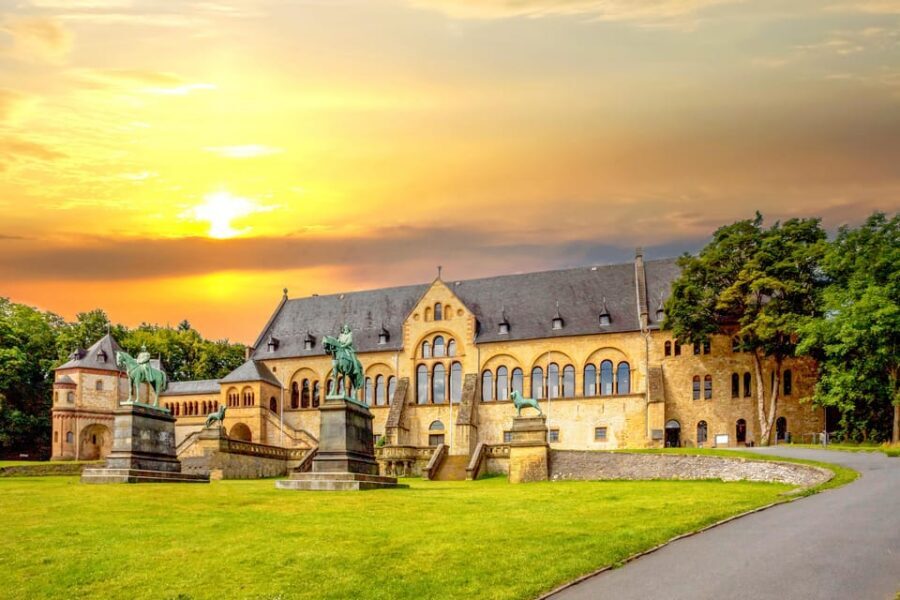
A medieval palace tour that actually feels alive. This guided walk through the Kaiserpfalz gives you an insider’s sense of why Goslar mattered in the Holy Roman Empire, from UNESCO recognition to very specific objects tied to Emperor Henry III.
I especially love how the tour links big ideas to tangible details: the St. Ulrich chapel and the grave plate connected to Henry III make the story feel concrete, not vague. I also like the focus on art and place, especially the historic paintings in the great hall by art professor Hermann Wislicenus. One consideration: it’s a German-language tour, so if your German is basic, you’ll want to be comfortable following along at speed.
Once you step inside, the palace rooms do the talking. And because the tour lasts about 1.5 hours, you get a satisfying hit of highlights without burning your entire morning or afternoon.
In This Review
- Key Highlights You’ll Care About
- Entering the Kaiserpfalz: Where Goslar’s Importance Becomes Visible
- A Quick Old-Town Warm-Up Before the Palace Interior
- The Big Hall: Why the Paintings Feel Like More Than Decoration
- St. Ulrich Chapel: Henry III’s Grave and the Heart Beneath
- The Kaiser’s Throne: What the Kaiserstuhl Armrests Communicate
- Winter Hall Vaults: The Exhibition Scene in the Wintersaal
- How Much Is $16 Worth for This 90-Minute Interior Tour?
- What the Guide Adds (and Why the German Tour Still Works)
- Who Should Book This Kaiserpfalz Tour?
- Quick Practical Notes Before You Go
- Should You Book the Goslar Kaiserpfalz Tour?
- FAQ
- Where is the meeting point for the Kaiserpfalz tour?
- How long is the guided tour of Goslar’s Kaiserpfalz?
- What languages are available for the live guide?
- Is this tour wheelchair accessible?
- How much does the tour cost?
- Are pets allowed during the tour?
- Can I cancel for a refund?
Key Highlights You’ll Care About
- UNESCO World Heritage (1992) setting: you’re touring a site recognized for major historical value.
- St. Ulrich chapel visit: the imperial grave context tied to Henry III is the emotional center.
- Henry III’s heart kept here: you’ll see the reference point for the heart resting beneath the grave.
- Great hall wall paintings: Hermann Wislicenus’s works cover the visual drama of the interior.
- Kaiserstuhl details: the throne armrests get their moment, not just a passing mention.
- Winter hall vault exhibition: you’ll get an organized look at what’s shown in the vaults.
Entering the Kaiserpfalz: Where Goslar’s Importance Becomes Visible
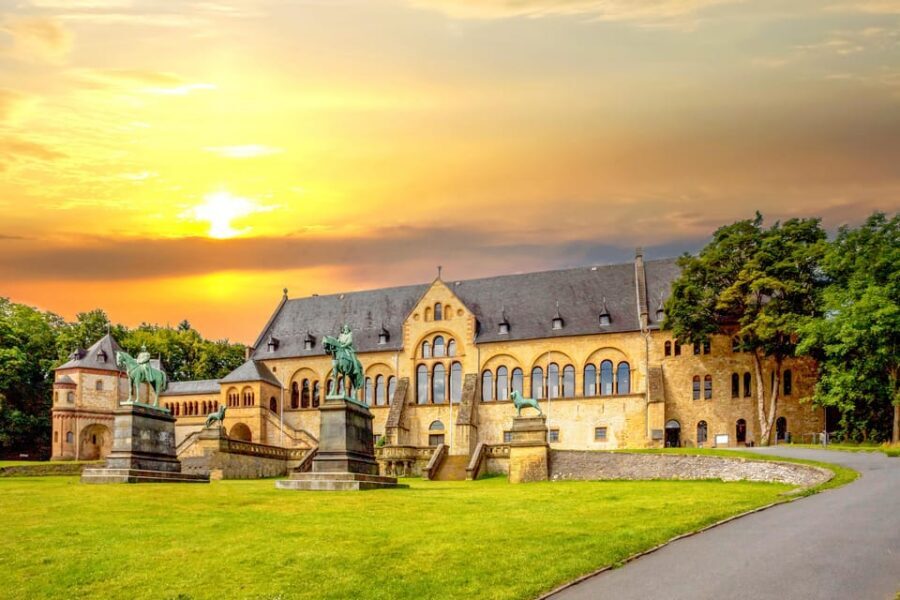
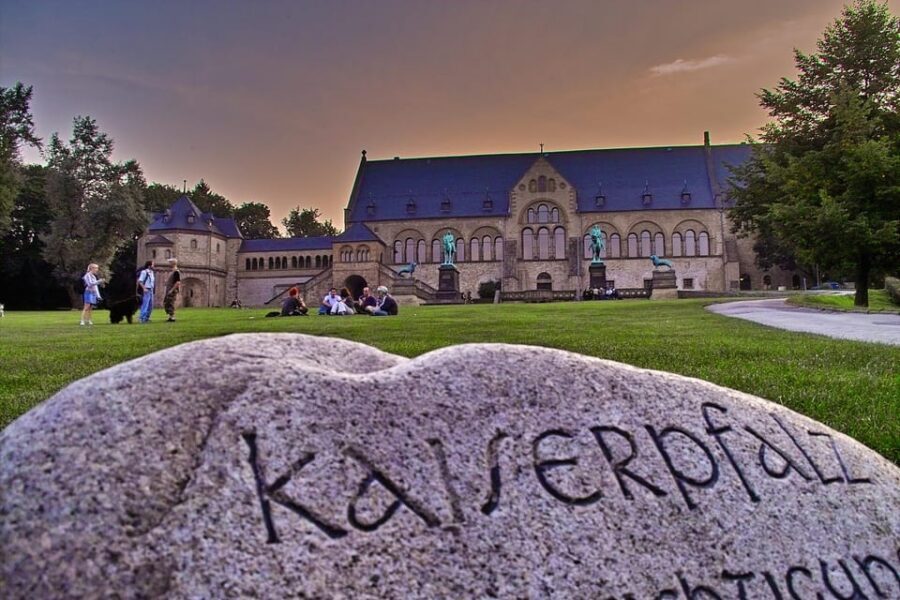
The tour starts with a short stretch through Goslar’s old town, just enough to help you get your bearings. Then you transition into the Kaiserpfalz, and the atmosphere shifts fast—from everyday street scale to imperial stone and ceremony.
This is one of those experiences where context matters. The palace wasn’t built to be a backdrop; it was built for authority, ritual, and display. A guided interior walk helps you notice what you’d otherwise miss, like which objects were meant to be looked at, and when.
Because it’s an interior tour, you’re not left guessing. You see the big rooms, specific chapels, and the features tied to emperors and commissioned art—exactly the places you’d want to understand, not just photograph.
You can also read our reviews of more tours and experiences in Goslar.



A Quick Old-Town Warm-Up Before the Palace Interior
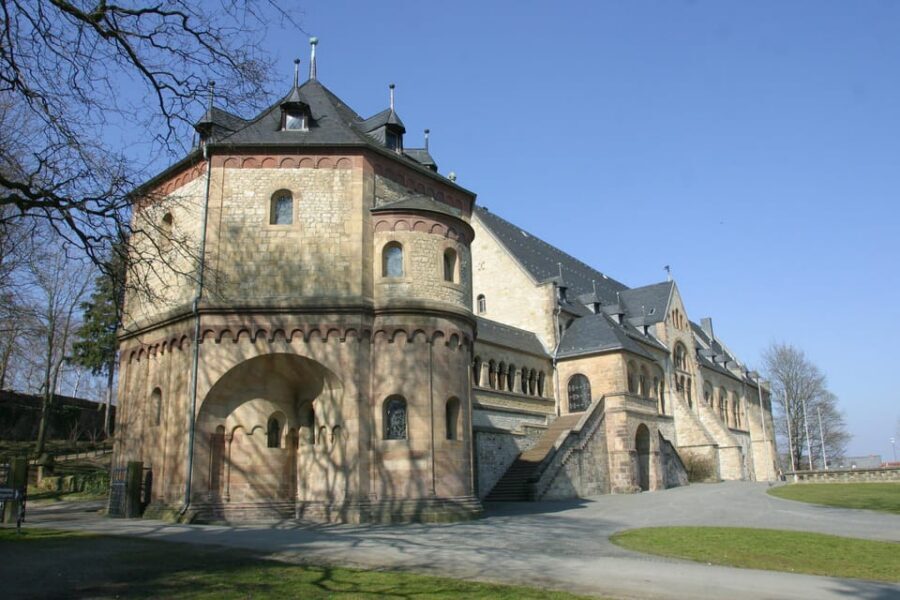
That pre-palace stroll through the Altstadt is practical. You don’t get a long lecture outside, but you do get oriented, which makes the indoor rooms feel more meaningful once you step in.
It also helps with pacing. After roughly an hour of walking and looking at medieval streets, the Kaiserpfalz feels like the natural next chapter rather than a random stop. I like tours that don’t dump you straight into a cathedral-sized room with zero setup—and this one keeps that approach.
Your meeting point is in front of the Atrium. If you arrive a few minutes early, you’ll have time to find the group and settle in before the guide starts speaking.
The Big Hall: Why the Paintings Feel Like More Than Decoration
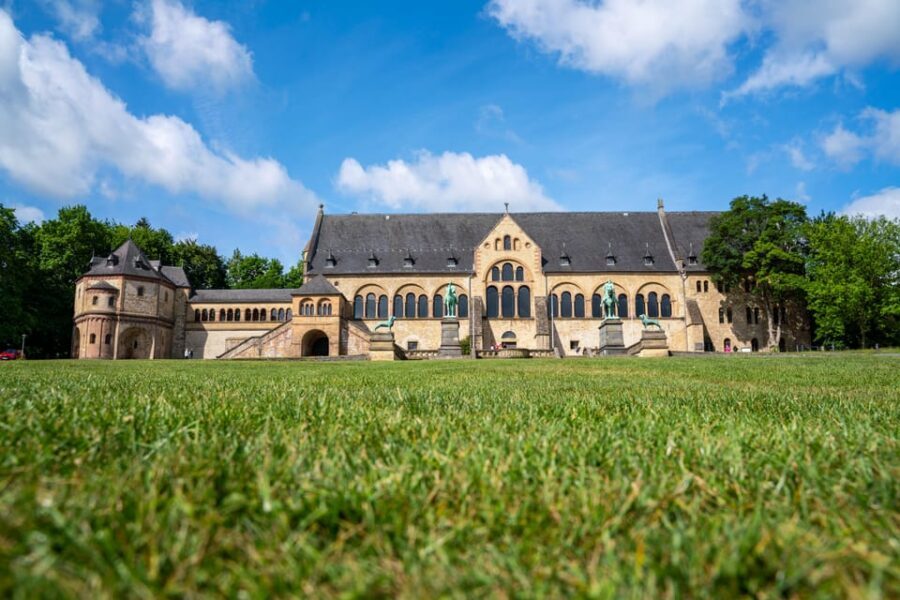
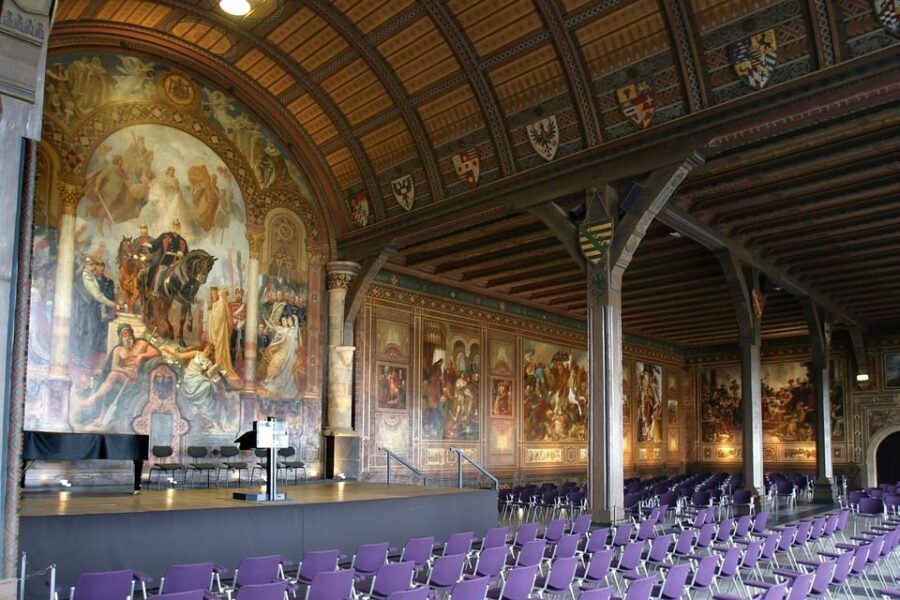
One of the clearest “you’ll see it right away” moments is the great hall with paintings that fill the wall surfaces. The tour highlights the fact that these historic images cover essentially all the wall planes, so the room becomes an all-around visual statement rather than scattered artwork.
This is where you’ll appreciate a guided approach. Without someone pointing it out, it’s easy to look at paintings as background. With a live guide, you can focus on what the paintings are doing in the space—how they shape your sense of scale and authority.
The guide also connects the art to the artist: Hermann Wislicenus, the art professor whose work is part of what you’ll see here. That name is a real anchor. It gives you a handle to remember the style and significance later, instead of treating the hall as just impressive scenery.
If you like your travel history grounded in specific objects—rooms, images, names—this hall is a highlight.
St. Ulrich Chapel: Henry III’s Grave and the Heart Beneath
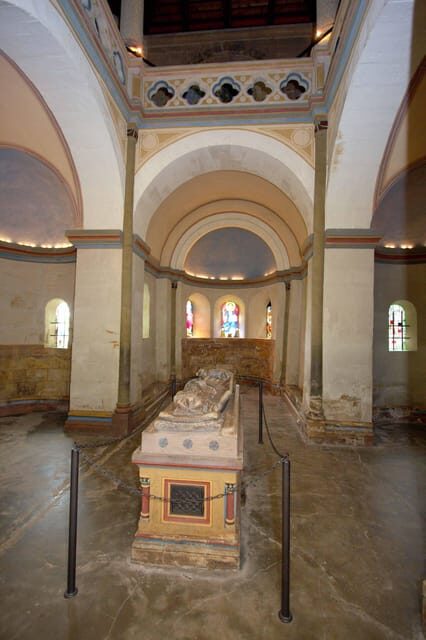
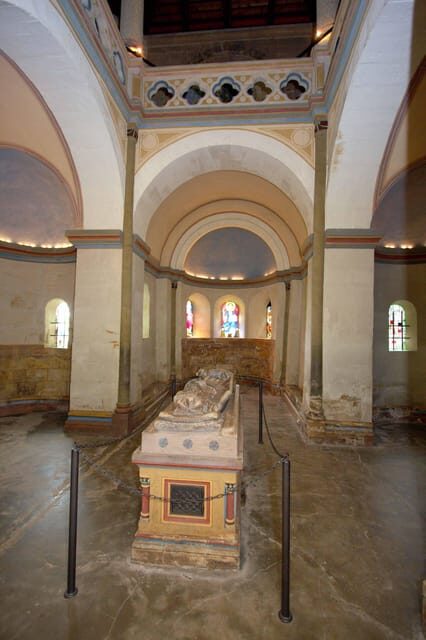
The tour’s emotional center is the Romanesque Pfalzkapelle, and more specifically the St. Ulrich-chapel. This is where you’ll see the grave plate associated with Emperor Henry III, and the tour makes the connection unusually tangible.
Here’s the unique detail that makes this stop stand out: beneath the grave plate, the heart of the emperor is still kept here. That’s the kind of fact that changes how you look at the chapel. It stops being a “nice old room” and becomes a place with a specific, physical story.
The guide doesn’t just point at the plate; you get an explanation tied to the imperial context. That matters because Henry III’s importance is historical, but the “heart” detail turns it personal and immediate. Even if you’re not a hardcore medieval history person, this is one of those stops that hits because it’s concrete.
Also, the chapel is part of the palace complex, so you experience it as an integral part of the imperial setup—not as a separate museum-side attraction.
The Kaiser’s Throne: What the Kaiserstuhl Armrests Communicate
In the palace interior, the tour also directs your attention to the Kaiserstuhl—specifically the armrests of the imperial chair. This might sound like a small detail, but that’s exactly why the guide’s focus matters.
Thrones are symbols, but they’re also objects designed for ritual use and seating posture. By pointing to the armrests, you understand that the throne isn’t just a big chair; it’s part of the choreography of power. The guide’s attention helps you read the object as a “designed for meaning” piece.
If you enjoy architecture and ceremonial design, this stop will feel satisfying. And if you don’t usually care about thrones, it still gives you a quick, clear moment to connect “medieval politics” with “how people actually sat and presented authority.”




Winter Hall Vaults: The Exhibition Scene in the Wintersaal
Another highlight is the exhibition housed in the vaults of the Wintersaal. The tour doesn’t treat it as a random “and now we’ll look at a display.” It’s positioned as a continuation of what you’ve learned in the palace rooms: how the palace was used, remembered, and interpreted.
Vault spaces can feel dramatic by default, and that’s helpful here. If you’ve ever felt museum displays get lost in big rooms, you’ll likely enjoy how this one is structured around the palace’s own architectural form.
This is a good moment to slow down. You’ve already had the big visual wow (paintings), the high-emotion object (Henry III’s heart connection), and the symbolic centerpiece (the throne). Then you move into the exhibition space, which helps you consolidate what you just saw.
How Much Is $16 Worth for This 90-Minute Interior Tour?
At $16 per person, you’re paying for a guided interior visit to major palace rooms and features, including the chapel and the exhibition spaces. What makes this feel like good value isn’t just the price—it’s the density of “must-see” content packed into about 1.5 hours.
If you were to wander alone, you might still see parts of the palace, but the guided framing helps you understand what you’re looking at:
- why the UNESCO context matters,
- who Wislicenus is and why his paintings are mentioned,
- what the heart detail means for the Henry III grave,
- how the throne elements were used as symbols of power.
That’s the difference between “seeing” and “getting it.” For many people, that’s worth more than the extra time or cost of piecing together information on your phone.
Also, the reviews I’ve seen reflect how strongly the guide’s delivery affects the experience, including the fact that kids can enjoy it when the explanation is made engaging.
What the Guide Adds (and Why the German Tour Still Works)
This is a live guided tour in German. A German-speaking guide can be incredibly effective here because the palace details and names (like Henry III and Hermann Wislicenus) deserve precise language.
If your German is comfortable enough to follow a fast, story-driven explanation, you’ll likely enjoy the flow a lot. If your German is only basic, don’t panic—your best strategy is to focus on the physical anchor points the guide points out: the chapel plate, the hall paintings, the throne armrests.
I’d treat it like a museum tour where the visuals do heavy lifting. The more you look at what’s physically in front of you while listening, the more you’ll get from the guide even if you miss some sentences.
The guide format also matters for pacing. In just 1.5 hours, you’ll cover the palace highlights without getting tired halfway through.
Who Should Book This Kaiserpfalz Tour?
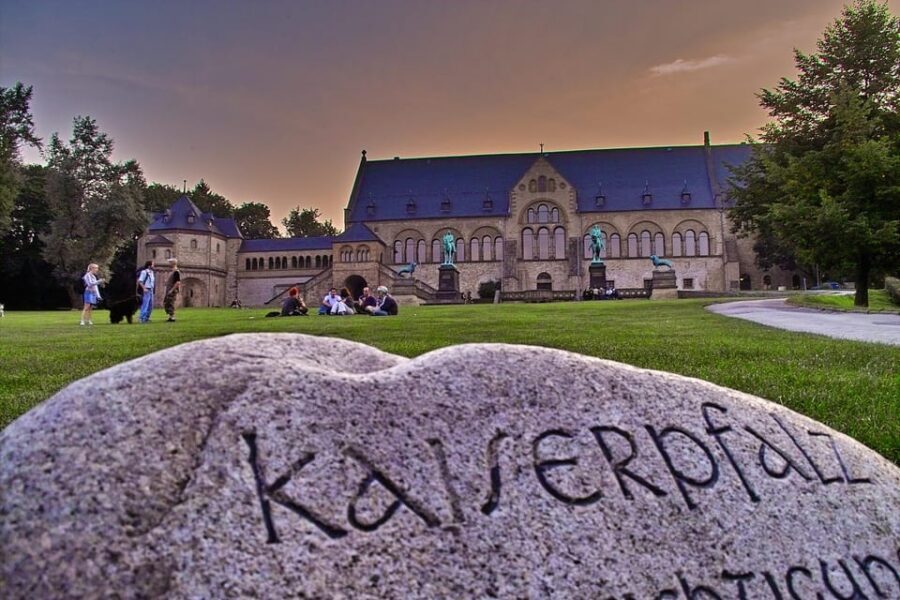
This tour is a strong fit if you:
- like medieval sites with specific, named details (Henry III, Wislicenus),
- want an interior experience rather than a purely outdoor walk,
- enjoy art + history connected to real rooms,
- need a compact, high-impact plan that doesn’t eat your whole day.
It’s also a decent option if you’re traveling as a family in the German language environment. Some tours work better for adults because they’re too lecture-heavy; the delivery here is clearly designed to keep people interested, including kids.
If you dislike indoor tours or prefer free-roaming without a guide, you might feel constrained by the structured route. But for most visitors, the guide is the whole point.
Quick Practical Notes Before You Go
You’ll be inside the Imperial Palace areas as part of a guided interior route, so plan for a comfortable walking pace inside. The tour lasts 1.5 hours, which is a good sweet spot for keeping attention on details without rushing.
The experience is wheelchair accessible, which is a big plus for anyone planning with mobility needs. Pets are not allowed, though assistance dogs are permitted—so if you’re bringing an assistance animal, you’re covered.
The operator is GOSLAR marketing gmbh, which is a reassuring local touch for understanding how the site is presented.
Should You Book the Goslar Kaiserpfalz Tour?
Yes, if you want a focused, guided way to understand why Goslar’s Kaiserpfalz is internationally recognized and culturally loaded. For $16 and about 1.5 hours, you get the kind of “high density” highlights that are hard to replicate on your own: the great hall paintings (including Hermann Wislicenus), the St. Ulrich chapel and the Henry III grave-heart connection, and the Kaiserstuhl details.
I’d especially recommend it if you enjoy the intersection of art, architecture, and political power. If you’re mostly into outdoor sights or you need everything in English, you’ll still see impressive rooms—but the German guide is a deciding factor.
If you want an experience that’s both practical and genuinely memorable, this one is an easy yes.
FAQ
Where is the meeting point for the Kaiserpfalz tour?
You meet in front of the Atrium.
How long is the guided tour of Goslar’s Kaiserpfalz?
The tour lasts about 1.5 hours.
What languages are available for the live guide?
The live tour guide speaks German.
Is this tour wheelchair accessible?
Yes, the experience is wheelchair accessible.
How much does the tour cost?
The price is $16 per person.
Are pets allowed during the tour?
Pets are not allowed, but assistance dogs are allowed.
Can I cancel for a refund?
Yes. You can cancel up to 24 hours in advance for a full refund.