REVIEW · FRANKFURT
Frankfurt on Foot Daily Walking Tour in English
Book on GetYourGuide →Operated by Frankfurt on Foot · Bookable on GetYourGuide
Old Town, hard history, and great views in one walk. I like how this English-only tour turns major landmarks into a clear storyline, and I especially like the focus on Jewish remembrance sites that explain what happened and how Frankfurt remembers today. You’ll see the medieval center and modern lessons in just a few streets, guided by local pros whose names come up again and again, like Justin, Jennifer H., Ann, Philip, and Hans.
One caution: you are on your feet for the full 3 hours. Expect steady walking over old streets and cobblestones, so comfy shoes matter more than you think.
Why this tour is worth your time in Frankfurt
- A strong overview fast: you connect the Römer-era core to what rebuilt the city after WWII.
- Free entries built in: all listed stops are free to visit on the tour route.
- WWII and Jewish history are handled directly: from the book burning to memorial walls and ghetto history.
- Photo-friendly route: you get time for skyline views and classic old-town angles.
- Smart pacing: there’s a snack break and WC breaks so you don’t feel like a human metronome.
In This Review
- Starting at Römerberg: where you’ll meet and how to get oriented
- The Römerplatz and Römer: Frankfurt’s medieval civic center
- The rebuilt Altstadt and the Book Burning Memorial
- Alt Nikolai and the Kaiserdom: seeing church power from the outside
- House Wertheim and Eisener Steg: surviving the war and then seeing the skyline
- Karmeliter Cloister wall paintings: Jörge Ratgeb at work (not always on every day)
- Stolper Steine and the Jewish Holocaust Memorial Wall
- Medieval Jewish Cemetery and the Jewish Ghetto Wall: the city’s boundaries become history
- Klein Markt Halle as your snack break: food, variety, and a final reset
- Pace, comfort, and what to bring for a smooth 3 hours
- Who this tour is for (and who might want a different plan)
- Should you book Frankfurt on Foot in English?
- FAQ
- How long is the Frankfurt on Foot Daily Walking Tour?
- Where do I meet the guide?
- Is the tour offered in English only?
- Is the tour wheelchair accessible?
- Do I need to pay for entry to the sights?
- Are snacks or drinks included?
- Are bathroom stops provided?
- Are kids allowed and do they pay?
Starting at Römerberg: where you’ll meet and how to get oriented
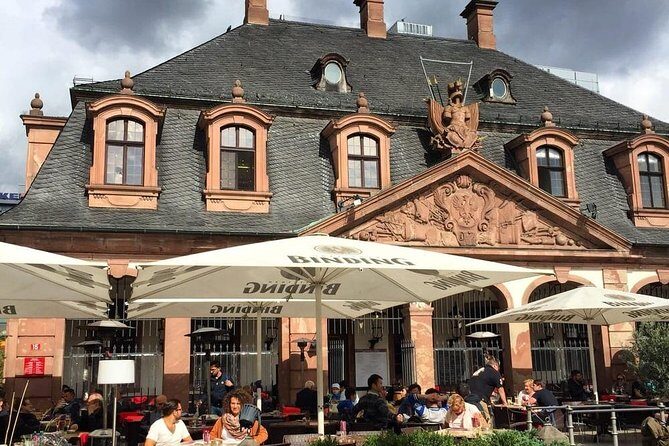
The tour starts at 10:00, right by the action: Braubach Strasse 41. Your guide meets you directly across from the Tourist Info on the Römerberg, in front of the Binding Schirn Pub, with a sign that says Frankfurt on Foot Walking Tours.
This matters because Frankfurt’s core can feel like a patchwork of old and rebuilt. Once you’re with the guide, the route clicks into place: you move from civic power (the City Hall square) to the memorials and then toward river views that show how the Main shaped the city.
If you want a practical plan, think of this as your orientation walk. After three hours, you’ll know where you are and what you’re looking at when you wander on your own.
The Römerplatz and Römer: Frankfurt’s medieval civic center
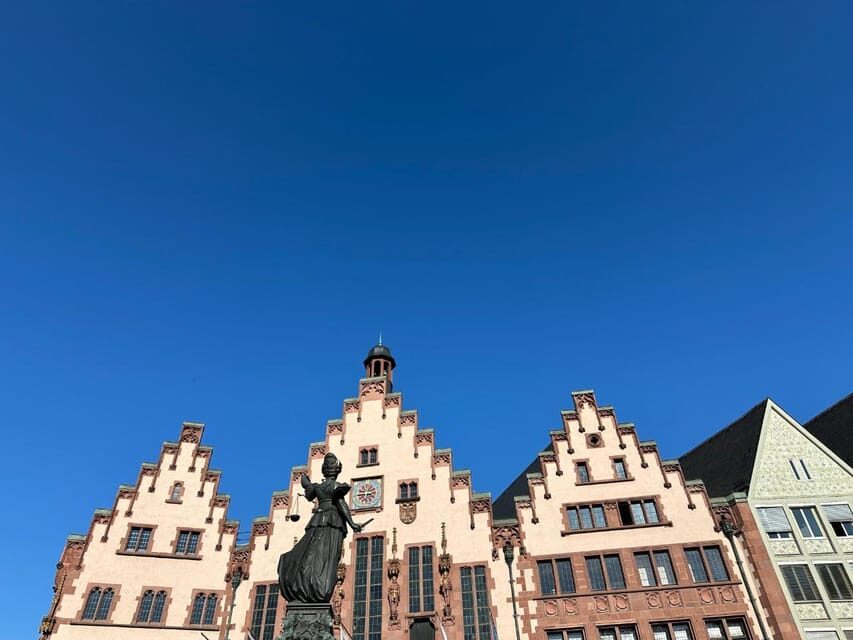
Your route begins at the Römer and the Römerplatz, the city hall complex and the old town square. This is where Frankfurt’s civic story gets physical: long before modern Germany, this was a place for decisions, ceremony, and public life.
The big reason I like starting here is perspective. The Römerplatz gives you a baseline for everything that follows: rebuilt streets make more sense when you understand what the city chose to preserve, and what it rebuilt to symbolize a return to normal life after destruction.
Also, you’ll find quick photo opportunities because the square and surrounding facades give you classic “Frankfurt at a glance” frames.
You can also read our reviews of more walking tours in Frankfurt



The rebuilt Altstadt and the Book Burning Memorial
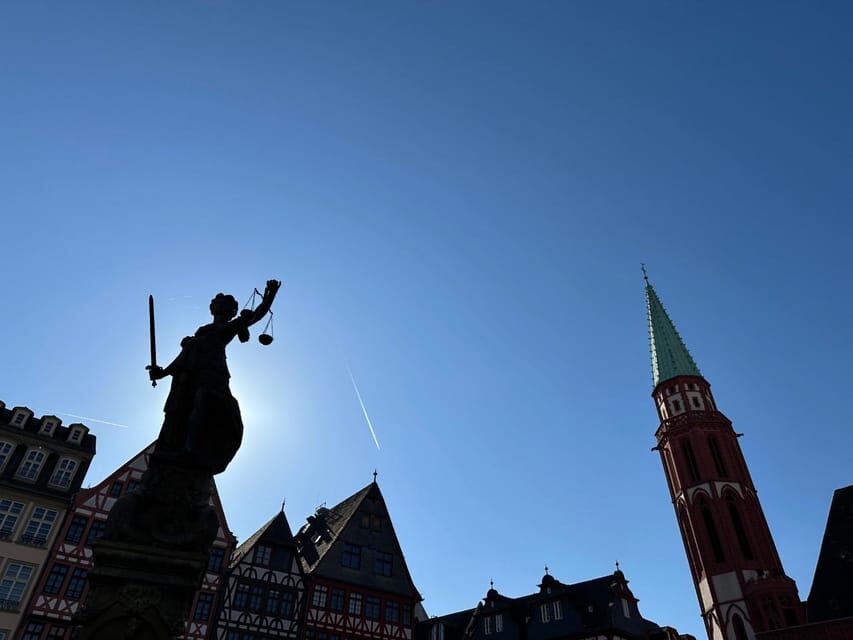
Next comes the New Alt Stadt, the story of how and why Frankfurt’s historic center was rebuilt. The tour doesn’t treat rebuilding like a footnote. It frames it as a cultural decision, tied to what came after the Nazi era.
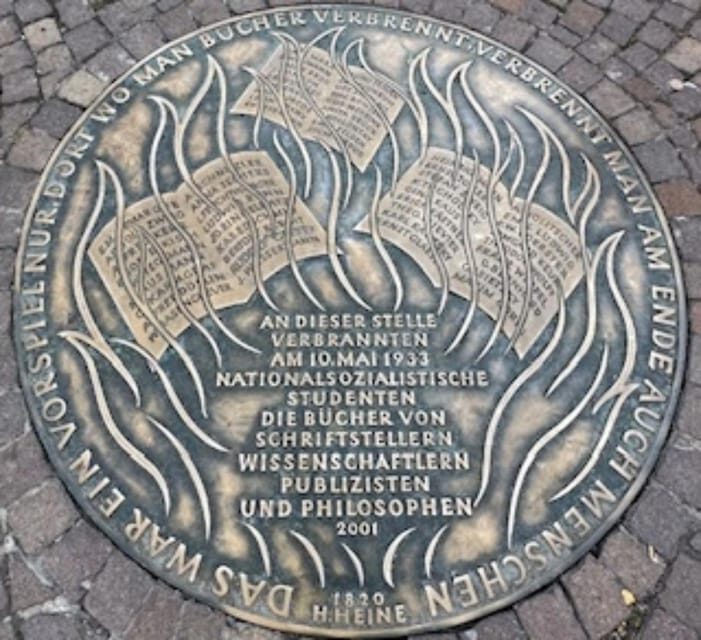
Then you hit the Book Burning Memorial, tied to the Nazi book burnings. This stop is the tour’s first real emotional pivot. You’re not just looking at a plaque; you’re seeing how dictatorship targeted ideas and culture, and how a city chose to mark that chapter.
A practical tip: this part can feel heavier if you’re rushing through sights. I’d slow down your pace here, and give the guide your full attention. The tour is set up so the memorial moment lands before you move into broader religious and community history.
Alt Nikolai and the Kaiserdom: seeing church power from the outside
You’ll pass Alt Nikolai Church, a Gothic church built in 1290. The tour notes exterior-only viewing on Sundays. That means you still get the architectural presence without being pulled into schedules that don’t match the group.
You’ll also see St. Bartholomew, better known as the Kaiserdom. This is an Imperial Church tied to coronations and elections of the Holy Roman Emperor for centuries. Like Alt Nikolai, the tour specifies exterior-only viewing on Sundays and religious holidays.
I like this approach because it keeps expectations clear. You’re there for the bigger idea: Frankfurt was a stage for empire-level ceremony. Even from the outside, the buildings make that role feel real.
If you’re taking photos, wear a lens-friendly stance. Church facades and angles around older squares can look best from a couple steps back, and the guide’s timing helps.
House Wertheim and Eisener Steg: surviving the war and then seeing the skyline
House Wertheim is one of those details that changes how you read the city. It’s described as the inner city’s only original half-timbered house left at the end of World War II. In other words, this isn’t just a pretty structure; it’s a survivor.
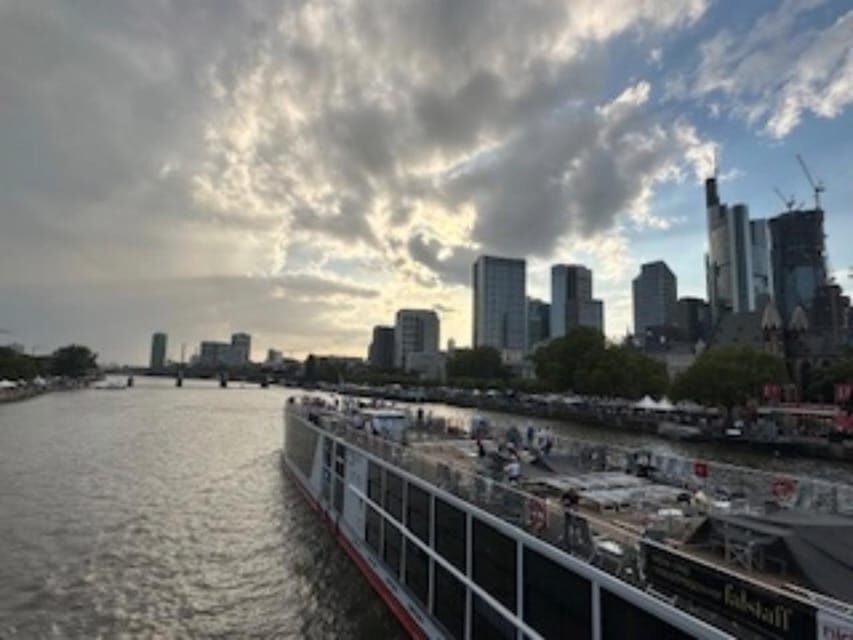
After that, you cross your attention to the Main river at Eisener Steg, a pedestrian bridge with great skyline views. The tour’s framing here is smart: you see how the riverfront connects Frankfurt’s museum-lined banks with the modern city outlook.
This stop is also a nice contrast break. Your earlier history stops are close and dense. On the bridge, you can breathe, look around, and reset your brain for the next major segment.
Karmeliter Cloister wall paintings: Jörge Ratgeb at work (not always on every day)
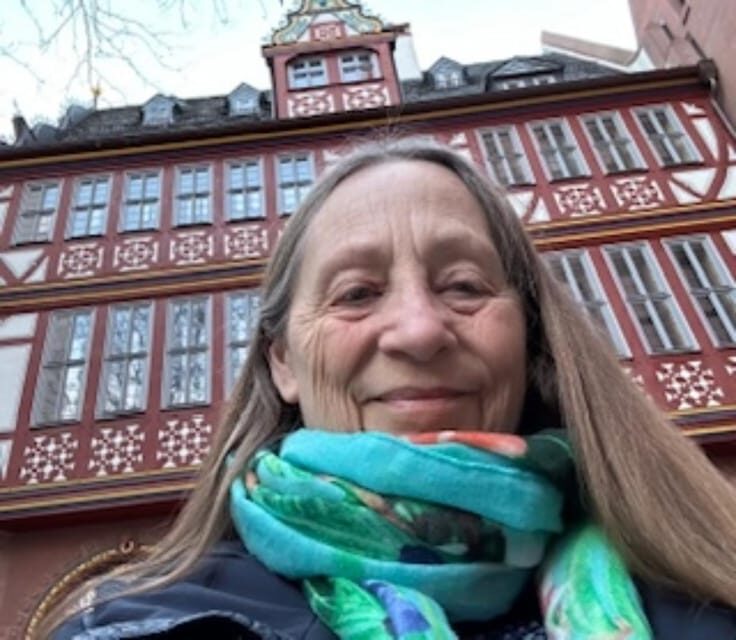
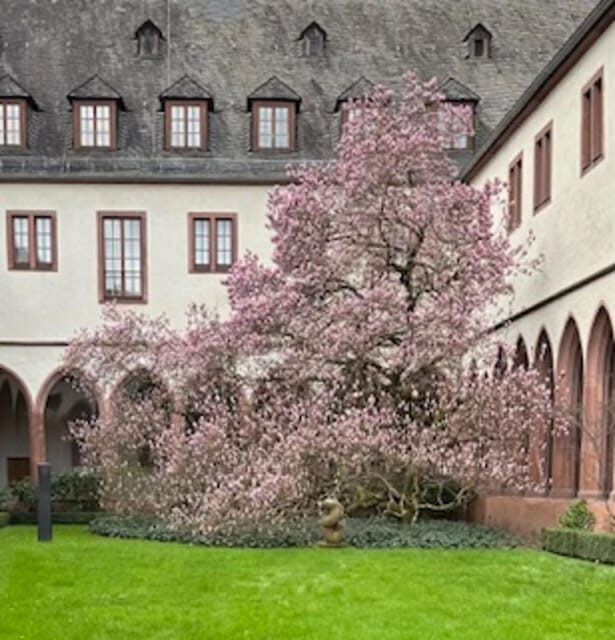
The tour includes the Jörge Ratgeb Wall Paintings in the Karmeliter Cloister. The highlight is scale: these are described as the largest religious wall paintings north of the Alps, painted in the early 1500s.
A useful heads-up: the tour notes this visit is not available on some holidays. That means your experience might vary by day, but the tour still keeps the storyline intact, so you’re not left wondering why you missed a stop.
If you like art history but hate museum overload, this is a good middle ground. You get a clear focal point and context tied to the religious life of the time, without turning your morning into a marathon of galleries.


Stolper Steine and the Jewish Holocaust Memorial Wall
This is the heart of the tour if you want Frankfurt to mean something beyond postcards.
You’ll be shown Stumble Stones, or Stolper Steine, the small brass memorial markers used across German cities to remember victims. The tour makes a point of how this method of remembrance works, turning everyday sidewalks into a map of lives interrupted by Nazi persecution.
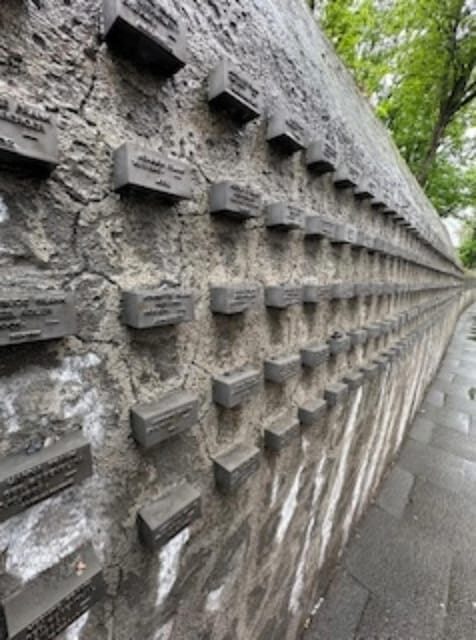
Then you visit the Jewish Holocaust Memorial Wall, one of the most personal stops on the route. It honors approximately 12,000 Jewish citizens of Frankfurt who were killed in the Shoa. The tour specifically mentions Anne, Margot, and Edith Frank as included on the wall of remembrance.
I recommend treating this segment like a pause, not a checklist. Stand still when you can, let the guide explain the names and context, and take a moment before moving on. The tour is built to keep you moving, but you’ll get more meaning if you don’t speed past the emotional weight.
Medieval Jewish Cemetery and the Jewish Ghetto Wall: the city’s boundaries become history
Next is a look at the Medieval Jewish Cemetery, described as one of the oldest and largest Jewish cemeteries in Germany, viewed from the outside. Even outside-only viewing can still feel powerful here because cemeteries carry time in a way buildings don’t.
Then you’ll see the Jewish Ghetto Wall, once part of city defenses in 1180, later used as a wall around the Medieval Jewish ghetto. This gives you a different kind of lesson: the city’s architecture doesn’t just shelter people. It can also confine them.
What I like about finishing this section is that it ties geography to policy. You’re standing where boundaries shaped daily life, and that makes the history feel less abstract.
Klein Markt Halle as your snack break: food, variety, and a final reset
The tour often includes a stop at Klein Markt Halle, described as a favorite for a reason. It’s a produce hall packed with fruits, vegetables, chocolate, pastries, cheeses, breads, meats, and fish, plus delicacies from around the world.
There’s also a snack break on the tour route. The listing’s details are clear: snacks and drinks are not included, but you’ll have that planned window to buy something if you want. The tour notes Klein Markt Halle is not on Sundays and holidays, so if your day falls on those dates, your group may swap the focus slightly to keep the flow.
Even if you’re not a big foodie, this stop helps you “finish clean.” After memorial-heavy time, the market noise and smells bring your energy back in a practical way.
Pace, comfort, and what to bring for a smooth 3 hours
This is an easy walking tour, and it’s designed to last about 3 hours with WC breaks and photo stops. It’s also offered 365 days a year, which is great if your schedule is tight and you want one solid activity any day.
I do want you to plan for real walking. The tour is described as an easy pace, but “easy” still means you’re moving continuously. Bring comfortable shoes. If rain shows up, expect slick cobestones. An umbrella can help, and a light layer helps you stay focused instead of cold-fidgety.
One more practical angle: no transportation is used. That’s a win for people who hate hopping between stops, but it means you’ll enjoy the route more if you’re comfortable walking.
Who this tour is for (and who might want a different plan)
This tour fits you if you want a guided snapshot that connects Frankfurt’s medieval core, its rebuilding story, and the city’s twentieth-century moral reckoning. It also fits you if you like when your guide talks in a way that keeps the pace moving, with clear explanations and time to ask questions.
It’s also a great choice for your first day in Frankfurt. The route gives you bearings fast, especially around the Römerberg area and the river.
If you hate emotional or difficult history topics, this might feel like too much in one morning. The tour includes the book burning memorial, Stolper Steine, and the Holocaust wall, and it doesn’t treat those lightly.
Should you book Frankfurt on Foot in English?
Book it if you want value that feels real: free entries, a 3-hour English guide, steady route clarity, and a mix of old-town landmarks with direct remembrance stops. At $35 per person, you’re paying mostly for time and interpretation, and you’re not paying separately for sights listed on the walk.
I’d especially book it if you’re going to be in Frankfurt for a short time, or if you want a route that helps you understand why this city looks the way it does today.
Skip it only if you know you need a lighter, purely scenic tour. This one is for people who want meaning, not just views.
FAQ
How long is the Frankfurt on Foot Daily Walking Tour?
It lasts 3 hours.
Where do I meet the guide?
Meet at the street across from the Tourist Info on the Römerberg, in front of the Binding Schirn Pub. Your guide has a sign that says Frankfurt on Foot Walking Tours.
Is the tour offered in English only?
Yes. The tour is only in English.
Is the tour wheelchair accessible?
Yes, it is wheelchair accessible. The tour is also stroller friendly.
Do I need to pay for entry to the sights?
No. All entries are free on this tour.
Are snacks or drinks included?
There is a snack break, but snacks and drinks are not included.
Are bathroom stops provided?
Yes, the tour includes WC breaks.
Are kids allowed and do they pay?
Children 12 and under are free and welcome to join, but they should be okay with walking about 7 km.