REVIEW · MUNICH
Third Reich & WWII Walking Tour
Book on Viator →Operated by munich walk tours Ralph Luenstroth · Bookable on Viator
Munich is all streets and scars, and this walk connects both. You’ll spend about 2 hours 45 minutes tracing how the Nazi movement grew in the city, from early rallies around Hofbräuhaus to the symbolic sites at Königsplatz and Feldherrnhalle. I like that this is built as a small-group tour (10-person limit), which keeps the pace human when the topic is heavy and detail matters.
Two things I really like: first, the guides bring strong on-the-ground context, with names like Michael, Alex, Josh, Danielle, Joel, Ulrich, and Bridget showing up in guide notes—and you can feel the care in how they handle the subject. Second, the tour isn’t just monument-hopping; it also includes a stop-and-think element around remembrance and discussion, so you’re not rushing through the hardest moments. One drawback to plan for: it’s a lot of standing and walking with limited breaks, so bring a snack and water, and dress for cold weather if you’re going in winter.
In This Review
- Key Points You Should Know Before You Go
- Third Reich and WWII Walking Tour in Munich: What You’re Really Signing Up For
- Route and Timing: Marienplatz Start, Königsplatz Finish, and the 2.5-Hour Pace
- Stop 1: Konigsplatz and the Nazi Movement’s Rise in a Post-WWI Munich
- Feldherrnhalle: When the Plot to Seize Power Didn’t Work
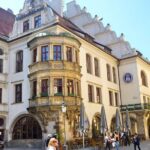
- Hofbräuhaus: The First Mass Meeting Energy
- Hofgarten and the White Rose Resistance Moment
- Pacing, Listening, and Comfort: What to Expect While You Walk
- Guides Make It Work: Names, Style, and How They Handle Sensitive Material
- Value for Money: Is $35.09 Worth It?
- Who This Tour Is Best For (and Who Might Skip It)
- Should You Book This Munich Third Reich Walk?
- FAQ
- How long is the Third Reich & WWII walking tour?
- Where do I meet and where does the tour end?
- Does the tour include admission tickets?
- Is the tour offered in English?
- Is this tour suitable for children?
- What’s the price per person?
- Is free cancellation available?
Key Points You Should Know Before You Go
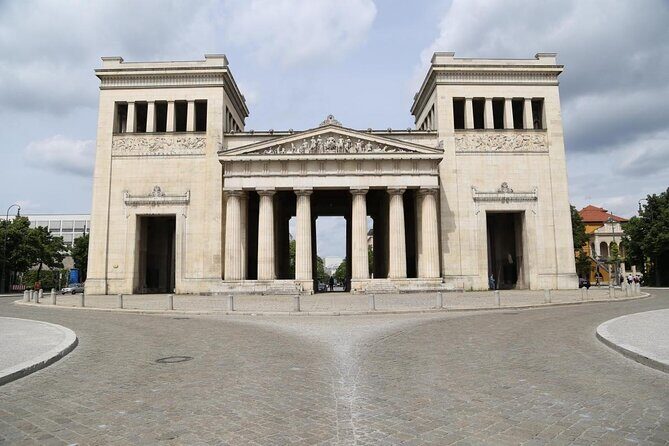
- Königsplatz anchors the story: You’ll start in the heart of the Nazi-era setting, where the symbolism and timing matter.
- Multiple iconic landmarks on foot: Expect key stops tied to early mass meetings, failed power grabs, and later rally ground.
- White Rose resistance gets attention: The walk includes a moment focused on resistance from the Hofgarten area.
- Small-group feel with serious pacing: Limited group size helps when the guide is working through complex, sensitive material.
- Not great for young kids: It’s specifically not recommended for children under 12.
- You’ll end near Hitler’s former HQ: The tour finishes at Königsplatz 1, in the area of the former headquarters.
Third Reich and WWII Walking Tour in Munich: What You’re Really Signing Up For
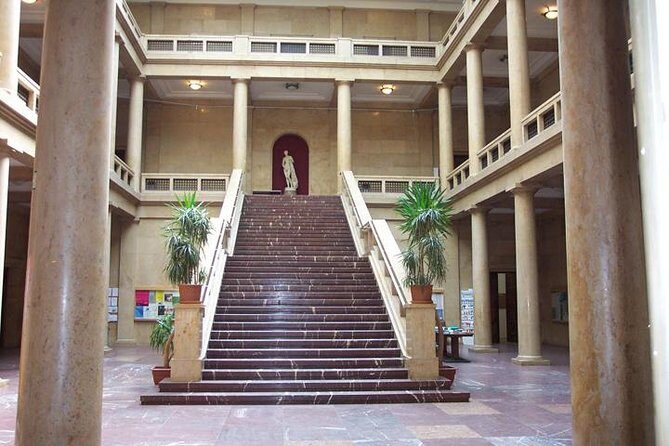
This is not a casual “Munich highlights” stroll. You’re walking through places where politics, propaganda, and public space got stitched together—then watching how that same machinery helped push Germany toward catastrophe. If you’ve ever wondered how an ideology gained mass momentum in real streets (not just textbooks), this tour is the kind that turns context into something you can see and stand near.
The price is $35.09 per person for roughly 2 hours 45 minutes, which feels fair when you factor in a professional guide and multiple major sites packed into one route. It’s also a format that can work well for short visits: you don’t need to plan separate museum days to start making sense of Munich’s role in the Nazi years.
You can also read our reviews of more walking tours in Munich
Route and Timing: Marienplatz Start, Königsplatz Finish, and the 2.5-Hour Pace
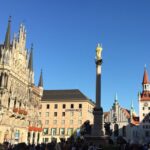
You’ll begin at Marienplatz, 80331 München. The walk ends at Königsplatz 1, 80333 München, and the tour finishes at Hitler’s former headquarter area. Plan on most of the time outdoors, with the tour duration listed at about 2 hours 45 minutes.
A few reviews point to the real-life pacing: even on cold days, guides keep you moving and the time can pass quickly, but you still need to be comfortable standing and walking for most of the afternoon. One review even mentions a stop inside for about 15 minutes mid-tour, which can help you reset—but don’t count on long breaks.
Practical takeaway: if you tend to get stiff, you’ll feel better coming prepared. Bring layers, a small snack, and water. A couple guides are reported to have handled winter conditions well, but that’s not the same as providing a warm-up routine for everyone.
Stop 1: Konigsplatz and the Nazi Movement’s Rise in a Post-WWI Munich
This is where the story clicks into focus. The tour frames Königsplatz in the aftermath of World War I, when Germany was humiliated and Munich was dealing with hyperinflation and political unrest. It’s a grim setup, but it matters, because the Nazi movement didn’t appear in a vacuum—it rose out of chaos, frustration, and the desire for order at any cost.
As you stand near the sites tied to the Nazi rise, your guide explains how the movement scaled up. Expect the tour to walk you through key turning points: early mass gatherings, then the attempt to seize power that failed at Feldherrnhalle, and later the big public staging connected to the party’s image and control.
The value here is your perspective change. Instead of seeing buildings and squares as “just architecture,” you start noticing how public space was used to shape belief—how crowd energy became a tool, and how symbolism did work.
Feldherrnhalle: When the Plot to Seize Power Didn’t Work
The walk includes Feldherrnhalle as part of the route tied to the Nazi party’s early power attempt. You’re not just learning that something happened there; you’re getting the wider arc that leads from postwar instability to militant political theater.
Why this stop is useful: it highlights that the path to power wasn’t straight. The Nazi movement tried, failed, regrouped, then rebuilt its strategy. That matters because it undercuts the simplistic story of instant success. History here feels mechanical and human at the same time—planned, attempted, corrected.
One thing I’d watch for: since the content covers major events and emotional weight, bring your full attention. This isn’t a place for half-listening while scrolling.
Hofbräuhaus: The First Mass Meeting Energy
The tour connects the growth of the party to the first mass meeting at the Hofbräuhaus. That detail is more than trivia. When you hear how the Nazi movement began to gather supporters publicly—using a familiar social setting—it helps you understand how ideology becomes normal in everyday life.
This stop also supports the tour’s bigger pattern: the narrative doesn’t treat propaganda as abstract. It shows how it used environments where people already gathered, then turned those spaces into political stages.


Hofgarten and the White Rose Resistance Moment
One highlight built into the walk is time around Hofgarten, specifically tied to the White Rose resistance movement. This is a crucial balancing point because it reminds you that not everyone went along quietly.
Even without heavy theatrics, resistance stories change how you interpret the Nazi-era sites. You start noticing what was refused, what was risked, and how dissent sometimes looked like paper, words, and moral stubbornness instead of uniforms and slogans.
This part of the experience is also where guides’ tone matters. Multiple guides in the provided notes are described as handling tragic subject matter with sensitivity and allowing moments for reflection.
Pacing, Listening, and Comfort: What to Expect While You Walk
The tour is designed for people who can handle a walking/standing format for close to three hours. The operator also indicates it’s generally suitable for “most travelers,” but there’s a clear note that it’s not recommended for children under 12—which makes sense given the seriousness of what’s covered.
A couple practical issues show up in reviews, and they’re worth planning around:
- Wear comfortable shoes. This isn’t a sit-down museum lecture.
- Take hydration seriously. Reviews suggest there’s little time to rest, so bring a drink and a snack.
- Be ready to hear well outdoors. One review mentions difficulty hearing the guide and calls for amplification; if you know you struggle with audio in crowds, consider positioning where you can face the guide.
Guides Make It Work: Names, Style, and How They Handle Sensitive Material
This tour’s quality lives and dies by the guide’s delivery. The guide notes you have here include people like Michael and Alex, both described as very knowledgeable and personable, with guides like Josh and Ulrich praised for narration and group management even during busy times.
The strongest common theme: guides are reported to keep facts grounded, explain context clearly, and treat the subject with respect. Several mentions also point to the way guides allow space for processing—quiet moments, then discussion and reflection. That’s not just good manners. It helps you take in what you see instead of turning it into a quick history stop.
A small bonus in several comments: guides didn’t end at the tour. People report helpful directions and suggestions for what to visit after the walk, which is the kind of local input that saves you time later.
Value for Money: Is $35.09 Worth It?
For $35.09, you get a professional guide, a structured route through major Nazi-era landmarks, and roughly 2.5 hours of guided context in English. That’s good value in a city where you can easily spend that amount on a single attraction without getting the “why this place matters” explanation.
The best reason it’s worth it is the format: walking tours let you connect story to geography. When the tour ends near Hitler’s former headquarter area at Königsplatz, the city starts to look like a map of cause and effect, not just sightseeing.
Where the value might not fit: if you want something lighter, you may find the subject matter mentally demanding. And if you hate walking, you’ll feel the time in your feet. But if you’re willing to stand for a while and listen closely, this is a strong use of a morning or afternoon.
Who This Tour Is Best For (and Who Might Skip It)
I’d point you here if:
- you’re interested in how the Nazi movement rose in Munich, not just WWII outcomes
- you like learning in context-rich walks
- you want a tour that also touches resistance like the White Rose
I’d be more cautious if:
- you’re bringing kids under 12 (it’s not recommended)
- you need lots of frequent breaks or a very short walking route
- you prefer purely upbeat cultural sightseeing
If you’re in Munich for a short stay, this is a practical way to understand why certain squares and buildings feel politically loaded.
Should You Book This Munich Third Reich Walk?
If you want to understand Munich’s Nazi-era role in a direct, site-based way, I think this tour is a solid booking. The small-group size helps, and the consistent guide praise for handling the heavy material with sensitivity is exactly what you want for a subject like this.
Book it especially if you like structured stories tied to specific places—because that’s where this experience shines. Just go prepared for a serious, walking-heavy morning or afternoon: snack, water, layers, and full attention. If that sounds like you, you’ll likely leave with a sharper, more honest picture of what happened here—and how ordinary public life became part of a horrifying system.
FAQ
How long is the Third Reich & WWII walking tour?
The tour duration is about 2 hours 45 minutes.
Where do I meet and where does the tour end?
It starts at Marienplatz, 80331 München, Germany and ends at Königsplatz 1, 80333 München, Germany.
Does the tour include admission tickets?
No. The experience notes that admission tickets are not included.
Is the tour offered in English?
Yes, it is offered in English.
Is this tour suitable for children?
It is not recommended for children under 12.
What’s the price per person?
The price is $35.09 per person.
Is free cancellation available?
Yes. You can cancel for a full refund if you cancel up to 24 hours in advance.