REVIEW · BERLIN
THE WALL: asisi Panorama Berlin Ticket
Book on GetYourGuide →Operated by asisi Panorama Berlin · Bookable on GetYourGuide
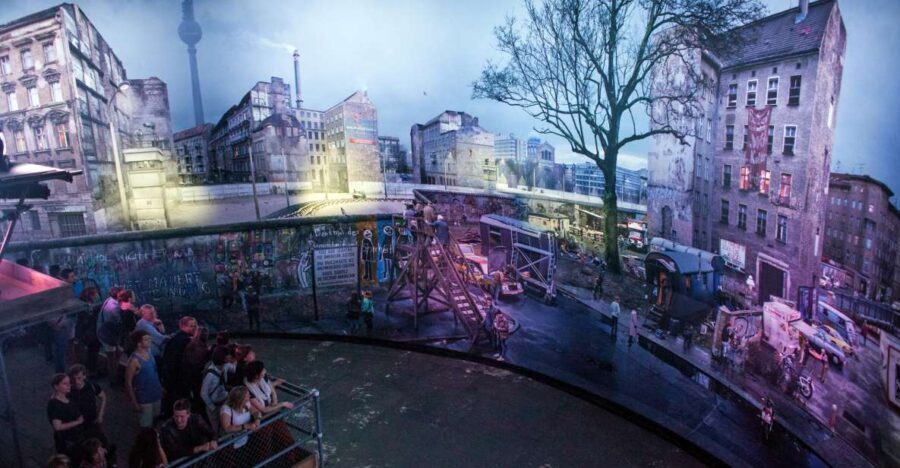
Stand in the Berlin Wall story. At asisi Panorama Berlin, you watch a recreated West Berlin-and-East Berlin divide unfold from a height people could actually feel. I love the 4-meter-high visitor platform, because it turns a Wall lesson into something you can study up close.
I also like how the scenes focus on everyday life in West Berlin, especially the SO 36 area, with the Wall cutting the neighborhood in half. You get a clear sense of how close danger could feel, with views that include the Death Strip and border facilities.
One possible drawback: it is a self-guided experience. If you want an on-the-spot human explainer for the finer points, you may find the provided materials are enough, but not as satisfying as a guided tour.
In This Review
- Key things to know before you go
- First Stop: Find asisi Panorama Berlin at Friedrichstraße 205
- Inside the Panorama: Kreuzberg in 1980s Autumn Light
- The 4-Meter Platform: Watching the Wall’s Shadow Where It Matters
- SO 36 and West Berlin Life: Why the Side Matters
- Yadegar Asisi’s Story: From Early Ideas to the Completed Panorama
- How Long to Spend (and What Order Makes Sense)
- Near the Wall: A Smart Add-On If You’re Already in the Area
- Price and Value: $16 for a Wall Experience That Has Weight
- Who Should Book This Ticket
- Should You Book the asisi Panorama Berlin Ticket?
- FAQ
- How long is the asisi Panorama Berlin ticket valid?
- What’s included with the ticket?
- Is a guided tour included?
- What can I expect from the main viewing platform?
- Is the experience offered in English?
- Are pets allowed?
- Where is the meeting point?
Key things to know before you go
- 4-meter platform views: you stand high enough to read details across the scene.
- Kreuzberg on a fictitious autumn day: daily routines meet history in a recreated 1980s setting.
- SO 36 perspective: you’re seeing West Berlin life right next to the border.
- Death Strip + border facilities: the display aims to show both the mundane and the gruesome.
- Yadegar Asisi’s creative process: there’s a documentary about how the panorama came to be.
- Video at the exit: it helps stitch the art to the real Wall story.
First Stop: Find asisi Panorama Berlin at Friedrichstraße 205
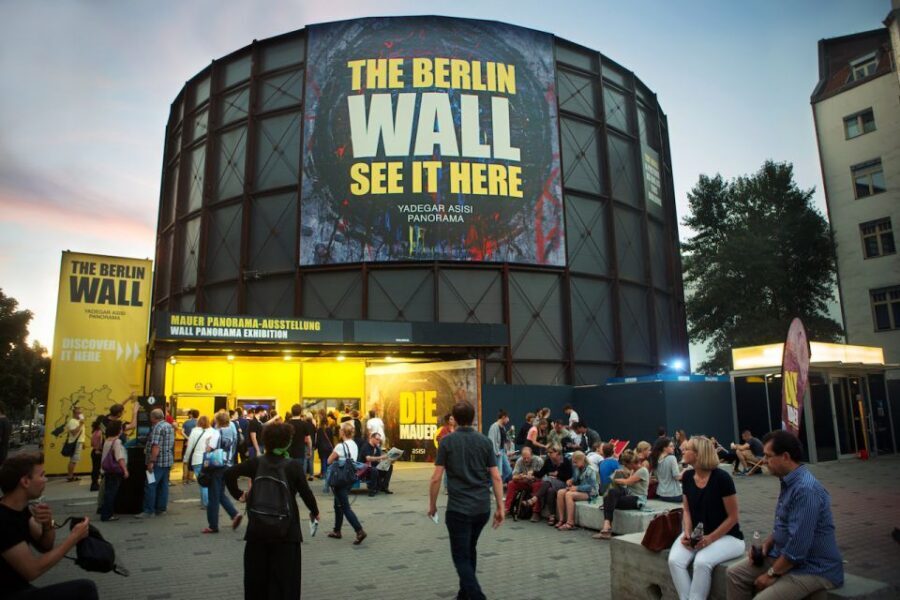
Plan to start at asisi Panorama Berlin, Friedrichstraße 205, 10117 Berlin. This is in a central area, so I’d treat it as an easy anchor for a Wall-themed day—especially if you’re also crossing off other nearby Berlin history stops.
Once you arrive, you’ll get right into the flow of the exhibition. A nice touch is the included key folder with extra information. It’s not a substitute for reading carefully inside, but it helps you keep track of what you’re seeing so the story doesn’t just blur into “cool art.”
Also, note the basics: your ticket is valid for 1 day, and you can skip the ticket line. The site also says free cancellation is available up to 24 hours in advance, and you can often reserve and pay later if your schedule is still shifting.
A few more Berlin tours and experiences worth a look

Inside the Panorama: Kreuzberg in 1980s Autumn Light
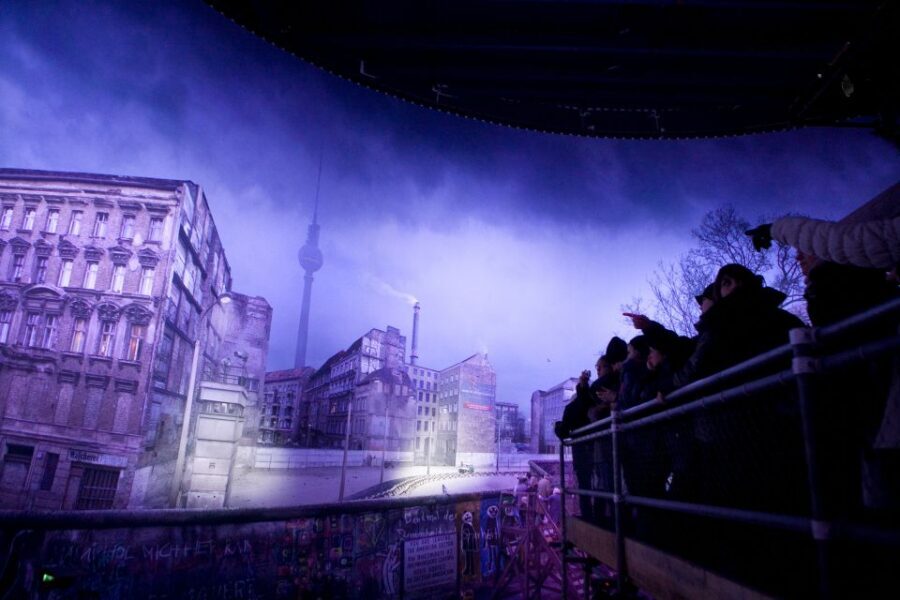
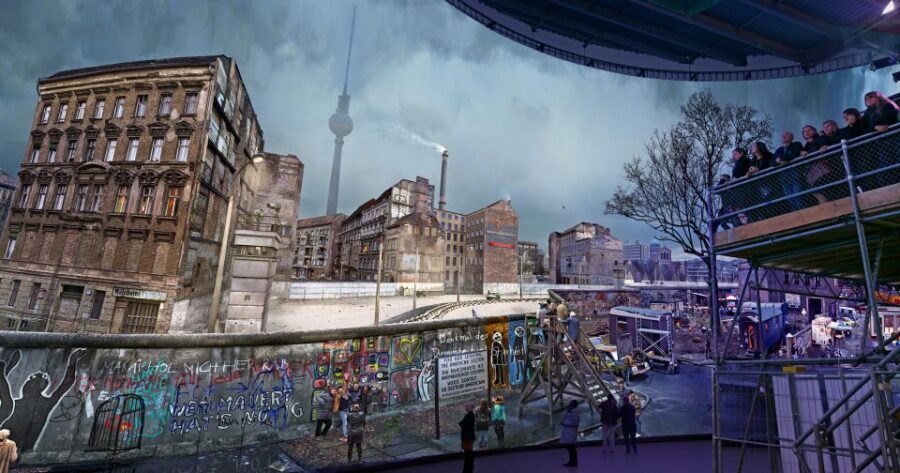
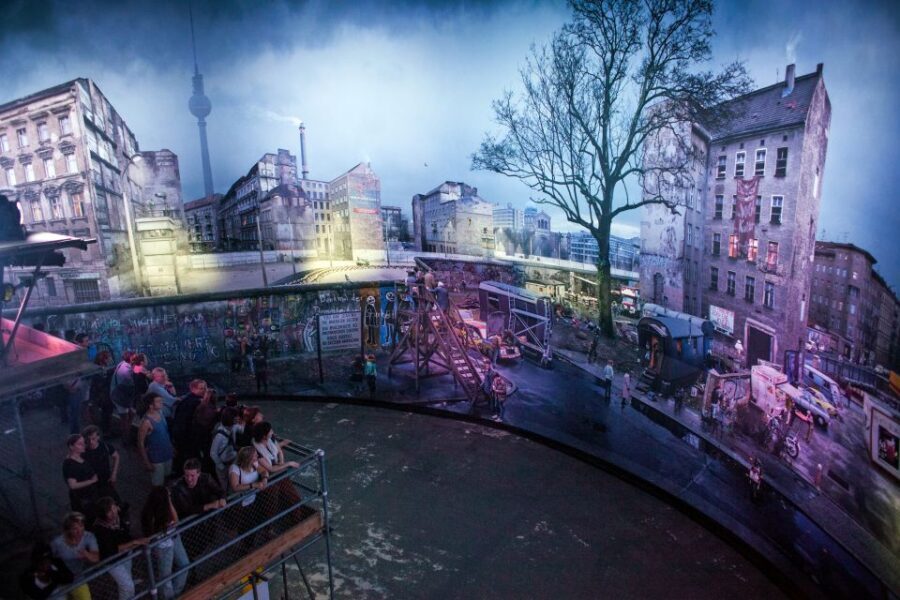
The core experience is an artistic representation of Berlin Wall life—built to help you picture what it felt like to live with the separation. The exhibition recreates Kreuzberg on a fictitious autumn day in the 1980s, and that choice matters.
Autumn is a smart setting. It gives the scene a specific mood and color, and it pushes the story beyond dramatic “war movie” moments. You’re meant to notice routines: streets, angles, how people move, and what looks normal from one side but impossible from the other.
A big part of the point is contrast. You’ll see an alternative life in SO 36 in West Berlin—separated from East Berlin, but only a stone’s throw away. That tension is the heart of the exhibit: distance on a map and proximity in real life don’t feel the same.
If you’re coming in with only a headline-level understanding of the Wall, this is the kind of place where details do the teaching. You can look for the small human things (how spaces are used, how the everyday plays out) while still being confronted with the hard border reality.
The 4-Meter Platform: Watching the Wall’s Shadow Where It Matters
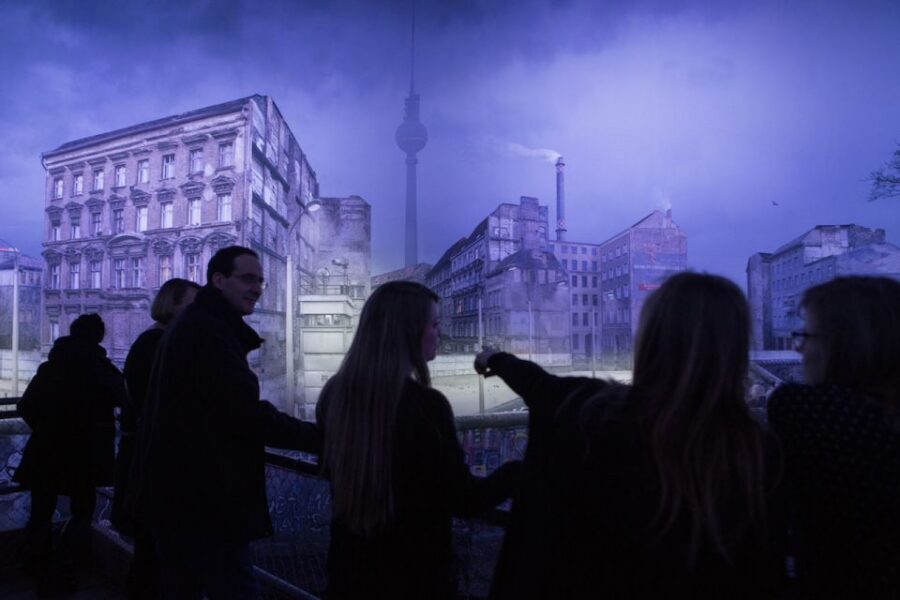
The best moment, in my opinion, is when you step onto the visitor’s platform. You stand 4 meters high, and that changes everything about how you read the scene.
From up there, you’re not just observing a picture. You’re positioned to study how the border functions visually—what you can see, what you can’t, and where attention gets pulled. It’s the difference between watching a video and actually looking out over a street.
The exhibition includes the so-called Death Strip and border facilities, and the experience aims to show how daily life could be both mundane and gruesome at the same time. That pairing is important. A Wall wasn’t only made of concrete. It was made of fear, monitoring, and the way ordinary routines were turned into hazards.
One small detail that adds weight: you may notice noises from the surrounding areas as part of the effect. Sound makes the scene feel less like a diorama and more like a lived environment—one where the border is always present, even when people are just going about their day.
SO 36 and West Berlin Life: Why the Side Matters
Most Wall-focused experiences tend to lump everything into East-vs-West. This one gives you a specific West Berlin neighborhood to hold onto: SO 36.
That focus matters because it reminds you that the Wall didn’t just separate territory; it separated communities and ways of life. Standing in the Panorama, you can try to imagine what it meant to live in West Berlin with the border so near that your daily choices were shaped by it.
You also get the benefit of scale. The exhibit is telling you that the distance between “separate worlds” could be surprisingly short. In practice, that can be more unsettling than a long explanation—because your eyes do the measuring instantly.
If you like history that has a human face, this is a strong fit. You’re not only learning what the border was. You’re seeing how it sat inside a neighborhood.
Yadegar Asisi’s Story: From Early Ideas to the Completed Panorama
A key reason this experience lands is that it includes the artist behind it. The exhibition features a documentary on Yadegar Asisi, from his early ideas to the creation of the Panorama.
That added layer helps you understand the display as more than a one-off art project. It shows intention: why this specific scene, why this structure, and how the Panorama was built to communicate something emotional and specific about Wall-era Berlin.
There’s also a documentary/film component and a video at the exit that ties the story together. I like experiences that give you both a front-row “what you see” moment and a back-row “how it was made” moment. It makes the whole visit feel more grounded.
If you’re the type who usually skips the film rooms in museums, give this one a chance. Even if you only catch the main storyline, it tends to make your later looking sharper.




How Long to Spend (and What Order Makes Sense)
The whole ticket is built for a 1-day visit, and the pacing is flexible once you’re inside. I’d give yourself enough time to do two things slowly: look closely from the platform and then return to the ground-floor scenes with that new perspective.
In terms of flow, plan for a sequence that moves through multiple exhibition spaces before the main Panorama view. Many people find the set-up works like separate stages: you absorb context, you stand at the main viewpoint, then you finish with the documentary/video elements.
Here’s my practical approach:
- Start with the rooms that set the scene and explain what you’re about to see.
- Save the platform moment for when you’re ready to really study details.
- If there’s a video at the exit, don’t treat it as a chore. It’s part of the story architecture.
Even though there’s no guided tour included with this ticket, the exhibition is designed so you’re not left guessing what you’re looking at. The key folder with extra information helps, too.
Near the Wall: A Smart Add-On If You’re Already in the Area
If your Berlin day already includes Checkpoint Charlie, you’re in a good position. One handy tip: after you visit, if you walk straight down the road toward the traffic lights, cross the road and you can spot a remaining section of the original Wall.
That’s a great way to connect the Panorama’s recreated world to the real fragments that still exist in the city. It also helps prevent a common problem with Wall-themed exhibits: you might leave thinking you only learned through art. A quick stop for the real thing fixes that.
Price and Value: $16 for a Wall Experience That Has Weight
At about $16 per person for a 1-day visit, this is priced like an attraction that wants to be accessible, not exclusive. The real value is what you get for that money: a major Wall experience built around close inspection, plus interpretive materials and film components.
What makes the pricing feel fair:
- You’re getting a full, self-paced exhibition (not just one room).
- The included key folder adds helpful context without extra cost.
- The skip-the-ticket-line feature saves time on a day when you might not have many hours to spare.
- You can experience both everyday life scenes and the harsh border elements in a single visit.
The experience also gets high marks overall, with an average rating of 4.5 out of 5 on hundreds of bookings. While ratings aren’t everything, that level of consistency is usually a sign the core experience works for many different kinds of visitors—people who know a lot, and people who are starting from scratch.
Who Should Book This Ticket
This one is especially good if you:
- Want a Wall visit that isn’t only about geography and dates.
- Prefer learning through visuals and close looking instead of listening to long lectures.
- Like art that carries a serious subject, not art as decoration.
It’s also a solid choice for people who might have only a day or two in Berlin. You can build a compact Wall program around it without needing a complicated schedule.
On the flip side, it might feel limiting if you want a guided tour with a live person. This ticket doesn’t include a guide, so you’ll be relying on the exhibition, the key folder, and whatever language support is offered.
One more practical note: pets are not allowed.
Should You Book the asisi Panorama Berlin Ticket?
I think you should book it if you want one Wall experience that’s emotionally clear and visually instructive. The combination of the 4-meter platform viewpoint, the SO 36 framing, and the inclusion of the Death Strip and border facilities makes the story harder to forget than a quick stop at a static monument.
I’d skip it only if you strongly prefer guided history explanations and know you’ll feel lost without one. If you’re okay reading and looking carefully, the Panorama’s structure does most of the work for you.
If you’re even remotely interested in understanding what life was like in the shadow of the Wall—on an autumn day in the 1980s—this is a smart use of time for your Berlin itinerary.
FAQ
How long is the asisi Panorama Berlin ticket valid?
Your ticket is valid for 1 day. You can check available starting times when you book.
What’s included with the ticket?
The ticket includes entry to the asisi Panorama Berlin, plus a free key folder with extra information.
Is a guided tour included?
No. A guided tour is not included with this ticket.
What can I expect from the main viewing platform?
You’ll view the Panorama from a visitor’s platform that is 4 meters high, designed to help you observe the recreated scenes.
Is the experience offered in English?
English support is mentioned through translation options for English speakers.
Are pets allowed?
No, pets are not allowed.
Where is the meeting point?
The meeting point is asisi Panorama Berlin, Friedrichstraße 205, 10117 Berlin.