REVIEW · MUNICH
Ten Munich Old town Sights in a Private Express Walking Tour
Book on Viator →Operated by Victoria – Key to Munich · Bookable on Viator
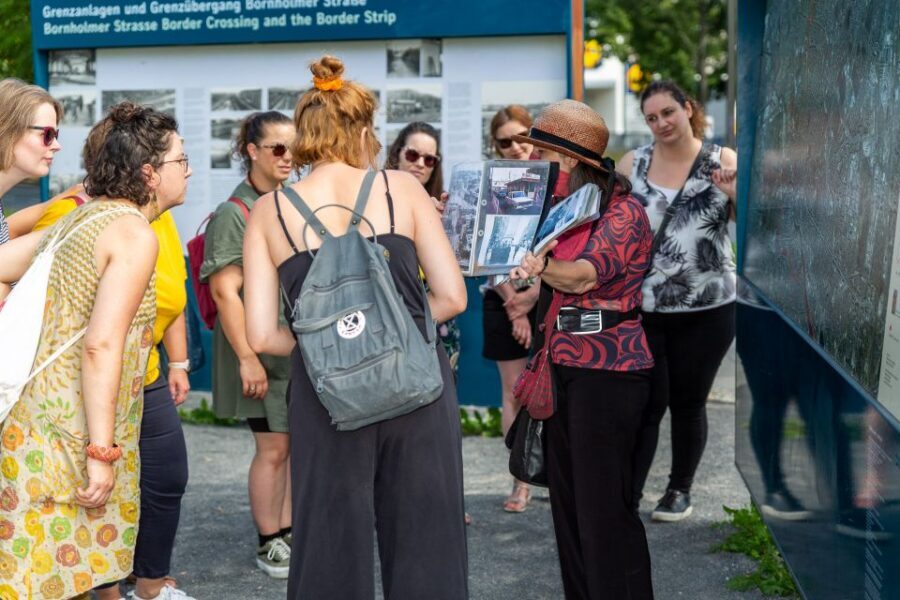
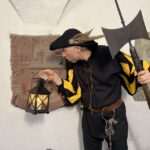
Munich’s icons, explained fast and human. I especially like Victoria’s iPad storytelling—war photos and context help buildings make sense, not just look pretty. I also like the private express pace, which packs big names and small legends into 1 hour 30 minutes without rushing you past everything.
One thing to consider: it’s an express walk. Inside time is limited at each stop, so you’ll get the highlights and the key stories, not a long, slow museum-style visit.
In This Review
- Key Highlights You’ll Actually Feel
- Private 90-Minute Old Town Value in Munich
- Where You Meet and How the Route Feels
- Old Town Hall Tower: Salt, Fortifications, and a Monk
- St. Peter’s Church: 8 Clocks, a Tiara Ritual, and a Cannonball
- Marienplatz: Angels, “Driving Distances,” and White Sausage Origins
- Fischbrunnen: Wallet Washing and the Butchers’ Jump
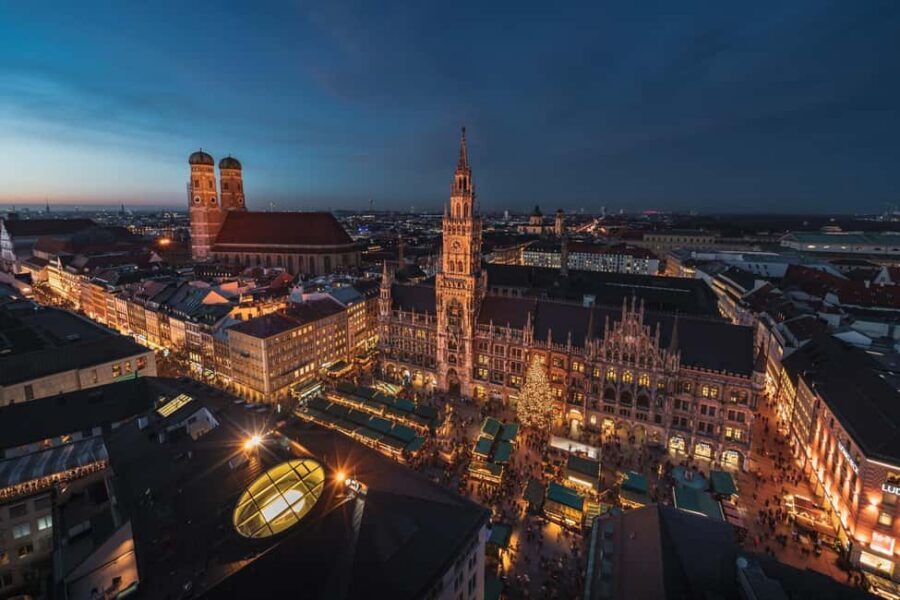
- New Town Hall: Glockenspiel Tunes and a Courtyard Full of Symbolism
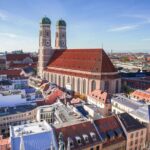
- Frauenkirche: Devil’s Footprint and the Wind That Won’t Behave
- Alter Hof and the Monkey Tower Linked to Louis IV
- Pfistermühle and the Pretzel Legend You Can Notice Immediately
- Hofbräuhaus München: Beer Angel, Personal Mugs, and Oktoberfest Links
- Tips to Get the Most Out of the Express Format
- Should You Book This Munich Old Town Express Tour?
- FAQ
- How long is the private walking tour?
- What does the tour cost?
- Is this a private tour or a shared group tour?
- What language is the tour offered in?
- Where do I meet the guide, and where does the tour end?
- Do I get a ticket on my phone?
- Are admissions included for the sights?
- Is food, drinks, or beer tasting included?
- Can I cancel and get a full refund?
Key Highlights You’ll Actually Feel
- Stories that explain the city name, symbols, and legends as you walk, not after you leave
- WWII building context shown via the guide’s iPad, making the damage visible and meaningful
- Free access at every listed sight stop, so you’re not hunting ticket booths mid-route
- Carillon and Glockenspiel moments at New Town Hall, tied to real Munich traditions
- Frauenkirche legends paired with a practical sight check for the Devil’s footprint and the wind story
- A classic finish at Hofbräuhaus with beer-hall details, plus Oktoberfest links (no tasting)
Private 90-Minute Old Town Value in Munich
This tour is built for people who want Munich’s core without spending the whole day in a queue. It costs $84.29 per person for about 1 hour 30 minutes, and it’s private, meaning only your group is on the route.
For the price, the value sits in two places. First, your guide covers ten major sights plus side stops with clear connections between them. Second, the tour lists free admission tickets for the sights along the way, which helps keep the trip from turning into a stack of extra expenses.
It’s also a popular booking, with an average of 96 days in advance. If you’re traveling in peak weeks, I’d treat that as a hint to reserve early.
You can also read our reviews of more walking tours in Munich
Where You Meet and How the Route Feels
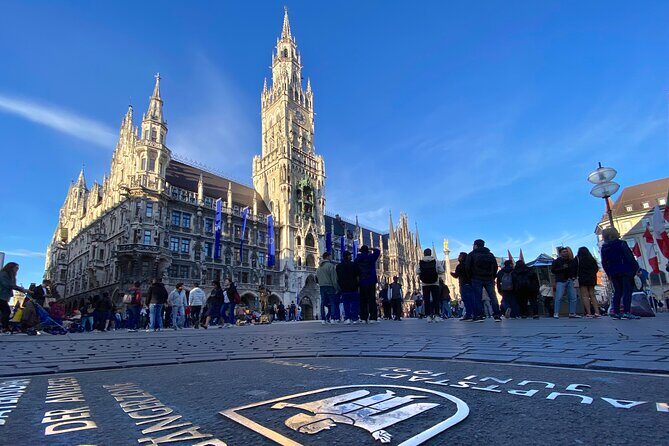
You start at Toy Museum Munich, Marienplatz 15. The tour ends at Hofbräuhaus München, Platzl 9, so you finish somewhere you can keep enjoying right away.
The route is designed around easy walking through central Old Town. Since it’s a walking experience and you cover multiple sights in a short window, wear comfortable shoes and plan to stand and look up a lot.
Also, it’s offered in English and comes with a mobile ticket. Service animals are allowed, and the tour notes that most people can participate, which makes it a straightforward choice if you’re not trying to tackle something technical.
Old Town Hall Tower: Salt, Fortifications, and a Monk
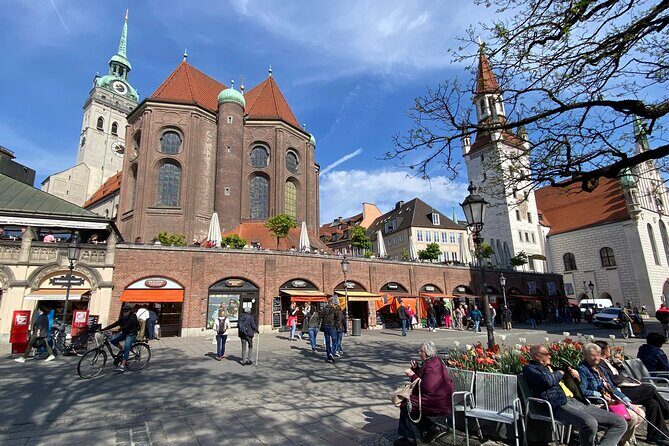
Old Town Hall is where the tour starts to get fun. You meet by the tower and get a sense of how it fit into medieval Munich’s fortification system—not just a pretty skyline piece.
Then the stories shift to how the city formed: you’ll hear about the city’s foundation and learn about the founder. A key theme is salt and how it helped power what became the Bavarian capital.
One of the most interesting parts here is the symbol question. You’ll learn how the monk became Munich’s symbol, and you’ll connect that to the way the city’s name is understood. It’s the kind of detail that makes the rest of the tour land better, because you’re not just sightseeing—you’re decoding.
Practical tip: look closely at the tower and surrounding features while your guide talks. These tours move quickly, and the best visual meaning usually happens when you hear the explanation while you’re in front of the landmark.
St. Peter’s Church: 8 Clocks, a Tiara Ritual, and a Cannonball
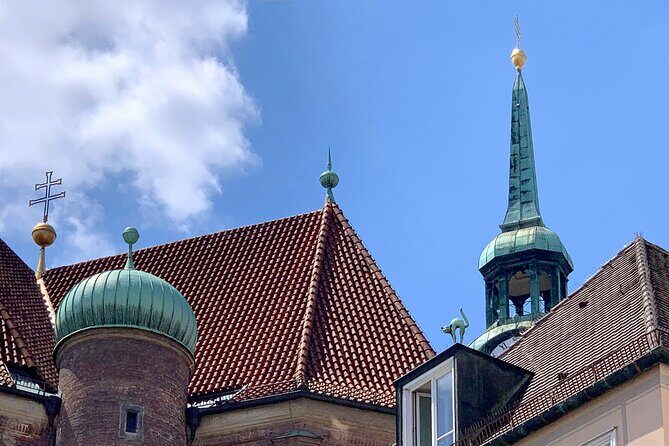
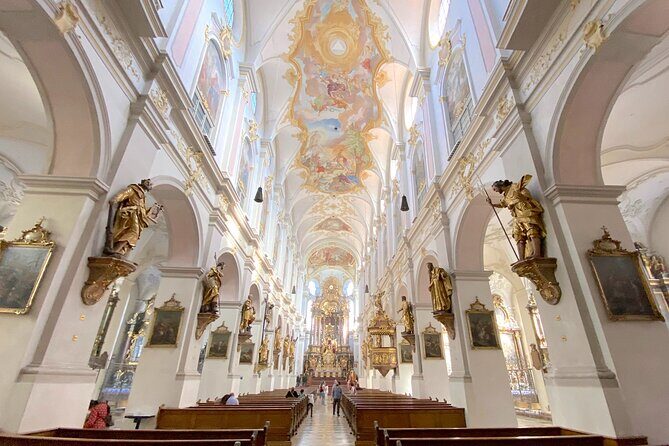
St. Peter’s is the kind of church you can’t fully appreciate without a guide telling you where to look. You visit Munich’s oldest church and focus on the tower with eight clocks, which is unusual enough to make you stop, stare, and remember.
Inside moments include the apse and the high altar featuring St. Peter. The tour also explains a symbolic act tied to St. Peter’s tiara—when it’s removed and how that connects to the election of the Pope in Rome. It’s a reminder that old buildings often carried big-world meaning long before today’s headlines.
And then come the details outside the expected postcard view. You’ll scrutinize exteriors for a cannonball in a window area, and you’ll search for the only presently silent bell, the Poor Sinners’ bell. The story links it to executions that were carried out in earlier times on Marienplatz.
If you like history that feels tangible, this is a strong stop. The cannonball alone is the sort of thing you’d miss on your own.
Marienplatz: Angels, “Driving Distances,” and White Sausage Origins
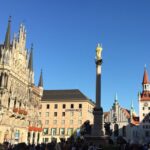
Marienplatz is the center of it all, so it’s smart that this tour makes you stand right in the middle. You’ll learn how the square functioned as a medieval marketplace and how it still plays the role of Munich’s animated public heart.
St. Mary’s column is a focal point. You’ll admire it and hear the story of the angels at its base, including the theme of angels fighting four evils. It’s symbolism you can actually point at, rather than something abstract.
Then the tour drops in local trivia that sticks. You’ll learn about how distances in Munich are counted (with driving distances being part of the explanation), and you’ll hear the claim about the place where the Munich white sausage was invented.
This stop is short, but it’s designed to make Marienplatz more than a photo stop. After this, you’ll understand why people treat the square like Munich’s living room.
You can also read our reviews of more private tours in Munich


Fischbrunnen: Wallet Washing and the Butchers’ Jump
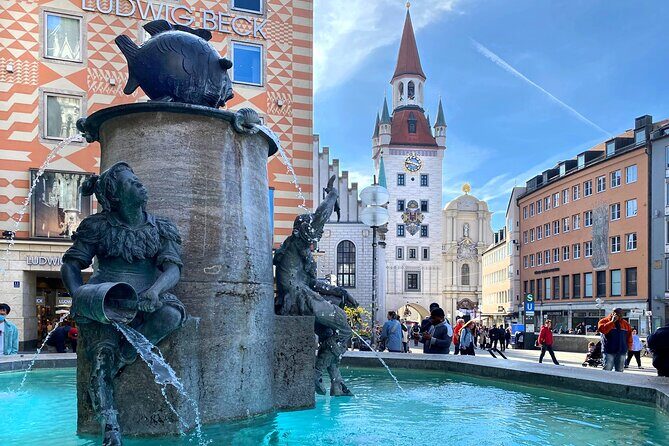
Fischbrunnen is one of those places where a short stop can still feel like a character moment in the story of a city. You’ll see the famous fountain and get two local traditions tied to it.
One is Wallet Washing, a tradition with a playful, practical vibe—basically a ritual for luck and money. The other is the Butchers’ Jump, which sounds like it belongs in a folk tale because it’s so specific to the local culture.
Even if you don’t plan to join any tradition yourself, you’ll leave knowing how Munich’s daily life has long borrowed from ceremony. It’s a nice contrast to the more serious church and cathedral stops.
New Town Hall: Glockenspiel Tunes and a Courtyard Full of Symbolism
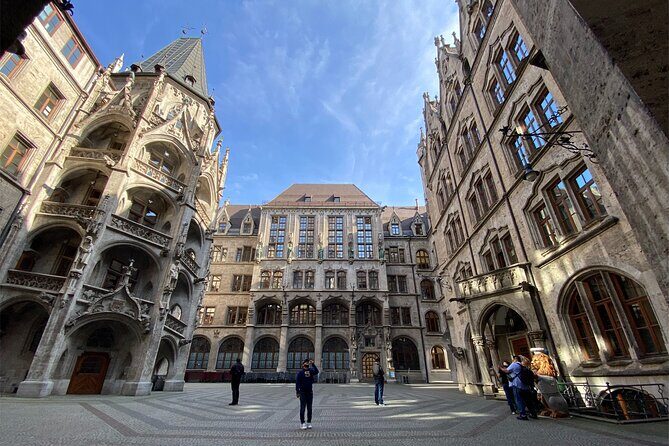
New Town Hall is where Munich’s civic pride shows off its teeth. The tour helps you decode the neo-gothic structure and then connects it to the city’s history through the daily reenactments of the Glockenspiel.
You’ll learn how those mechanical clock moments link to what people remember about Munich. Even if you’ve seen pictures before, you’ll understand what’s being reenacted and why it matters.
Later, you get a different angle of the same building. You’ll take a peek into the grand courtyard and spend time on what the sculpture work is trying to say—especially around the portico tied to the old city treasury.
Then there’s the Staircase of Ages, and the tour has you read it through the statues on its walls. This is a good stop for anyone who likes architecture as storytelling, not just architecture as decoration.
The only catch: because it’s an express tour, you’ll see the key ideas and then move on. If you want to linger in courtyards for a long time, you’ll probably want extra self-guided time on your own later.
Frauenkirche: Devil’s Footprint and the Wind That Won’t Behave
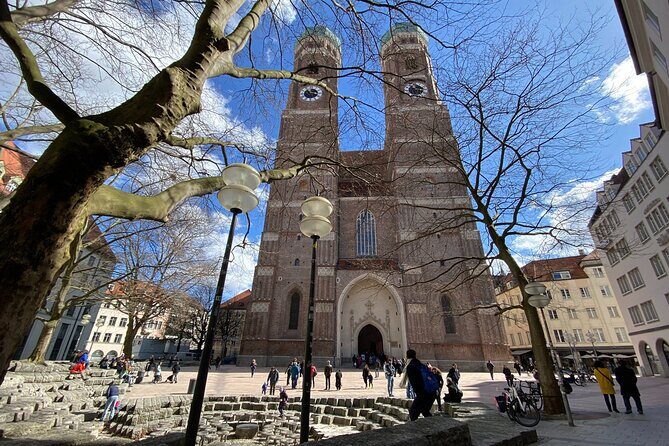
Frauenkirche is Munich’s cathedral, and it comes with legends you can actually look for. You’ll hear the spine-chilling construction story and then you’ll go hunting at the entrance.
The tour points you toward the Devil’s footprint, a detail that’s easy to miss if you’re only glancing while walking. It’s the kind of legend that makes you slow down for a second.
Next comes the wind story. You’ll find out how there’s a legend about wind constantly blowing around the cathedral, supposedly regardless of season and weather. You won’t have to believe everything on day one, but standing there while your guide explains the idea is exactly how the story becomes real.
This stop works because it mixes legend with a physical location you can check yourself.
Alter Hof and the Monkey Tower Linked to Louis IV
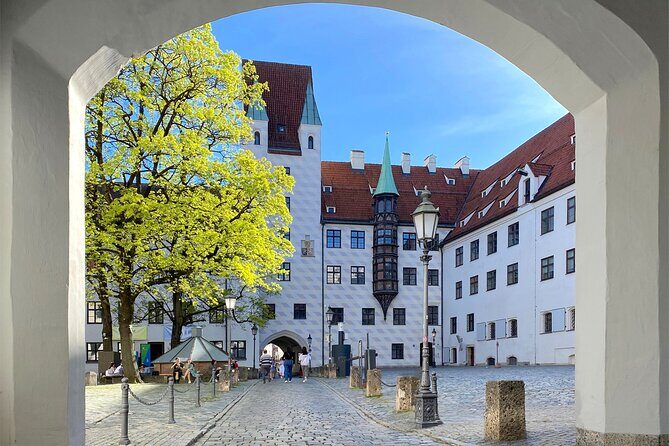
Alter Hof takes you from street-level legends into royal territory. You visit the inner courtyard of the first residence of the Wittelsbach royal family in Munich, and you’ll focus on the Monkey Tower.
The tour connects the Monkey Tower to a legend and explains its astonishing role in the life of Holy Roman Emperor Louis IV. That link to a major figure makes the courtyard feel more than just a nice passageway.
If you’re curious about where power sat before today’s museums and monuments, this is the kind of stop that gives you orientation. It tells you who mattered and where they lived.
Pfistermühle and the Pretzel Legend You Can Notice Immediately
Pfistermühle is brief but memorable. You’ll walk by the building that once hosted the royal mill and bakery, and you’ll get the legend of the pretzel—plus how it connects symbolically to Munich.
This is where the tour earns points for keeping things human. Instead of only big politics and architecture, you get food culture tied to old production and local identity.
If you’re a snack person (which is most people), this stop makes later pretzel purchases feel earned, not random.
Hofbräuhaus München: Beer Angel, Personal Mugs, and Oktoberfest Links
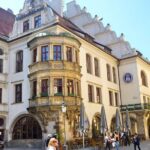
The tour ends in a place with built-in energy. Hofbräuhaus München is the former royal brewery, and today it’s one of the world’s best-known beer halls.
You go inside the main hall and get a guided look at the features that make it famous. You’ll have a chance to meet the beer angel, observe regular guests at their tables, and take a look at the lockers where people keep their personal beer mugs.
Then the guide switches gears into beer history and tradition. You’ll learn the story behind the beer purity law, and you’ll hear which breweries are allowed to sell beer at Oktoberfest. There’s also an unexpected connection between Oktoberfest and a royal wedding.
Important: no beer tasting is included. So think of this stop as a guided look into the place and its traditions, not a tasting package.
If you want a smooth ending, this is a smart way to close. You finish with a destination you can sit in, order food and drink on your own, and keep the momentum going.
Tips to Get the Most Out of the Express Format
This is an efficient route. To make it work for you, come with curiosity rather than a strict checklist.
Ask questions during the moments when you’re standing still. The guide’s stories pay off more when you can look around while you listen, especially at places like St. Peter’s (for the clocks and bell) and Frauenkirche (for the footprint story).
Also, because the tour finishes at Hofbräuhaus, you can plan your first meal afterward around that timing. If you eat early, you’ll still have plenty of energy to enjoy the beer hall atmosphere without feeling rushed.
Finally, if you care about hearing the Glockenspiel at New Town Hall, ask your guide whether it’s playing during your exact time window. The tour notes daily reenactments, but the schedule isn’t something you should guess.
Should You Book This Munich Old Town Express Tour?
Book it if you want the fastest path to Munich’s Old Town that still feels like a story. This tour gives you clear explanations at each major landmark, uses visual support through the guide’s iPad, and ends in one of Munich’s most iconic interiors.
Skip it (or add your own time separately) if you want long indoor visits at every stop. The format is designed for highlights and key legends, not extended museum-style exploration.
If you’re first-time in Munich, or if you want a second trip that’s more about meaning than “I saw it,” this is a strong choice. It’s structured, friendly, and compact—exactly what an express walking tour should be.
FAQ
How long is the private walking tour?
It lasts about 1 hour 30 minutes.
What does the tour cost?
It costs $84.29 per person.
Is this a private tour or a shared group tour?
It’s a private tour, so only your group will participate.
What language is the tour offered in?
The tour is offered in English.
Where do I meet the guide, and where does the tour end?
You meet at Toy Museum Munich, Marienplatz 15, 80331 München, Germany, and the tour ends at Hofbräuhaus München, Platzl 9, 80331 München, Germany.
Do I get a ticket on my phone?
Yes, the tour uses a mobile ticket.
Are admissions included for the sights?
The tour itinerary lists admission tickets as free at the stops included.
Is food, drinks, or beer tasting included?
Food and drinks are not included, and no beer tasting is included.
Can I cancel and get a full refund?
Yes. You can cancel up to 24 hours in advance for a full refund.