REVIEW · GERMANY
Self-Guided Walk Around Quedlinburg’s Timber-Framed Houses
Book on Viator →Bookable on Viator
Quedlinburg is medieval everywhere you look. This self-guided GPS audio walk takes you past UNESCO-recognized timber-framed houses and major landmarks at your own pace, starting under the ivy-covered Quedlinburg Rathaus and ending with wide views from Castle Hill. Along the way, you’ll get audio context on big names like Henry I, Otto the Great, and Johann Christoph GutsMuth, so the town feels like more than pretty buildings.
I also like the offline-ready setup: you can download the audio, maps, and geodata and explore without hunting for signal at every corner. The main thing to watch is practical: you need your own smartphone and headphones, and if you prefer a specific language, double-check the app’s language settings before you start, since at least one experience didn’t go as expected.
In This Review
- Key highlights at a glance
- Quedlinburg’s Timber-Framed Houses, All On Foot
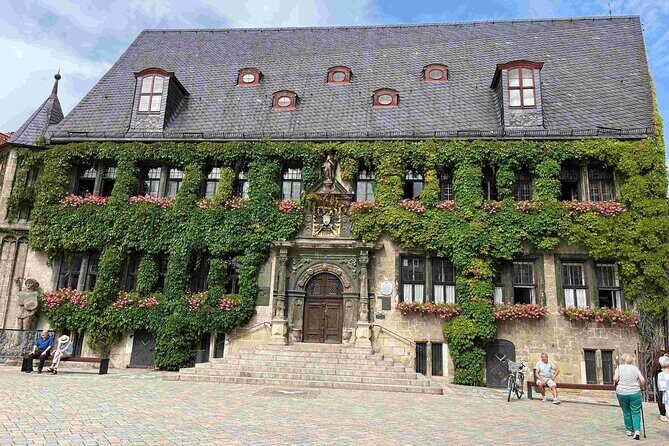
- Your Walk Starts in Marktplatz by the Ivy-Covered Rathaus
- Rathaus Details, Plus a Medieval Alley Detour
- St. Benedicti and St. Nicholas: 13th-Century Church Stops
- Johann Christoph GutsMuths: Physical Education’s Connection to Quedlinburg
- The Henry I Stops: Royal Power Meets Medieval Streets
- Castle Hill and Schlossgarten: Where the Views Finish the Story
- Price and Value: Does $7.99 Make Sense?
- Practical Logistics That Actually Matter
- Who This Walk Is Best For
- Should You Book This Self-Guided Walk?
- FAQ
- How long is the self-guided walk around Quedlinburg?
- Where does the tour start and end?
- Do I need an internet connection during the walk?
- What do I need to bring with me?
- Are museum tickets or entrance fees included?
- Can I cancel and get a full refund?
Key highlights at a glance
- GPS-guided, self-paced route that helps you stay oriented through the Old Town
- Offline audio, maps, and geodata so you’re not dependent on mobile coverage
- Start at Marktplatz by the ivy-covered Rathaus and build your way through the medieval core
- Church-to-church architecture from 10th- to 13th-century stops, including St. Servatius Cathedral
- GutsMuths stops that connect Quedlinburg to the father of physical education
- Castle Hill finish at Schlossgarten with panoramic town views
Quedlinburg’s Timber-Framed Houses, All On Foot
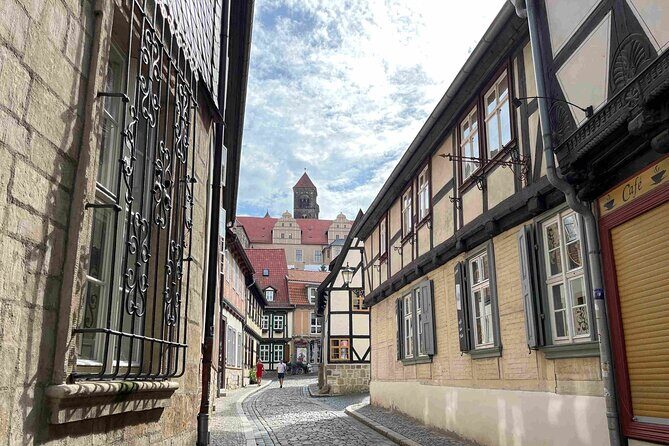
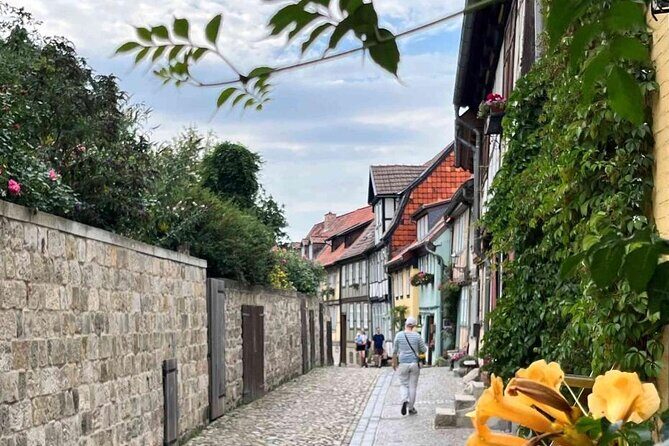
Quedlinburg sits in the Harz mountain region, and it’s one of those rare places where walking feels like reading a living textbook. More than 2,000 timber-framed houses—many from centuries ago—help explain why this town earned UNESCO recognition.
This tour is designed for a sweet spot: enough time to see key highlights and enough flexibility to slow down for details when something catches your eye. Most walks come in around an hour to an hour and fifteen minutes, which makes it a strong choice for a half-day chunk of your itinerary.
You can also read our reviews of more walking tours in Germany
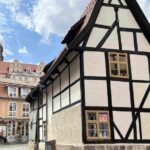
Your Walk Starts in Marktplatz by the Ivy-Covered Rathaus
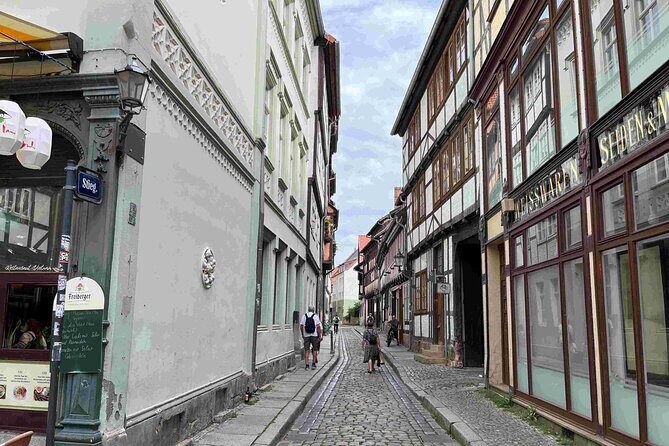
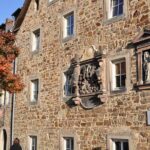
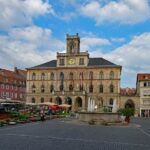
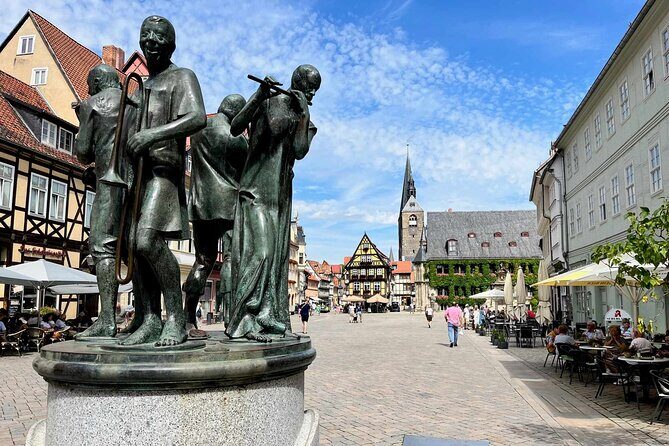
The experience begins in the center of town at Marktplatz, in the shadows of the Quedlinburg Rathaus. Even if you only glance up at the start, the ivy-covered façade sets the tone. This is the kind of place where you immediately understand why Quedlinburg looks the way it does: the town grew around important civic and religious centers, then kept those cores intact.
You’ll hear about what makes the Rathaus significant, including its age and Gothic character. The main practical value here is orientation. Starting in the market square gives you an easy mental map for the rest of the walk—everything else feels like a walk branching out from a clear center.
Tip: If you want the best photos, try to start when streets aren’t packed. Morning or early afternoon usually beats late afternoon, especially in peak seasons.
Rathaus Details, Plus a Medieval Alley Detour
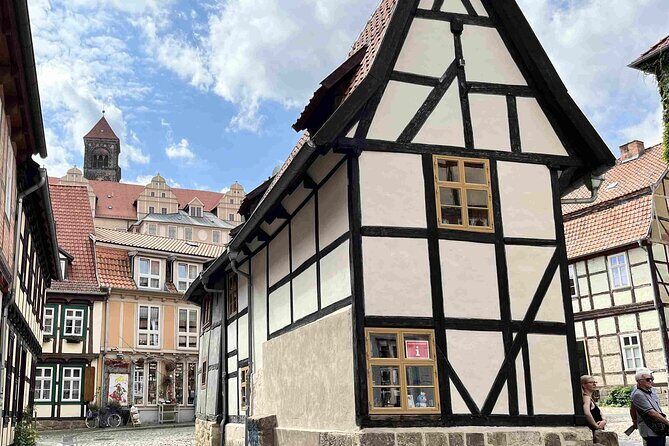
From the Rathaus, your route keeps you moving through the historic heart of Quedlinburg. You’ll pass the city-administration setting inside the Rathaus building, and the audio helps you connect architectural style to what you’re standing in front of.
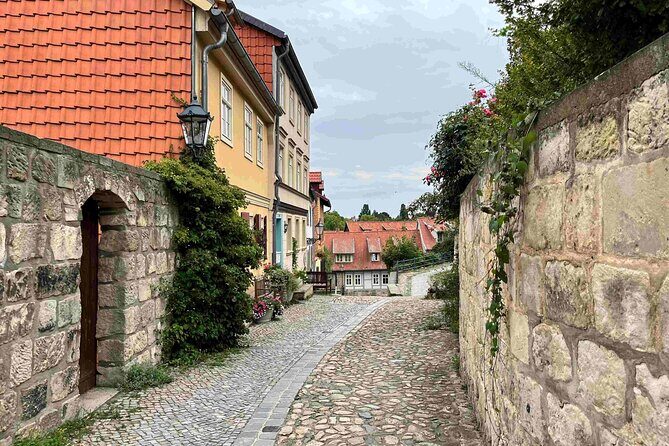
Then comes one of those quick side turns that makes a self-guided walk feel fun instead of purely sightseeing. You’ll be led to the shoemaker court, reached through a narrow alley. It’s a small stretch, but the payoff is big: you get a medieval-feeling moment that’s easy to miss if you’re just strolling without a plan.
Why it matters: Timber-framed towns can look repetitive if you only photograph façades. This kind of tucked-away stop breaks the pattern and reminds you that Quedlinburg wasn’t built just for decoration. It was built for real daily life—work, trade, worship, and governance.
St. Benedicti and St. Nicholas: 13th-Century Church Stops
Next, the tour shifts from civic power to spiritual power with two major 13th-century church stops.
You’ll visit St. Benedicti Church, where the audio focuses on its historical and architectural appeal. Then you’ll pass by St. Nicholas Church, another 13th-century gem in the town’s ecclesiastical landscape. The point isn’t only that they’re old. It’s that, in Quedlinburg, church buildings sit in the middle of the town’s story—physically and historically.
What you’ll get from the audio: short, place-based explanations that help you look beyond the obvious. Instead of standing in front of a church and guessing what you’re seeing, you’ll have cues for what to notice.
Possible downside: If churches aren’t your thing, these stops can feel like extra time. But if you’re even a little curious about why medieval towns were shaped by religion and community institutions, these two add real depth.
Johann Christoph GutsMuths: Physical Education’s Connection to Quedlinburg
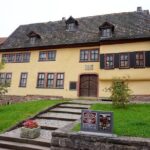
One standout segment centers on Johann Christoph Friedrich GutsMuths, often described as a pioneer of physical education. You’ll encounter a monument honoring him and then visit places connected to his life, including the birthplace at GutsMuths Haus.
This is a smart twist in an otherwise architecture-heavy walk. Many UNESCO timber-framed town tours focus on buildings alone. Here, you get a human thread: a person tied to a major cultural idea—physical education—and you see how that legacy links back to Quedlinburg.
Practical angle: Because you’re walking at your own pace, you can spend extra time here if you’re interested, and just skim if you’re more focused on façades and cathedrals.
You can also read our reviews of more guided tours in Germany

The Henry I Stops: Royal Power Meets Medieval Streets
The route then adds a political storyline. You’ll hear about a historic site where Henry I discovered he would be the new German King, which adds a regal layer to the streets you’re walking on.
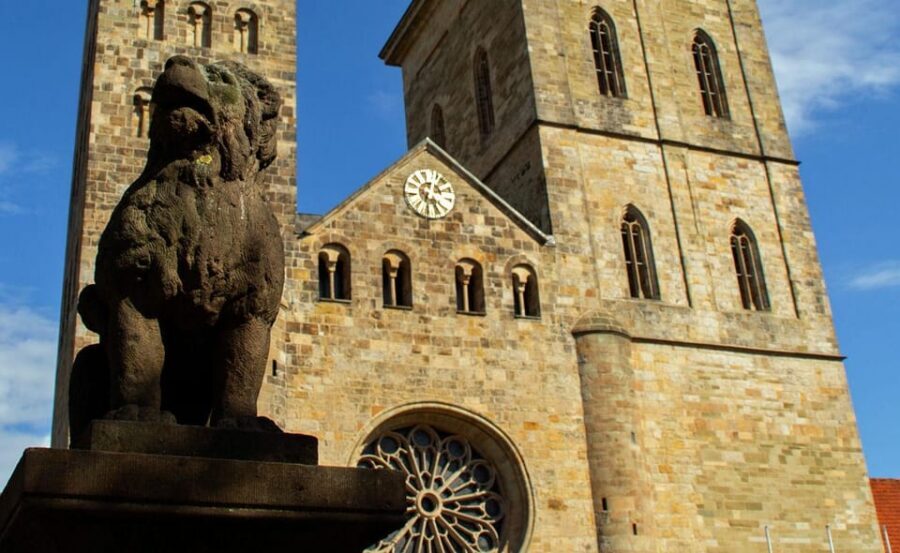
Right after that, the tour brings you to the big centerpiece: St. Servatius Cathedral. Founded by Henry I and Otto the Great in the 10th century, this cathedral is known for Romanesque architecture. You’re not just touring a building. You’re walking through the kind of early medieval significance that helps explain why Quedlinburg mattered beyond its own town limits.
What to watch for: Romanesque architecture often reads differently from Gothic. If you slow down and look at the structure and shape language—rather than only the overall size—you’ll get more out of the visit.
Castle Hill and Schlossgarten: Where the Views Finish the Story
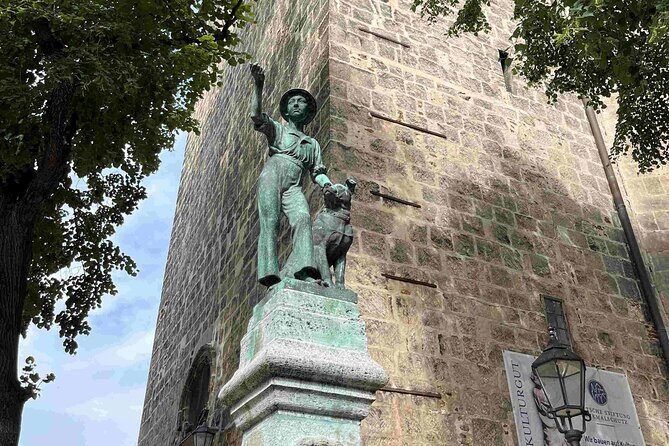
The final stretch moves toward the remains of Quedlinburg Castle and its museum area. Even without committing to museum time, the site adds context: it’s a reminder that medieval Quedlinburg wasn’t only timber-framed neighborhoods and churches. Royal power sat close by.
Then you finish at Schlossgarten Quedlinburg, a garden on Castle Hill with panoramic views over the town and surrounding area. This ending is one of the best design choices in the tour. After an hour of reading the streets, you get a wide view that helps the whole place click.
Why it’s worth lingering: From a viewpoint, timber-framed houses stop being individual photos and start looking like an urban pattern—clusters, streets, and the way the town grew around key institutions.
Price and Value: Does $7.99 Make Sense?
At $7.99 per person, this self-guided audio tour sits in the “small spend, high usefulness” category—especially if you like wandering with structure.
Here’s what you’re really paying for:
- Lifetime access to the English audio before your booking date and after it
- GPS/self-guided flexibility, so you’re not boxed into a fixed schedule
- Offline audio, maps, and geodata, which can save you time and frustration
It’s not the same value as paying for museum tickets, guided interpretation inside buildings, or a deeper multi-hour narrative tour. But for a compact walking window—around 60 to 75 minutes—it’s strong value. You can cover the core highlights without needing to time your day around a group.
Good to know: Museum or entrance tickets aren’t included, so if you want inside access to specific sites, plan for that separately.
Practical Logistics That Actually Matter
You’ll need a few basics for the tour to run smoothly:
- Bring your smartphone
- Bring headphones
- The audio includes offline access to maps and geodata, but your device still needs power
The tour route has a clear start and finish:
- Start: Peter Sternehaus, KirschMarkt 3, 06484 Quedlinburg
- End: Lookout Point, Schloßberg 36, 06484 Quedlinburg
The hours listed cover the full day across the date range shown, which means you can fit it into almost any day on your schedule. Still, timing affects crowding and parking for the town overall, so aim for quieter hours when you can.
Language note (based on real-world use): One experience flagged trouble switching languages. The safest move is to check the app language setting before you begin, and don’t assume every device/app configuration will behave the same.
Who This Walk Is Best For
This tour is a great fit if:
- you want a low-pressure way to see Quedlinburg’s key sights
- you prefer short stops with the freedom to slow down
- you like architecture but also want audio context tied to people like Henry I and GutsMuths
- you’re traveling on your own and want help not getting lost
It might be less ideal if:
- you’re hoping for guided, two-way Q&A (this is self-guided)
- you expect museum entry included (it’s not)
- you need flawless language flexibility and want that guaranteed in advance
Should You Book This Self-Guided Walk?
If you want an easy win in Quedlinburg—timber-framed streets, major churches, a famous cathedral, and a view finish—this is a smart booking. The cost is modest, and the offline setup is the kind of practical feature that pays off in real life.
Book it if you’ll actually use the audio and like walking with a route plan but not a rigid schedule. Skip it if you’re strictly a museum-and-interiors person, or if you know you’ll need a specific language setting and can’t risk app hiccups.
FAQ
How long is the self-guided walk around Quedlinburg?
It takes about 1 hour to 1 hour 15 minutes.
Where does the tour start and end?
You start at Peter Sternehaus, KirschMarkt 3, 06484 Quedlinburg and end at the Lookout Point, Schloßberg 36, 06484 Quedlinburg.
Do I need an internet connection during the walk?
No. The tour includes offline access to audio, maps, and geodata.
What do I need to bring with me?
Bring your own smartphone and headphones.
Are museum tickets or entrance fees included?
No. Tickets or entrance fees to museums or attractions are not included.
Can I cancel and get a full refund?
Yes. You can cancel for a full refund if you cancel at least 24 hours before the experience starts. If you cancel within 24 hours, the amount paid isn’t refunded.