REVIEW · STUTTGART
Stuttgart: Ticket for the Miniature Worlds – Europe’s largest city model
Book on GetYourGuide →Operated by Miniaturwelten Stuttgart gGmbH · Bookable on GetYourGuide
Mini trains, huge detail, one small ticket. At Miniaturwelten Stuttgart, you’ll see the Miracle of Stuttgart, Europe’s largest city model, created by one man, Wolfgang Frey, and it’s packed with station drama, hand-built streets, and tiny realism. I love the train-station focus and the way the model rewards slow looking, building by building. One thing to consider: some labels and content are in the original language, so if you want English all the time, you’ll want to ask the team for help as you go.
You’ll be based right across from Stuttgart’s main railway station, and the experience is made to fit into a day. A typical visit is about 1.5 hours, but the details can stretch that out fast, especially if you’re a rail fan or you like miniature engineering. The ticket is $10 per person, and the value feels strong once you add the extra kid activities and free luggage storage.
There’s one step at the entrance, though there is separate barrier-free access if you need it. Photos are welcome, and you’re even encouraged to ask questions—so you can turn a quick stop into a properly explained miniature city.
In This Review
- Key highlights worth planning for
- First stop: a miniature city across from Stuttgart Hbf
- The Miracle of Stuttgart: what you’re actually looking at
- Train-station obsession: the model’s beating heart
- How one builder makes 15 years look effortless
- Reading the streets: where your eyes should go
- Signal box realism: understanding station work in miniature
- A visit that works for families: detective game and play stations
- Timing tips: how to avoid the rushed feeling
- Where the $10 price feels justified
- Practical rules that help your visit go smoothly
- Should you book this ticket? My take
- FAQ
- Where is Miniaturwelten Stuttgart located?
- How much time should I plan for the visit?
- How much is the ticket?
- What’s included with the ticket?
- Is there a kids activity besides playing with the model rail stations?
- Can I store luggage before or during my visit?
- Is the attraction wheelchair accessible?
- Are photos allowed?
- Is there a discount for another attraction nearby?
Key highlights worth planning for
- Europe’s largest city model spreads across 180 m², so you get big-picture views and close-up streets
- The 1980s Stuttgart replica feels specific and time-bound, with a strong focus on the train station
- A recreated signal box helps you understand how station signalmen work, including an 8 meter control panel
- Built by one person over 15 years, using everyday materials—nothing is prefabricated
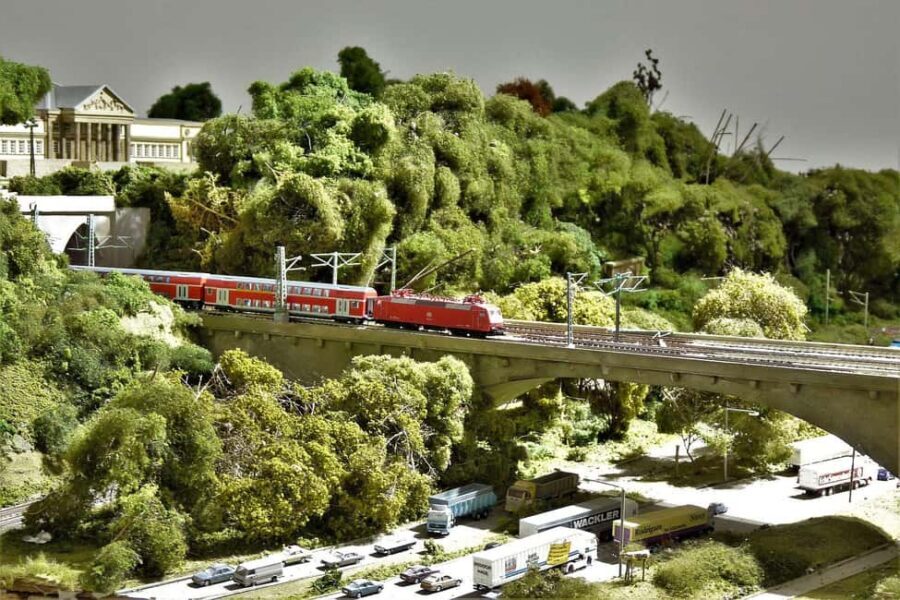
- Scale detail that’s visible up close, from 2,500 hand-painted vehicles to 4,000 trees
- Kids get real activities, including a detective search game and play stations built for them
First stop: a miniature city across from Stuttgart Hbf
The best part about this place, for me, is how easy it is to reach. Miniaturwelten Stuttgart sits directly opposite the main railway station, so you can tack it onto a train day without complicated routing. You also get bus stop access close by, and the entrance area is set up for regular visitor flow.
The ticket gets you admission for a day, and you’re free to wander at your own pace. I like that they don’t try to turn it into a rushed factory tour. Instead, the model is the star, and the staff can step in with background explanations when you ask.
Expect to spend at least 1.5 hours if you want to take it in calmly. If you’re the type who stops at small objects—garbage cans, fences, and street textures—go longer. The builder’s whole point is that “small” details add up to a believable city scene.
A few more Stuttgart tours and experiences worth a look



The Miracle of Stuttgart: what you’re actually looking at
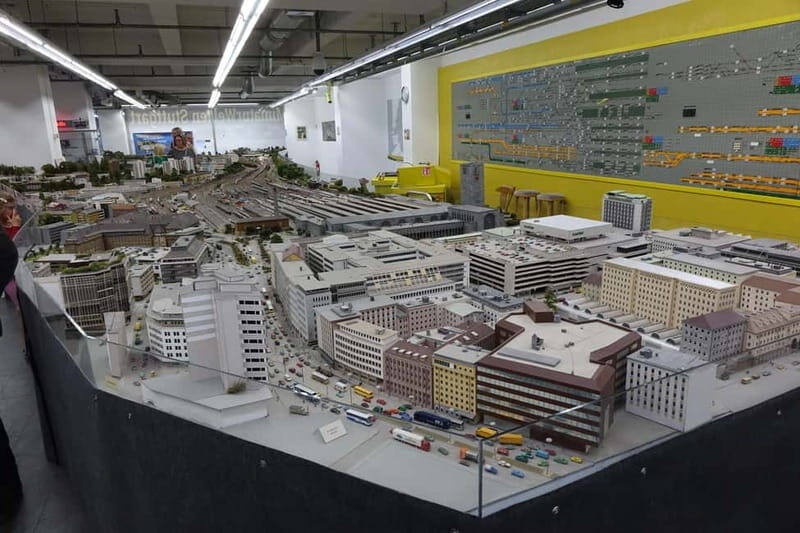
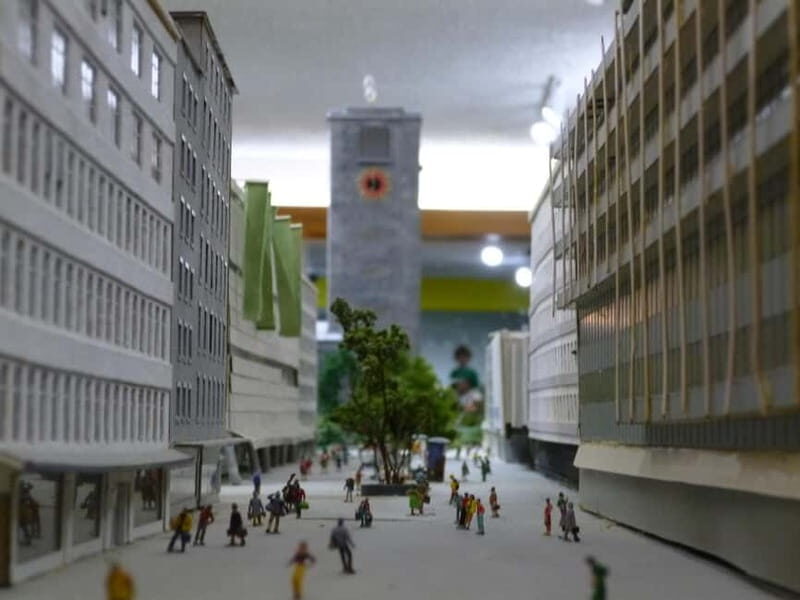
The Miracle of Stuttgart is the name of the city-scale model, and it’s built on 180 m². The cityscape is meant to represent Stuttgart from the 1980s and 90s, and it’s created at a scale of 1:160. That matters, because it explains why the model feels both realistic and slightly theatrical. You’re not just seeing buildings—you’re seeing a past version of the city arranged to be read like a miniature documentary.
Here’s what makes it special in practical terms: nothing is pulled from a kit. The entire model was researched, planned, and built with high precision by Wolfgang Frey himself. You’ll notice this in the “logic” of the streets and objects. Even when something is tiny, it looks intentional.
If you’re curious about the effort behind it, the numbers are impressive:
- over 450 buildings
- about 2,500 hand-painted vehicles
- 4,000 trees
- 2,500 individually made tombstones
That last one is a gut-check moment. A miniature city can be showy—this one chooses realism, even in places you might not expect to get attention. If you enjoy model-making as a craft, this is the kind of detail that makes your brain slow down.
Train-station obsession: the model’s beating heart
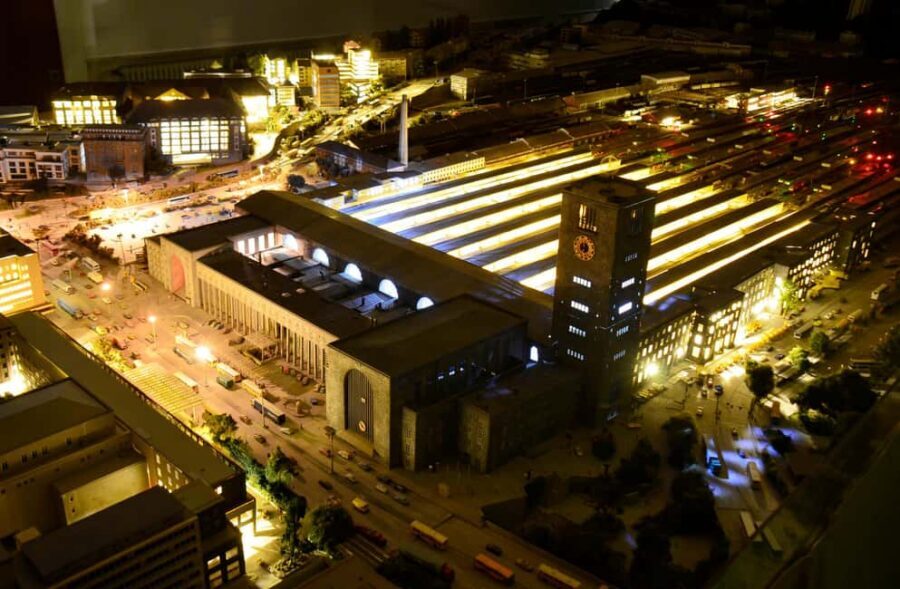
The model’s biggest pull for many visitors is the station focus, and it’s not just about trains rolling through. There’s also a recreated signal box and a built-in explanation of how station signalmen work.
In fact, the signal box reconstruction is a standout: you’ll see an 8 meter long control panel with 8 control tables. That scale sounds almost too big for a miniature exhibit, and it helps you understand the station as an operating system, not just a scenery backdrop.
What you’ll get from this section is a sense of cause and effect. Instead of trains appearing by magic, the setup points you toward the idea that station control is a mix of procedure, timing, and attention. Even if you don’t know rail terminology, you’ll likely feel the engineering behind the scenes.
If you’re coming specifically for rail history or model railroading, this is where your time pays off most. If you’re coming with kids, this section is often easier for them to track—watching trains and imagining the station work feels more like a story than a static display.
How one builder makes 15 years look effortless
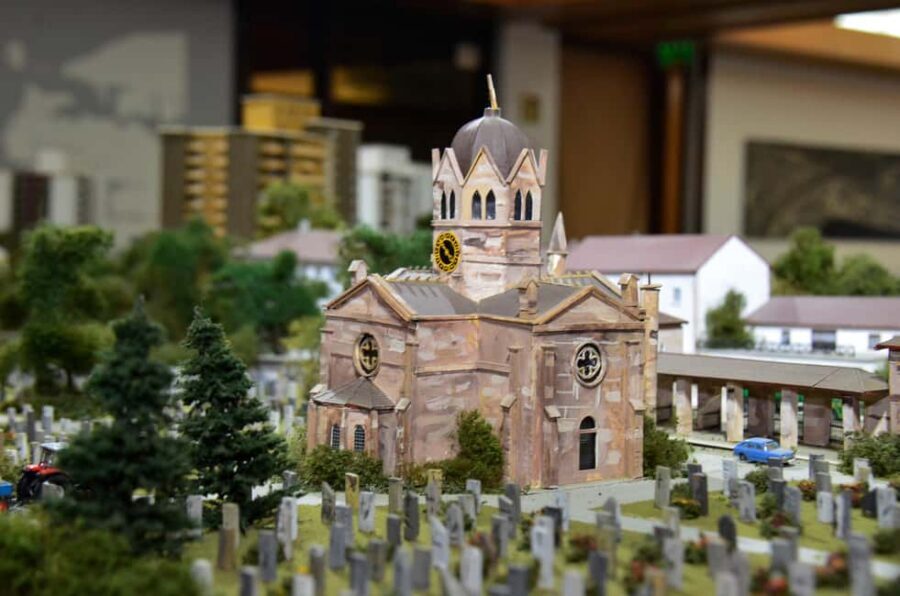
One person built this city model over 15 years. That fact can sound like a trivia bullet point—until you stand in front of the scene and realize how consistent the craftsmanship feels.
The model is also described as being built from waste materials, bulky waste, paint, and glue. So you’re not just seeing “mini buildings.” You’re seeing a conversion of everyday stuff into something that looks planned and finished.
What I love about that approach is the message it gives you as a visitor: you’re allowed to notice process. The exhibit is essentially a lesson in observation and patience. You’ll start to look at:
- the textures on small structures
- the placement of objects along streets
- the way vehicles and greenery bring motion to the still scene
- the little “cues” that make a city feel inhabited
And you don’t need to be an expert to get it. You can ask questions, and the team is happy to explain special features and background details. That interactive help is key, because it turns a visual experience into a story you understand.
Reading the streets: where your eyes should go
When I walk into a miniature city, I try to avoid the mistake of staring at only one highlight. Here, you’ll get the best payoff if you treat it like a map.
Start by taking in the overall layout of the cityscape across the 180 m². Then shift to smaller zones—streets, building edges, and the station area. You’ll notice that the model includes realism down to objects like garbage cans and fences, which is the kind of detail that makes the whole thing feel lived-in.
After you’ve got the big scene, look for the “quiet details.” In this model, that often means searching for tiny craftsmanship moments:
- hand-painted vehicles
- tree placement that feels intentional
- individual tombstones that add a weight and realism to the city’s past
If you’re with kids, you can turn this into a simple game: spot one detail you’ve never seen in another model. The model is dense enough that they’ll likely find something new every few minutes.
You can also read our reviews of more city tours in Stuttgart




Signal box realism: understanding station work in miniature
The signal box section is where the exhibit becomes more than scenery. This is the place that answers the question, What makes a station run?
You’ll see a recreated operating setup with an 8 meter long control panel and 8 control tables. Even if you don’t read every instruction, the physical size and structured layout help you understand that signalmen weren’t watching trains like passengers. They controlled movements and safety using a system.
I also like that you can get background information from the team. If you ask a few questions—How does this control table connect to what you see? What did signalmen do in this era?—you’ll connect the visuals to a real kind of work. That’s what makes the model feel educational without turning boring.
A visit that works for families: detective game and play stations
This is a rare museum-style experience that feels genuinely family-friendly. The ticket includes a free children’s detective search game at the ticket office. You just ask staff for it, and it gives kids a reason to look closely instead of just rushing to the biggest trains.
There are also two model railway play stations for kids. That matters because it’s not only “look at the cool thing.” Kids get a chance to interact in an age-appropriate way while adults can keep viewing at their own pace.
If you’re traveling with little ones, build in extra time. The model is impressive, but the kids activities help keep attention where it should be—right in the exhibit, not on boredom.
Timing tips: how to avoid the rushed feeling
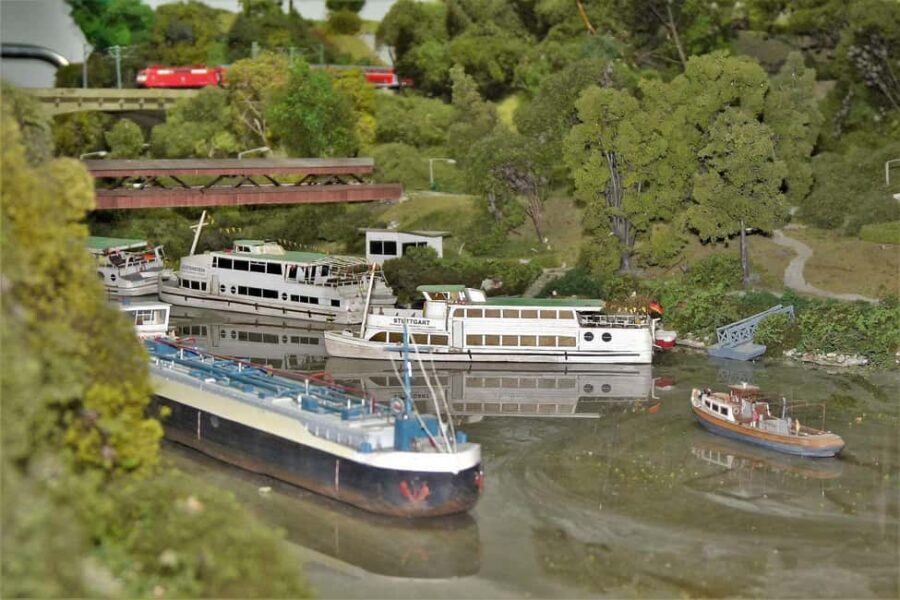
There’s no strict timeline you have to follow, but the exhibit is a lot easier to enjoy when you’re not racing. They recommend that you plan your discovery pace so you can use the last admission about one hour before closing.
That one-hour buffer is a good idea for almost anyone. It gives you time to:
- start with the overall model
- take your time around the station and signal box section
- do a slow scan for the small details like vehicles, trees, and tombstones
I also recommend you bring your curiosity. This is the kind of exhibit where stopping to ask questions early changes what you notice later. The team’s background info can act like a decoder ring for the whole scene.
Where the $10 price feels justified
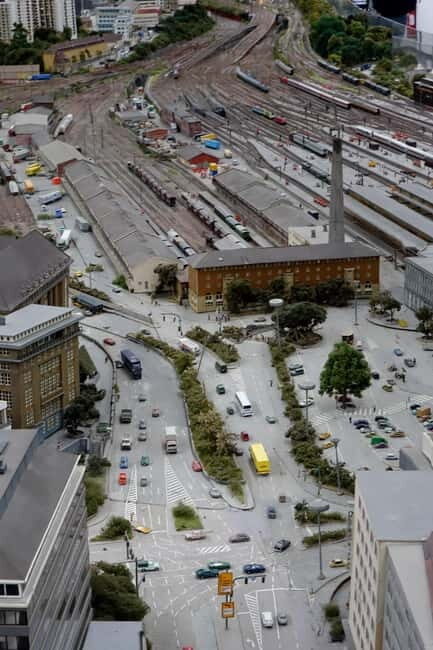
At $10 per person for a day ticket, this is one of those deals that becomes more impressive the more you look around. The model covers 180 m² and includes thousands of individually made details. You’re paying for a craft project that took 15 years and still functions as a public museum experience.
On top of that, you get value extras:
- a free kids detective search game
- two model railway play stations for children
- free luggage storage at the entrance (even until 5 pm, if you tell the ticket office)
- photos and publications are expressly permitted and welcome (with consent rules for employees and other guests)
There’s also a bonus for rail fans: you can get 50% off admission to the Märklineum in Göppingen with proof of your booking, within one year.
So yes, it’s cheap. But more importantly, it’s not cheap in a “small thing” way. It’s cheap because the experience is dense.
Practical rules that help your visit go smoothly
A few simple guidelines make the experience better for everyone:
- Please don’t touch anything. The facility is meant to last, and touching can damage delicate parts.
- Photos are allowed, and you’re welcome to take pictures.
- If you photograph employees or other guests, get their consent first.
- If you have questions, ask the team. They’re set up to help with explanations and special features.
Also, plan around the entrance step. If you need barrier-free access, there is separate access available—just let them know if assistance is needed. That keeps your visit from turning into a stress test.
Should you book this ticket? My take
Book this if you want a low-cost, high-detail stop that works for rail lovers, families, and curious adults who like to notice small things. It’s especially worth it if you’re drawn to how the station works, not just what it looks like. The recreated signal box with its long control panel is the kind of detail that makes the whole model feel alive.
Skip it or reconsider only if you strongly need fully English explanations on every label and section. Some content is shown in its original language, and while staff can help, you might not get a seamless English experience everywhere in the model.
If you have even one hour between train connections or you’re already in Stuttgart’s station area, this is an easy yes.
FAQ
Where is Miniaturwelten Stuttgart located?
It’s directly opposite Stuttgart’s main railway station, and the entrance is also reachable from nearby bus stops and the street.
How much time should I plan for the visit?
The average visit lasts about 1.5 hours, though you may want more time if you enjoy the fine details and want explanations.
How much is the ticket?
The price is $10 per person for admission.
What’s included with the ticket?
Your day ticket includes admission to the exhibition, a free children’s detective search game at the ticket office (just ask), and two model railway play stations for kids. Free luggage storage is also available.
Is there a kids activity besides playing with the model rail stations?
Yes. There’s a free children’s detective search game available at the ticket office.
Can I store luggage before or during my visit?
Yes. Free luggage storage is available at the entrance, and it can be kept there until 5 pm if you let the ticket office know.
Is the attraction wheelchair accessible?
It is wheelchair accessible. Note that there is one step, but separate barrier-free access is available—just request assistance if you need it.
Are photos allowed?
Photos and publications are expressly permitted and welcome. If you take photos of employees and other guests, you need their consent.
Is there a discount for another attraction nearby?
Yes. You can get 50% off admission to the Märklineum in Göppingen if you present your GetYourGuide booking, within one year.