REVIEW · GERMANY
Lüneburg Private Guided Walking Tour
Book on GetYourGuide →Operated by Travmonde OÜ · Bookable on GetYourGuide
Salt really shaped Lüneburg. It’s a 90-minute private guided walking tour that connects the town’s medieval streets to its white gold past, with standout stops like the 1230 Town Hall. I like how the guide links what you can see now—timber houses, crooked facades, and brick patterns—to why the town grew.
My other favorite part is the architecture angle: this is also part of the European Route of Brick Gothic, so you’re not just hearing stories in the abstract. One drawback to keep in mind: at $294 per group, it can feel pricey unless you’re traveling with enough people to spread the cost.
In This Review
- Key highlights you’ll care about
- Meet at St. Johannis: a smart start for orientation
- Salt, white gold, and why the old houses look crooked
- Hanseatic League power: merchants, money, and city status
- Brick Gothic route: what to spot in Lüneburg’s brickwork
- Town Hall from 1230: the civic core of the salt story
- Heinrich Heine’s Lüneburg link: a 15th-century building with a modern echo
- Timing and pacing: getting value in 90 minutes
- Price and group size: when $294 is good value
- Who should book this Lüneburg walking tour
- Should you book the Lüneburg Private Guided Walking Tour?
- FAQ
- Where does the tour start?
- How long is the Lüneburg private guided walking tour?
- How much does the tour cost?
- Is this a private tour?
- What languages are available?
- What’s included in the price?
- Are entrance fees included?
- What is the cancellation policy?
- Can I reserve without paying right away?
- How do I find the starting times?
Key highlights you’ll care about
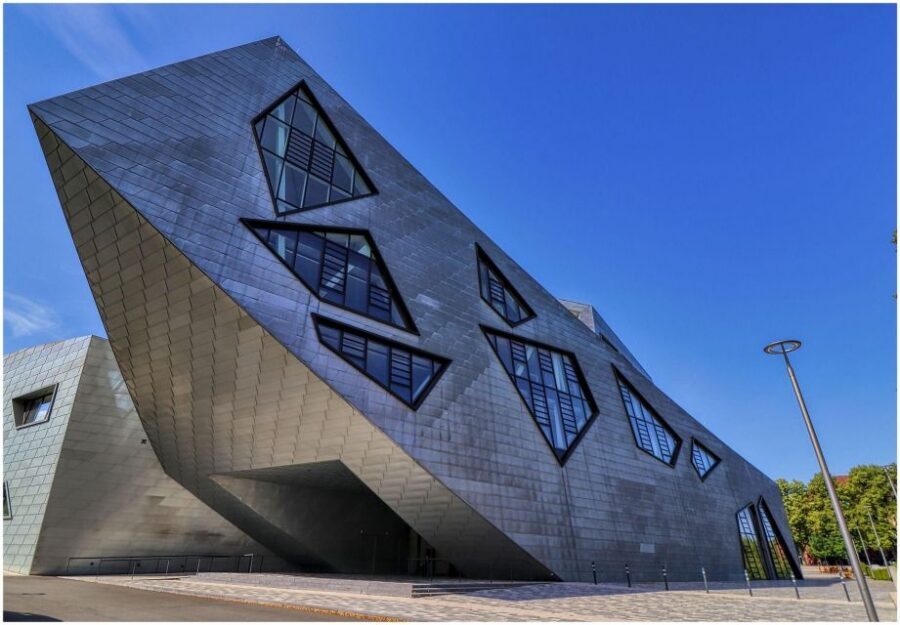
- Salt wealth made Lüneburg lean and rich: why crooked houses exist, and how “white gold” fueled growth
- Hanseatic Town connections: how merchant power shaped the streets and buildings you’ll see
- Brick Gothic architecture stops: what to look for in brick details during your walk
- Town Hall dating to 1230: one landmark that anchors the whole story
- Heinrich Heine’s Lüneburg link: a 15th-century patrician building tied to the writer’s life
- 90 minutes on foot: plenty of depth for a short visit, but not time for lots of optional entry fees
Meet at St. Johannis: a smart start for orientation
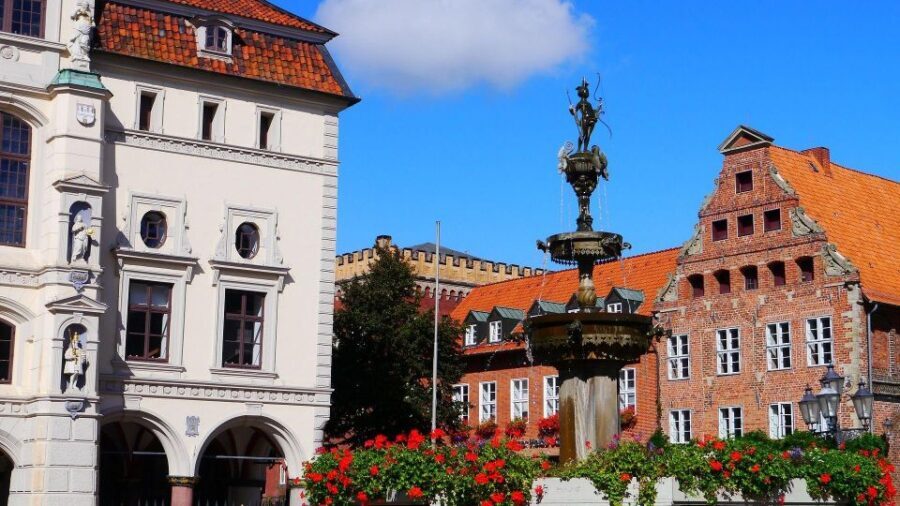
Your tour meets in front of St. Johannis Cathedral (Bei der St.Johanniskirche 2, 21335 Lüneburg). This is a good place to start because you get your bearings fast: you’re right on the edge of the historic core, so the rest of the walk feels like a natural progression.
A private group also matters here. You’ll have a local professional guide with your group only, so you can ask quick questions as you go—especially useful when the story shifts from salt to medieval city power.
If you’re arriving early, take a minute to look around the cathedral area and get a feel for the scale of the old town. Lüneburg is small enough that you can cover a lot in 90 minutes, but it’s detailed enough that paying attention helps.
You can also read our reviews of more walking tours in Germany
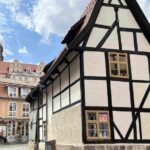
Salt, white gold, and why the old houses look crooked
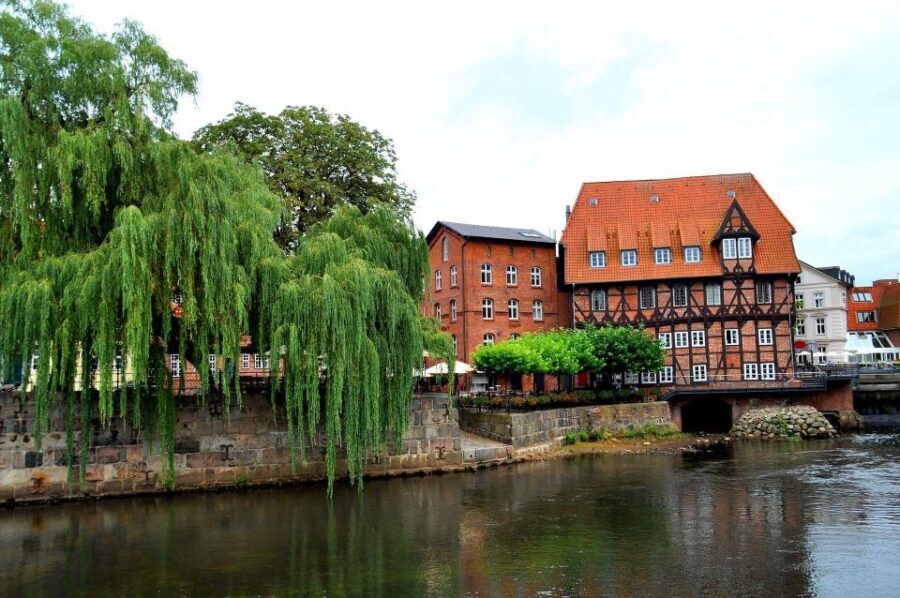
Lüneburg’s identity is salt. The tour’s center of gravity is the town’s salt-producing heritage—often called white gold—and how that wealth shaped everyday life and big civic projects. Even if you’ve heard of salt before, it’s the local, street-level angle that makes this topic click.
On the walk through the western Old Town, you’ll notice crooked and cracked houses. The guide explains the link between the buildings’ condition and the city’s salt history, and it’s one of those visual cues that turns a “fact” into something you remember. Think of it as a history lesson you can point to.
You’ll also see the mix of medieval wooden houses and later opulence. That combination is part of why Lüneburg looks like it has layers, not just one straight timeline. The salt economy gave the town staying power, and you can feel that in how the architecture evolves.
One practical thing: because this is a walking tour, you’ll be looking at building facades and details more than wandering indoors. Bring your curiosity—and take your time with what you see, even if you feel you’re just walking past it.
Hanseatic League power: merchants, money, and city status
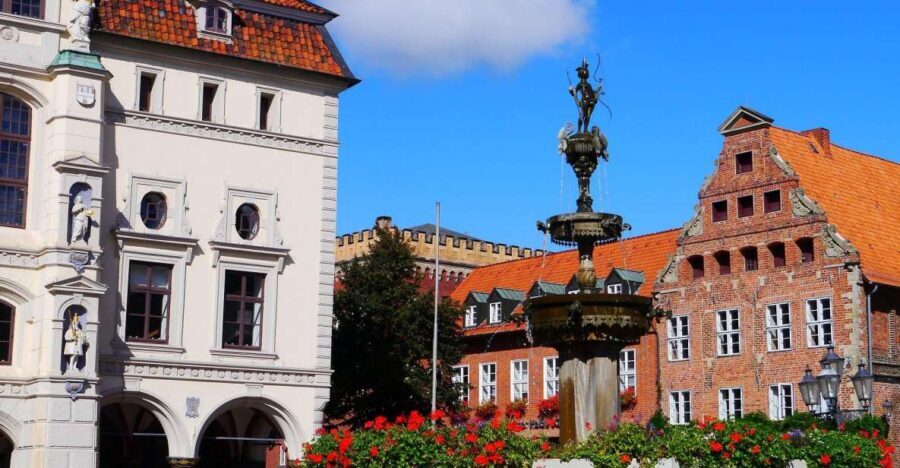
Salt didn’t only bring wealth—it helped Lüneburg grow into a prominent Hanseatic Town in Europe. You’ll learn how the Hanseatic League worked as a commercial and defensive network of merchant guilds and market towns, which is a very different idea than a single kingdom ruling everything.
This matters because it explains why certain civic buildings and street patterns exist. When a city is part of a trade superpower, you get investment. You also get pride, systems for governance, and architecture that signals importance.
As you move through town, the guide ties those big ideas back to local scenes. It’s not just “this was important.” It’s more like: here’s how economic power tends to show up in brickwork, timber, and public architecture.
If you enjoy history that has a cause-and-effect feel—money leading to construction, construction leading to institutions—this is a great match.
Brick Gothic route: what to spot in Lüneburg’s brickwork
Lüneburg is part of the European Route of Brick Gothic architecture. That label can sound like a travel brochure phrase, but on the streets it turns into real visual homework—in a good way.
Brick Gothic is less about a single look and more about how brick shapes the feel of buildings. During your walk, you’ll have chances to spot architectural style cues connected to the region and era. The guide keeps it practical, so you’re not left trying to identify styles alone.
I like this approach because it gives you a way to “read” the buildings as you pass them. You stop seeing brick as just a wall material and start seeing brick as a signature of local design and regional trade.
One consideration: if you’re hoping for lots of inside viewing, this tour is built for walking and seeing externals. You can still get a ton out of it, but plan your expectations around street-level architecture.
Town Hall from 1230: the civic core of the salt story
One of the standout highlights is the history of Lüneburg Town Hall, dating back to 1230. For a 90-minute tour, anchoring the walk around one long-lived civic site is smart. It keeps the salt and Hanseatic themes from floating around as separate topics.
When you focus on a building with roots that deep, you start to see the whole medieval logic: wealth isn’t only for private mansions. It funds institutions. It shapes laws. It funds public presence.
This is where the tour’s storytelling pays off. You’ll be able to connect the town’s salt wealth to something tangible: a place built for governance and civic authority that still matters centuries later.
Also, because it’s a private group, you can linger a bit longer if something catches your eye. Not every tour lets you slow down without feeling like you’re holding everyone up.
You can also read our reviews of more guided tours in Germany


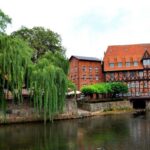
Heinrich Heine’s Lüneburg link: a 15th-century building with a modern echo
The tour also brings in a cultural thread with Heinrich Heine, the 19th-century German writer and journalist. Heine is a famous son of Lüneburg, born in the Heinrich-Heine-Haus.
This stop is a nice reset from the medieval focus. Instead of treating Lüneburg like a sealed-off past, you see how the town’s older buildings stay in use and stay part of identity. The Heinrich-Heine-Haus is a 15th-century patrician building, and it’s now housing state departments and an apartment for writers subsidized by the German state.
Even if you’re not a Heine expert, it’s a useful reminder: cities like this aren’t museums you pass through. They’re living places that keep reusing older structures for new roles.
If you love the idea of linking literature and place, this part adds extra flavor to an otherwise straight history-and-architecture walk.
Timing and pacing: getting value in 90 minutes
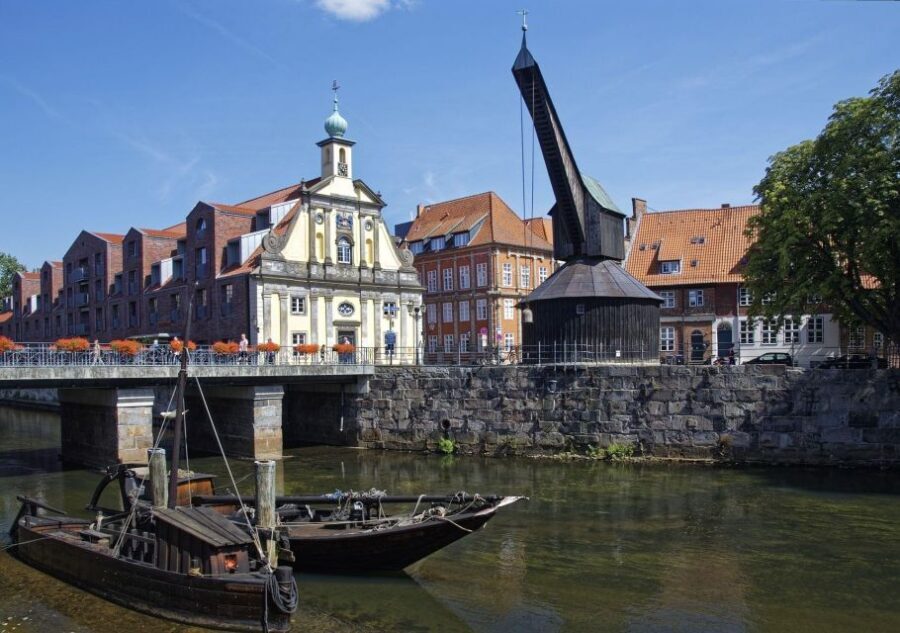
This tour lasts 90 minutes, which is a sweet spot for Lüneburg. You get enough time for multiple themes—salt heritage, Hanseatic status, Brick Gothic architecture, and key landmarks—without burning half a day.
Because it’s a private group, your guide can respond to your pace. If your focus is more architecture, you can ask questions about what you’re seeing. If your focus is story, you’ll get more context about why the town grew and how that shows up in buildings.
One practical tip: wear comfortable walking shoes and plan for outdoor time. The tour’s vibe is street observation, not indoor museum circuits.
Also, keep in mind entrance fees are not included. That matters if you were hoping to add extra paid stops. With this tour style, you’re primarily collecting history from the street and from landmarks you can view without paying.
Price and group size: when $294 is good value
The price is $294 per group up to 15 for a 90-minute tour. That pricing can be either a bargain or a splurge depending on how many people you have.
Here’s the simple math you can use:
- If you fill the group size (15 people), the cost is roughly $19.60 per person.
- If you have a smaller group, the per-person cost rises fast.
So the main value question is this: do you have enough people to make the group price work? If you’re traveling solo or as a couple, you’ll be paying for the whole private guide time. If you’re a family group, a friend crew, or two couples traveling together, it becomes much more reasonable.
One more value note from the overall feedback pattern: at least one booking felt the price-to-value wasn’t right. I take that as a reminder to match expectations to format. If you want a tour packed with lots of indoor entry tickets, this one is structured more around exterior sights and guided storytelling. You’re paying for a focused narrative walking experience, not for paid attractions.
Who should book this Lüneburg walking tour
This is a good fit if you want:
- A short, guided walk that explains what you’re seeing in Lüneburg
- A strong focus on salt heritage, Hanseatic connections, and medieval civic life
- Street-level architecture reading, including Brick Gothic themes
It may be less ideal if:
- You’re looking for a long, slow stroll with lots of breaks and optional paid entrances
- You’re traveling with just one person and hate paying the full private price
Should you book the Lüneburg Private Guided Walking Tour?
I’d book it if you’re the kind of traveler who enjoys cause-and-effect history—how one industry turns into city power, and how that power becomes buildings you can still see. The mix of salt wealth, Hanseatic role, and standout landmarks like the Town Hall (1230) gives your time structure, not randomness.
I wouldn’t book it as a solo “splurge” unless you’re sure you’ll stay fully engaged for the entire 90 minutes and don’t need paid attractions. For small groups, do the math on the $294 total. If the cost per person still feels fair, you’ll likely enjoy how the guide ties Lüneburg’s medieval charm to the economic story behind it.
One final note: since it’s provided by Travmonde OÜ, you’re getting a professionally run private walking format with a local professional guide for your group.
FAQ
Where does the tour start?
The meeting point is in front of St. Johannis Cathedral, Bei der St.Johanniskirche 2, 21335 Lüneburg.
How long is the Lüneburg private guided walking tour?
The tour duration is 90 minutes.
How much does the tour cost?
It costs $294 per group, for up to 15 people.
Is this a private tour?
Yes. It’s a private group tour.
What languages are available?
The live tour guide is available in English and German.
What’s included in the price?
Included is a local professional guide who will be with your group only, and there may be possible customization on the spot.
Are entrance fees included?
No. Entrance fees are not included.
What is the cancellation policy?
You can cancel up to 24 hours in advance for a full refund.
Can I reserve without paying right away?
Yes. You can reserve now and pay later.
How do I find the starting times?
The tour duration is fixed at 90 minutes, and starting times depend on availability.