REVIEW · GERMANY
Augustusburg Castle: Guided tour
Book on GetYourGuide →Operated by Augustusburg/Scharfenstein/Lichtenwalde Schlossbetriebe gGmbH · Bookable on GetYourGuide
A Renaissance fortress with serious water-plumbing stories. On this Augustusburg Castle guided tour, I like how the Lindenhaus electoral chambers bring 16th-century court life into focus, and how the Cranach altar connects art to the people who ruled here. The one drawback: it’s only 1 hour and the live guide is German, so if you want lots of slow time in rooms, you’ll feel rushed.
Augustusburg Castle sits high above the Zschopau Valley on the edge of the Ore Mountains, and that altitude isn’t just for views. It’s also part of the point: you’ll learn how this place worked day to day—right down to its water system—while multimedia elements help you picture the castle in the 1500s.
In This Review
- Key highlights you’ll actually remember
- Augustusburg Castle’s setting: more than a pretty hilltop
- Lindenhaus electoral chambers: how court life worked day to day
- The castle church and the Cranach altar: art tied to a family
- Fountain house and the well system: the castle’s brain for water
- Multimedia and a tight 1-hour pace: efficient, not exhausting
- Price and value: is $9 worth your hour?
- Who this tour suits best (and who should adjust expectations)
- What to do before and after the tour
- Should you book Augustusburg Castle’s guided tour?
- FAQ
- FAQ
- How long is the Augustusburg Castle guided tour?
- What is included in the tour price?
- What language is the live guide?
- Where do I meet the guide?
- Does the tour skip the ticket line?
- Is the tour price $9 per person?
- Are meals included?
- Are museum and exhibition tickets included?
- Is free cancellation available?
Key highlights you’ll actually remember
- Lindenhaus electoral chambers: everyday life and court routine, explained in plain terms.
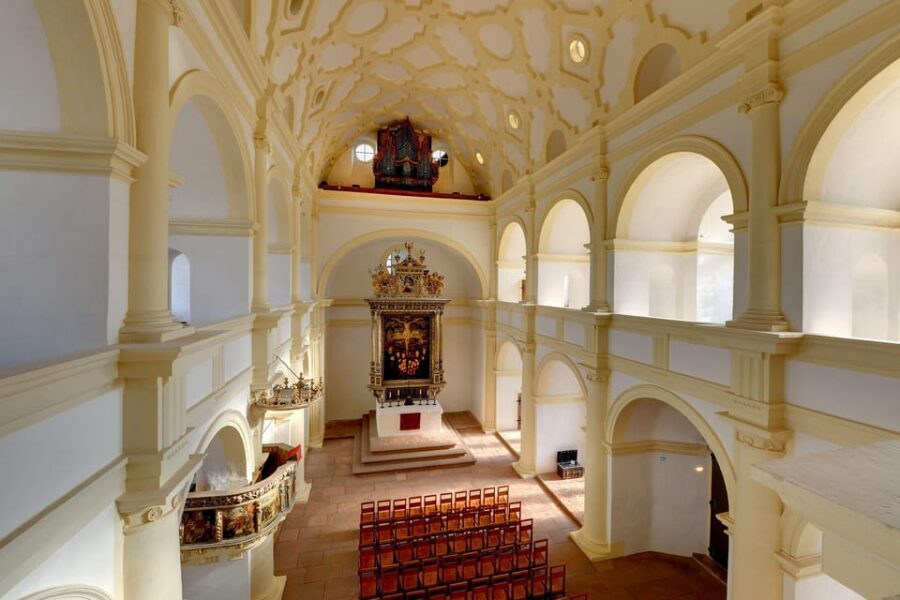
- Lucas Cranach the Younger altar piece: the only surviving portrait of Elector August and Anna with their children.
- Castle church stop: art history that links directly to the ruling family.
- Fountain house engineering: second deepest fountain in Saxony.
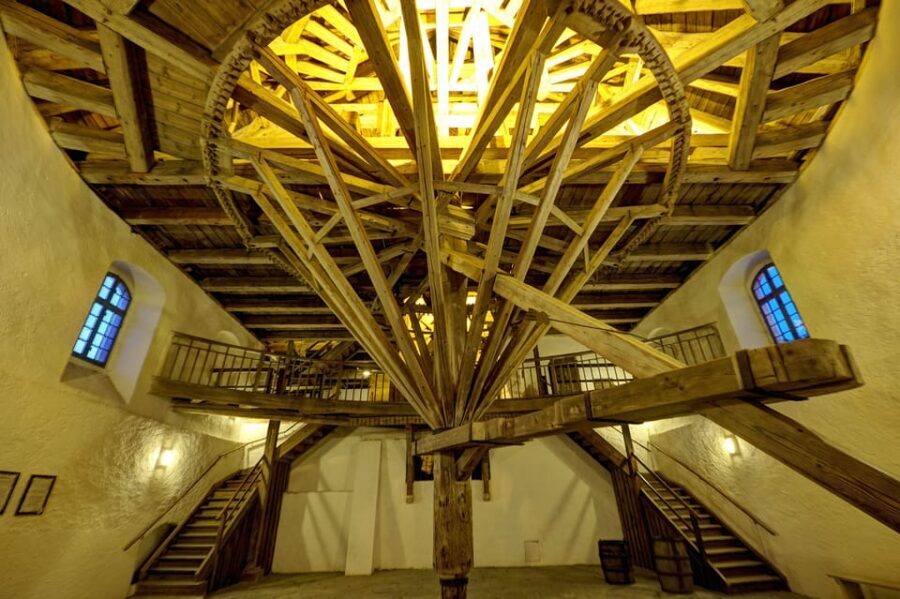
- Oldest preserved driving galley in Saxony: an early “machine” used for the castle’s water supply.
Augustusburg Castle’s setting: more than a pretty hilltop
Augustusburg Castle towers above the Zschopau Valley, right at the edge of the Ore Mountains. That location matters because it explains why Elector August of Saxony poured money and ambition into a Renaissance castle here, not somewhere flatter.
Once you’re inside, the castle’s height starts to feel practical, not just dramatic. You get the sense that the castle was built as a strong symbol of power—but also as a living system with real logistics, real maintenance, and real daily routines.
You can also read our reviews of more guided tours in Germany


Lindenhaus electoral chambers: how court life worked day to day
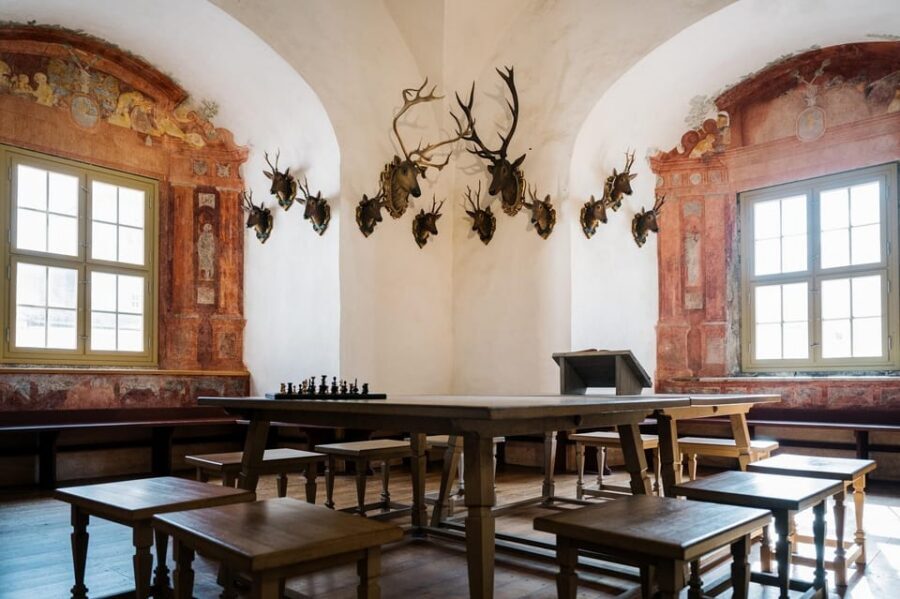
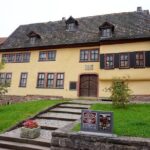
The heart of the tour is the visit to the Lindenhaus with the electoral chambers. This is where your guide connects the big idea—power—with the human details. You’ll hear what life looked like for Elector August’s court, not just what the building looks like from the outside.
Expect explanations of everyday routines and court behavior, the kind of information that makes rooms feel less like “museum space” and more like an operating workplace. In a place like this, small details are usually the difference between a quick look and a meaningful hour.
One practical thing: you’ll likely spend your time moving between the most important rooms rather than trying to read every label. With only 1 hour, the guide keeps you on the main thread, so you leave understanding the story rather than collecting random facts.
The castle church and the Cranach altar: art tied to a family
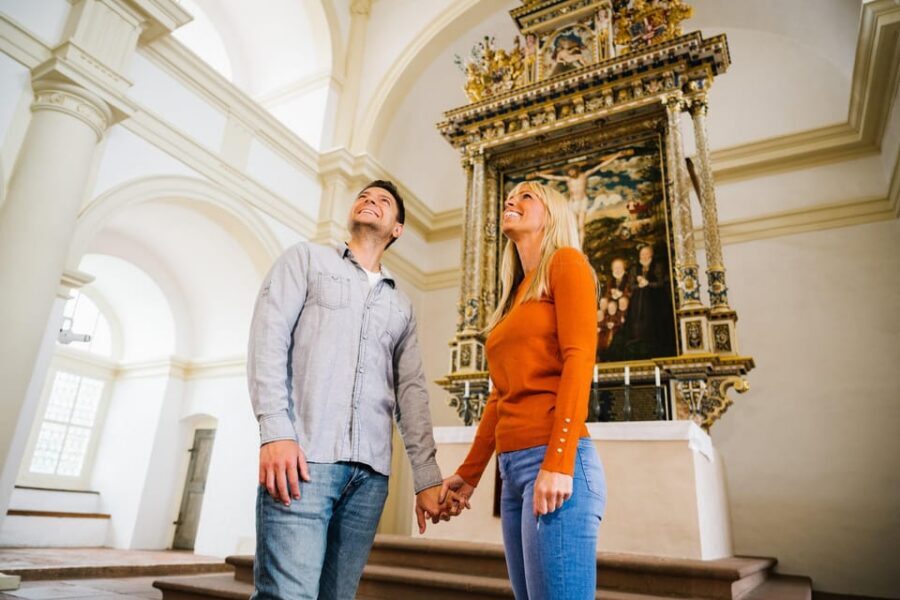
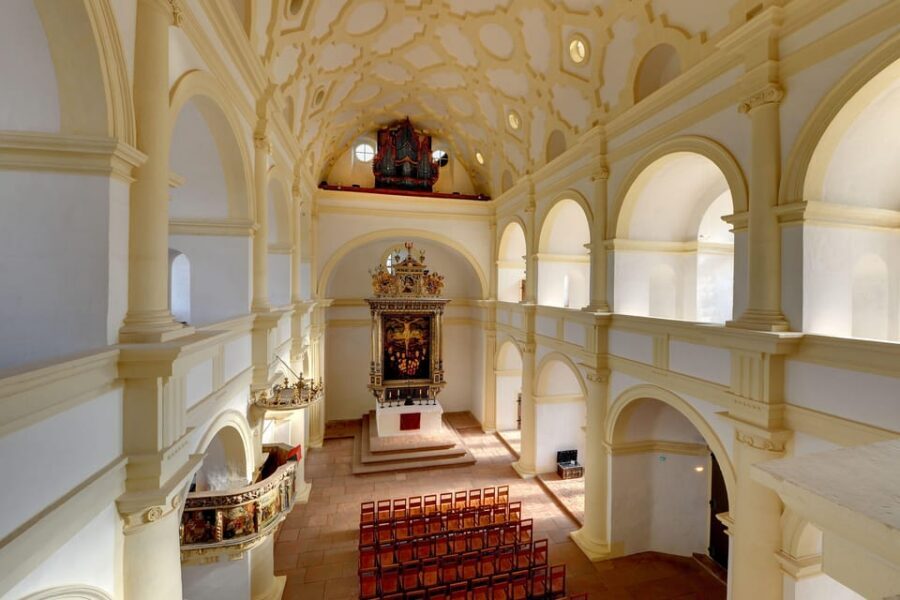
Next comes the castle church, where you’ll see the Cranach altar painted by Lucas Cranach the Younger. This is the tour’s art moment, but it’s not treated like a detour.
What makes it special is the subject: it features the only surviving portrait of Elector August and Anna and their children. So you’re not just looking at a religious artwork. You’re looking at how the ruling family wanted to be remembered—and how art served politics, status, and legitimacy.
If you like Renaissance art when it’s explained in human terms, this stop is a strong one. Your guide’s job here is to connect what you see—faces, symbols, and composition—to the people who lived behind these walls.
Tip for your visit: stand back for a minute before you move in close. The altar piece can register better as a full scene first, then your eyes start catching individual details.
Fountain house and the well system: the castle’s brain for water
Now for the stop that feels almost like a workshop—though it’s inside a castle. You’ll visit the well house, including the second deepest fountain in Saxony. That’s an impressive technical detail, but the tour gives you the “why,” not just the number.
At this elevation—more than 500 meters—the castle needed a water supply that could be managed reliably. The tour explains how the system supported the castle’s operation, turning the well from a cool fact into an essential part of castle life.
Here’s the twist: you’ll also see the oldest preserved driving galley in Saxony. Think of it as a piece of early water-lifting technology. It’s the kind of object that makes you look at “function” the way you’d look at “architecture.”
The result is a tour that mixes power and practicality. You get the ceremonial side in the chambers and church, then you get the engineering side in the fountain house.
Multimedia and a tight 1-hour pace: efficient, not exhausting
This guided tour runs for 1 hour. That length is short enough to keep things focused, and long enough for a real arc: court life → art/identity → water logistics.
Multimedia elements support the walkthrough, so you’re not stuck only with static displays. They help you build a mental picture of the 16th century as you move room to room, instead of trying to imagine it all by yourself.
If you’re someone who gets tired of tours that stretch on forever, the pacing here can feel refreshing. If you’re someone who prefers slow time and long photo breaks, plan a little extra after the tour to linger where you care most—especially if you want to revisit the church area.
Also, the tour includes skipping the ticket line, which helps you start smoothly at the main entrance. Less waiting means more time for the actual story.



Price and value: is $9 worth your hour?
At $9 per person for a live guided tour, the value comes from what you get packed into the hour: access to the electoral chambers area, the castle church with the Cranach altar, and the well house with key water-supply features.
For a guided experience, that’s a bargain—especially because you’re not just “seeing rooms.” You’re getting interpretation: everyday court life, what the Cranach altar depicts in the context of the ruling family, and how the well system kept the castle running at altitude.
The trade-off is that museum exhibitions and additional museum ticket areas are not included. If you’re the type who wants to spend extra time wandering through exhibitions on your own, you may need separate entry tickets after the tour.
Still, for many people, this is the perfect first look: you understand what matters most, then you decide whether you want more independent time.
Who this tour suits best (and who should adjust expectations)
This tour fits best if you like structure and a clear storyline. You’ll appreciate it if you enjoy:
- Renaissance art when it’s tied to real people and real power
- Practical engineering details explained simply
- A guided format that keeps you from getting lost in a big building
It may feel less ideal if:
- You need long, quiet time to read everything at your own pace
- You don’t want frequent reminders not to touch things (some guides can be very strict about behavior in historical rooms)
- You require a language you don’t have here—German is the stated guide language
One more thing to consider: the tour is only 1 hour. Even with good guiding, you’ll feel like you’re sampling key areas rather than covering every corner.
What to do before and after the tour
Before you go, come with a simple goal: pick one theme—court life, art, or water systems—and let the tour guide you there. After the tour, you’ll know which theme grabbed you most.
After the tour, you can choose what to repeat. If the Cranach altar stood out, focus your independent time around the church area. If the well house grabbed your attention, look for how the castle’s design connects to the idea of water and logistics.
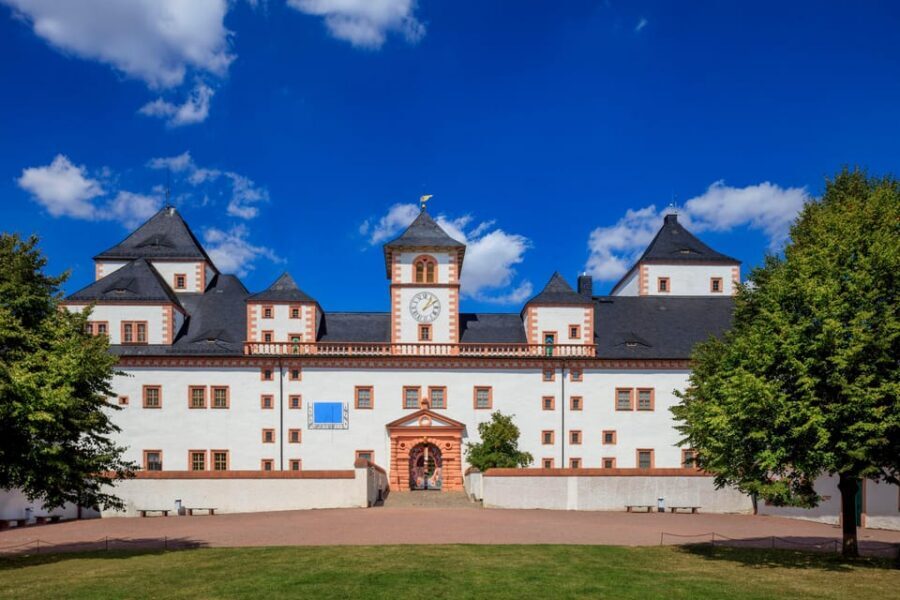
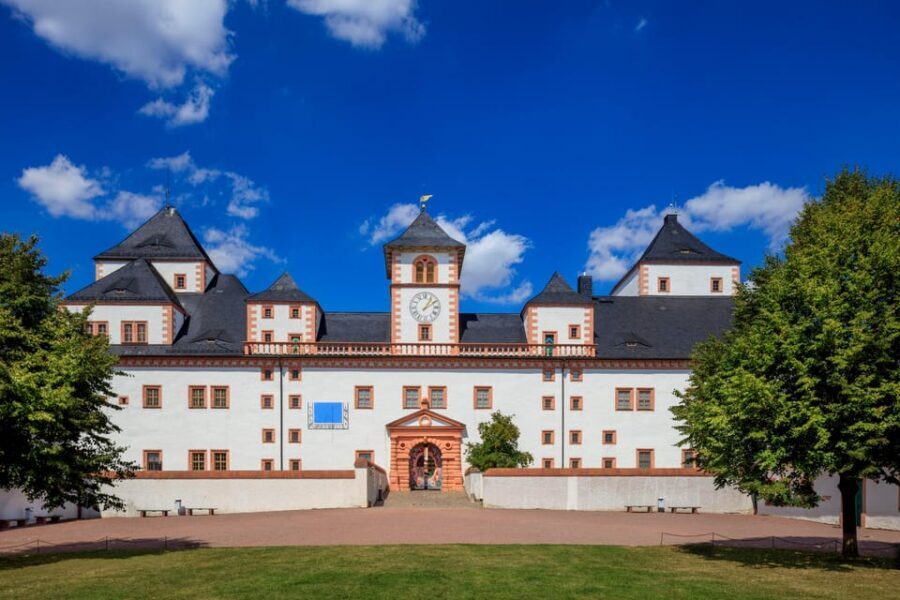
For photos: the castle’s exterior views are part of the overall experience, since the location above the Zschopau Valley is part of the “why” of the castle. Even if you only get a few minutes before or after, it helps you orient yourself.
Should you book Augustusburg Castle’s guided tour?
If you want a smart, low-cost way to understand Augustusburg Castle in one hour, I’d say yes. The price is strong, the stops are well chosen, and the mix of electoral life, Cranach art, and water-supply engineering gives you a fuller picture than a standard “room viewing” tour.
Book it especially if you’re German-comfortable or you don’t mind listening in German, and if you like tours that keep moving and tell a story. Skip this one only if you need a longer visit, you don’t want strict guidance on museum behavior, or you’re expecting the guide to cover extra museum exhibitions that aren’t included.
FAQ
FAQ
How long is the Augustusburg Castle guided tour?
The tour lasts 1 hour.
What is included in the tour price?
You get a personal live tour guide, entrance to the Lindenhaus electoral chambers, access to the castle church with the Cranach altar, and a visit to the well house with the second deepest well.
What language is the live guide?
The tour is guided in German.
Where do I meet the guide?
Meet at the main entrance.
Does the tour skip the ticket line?
Yes, the tour includes skip-the-ticket-line entry.
Is the tour price $9 per person?
Yes, the price is listed as $9 per person.
Are meals included?
No. Meals and beverages are not included.
Are museum and exhibition tickets included?
No. Entry tickets to museums and exhibitions are not included.
Is free cancellation available?
Yes—free cancellation is available up to 24 hours in advance for a full refund.