REVIEW · GERMANY
Mustard-Guided Manufaktur Sightseeing, tasting and factory sales
Book on Viator →Operated by Quedlinburger Senf-Manufaktur · Bookable on Viator
Mustard tastings meet factory history in Quedlinburg. The Quedlinburger Senf-Manufaktur runs a guided visit in historical rooms, housed in the former horse stable of the Dippe Saatgut AG, with a focus on how mustard tastes, smells, and works as both seasoning and traditional remedy. I love the fresh mustard tasting and the way the guide connects mustard history to real senses (taste, smell, and feel). One big consideration: mustard allergy sufferers should skip this one.
The whole experience lasts about 1 hour and keeps things small, with a maximum of 25 people. You get a mobile ticket, hand disinfection is available, and a mouth/nose mask is mandatory.
In This Review
- Key Things You’ll Notice Fast
- A Mustard Tour That Feels Like More Than a Tastings Stop
- Where You Go in Quedlinburg and What the Timing Means
- Entering the Historical Rooms and the Dippe Saatgut Stable Setting
- The Guided History: Quedlinburg Mustard Factory Origins
- Yellow vs Brown Mustard: What You’ll Actually Learn to Taste
- More Than Flavor: Smell, Feel, Spices, and Seasoning
- Visiting the Manufactory and Seeing How It Fits Together
- Factory Sales After the Tour: What You Can Buy
- The Atmosphere: Friendly, Relaxed, and Built for Real Questions
- Price and Value: What $14.82 Gets You
- Who Should Book This Tour (and Who Might Skip It)
- Practical Tips Before You Go
- Should You Book This Mustard-Guided Manufaktur Tour?
- FAQ
- How long is the mustard manufactory tour in Quedlinburg?
- What time does the tour start, and how often does it run?
- Where do I meet for the tour?
- What happens during the experience?
- What products are available during the factory sales?
- Is a mask required?
- Is the group small?
- Is it easy to reach using public transportation?
- Can I cancel and get a refund?
Key Things You’ll Notice Fast
- Former horse stable setting at Quedlinburger Senf-Manufaktur (the Dippe Saatgut AG connection)
- Quedlinburg mustard factory history explained in a guided format
- Yellow vs brown mustard tasting so you can actually tell the difference
- Medicinal use talk plus seasoning know-how tied to how mustard behaves in food
- Factory sales right after the tour with mustard, chili paste, and herb salt
- Small group feel (max 25) with table spacing and hand disinfection
A Mustard Tour That Feels Like More Than a Tastings Stop
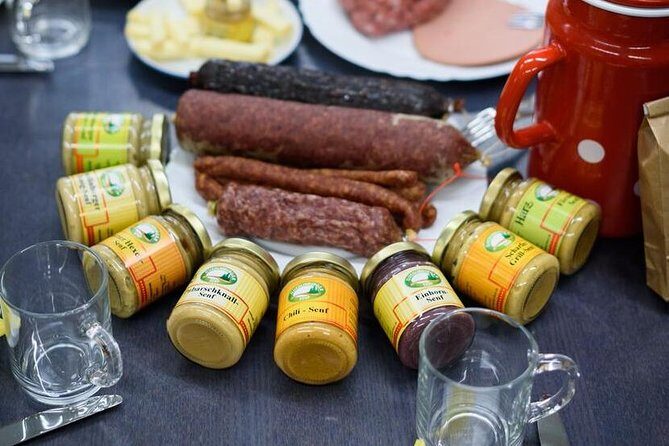
If you’re the type who likes food tours that teach you something real, this one hits a sweet spot. You’re not just sampling jars. You’re learning why mustard is built the way it is—its character, its flavor shifts, and how people use it beyond the obvious sandwich role.
I also like that it’s practical. The tour is built around senses—taste, smell, feel—and around how spices and seasoning connect to everyday cooking. That means when you leave the manufactory area, you’re more likely to know what to do with what you bought, instead of treating it like a souvenir.
You can also read our reviews of more food & drink experiences in Germany
Where You Go in Quedlinburg and What the Timing Means
This experience meets at Quedlinburger Senf-Manufakturehemaliger Hof der Dippe-Saatgut AG, Neuer Weg 23, 06484 Quedlinburg, Germany. It starts at 11:00 am, and it runs three times a week on Tue, Fri, and Sat.
The duration is about 1 hour, which matters more than it sounds. You can fit this between sightseeing blocks without it swallowing your whole morning, and you still get guided storytelling plus tasting plus shopping.
For planning: the tour ends back at the meeting point, so you don’t have to worry about a confusing final transfer. That makes it easier to pair with other Quedlinburg stops on the same half-day.
Entering the Historical Rooms and the Dippe Saatgut Stable Setting
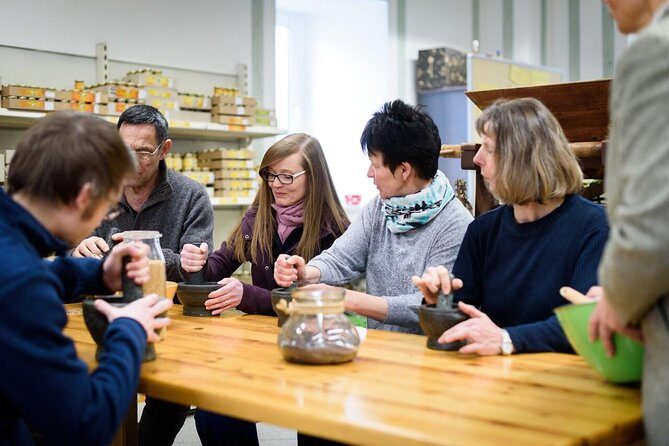
The setting is part of the experience. The manufactory tour takes place in historical rooms, specifically in a former horse stable connected to the Dippe Saatgut AG. That gives the visit a grounded feel. You’re not imagining a factory story in the abstract—you’re in the space where that manufacturing life happened.
This kind of setting also makes the guide’s explanations stick. When the tour frames mustard production inside a historic working environment, you get a clearer sense of how local industry was built into daily life—more than a modern “food attraction.”
And since the experience is guided, you’re not left guessing what you’re looking at or why any of it matters. The whole flow is designed to connect the building, the process, and the product.
The Guided History: Quedlinburg Mustard Factory Origins
One of the core pieces you should expect is an introduction to the history of the Quedlinburg mustard factory. The tour doesn’t treat mustard like a generic condiment. It positions mustard as a local craft with a production story and a reputation that people understood well enough to keep using over time.
That historical frame is valuable for two reasons.
First, it makes the tasting more meaningful. You’re not just trying flavors; you’re seeing how they relate to a specific regional identity. Second, it helps you understand why mustard is tied to both cooking and traditional uses. It’s not presented as a gimmick, but as knowledge that developed alongside production.
The experience also has a relaxed tone, and the topic is presented in a friendly, multi-sided way. In practical terms, that means you’re free to ask questions about what you’re tasting without it feeling like a classroom.
Yellow vs Brown Mustard: What You’ll Actually Learn to Taste
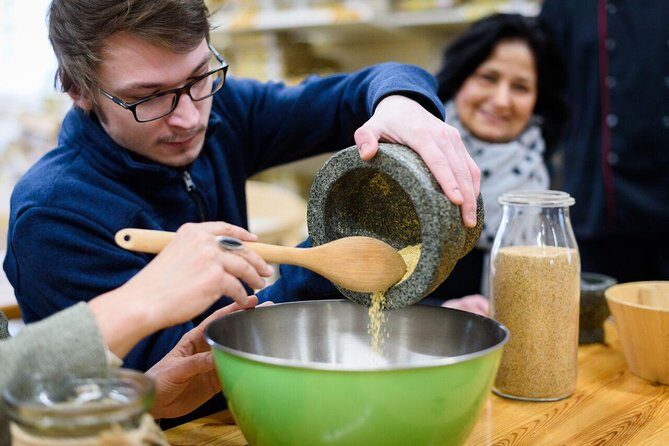
This tour specifically sets aside time for tasting mustard, and it includes the difference between yellow and brown mustard. That’s a great inclusion because those two styles are easy to confuse when you only know them from jars.
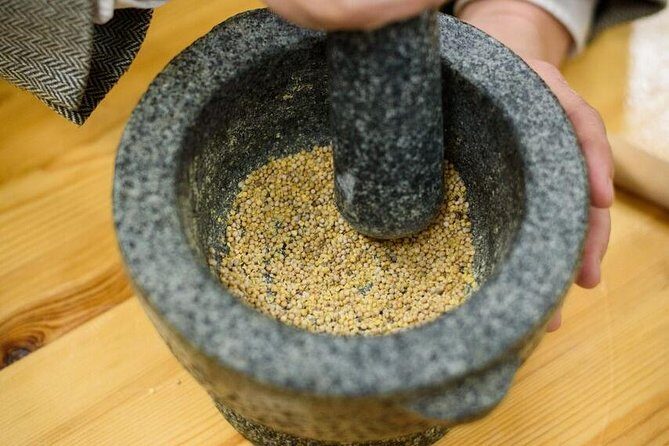
Here’s the useful part: you’ll taste the differences directly, not just read about them. The guide’s focus on senses—taste, smell, and feel—pushes you to pay attention to what changes in your mouth as well as what changes on your nose.
It also helps that the tour frames mustard as both seasoning and traditional remedy agents. Even if you don’t adopt the “remedy” idea personally, hearing how mustard is described in that role gives you a deeper context for why people historically cared about it.
You can also read our reviews of more guided tours in Germany

More Than Flavor: Smell, Feel, Spices, and Seasoning
Mustard isn’t one note. It’s sharp, aromatic, and it can shift depending on preparation and style. That’s why the tour leans into senses: you don’t just get a quick taste and move on.
You’ll hear about mustard as a seasoning agent and as a remedy agent, plus the role of spices and seasoning in shaping flavor. That matters because most people only think of mustard as an ingredient that adds tang. After this, you’ll be more likely to think in terms of how mustard carries spice character and how it changes the overall feel of a dish.
If you cook at home, you’ll probably enjoy this even more. You’ll leave with a clearer sense of how to use mustard beyond the default application, because the tour gives you a framework tied to real-world use.
Visiting the Manufactory and Seeing How It Fits Together
After the history and the mustard basics, the tour continues with a visit to the manufactory. While the exact production steps aren’t spelled out in the tour description you provided, the intent is clear: you’ll see the manufactory environment where mustard is produced, and then you’ll continue into tasting and sales.
The flow matters. You start with context (history and how mustard is understood), then you move into tasting and finally into factory sales. It keeps your brain engaged in a logical order: learn → taste → buy with purpose.
Also, because the group cap is 25 people, you’re less likely to feel rushed. It still moves as a group, but the setup aims to keep the experience comfortable.
Factory Sales After the Tour: What You Can Buy
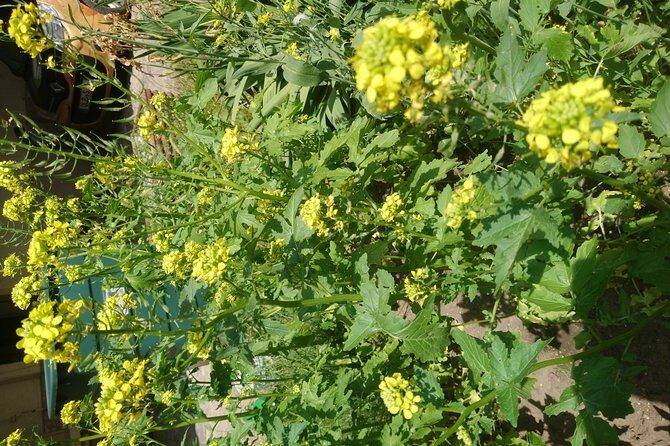
The experience ends with factory sales. You’ll have the chance to buy mustard, and also items like chili paste and herb salt.
This is one of those details that makes the tour practical. If you’re only buying a small jar of mustard, it can feel like you’re guessing. With this format, you’ve already been tasting and learning the differences, so your purchase is based on something you experienced.
If you like bringing home food that you’ll actually use, this is a smart way to do it. Chili paste and herb salt expand your options beyond the classic mustard-and-mayo moment. Even if you’re not sure what you want yet, tasting first helps you narrow down.
The Atmosphere: Friendly, Relaxed, and Built for Real Questions
The strongest praise points from past experiences are about tone and communication. People highlight a friendly guide who covers the subject in a versatile way, and they also mention a loose, relaxed atmosphere with nice people and a really good product.
That’s exactly what you want in a small food tour. If you feel comfortable asking questions, you get more out of the tasting portion. And if the shopping feels like the natural continuation of the tasting—not a hard sell—you’re more likely to leave happy with what you bought.
You also get some practical comfort measures. The tour mentions generous table settings, hand disinfection availability, and that wearing a mouth/nose mask is mandatory.
Price and Value: What $14.82 Gets You
At $14.82 per person, this tour is priced like an accessible local experience rather than a high-end guided attraction. For that amount, you’re getting more than a quick sample: you’re getting a guided history of the Quedlinburg mustard factory, tasting (including the yellow vs brown comparison), a manufactory visit, and then access to factory sales.
That’s why it feels like good value. The time is short—about an hour—but the content is stacked. You’re paying for a guided explanation plus sensory tasting plus the chance to purchase based on what you learned.
Also, the booking behavior suggests it’s a popular slot: on average it’s booked 34 days in advance. That doesn’t automatically mean you should rush, but it’s a hint to check dates if you’re traveling on a busy weekend.
Who Should Book This Tour (and Who Might Skip It)
This experience is a great match if you enjoy:
- food tours that focus on senses, not just photos
- learning how a regional product is made and used
- tasting mustard styles and taking home items you’ll use
It’s also a strong pick for people who like guided experiences that feel friendly and not overly formal. The tone described with previous sessions suggests you won’t feel put on the spot.
Two groups should think twice. First, mustard allergy sufferers should avoid it. Second, if you dislike guided tastings or don’t want any mask-required experiences, you might find it less comfortable.
Service animals are allowed, and the site is near public transportation, which helps if you’re moving around Quedlinburg without a car.
Practical Tips Before You Go
Here are a few smart moves that fit the way the tour is designed:
- Eat lightly beforehand so tasting feels enjoyable, not overwhelming.
- Pay attention during the sensory parts—smell and feel are part of the lesson, not an afterthought.
- If you buy products, think about how you’ll use mustard at home. The tour is built to help you choose with confidence.
- Bring a mask for the mandatory requirement.
Also, the tour group limit is 25 travelers, so expect a small-group vibe rather than a big crowd.
Should You Book This Mustard-Guided Manufaktur Tour?
I’d book it if you want a short, focused experience that mixes history, guided tasting, and real shopping. For the price, it’s one of those rare food tours where you leave with both knowledge and products you can actually use.
Skip it if mustard is a problem for you—especially if you have any mustard allergy concerns—because the tasting is central to the experience.
If your Quedlinburg plan includes time on a Tue, Fri, or Sat at 11:00, this is a very practical way to spend an hour: you’ll learn something, taste something, and walk away with options like chili paste and herb salt that go beyond a single condiment jar.
FAQ
How long is the mustard manufactory tour in Quedlinburg?
It lasts about 1 hour.
What time does the tour start, and how often does it run?
It starts at 11:00 am and runs three times a week: Tue, Fri, and Sat.
Where do I meet for the tour?
The meeting point is Quedlinburger Senf-Manufakturehemaliger Hof der Dippe-Saatgut AG, Neuer Weg 23, 06484 Quedlinburg, Germany.
What happens during the experience?
You get a guided introduction to the history of the Quedlinburg mustard factory, a visit to the manufactory, mustard tasting, and then factory sales.
What products are available during the factory sales?
You can purchase mustard, chili paste, and herb salt.
Is a mask required?
Yes. Wearing a mouth/nose mask is mandatory.
Is the group small?
Yes. The maximum group size is 25 travelers.
Is it easy to reach using public transportation?
The location is described as being near public transportation.
Can I cancel and get a refund?
Yes, there is free cancellation. You can cancel up to 24 hours in advance for a full refund.