REVIEW · BERLIN
Rickshaw Sightseeing City Tours Berlin – Rikscha Tours
Book on Viator →Operated by Rikscha & Bier Bike & Party Beer Bike - Leo Rickshaw Tours · Bookable on Viator
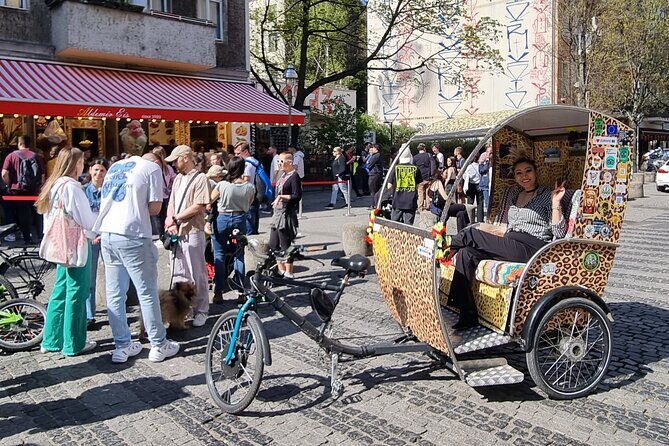
Berlin moves fast on four wheels. This rickshaw tour strings together big Berlin moments with onboard Wi‑Fi and a warm blanket for chilly evenings, plus the kind of close-up views buses never give you.
You’ll ride past major sights in a tight loop from the Brandenburg Gate area through the Wall-era checkpoints and on toward Berlin’s lively central districts. One thing to keep in mind: while many outings run smoothly, there have been past reports of missed meet-ups or cancellations due to cold-weather equipment problems, so do a quick confirmation and keep a backup plan for the day.
In This Review
- Key Things You’ll Remember
- Entering Berlin Up Close From the Rickshaw
- Comfort Gear That Actually Matters in Berlin
- Pickup Near Brandenburg Gate, Plus How the Tour Runs
- How You Fit Huge Berlin Into 1–4 Hours
- Brandenburg Gate to the Reichstag: Power, Design, and Turning Points
- The German Chancellery: Modern Transparency as a Design Choice
- Tiergarten and the Soviet War Memorial: The Cost of Victory
- Potsdamer Platz and Topography of Terror: City Life on Top of Hard Edges
- Berlin Wall Memory Stretch: From Memorials to Checkpoint Charlie
- Gendarmenmarkt to Konzerthaus: Elegant Berlin and Who Built It
- Bebelplatz and Neue Wache: Books, Memory, and War’s Aftermath
- Museum Island and the Cathedral Area: UNESCO Meets Everyday Street Life
- Nikolaiviertel and Alexanderplatz: Old Neighborhoods, Then the Big City Pulse
- East Side Gallery: The Wall as Art
- The Guide Matters: Music, Humor, and Photo Ops
- Tickets: What’s Usually Included, What Isn’t
- Value for Money: $105.72 Per Group (Up to 2)
- The Main Risk to Know Before You Go
- Should You Book This Berlin Rickshaw Tour?
- FAQ
- How long is the rickshaw sightseeing tour?
- How much does the tour cost?
- Is pickup available from my hotel?
- Where does the tour start and end?
- Is the tour offered in English?
- What’s included on the ride?
- Are entry tickets included for the sights?
- How big is the group?
- What happens if the weather is poor?
- Is there a cancellation option?
Key Things You’ll Remember
- Close-up landmark views instead of a bus window: You’ll feel the scale of places like the Reichstag area and Potsdamer Platz.
- Wi‑Fi and warmth built into the ride: Use the internet as you roll, and stay cozy with the provided blanket.
- Music and photo help included: You can request music, and your guide can act as a personal photographer.
- A lot of stops, kept moving: Most are quick visual stops, designed for a 1–4 hour window.
- Private tour for up to 2: Easier conversation and less “group herding.”
- Consider reliability and weather: Good weather matters, and there have been occasional start-time hiccups reported.
Entering Berlin Up Close From the Rickshaw
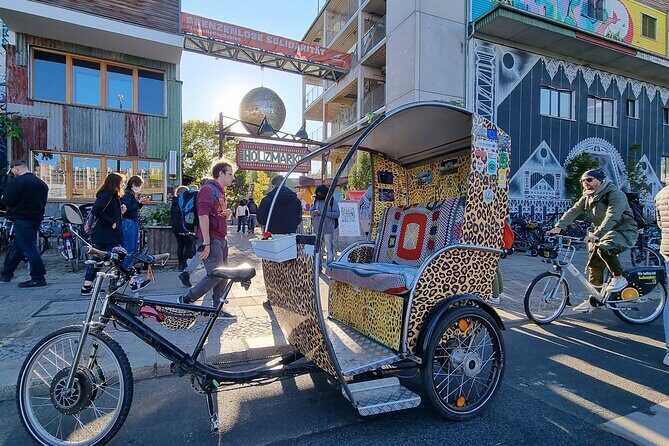
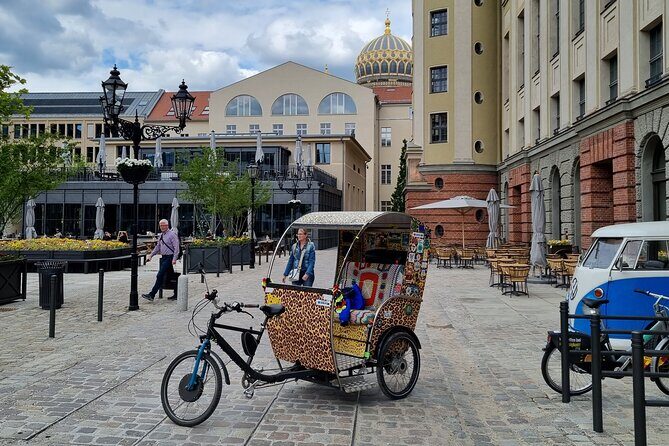
Berlin is built for long walks—but it also rewards smart shortcuts. From the moment you roll past the Brandenburg Gate area, the rickshaw format does something buses can’t: it puts you at street level, close to stone, façades, and the details people rush past on foot.
The best part is how the ride changes your tempo. You’re not doing a marathon. You’re bouncing from one “wait, I want to see that up close” moment to the next, with enough time to look, listen, and snap photos without constantly scanning for the next subway line.
You can also read our reviews of more city tours in Berlin
Comfort Gear That Actually Matters in Berlin
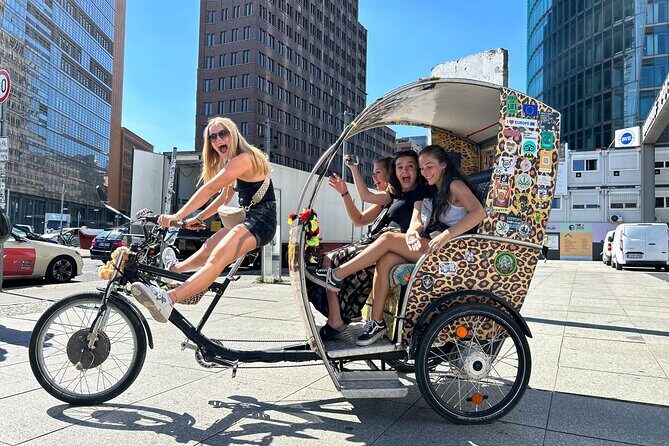
This isn’t a take-a-seat-and-freeze tour. You get a warm blanket, which sounds simple until you’re moving outdoors in an evening chill and don’t have to bargain with your coat the whole time.
You also get onboard Wi‑Fi, which is handy for map-checking, translating signs you can’t quite read from the street, and keeping your phone charged for photos. If you’re traveling with a friend and want to coordinate dinner or museum plans right after, this saves time.
And if you like a bit of atmosphere while rolling through iconic streets, you can add music on request.
Pickup Near Brandenburg Gate, Plus How the Tour Runs
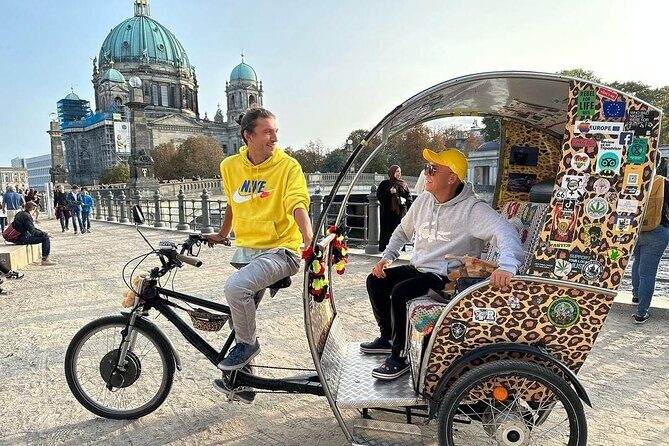
The tour starts at Brandenburger Tor (10117 Berlin) and ends back at the meeting point. Pickup is offered within a 2 km radius from the Brandenburg Gate. If you’re farther out, there’s a charge of €10 per km.
Because this is a private tour/activity for your group, you’re not sharing your stops with a crowd. It can feel more like a conversation with a moving walking tour than a rigid checklist.
Timing matters here. The full experience is listed as about 1 to 4 hours, and that range is what makes it possible to hit a lot of recognizable Berlin sites without spending your whole day in transit.
How You Fit Huge Berlin Into 1–4 Hours
Your itinerary is set up for quick, meaningful pauses. Many stops are exterior or roadside views with short “look-and-learn” moments, so you can get context without burning time waiting in lines.
Here’s the rhythm to expect:
- You ride between areas at a pace that feels faster than walking.
- You stop briefly where the sight needs a closer look.
- You move on while the rest of the city is still in your sightline.
This is a great format if you want a guided spine through Berlin’s big eras: monarchy and classical architecture, WWII and its aftermath, Cold War borders, and modern city life.
Brandenburg Gate to the Reichstag: Power, Design, and Turning Points
You start with the Brandenburg Gate—not just a photo spot, but an architectural statement. It was built from 1788 to 1791, based on designs by Carl Gotthard Langhans the Elder, who was inspired by the propylaea of the Athens Acropolis. The gate was ordered by King Friedrich Wilhelm II as a grand end point to the boulevard Unter den Linden.
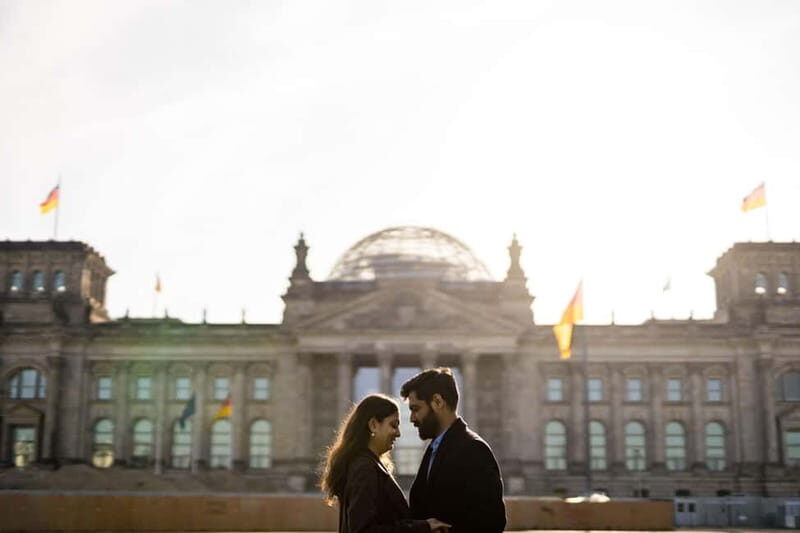
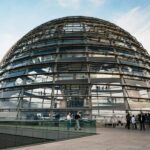
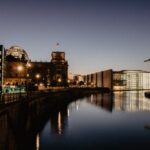
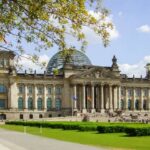
Then you roll toward the Reichstag/Bundestag area, where German history doesn’t sit quietly. Key moments tied to the building include November 9, 1918, when SPD politician Philipp Scheidemann announced the Republic from the west-portal balcony, and the Reichstag fire on February 27, 1933, which destroyed the plenary hall and dome. In the final days of WWII, the April 30, 1945 raising of a Soviet red flag by two Red Army soldiers became a symbol of victory over the Third Reich.
Even if you don’t go inside, the street-level view helps you understand why this building mattered. This is one of those places where you can feel the weight of events without needing a ticket.
The German Chancellery: Modern Transparency as a Design Choice
Next comes the German Chancellery, known for its striking approach to transparency and light. The main administration building rises to 36 meters, set between administrative wings. Big glass sections cut into the structure’s mass make it feel lighter than you’d expect from a government complex.
If you look closely while you pass, you’ll notice the architectural “grammar”: concrete pillars and wall sections alternate with large glass surfaces, while offices are arranged around glazed atriums. In a city where so many buildings were shaped by conflict and rebuilding, it’s a useful contrast—political power presented through openness rather than fortress vibes.
Tiergarten and the Soviet War Memorial: The Cost of Victory
In the Tiergarten area, your ride includes the Soviet War Memorial. Two T-34 tanks flank the square, and in the middle there’s a bronze statue of a Red Army soldier with his rifle on his shoulder. Names of fallen Soviet soldiers are recorded on panels behind them, and the memorial area includes graves for around 2,500 soldiers.
What makes this stop hit differently from a museum is proximity. You see the tanks and the scale right where people walk through daily. It helps you connect the Cold War story to the actual human cost underneath the politics.
Potsdamer Platz and Topography of Terror: City Life on Top of Hard Edges
Your route continues toward Potsdamer Platz, once planned as a district and now a familiar mix of cafes, cinemas, and shops. The area was laid out over 6.8 hectares, and the planning clearly worked—people actually use it, not just admire it.
But the tour doesn’t let you stay in “cool city” mode for long. You also reach Topography of Terror, which became known by that name in 1987. This site was the central location for planning and controlling many Nazi crimes from 1933 to 1945, and it housed major institutions of the SS and police apparatus, including the Secret State Police Office and Reichsführung SS.
The value here is that you’re not learning in abstract terms. You’re linking street corners to the machinery of oppression. Even with a short roadside stop, the context gives the place gravity.
Berlin Wall Memory Stretch: From Memorials to Checkpoint Charlie
The Cold War gets attention in a few ways along the route. You’ll pass a Memorial of the Berlin Wall area, then move toward Checkpoint Charlie.
Checkpoint Charlie was the most famous border crossing controlled by the Americans among Berlin’s three key border points near the Glienicke Bridge. The other major points were Helmstedt-Marienborn (Checkpoint Alpha) and Dreilinden-Drewitz (Checkpoint Bravo). The crossing rules were specific: it could be used by foreigners and employees of the FRG’s permanent representation in the GDR, plus GDR officials.
Even as a roadside stop, it’s worth paying attention to what you’re seeing. This isn’t just a theme-park border. It was a controlled gateway with real risk wrapped around daily life.
Gendarmenmarkt to Konzerthaus: Elegant Berlin and Who Built It
You move into one of Berlin’s most photogenic squares: Gendarmenmarkt. The square was designed at the end of the 17th century by Johann Arnold Nering, and it was tied to French immigrants—especially French Protestants known as Huguenots.
The square went by several names over time, ending up as Gendarmenmarkt in 1799 because the guard and stables of the regiment Gens d’armes were located there between 1736 and 1782.
From there you head past the Deutscher Dom and toward the Konzerthaus. The Konzerthaus area is a classicist highlight and one of Karl Friedrich Schinkel’s key works. A small comedy house opened there as far back as 1776, and it was later renamed the Royal National Theater in 1787 as it rose to a leading role.
The rickshaw perspective helps here because you’re catching the scale and symmetry without having to find the “perfect angle” like you would from a quick sidewalk photo.
Bebelplatz and Neue Wache: Books, Memory, and War’s Aftermath
Next up is Bebelplatz, near the museum center. The place is famous for Nazi book burning. On May 10, 1933, the National Socialists burned over 20,000 books there, targeting what they called non-German spirit. Names tied to the burned books include Erich Kästner, members of the Mann family, Magnus Hirschfeld, Lion Feuchtwanger, Karl Marx, Else Lasker-Schüler, and Heinrich Heine.
Just a few steps away on the broader memorial landscape is Neue Wache, built between 1816 and 1818 based on Schinkel’s designs. Since 1993, it has served as the central memorial of the Federal Republic of Germany for victims of war and tyranny.
These are heavy sites. The good thing about doing them on a short pause in motion is that your guide can connect the emotional facts to the physical space without turning it into a classroom lecture.
Museum Island and the Cathedral Area: UNESCO Meets Everyday Street Life
You also roll through Museum Island, a UNESCO World Heritage Site known for its museum complex. Even if you don’t stop inside, the surroundings matter. This is the kind of area where Berlin’s long planning timeline shows up in the way everything sits around the water and squares.
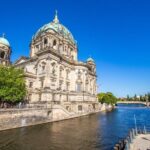
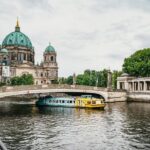
The tour route includes the nearby Berlin Cathedral area and the Lustgarten—a large square once part of the Berlin City Palace. The mix of grand civic architecture and open space makes it easy to understand why Berlin’s center has always been a stage for power.
There’s also a stop near the New Synagogue on Oranienburger Strasse, once described as the largest and most important synagogue in Germany. From the street, it’s a reminder that this city’s stories weren’t only political—they were also cultural and religious, interrupted and rebuilt.
Nikolaiviertel and Alexanderplatz: Old Neighborhoods, Then the Big City Pulse
You then shift toward older residential charm with Nikolaiviertel, Berlin’s first and oldest residential area. It’s built around historic character, including the Nikolaikirche, plus old-town flair with historic houses, restaurants, and coffee shops.
After that comes Alexanderplatz, a place that stays lively. It’s been that way through different political eras—Weimar-time energy, GDR-era life, and today’s constant movement.
If you only have a short stay in Berlin, this combo is smart: you get history with texture at Nikolaiviertel, then you see how the city runs now at Alexanderplatz.
East Side Gallery: The Wall as Art
Your final big anchor is the East Side Gallery, described as a remnant of the Berlin Wall and claimed to be the longest open-air gallery in the world. This is one of those stops that works best when you slow down for a minute and let the images hit before you start moving again.
From a rickshaw, you can get a nice mix of close views and wider context. You’re not just photographing a wall. You’re also seeing how the city has wrapped itself around that scar.
The Guide Matters: Music, Humor, and Photo Ops
This tour is at its best when your guide is fully in the role. In my notes, a standout is Leo. I’ve seen him described as interactive and funny, and that energy matters when you’re talking about sites that range from architecture to war crimes and Cold War borders.
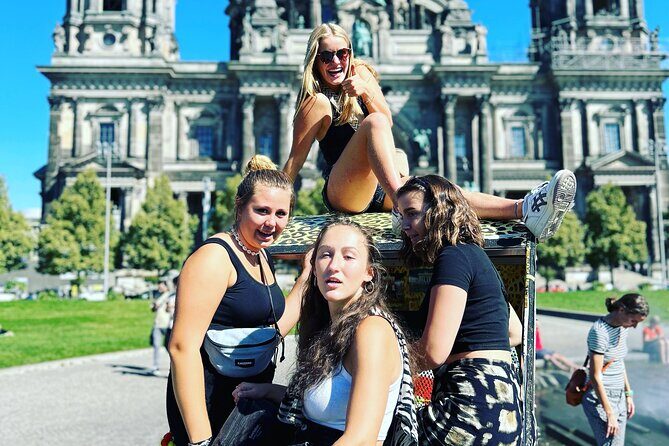
You’ll also benefit from the practical way a good rickshaw guide works. The ride can include narrow paths and quick turns, and the guide can stop when there’s a point worth stepping up for a photo. There’s even an included photographer angle in the setup, so you’re not stuck asking strangers to take your picture at the wrong moment.
If you have must-see stops, tell your guide what they are early. You’ll get a better match to your interests, instead of a one-size-fits-all circuit.
Tickets: What’s Usually Included, What Isn’t
Most of what you do is visual and roadside. That keeps the tour moving and keeps costs predictable.
That said, some specific sights have admission tickets not included—so if you want to go inside places like the Reichstag/Bundestag area, you’ll need to plan for tickets separately. Other memorials and sites along the route are listed as free, which helps keep the day from turning into a stack of entry fees.
My advice: treat the ride as your guided orientation. If something pulls you in, then decide on a separate return visit.
Value for Money: $105.72 Per Group (Up to 2)
At $105.72 per group for up to 2 people, the value depends on what you compare it to.
If you’re planning to do Berlin highlights in a short window, this can work like an efficient private guide plus transportation. The ticket-like items included aren’t just “a ride”:
- warm blanket for comfort
- Wi‑Fi onboard
- music on request
- photographer support
And since it’s private for up to two, you’re not paying for dozens of strangers’ attention and stop timing.
One cost note: alcoholic beverages and coffee/tea aren’t included, so if you want drinks, you’ll have to handle that separately.
If your travel style is fast but not rushed, and you like history with visuals, this is a solid deal.
The Main Risk to Know Before You Go
Here’s the balanced part. There are multiple reports of no-shows or poor communication at the meet-up point. In a few cases, the operator later explained that unforeseen situations prevented attendance, including cold-weather battery problems on similar vehicles.
You can’t remove all risk in any private guide setup, but you can cut it down:
- Confirm close to start time.
- Make sure you can receive calls or messages.
- Plan a simple backup option for the evening if the start slips.
Also, this experience requires good weather. If conditions turn, you may be offered another date or a refund, so don’t schedule it as your one-and-only Berlin plan for that day.
Should You Book This Berlin Rickshaw Tour?
Yes, if you want a quick guided tour with close-up landmark views, comfort built in, and a guide who can keep things lively while covering major Berlin eras. I especially think it fits couples or close friends who want private pacing and solid photo opportunities.
I’d hesitate if your trip is razor-scheduled, because there have been past reports of missed start times and equipment-related cancellations. If you can be flexible and you confirm right before you go, the odds improve that you’ll end the day smiling instead of checking your watch.
If you’re doing Berlin for the first time and you want the big highlights connected into one story, this rickshaw format is a smart way to get oriented fast.
FAQ
How long is the rickshaw sightseeing tour?
The duration is listed as approximately 1 to 4 hours.
How much does the tour cost?
The price is $105.72 per group, up to 2 people.
Is pickup available from my hotel?
Pickup is offered within a 2 km radius from Brandenburgertor. If you are more than 2 km away, there is a €10 per km charge.
Where does the tour start and end?
It starts at Brandenburger Tor (10117 Berlin, Germany) and ends back at the meeting point.
Is the tour offered in English?
Yes, it’s offered in English.
What’s included on the ride?
Included features are a warm blanket, Wi‑Fi on board, music on request, and a photographer.
Are entry tickets included for the sights?
Admission tickets are not included for some stops, while other sites are listed as free. Most of what you’ll do is short exterior viewing from the rickshaw.
How big is the group?
This is a private tour/activity. Only your group will participate, with up to 2 people.
What happens if the weather is poor?
This experience requires good weather. If it’s canceled due to poor weather, you’ll be offered a different date or a full refund.
Is there a cancellation option?
Free cancellation is available. You must cancel at least 24 hours in advance of the experience start time for a full refund.