REVIEW · MUNSTER
Münster: Old Town Highlights Guided Tour
Book on GetYourGuide →Operated by k3 stadtführungen · Bookable on GetYourGuide
Münster’s stories hit harder on foot. This 1.5-hour guided walk links place names to the city’s turning points, from the rise of Mimigernaford to the 16th-century Anabaptist era and the Peace of Westphalia. I like how the stops are specific, including St. Paul’s Cathedral and St. Lambertus, so the facts don’t float in midair. One thing to plan for: it’s held in German, so non-German speakers may feel limited.
Two details are especially worth your attention. First, the tour threads older conflicts directly into what you can still see in Münster today, like cathedral immunity shaping how the old town reads at street level, and the strange physical marks left behind by the Anabaptists. Second, the experience is led by a guide who’s described as both entertaining and on time, with real answers to questions—and an easy-to-spot start at the meeting point with an orange bag marked k3.
The duration is short by design. That’s great if you want an efficient orientation, but if you want to linger and read everything slowly, you’ll likely want a follow-up visit on your own right after.
In This Review
- Key things that make this Münster old town tour worth your time
- 90 minutes of Münster: what this tour does well
- Finding your guide at Michaelisplatz without fuss
- St. Paul’s Cathedral and the city’s unlikely origin story
- Overwasserkirche: when the building refuses to fully “finish”
- St. Lambertus and the symbolism of the cages
- Prinzpi(al)markt and the old-town rhythm
- Münster Town Hall and the Peace Hall: why 1648 matters
- Erbdrostenhof and Clemenskirche: Baroque style you can actually recognize
- Price and value: is $16 really enough?
- Who should book this Münster old town tour?
- Should you book it? My practical take
- FAQ
- FAQ
- How long is the Münster Old Town Highlights Guided Tour?
- How much does it cost?
- What language is the tour in?
- Where do I meet the guide?
- What sights are included?
- What history topics will the guide cover?
- Can children join for free?
- Is free cancellation available?
Key things that make this Münster old town tour worth your time

- St. Paul’s Cathedral story: how a small Saxon settlement became Münster, plus cathedral immunity and merchant-versus-clergy disputes
- Anabaptist-era clues you can still spot: the Überwasserkirche tower that still has no point and headless saints
- St. Lambertus and the market church details: cages symbolizing the end of the Anabaptist movement, tied to the tower keeper’s work
- Peace of Westphalia at the historic town hall: the Peace Hall where negotiations ended the Thirty Years’ War in 1648
- Baroque-era city shaping: Erbdrostenhof and Clemenskirche by Johann Conrad Schlaun—still visible in Münster’s city face
90 minutes of Münster: what this tour does well
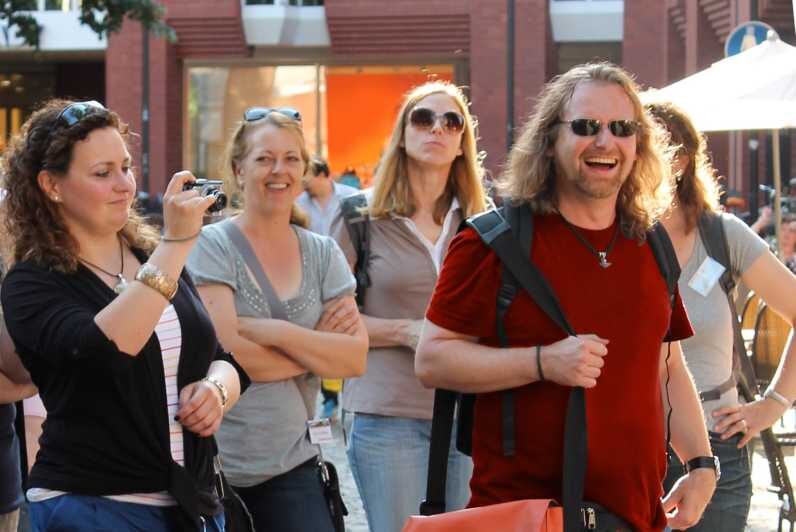
This tour is built around one smart idea: Münster’s past isn’t just in books. It’s in the way buildings sit, in towers that look a little wrong on purpose, and in civic spaces tied to major European turning points. In a tight schedule, you get a guided line through several eras instead of a random walk past landmarks.
At $16 per person for about 1.5 hours, you’re paying for more than entry-level sightseeing. The value is in the connections the guide makes—why cathedral immunity mattered, how a religious regime left physical marks, and how peace negotiations are still anchored by the same important rooms.
If you’re the type who wants history with names attached and an explanation for what you’re looking at, this format fits. You won’t need a stack of reading beforehand; you’ll just need to show up ready to listen.
You can also read our reviews of more guided tours in Munster



Finding your guide at Michaelisplatz without fuss
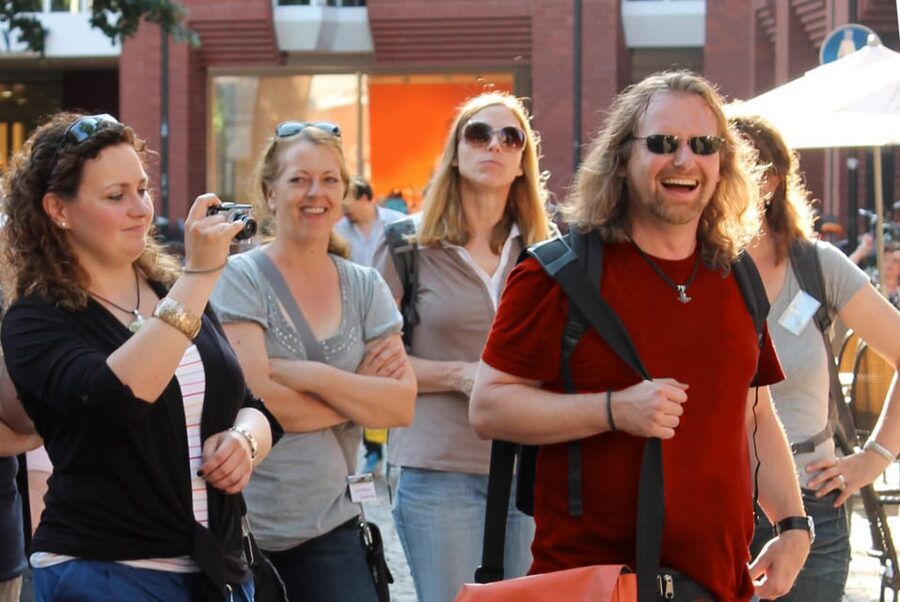
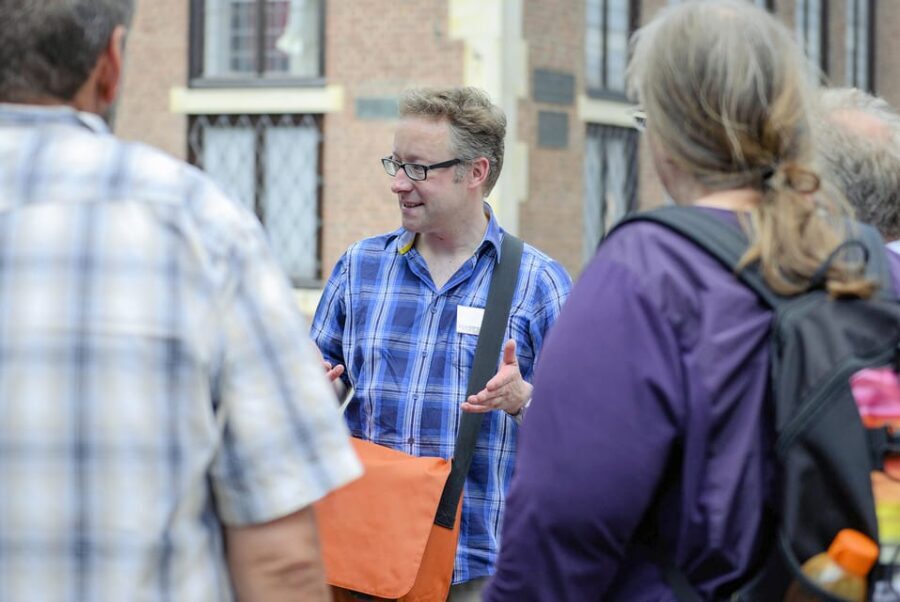
Meet your guide opposite the historic town hall, underneath the sign Michaelisplatz. Look close to the Rathausrelief, and make your life easy by finding the person holding an orange bag with the k3 sign.
That tiny detail matters more than it sounds. On a short tour, you don’t want to burn time searching or guessing. With a clear meeting point and a standout marker, you can start focused instead of stressed.
Once you’re together, the pace is designed to cover several major highlights—so I’d treat this as your “get my bearings” block for Münster’s center.
St. Paul’s Cathedral and the city’s unlikely origin story

St. Paul’s Cathedral (Dom) is where the tour begins to feel like more than sightseeing. You’ll hear how the small Saxon settlement of Mimigernaford became Münster, which gives you a timeline you can keep in your head while walking.
Then the tour shifts into a theme that’s easy to overlook when you’re just passing by: cathedral immunity. Instead of presenting it as a historical footnote, the guide explains it as something that affected how disputes played out and how the cityscape developed. That’s the practical part—after this stop, you’ll start noticing how power and boundaries can shape a town’s layout.
I especially like this approach because it changes how you look at the streets. You’re no longer just scanning for pretty buildings. You’re reading the old town like a map of old arguments.
Possible drawback: if you arrive with zero curiosity about medieval civic structures, this can feel heavy at the start. But if you enjoy understanding how cities worked, this is a strong anchor point.
Overwasserkirche: when the building refuses to fully “finish”
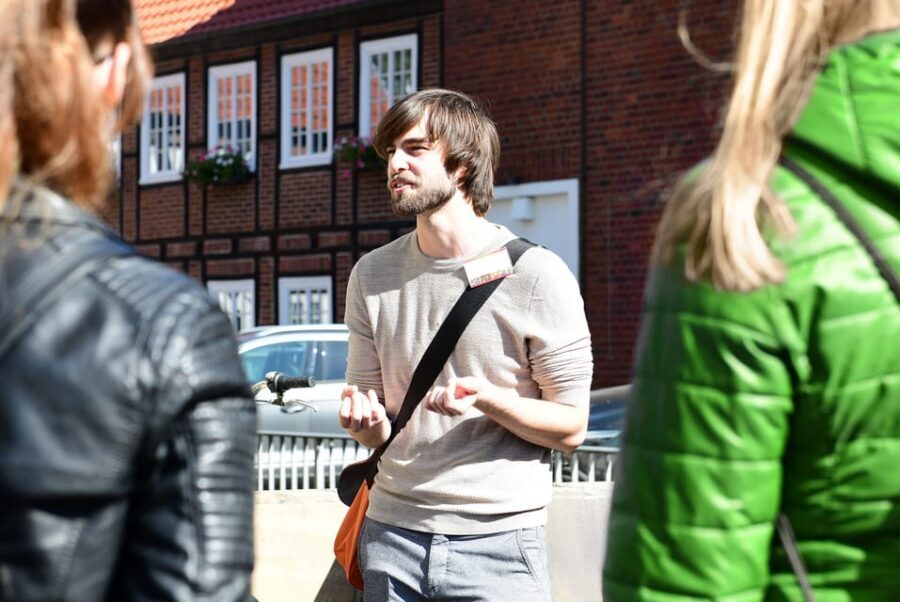
The Anabaptist era is one of the tour’s most memorable threads, partly because it’s delivered through visible oddities. You’ll hear how the rule of the Anabaptists in the 16th century left behind physical markers, including the Überwasserkirche tower that still stands without a point to this day.
That’s the kind of detail that sticks because it doesn’t behave like normal architectural tradition. It raises a question in your mind—why is it like that?—and the tour gives you the answer connected to the historical story.
You’ll also learn about saints remaining headless. It’s not presented as shock value. It’s framed as evidence—how religious conflict can change art, symbols, and what a public building communicates long after the people involved are gone.
When you see this explained, you realize these aren’t random quirks. They’re part of Münster’s memory system, built into stone.
St. Lambertus and the symbolism of the cages
Next comes another standout: the market church of St. Lambertus. Here the tour points out cages symbolizing the end of the Anabaptist movement. You’ll also hear about how the tower keeper worked there, which helps the symbolism feel grounded rather than purely theatrical.
This is where the tour becomes especially useful for first-timers. Instead of only telling you what happened, it helps you interpret what you’re seeing. Cages as a symbol might sound abstract at first. But with the explanation, you start to understand how a community marks an ending—and how that ending becomes part of everyday city landmarks.
I also like that this section doesn’t treat religion as an isolated topic. It links political change, public space, and the visual language of authority.






Prinzpi(al)markt and the old-town rhythm

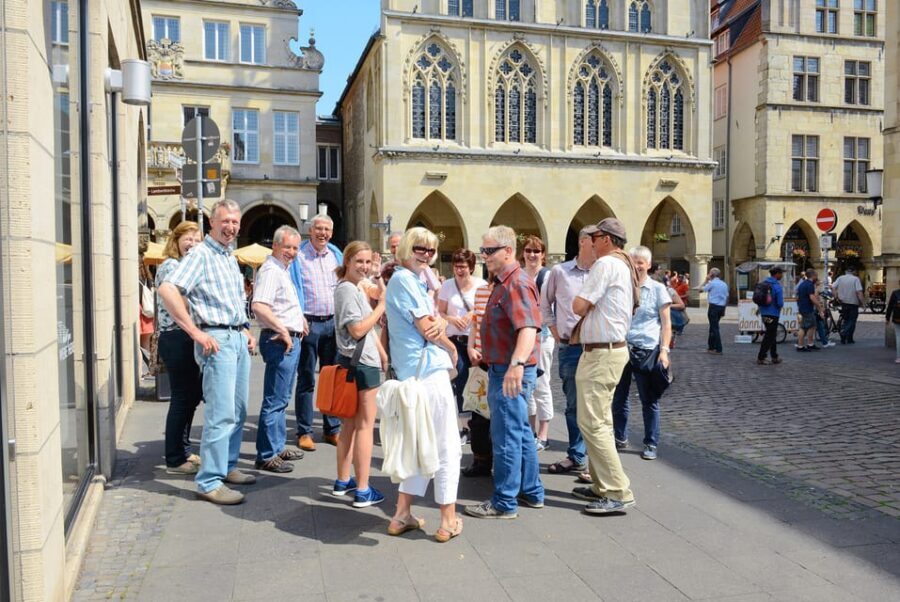
The tour includes Prinzipalmarkt as one of the sightseeing highlights. This is a good moment to reset your brain after the heavier historical sections. You’re back in the more human rhythm of town life: the square where public movement and everyday viewing meet the past you just learned.
Even if you don’t get a long lecture here, the timing helps. You’ve already been given the background for understanding why civic and religious power mattered. Now you can look around and recognize how those institutions would have interacted with commerce and public life.
If you’ve ever walked into a historic center and felt like you missed the plot, this “breather” stop helps you reconnect. You see the old town again, not just the landmarks.
Münster Town Hall and the Peace Hall: why 1648 matters
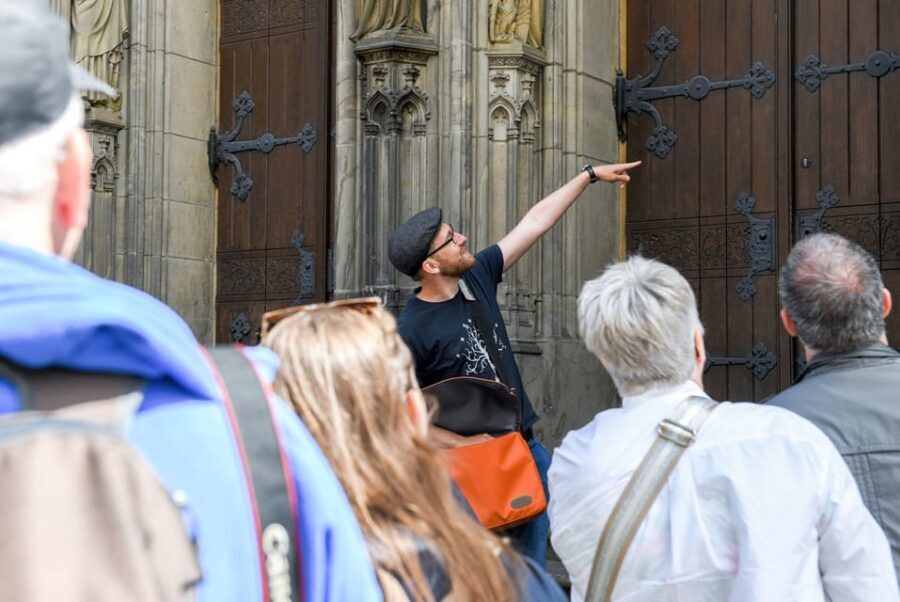
The historic town hall is another centerpiece, because you’ll connect it to the Westphalian peace negotiations. Specifically, you’ll learn it as the place where peace was signed between the Dutch and the Spaniards in the Peace Hall, tied to the Peace of Westphalia.
The tour links this to the end of the horrors of the Thirty Years’ War in 1648. That’s not just a date drop. It’s a way to understand why this building sits so deeply in European memory. Peace treaties happen in rooms, but they also happen in cities that become symbols.
What I like about including this stop is that it pulls Münster into a larger story without losing the local focus. You’re learning why Münster matters beyond its own borders, and you’re doing it while standing in the relevant place.
If you’re history-minded, you’ll feel your mental map of Europe adjust. If you’re not, you’ll still appreciate the guide’s clarity, because the narrative is anchored in a real civic site you can point to.
Erbdrostenhof and Clemenskirche: Baroque style you can actually recognize
The tour also highlights two buildings by the Baroque master builder Johann Conrad Schlaun: the Erbdrostenhof and Clemenskirche. This part is useful because it helps you see that Münster’s identity isn’t frozen in medieval time.
Baroque architecture can be intimidating if you only know it from big names far away. Here, you’re given a local anchor. That makes it easier to notice style patterns and understand why the city face looks the way it does today.
I’d treat this as your “okay, now I see how the later eras shaped the present” moment. It balances the earlier, conflict-heavy segments and gives you a cleaner way to appreciate the city’s evolution.
Price and value: is $16 really enough?
For $16 per person, you’re getting a guided walkthrough that covers several major highlights: Dom, Lamberti Church, Prinzipalmarkt, and Historic City Hall—plus the interpretive layer connecting them (Mimigernaford origins, cathedral immunity, Anabaptist physical marks, and the Peace Hall). For a first-time visitor, that combination is the real value.
You’re not paying for endless time. You’re paying for a tight story with specific stops and an entertaining guide. In other words: you buy context, not just walking.
If you’re traveling as a couple or with kids who can join free under 6, the value can become even better, because you’re not forced to stretch the budget just to keep everyone included.
One note: since the tour is in German, make sure you’re comfortable catching the storyline. It’s live, so translation isn’t built in.
Who should book this Münster old town tour?
This is a strong match if you:
- want a compact, story-driven walk through Münster’s center
- like understanding why landmarks look the way they do
- enjoy history that explains visible details, like tower changes and symbolic carvings
- travel with children under 6 (they can join for free)
It may be less ideal if you:
- don’t read or understand German well and expect a full experience without language support
- want a slow, self-paced museum-style visit rather than an efficient walking narrative
Should you book it? My practical take
If you want one solid shot at understanding Münster’s old town—how the city grew, why religious conflict left marks, and why peace negotiations mattered—this tour is a good use of time. The 1.5 hours feel designed for orientation, not fatigue, and the guide experience sounds consistently strong, including punctual starts and good answers.
I’d book it if German is manageable for you and you like your history tied to what you can see. I’d pass or plan something different if language will make the story slip away, because the tour’s value depends on following the narrative as you walk.
FAQ
FAQ
How long is the Münster Old Town Highlights Guided Tour?
The tour lasts 1.5 hours.
How much does it cost?
It costs $16 per person.
What language is the tour in?
The live tour guide speaks German.
Where do I meet the guide?
Meet opposite the historic town hall beneath the sign Michaelisplatz, close to the Rathausrelief. The guide wears an orange bag with the k3 sign.
What sights are included?
The tour includes sightseeing highlights such as Dom, Lamberti Church, Prinzipalmarkt, and the Historic City Hall.
What history topics will the guide cover?
You’ll learn about Münster’s development from the Saxon settlement of Mimigernaford, cathedral immunity, disputes between merchants and clergy, Anabaptist rule and its visible marks, and the Peace of Westphalia peace negotiations at the town hall.
Can children join for free?
Yes. Children aged 0–5 years can join for free.
Is free cancellation available?
Yes. You can cancel up to 24 hours in advance for a full refund.