REVIEW · BERLIN
Private taxi tour to Potsdam and Sanssouci 6-8h
Book on Viator →Operated by Gunter Bauer GAT-Productions · Bookable on Viator
Potsdam can feel like a royal movie set. This private taxi day ties together Sanssouci Palace, the park world of Frederick the Great and Prussian rulers, and smart city-side stops you’d never line up on your own. I especially love the way Gunter Bauer explains what you’re seeing in plain terms, from architecture styles to what was rebuilt after the war.
The second thing I like is control: you get pickup, a comfortable ride, and pacing that fits your interests instead of sprinting with a big crowd. One drawback to know up front is that this route includes lots of walking on mostly unpaved paths, so good shoes matter.
In This Review
- Key highlights you’ll actually feel during the day
- Potsdam in a single day: why this place clicks
- Price and value: what you’re really paying for
- The taxi setup that makes Potsdam easier
- Sanssouci Palace: Frederick the Great’s rococo retreat
- Windmill and Orangery: views plus the story behind them
- Mode Chinoise at the Chinese Tea House
- The wine story and the postcard view at Weinbergterrassen
- Friedenskirche: Italian style and a quiet kind of drama
- Sanssouci Park: 2 km of palaces, viewpoints, and hidden detours
- The Friendship Temple and the “pleasure gardens” mindset
- Cecilienhof: comfort in an English shell, then global history
- New Palace and the 600-room flex
- The mechanical elevator and the mosque-shaped cover story
- Potsdam’s city feel: gates, Dutch Quarter, and the rebuilt core
- Russian colony stop: gifts, choir stories, and a different Potsdam flavor
- Glienicke Bridge and the drive-by drama on the way back
- What you’ll get from Gunter Bauer (and why it matters)
- Who should book this private Potsdam and Sanssouci taxi tour
- Should you book it?
- FAQ
- What is included in the tour price?
- Do I need tickets for Sanssouci Palace?
- How long is the tour, and what time does it start?
- Is this tour private?
- How does pickup work in Berlin?
- Can you accommodate a baby seat or stroller?
- Can I cancel for a full refund?
Key highlights you’ll actually feel during the day
- A private Berlin-to-Potsdam taxi plan that keeps you moving without the hassle of transit and transfers
- Gunter Bauer’s on-the-spot storytelling, including how styles changed and how buildings were affected by war and rebuilding
- Photo-friendly pacing, with the guide taking pictures at key spots and sharing them afterward
- Sanssouci Park in full “pleasure garden” mode, not just a quick palace photo stop
- Big variety in one day, from rococo palaces to the Dutch Quarter, multiple city gates, and even Glienicke Bridge
Potsdam in a single day: why this place clicks
Potsdam works because it’s not one attraction. It’s a whole royal “system” of palaces, viewpoints, gardens, and ceremonial buildings built to impress power.
Frederick the Great’s Sanssouci area is the star, but what makes the day satisfying is the variety: you’ll go from vineyard views and rococo rooms to Italian-style religious architecture, plus the later Prussian moves toward bigger guest palaces and family residences.
You can also read our reviews of more private tours in Berlin

Price and value: what you’re really paying for
At $179.01 per person for a private 6 to 8 hour taxi tour, the value depends on how you handle admissions and your expectations.
You’re paying for door-to-door pickup, an air-conditioned vehicle, parking fees, and the guided driving + walking plan. Admission isn’t automatically everything: the tour includes parking and transport costs, and it offers an optional Sanssouci+ booking option if you want castle admissions covered in advance. That means you can choose between a lower-cost option and a smoother ticket experience.
If you hate ticket friction and want to focus on seeing, Sanssouci+ can be worth it. If you’re happy buying only specific entries and enjoying the park viewpoints, you can keep costs tighter.
The taxi setup that makes Potsdam easier
This is a private tour, so it runs like your day, not a bus schedule. The ride starts at 10:30 am, with pickup from your hotel or accommodation in Berlin.
You’ll also get the practical parts that keep the day calm:
- You ride in an air-conditioned vehicle
- You don’t waste time figuring out parking or transit
- You can ask for pacing tweaks as you go
A small but useful detail: you’ll be asked to wait on the street only after the guide sends an SMS or WhatsApp message, so you’re not standing outside guessing where the car is.
Sanssouci Palace: Frederick the Great’s rococo retreat
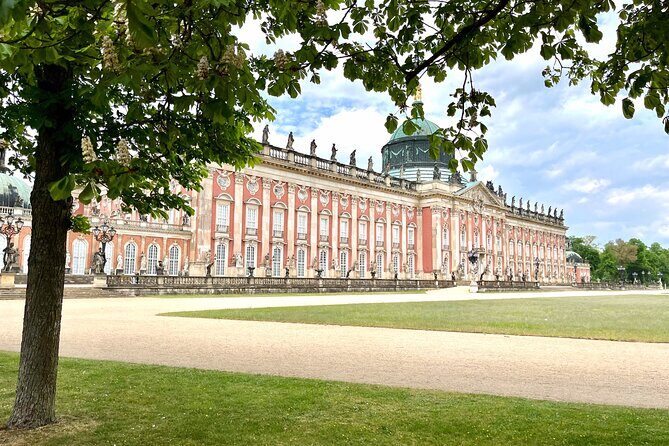
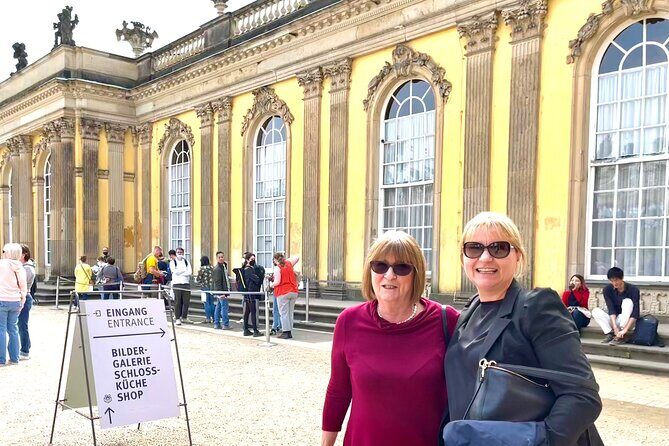
Sanssouci Palace is the headline, and it delivers. It’s Frederick the Great’s “dream castle,” set alone on a small vineyard, and it’s rococo in spirit and detail.
What I find compelling is the human scale. The palace has only 8 rooms, with garden access from inside the experience. That makes it feel less like a museum maze and more like the king’s private world.
You’ll also hear the story behind the exclusivity. Frederick’s court life here was male-focused, and the account includes famous visitors like the French philosopher Voltaire, along with the king composing and playing music. It’s a reminder that this is palace design meant for conversation, performance, and control, not just decoration.
Time tip: plan for around 30 minutes for this stop. If you love interiors, consider pairing Sanssouci Palace with Sanssouci+ so you’re not splitting attention between ticket lines and decisions.
Possible drawback: admission for the palace isn’t included unless you choose the Sanssouci+ option, so double-check what you’re selecting.
Windmill and Orangery: views plus the story behind them
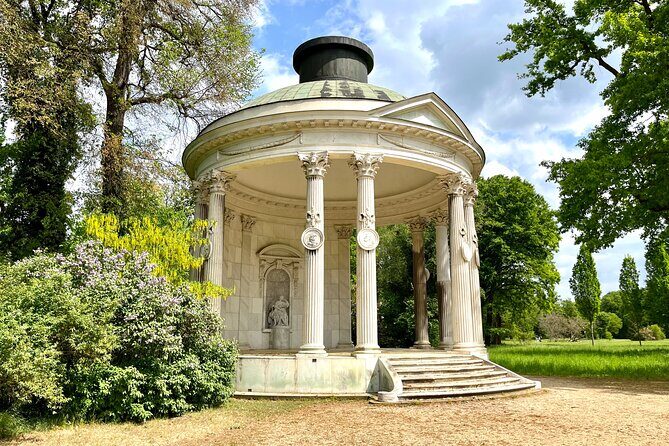
From the palace area, you move into the park’s working and scenic side.
The Historic Windmill is there because of a real legal dispute with the king, and it’s still functional enough that grain can be ground today. Even if you don’t linger long, it gives you a different flavor of Sanssouci: power wasn’t only decorative; it also managed resources.
Then comes the Orangery, built for protecting exotic plants during winter and designed to be an attraction in its own right. It also links the park’s plant life to the architecture game of the era, including a Roman-style eye-catcher on the ridge.
If you care about design, you’ll enjoy how these buildings are positioned for both utility and view—exactly the kind of planning that makes Potsdam feel deliberate.


Mode Chinoise at the Chinese Tea House
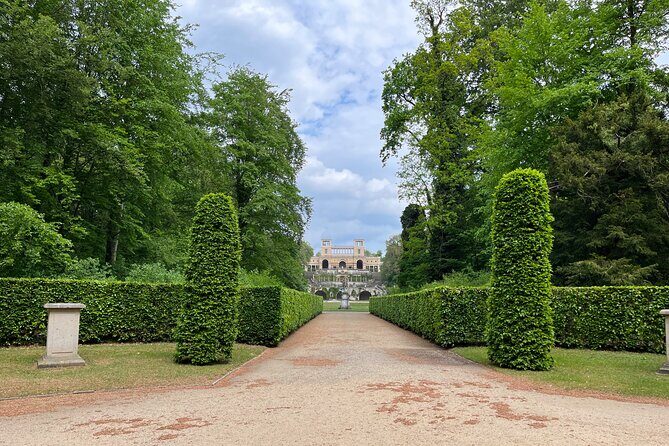
One of the most fun stops is the Chinese Tea House, described as more than a pavilion: it’s dressed for an experience of China-in-style, with precious furniture and delicate Chinese porcelain, plus gold-rich decoration.
This is where Frederick the Great’s era overlaps with Romantic taste and theatrical design. You’re not just looking at a building; you’re stepping into a curated fantasy that European royalty liked to wear on their sleeves.
If you’re traveling with anyone who enjoys themes and aesthetics, this is the one that usually wins people over fast.
Practical note: the park paths can be uneven and mostly unpaved. Wear walking shoes, not sandals. You’ll thank yourself when the ground turns slightly rough underfoot.
The wine story and the postcard view at Weinbergterrassen
The Weinbergterrassen viewpoint is the classic “Sanssouci Palace from the right angle” moment. It also connects to a clever problem-solving story: Potsdam was too far north for open-vine growing in the way people wanted, so the gardeners hid vines behind glass.
That glass setup helped with growing season control, giving the king’s gardeners a way to maintain a wine output even in colder periods. And yes, if supplies ran short, there were still deliveries from places like France and Italy, according to the story told on the route.
You’ll also learn about the fountain system behind the illusion. The fountain feeding links to a pond higher up, with the whole water engineering disguised through features like the ruin mountain. One detail in the narrative is that the ruin mountain wasn’t finished during Frederick’s lifetime, which adds a slightly unfinished, human realism to the fantasy.
This viewpoint comes with about 15 minutes, and the ticket is listed as free in the route notes.
Friedenskirche: Italian style and a quiet kind of drama
Not every stop is about show. Friedenskirche brings Italian styling into Potsdam, including a bell tower that follows Italian campanile design and stands apart from the main building.
The small artificial pond and reflection angle make it feel calm, almost cinematic. It’s also framed as a final resting place far from Berlin’s Hohenzollern burial area.
If you want a pause from palaces and garden spectacle, this stop gives you that breath without losing the sense of ceremonial design.
Sanssouci Park: 2 km of palaces, viewpoints, and hidden detours
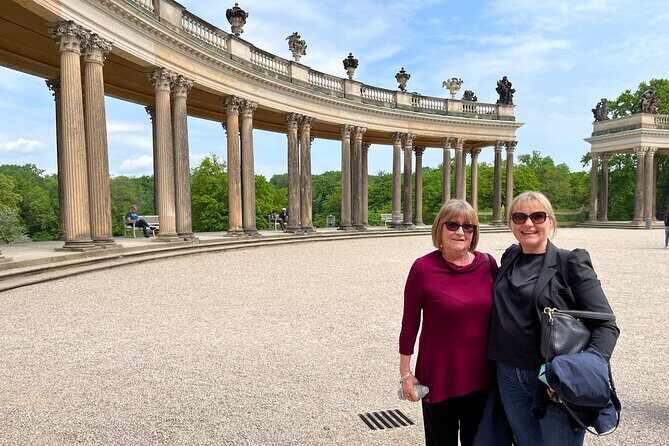
The park is the engine of the day. It connects Sanssouci Palace with the vineyard and the big fountain area, then continues toward the New Palace area, using a long axis and connecting paths.
The route includes about 45 minutes for Sanssouci Park with admission noted as included. This is the right amount of time to walk, stop for photos, and still feel like you covered meaningful ground.
What makes this park special is that it’s integrated into the terrain and built as a “pleasure garden” system. You’ll hear about side attractions along the way: small castles, Roman baths, and themed structures like the Chinese tea house.
If you hate long walks: this is the part where you need to stay honest with yourself. You’ll see a lot, but you’ll also move on foot across paths that don’t feel like smooth sidewalks.
The Friendship Temple and the “pleasure gardens” mindset
Along the park route you’ll also come across the Friendship Temple, described as intimate rather than grand—made for small moments, not big ceremonies.
That’s a theme across the park: even when buildings are dramatic, the intent is still often social. It’s built for short walks, conversations, and scenic stops where servants could provide food for a picnic style break.
If you like the way power and taste show up in tiny details, you’ll enjoy how the park’s structure supports those moments.
Cecilienhof: comfort in an English shell, then global history
Cecilienhof Palace is the youngest Prussian palace on this route, built for the Crown Prince and his wife Cecilie von Braunschweig.
What stands out is the contrast. The exterior is described as an English country-house look, while the interior is modern for the time, including central heating and bathrooms. There’s even a room that’s designed to feel like a ship’s cabin because the princess liked sea voyages.
But the stop’s biggest pull for most people is the 1945 Potsdam Conference. The story is explicit: Stalin, Truman, and Churchill meet here, and the conference room remains furnished as it was then.
If you only know Potsdam as a pre-war royal playground, Cecilienhof broadens it into 20th-century world history without changing the location’s sense of “site meaning.” It’s a smart pivot.
New Palace and the 600-room flex
If Sanssouci Palace is Frederick’s intimate dream, the New Palace is the statement to the world. The route describes it as having around 600 rooms, designed for relatives and court life.
You’ll hear how the royal family setup included apartments and separate “communs,” with kitchens kept away because of stench and practical realities. That detail makes the building feel less like a fantasy and more like a machine built for ruling.
There’s also a long avenue to the king’s small castle on the vineyard measuring about 2 km, which reinforces how the grounds were designed for procession and daily ritual, not only visiting.
The mechanical elevator and the mosque-shaped cover story
One of the more surprising engineering moments on the route is in the New Palace area: an elevator with a mechanical drive is described as being used for the empress, with the industrial look later hidden behind another fashion statement.
That cover is an oriental-style building in the form of a mosque with a minaret, which also acts as a chimney for a steam turbine that still produces electricity today.
This is the kind of detail I love because it breaks the idea that these places were only about aesthetics. Style and function were stitched together.
Potsdam’s city feel: gates, Dutch Quarter, and the rebuilt core
After the royal core, the route shifts into Potsdam’s streets and urban identity.
You’ll visit the Nauen Gate, described as imposing and kept in medieval Romanesque style. It’s positioned as a major surviving city gate, and the square around it has cafes and restaurants if you want a break without leaving the historical area.
Then comes the Dutch Quarter, created after the Thirty Years’ War when skilled Dutch canal builders were brought in. The district uses traditional Dutch-style building in red clinker tones and reads visually like Holland. Shops, antiques, bars, and cafes line the area, and the story includes that even Queen Beatrix visited.
Another city center stop includes the idea of Potsdam’s main street as a pedestrian zone with geometric layout and a mix of baroque town houses and modern browsing spots. The route notes an Art Nouveau department store with an original glass roof.
If you want Potsdam to feel like a living place, not only a palace brochure, this urban segment is key.
Russian colony stop: gifts, choir stories, and a different Potsdam flavor
The route also includes a stop tied to a Russian settlement story: immigrants are expected to live comfortably, but the origin is framed as royal gift exchanges and political ties.
The narrative includes the amber room being gifted (and a Russian choir tied to wedding celebrations), plus the idea that descendants still live there. Reviews also mention that the guide can add time for eating at a restaurant in the Russian village area, like the Colony of Alexandrowka.
If you want your day to include more than German royal romance, this segment gives you a cultural contrast.
Glienicke Bridge and the drive-by drama on the way back
On the Berlin side, the route includes Glienicke Bridge, known as a former border crossing between West Berlin and the GDR that was closed for about 40 years.
The story includes covert spy exchanges between the US and the Soviet Union, and it notes that the bridge has served as an authentic film backdrop because of that Hollywood-ready drama.
This stop works well as a closing moment: you get one last “history in the air” experience without needing a long walk.
The drive also includes a description of a palace area on the way back tied to water views between Tiefer See and Griebnitzsee, plus the New Garden and Marble Palace in Italian style. It’s framed as a sight you can catch as you move between cities.
What you’ll get from Gunter Bauer (and why it matters)
This tour stands or falls on the guide, and Gunter Bauer GAT-Productions is the core reason people rave about the day.
You’ll get:
- Architecture and style explanations as you move between buildings, not just dates
- Clear answers about what was destroyed and then rebuilt after the war
- Safe, smooth driving that keeps you comfortable through the day
- Photo taking at key spots, then sending those pictures afterward
- A habit of personalizing the pace and adding stops if you ask, including things like a visit to Barberini museum for a special exhibition or adding time at the Colony of Alexandrowka restaurant
That last part matters. In a day packed with sights, personalization turns “a lot to see” into a trip that feels like it fits your own curiosity.
Who should book this private Potsdam and Sanssouci taxi tour
This works best if you want:
- A high-signal day with minimal transit friction
- A guide who connects buildings to bigger stories, like court life, war damage, and rebuilding
- Plenty of outdoor viewpoints plus a few major indoor palace moments
- A pace that doesn’t punish you when you stop to read details or ask questions
It’s less ideal if you dislike walking on uneven park paths or if you want a purely museum-style itinerary with lots of inside time.
Should you book it?
If you’re choosing between a DIY transit plan and a guide-led private day, I’d lean toward booking this one. Potsdam is exactly the kind of place where a good narrative turns scattered sights into a coherent story, and a private taxi ride keeps the day from feeling like logistics.
Book it if you want Sanssouci Palace plus the surrounding park world, then you also want urban Potsdam stops like gates and the Dutch Quarter, with optional additions handled by Gunter. Consider skipping if you want lots of long indoor time without walking or if you strongly prefer only one palace complex and nothing else.
Either way, wear proper shoes, bring water or plan a café stop, and choose your admissions strategy (especially whether you want Sanssouci+).
FAQ
What is included in the tour price?
Pickup from your hotel or accommodation, an air-conditioned vehicle, parking fees, and the taxi ride plus city tour are included. Admission to some sights is only included if you book the Sanssouci+ option for castle tours. Snacks are not included.
Do I need tickets for Sanssouci Palace?
For Sanssouci Palace, the admission ticket is listed as not included unless you choose the Sanssouci+ option. The park includes admission as noted for the park time on this route.
How long is the tour, and what time does it start?
The tour runs about 6 to 8 hours and starts at 10:30 am.
Is this tour private?
Yes. It is a private tour/activity, and only your group participates.
How does pickup work in Berlin?
You can request pickup from your hotel or accommodation. You should come out onto the street only after the guide sends an SMS or WhatsApp message, and you’re asked to include a cell phone number when booking.
Can you accommodate a baby seat or stroller?
A baby car seat (MaxiCosy) is available on request. Strollers are allowed, but the cradle must be removable and the frame foldable, with extra room needed in the vehicle for suitcases.
Can I cancel for a full refund?
Yes. Free cancellation is offered if you cancel up to 24 hours in advance for a full refund.