REVIEW · BERLIN
Potsdam Tour from Berlin With Guided Sanssouci Palace Visit
Book on Viator →Operated by BEX Sightseeing · Bookable on Viator
Potsdam is history with good shoes. This half-day trip from Berlin mixes big-name sights with quick context: Sanssouci Palace (with skip-the-line entry) plus the Bridge of Spies and other UNESCO-linked corners of town. I really like the guided format (you’ll get the who-and-why, not just the what) and the smooth coach ride with a professional driver. The main drawback to consider is time: it’s only about 4 hours, so you’ll see a lot from the outside and get a focused slice inside Sanssouci.
What makes it work so well is pacing. You’re not stuck in a slow “all day bus tour” situation, and you still cover the essentials that explain Potsdam’s role from Prussian power to Cold War intrigue. One small heads-up: English commentary can vary depending on the guide and the language mix on board, so if you want very steady English narration the whole time, plan to ask the guide early.
If your goal is a first taste of Potsdam without the stress of train schedules and ticket lines, this tour is a strong option. At $77.23 for a half-day with guided sightseeing and Sanssouci admission included, it’s best viewed as paying for time savings + interpretation, not as a bargain for raw hours.
In This Review
- Quick hits (what you’ll notice fast)
- A fast Potsdam fix from Berlin: how the 10:00 plan works
- Skip-the-line Sanssouci Palace: Frederick the Great’s private retreat
- Where Sanssouci might not match your expectations
- Glienicke Bridge and the Bridge of Spies: a Cold War photo stop with real teeth
- How to use this stop well
- Dutch Quarter (Holländisches Viertel): red-brick history with a surprisingly modern vibe
- Alexandrovka: the Russian singers’ colony that became a UNESCO story
- Why this stop is worth your attention
- Old Market Square and St. Nicholas Church: Potsdam center, rebuilt and in use
- What you’ll feel here on a short tour
- Coach comfort, small group size, and realistic timing
- Bathroom and food reality check
- Best mindset for a 4-hour day
- Price and value: what you’re paying for (and what you’re not)
- Who should book this Potsdam tour from Berlin?
- Should you book this Potsdam tour?
Quick hits (what you’ll notice fast)
- Skip-the-line Sanssouci Palace access that turns a bottleneck into a guided experience.
- A small group vibe with a maximum of 30 people, so questions don’t get lost.
- Cold War drama at Glienicke Bridge, plus photo-friendly stops.
- UNESCO-level variety from the Russian singers’ colony of Alexandrovka to historic Potsdam center landmarks.
- Coach comfort and a timed plan that keeps you moving without rushing at every stop.
- A practical pace: some spots are short photo stops, while Sanssouci gets real time.
A fast Potsdam fix from Berlin: how the 10:00 plan works
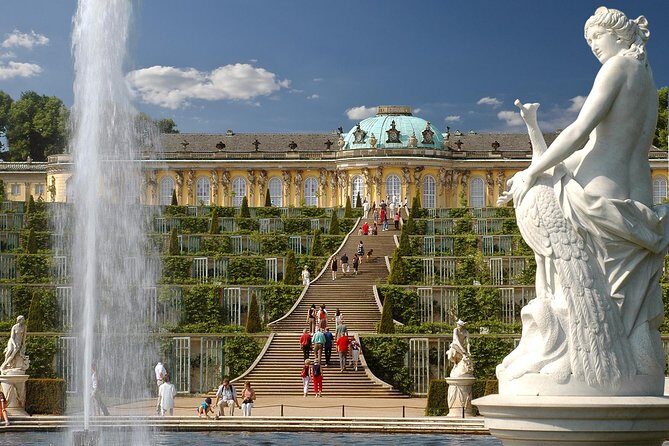
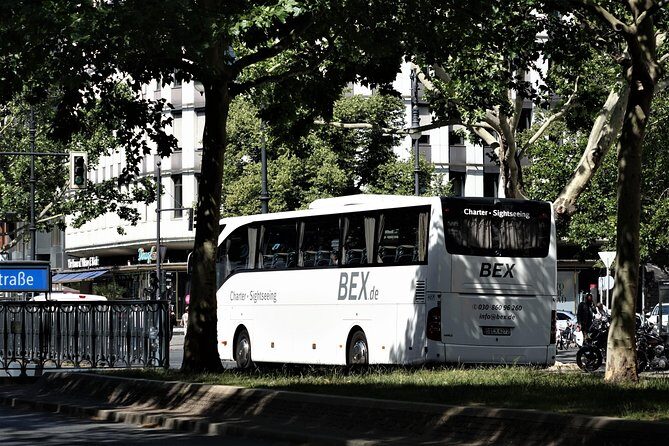
This tour runs for about 4 hours and starts at 10:00am at Kurfürstendamm 216, 10719 Berlin. You’ll end back at the same meeting point. Expect a guided half-day that mixes walking and riding, with most time spent at key photo and history stops plus a longer block at Sanssouci.
The group size (up to 30 travelers) is one of the quiet advantages. A smaller group generally means you’re not stuck waiting for long lines of people at every turn, and it’s easier to hear what the guide is saying. You’ll also get a local guide working in English and German, which is helpful if your group includes different language preferences.
Bring layers. Potsdam is open-air much of the time, especially around the bridge viewpoints and historic squares. Also, plan that food and drinks aren’t included, so you’ll want water in your daypack and maybe a small snack if you’re the type who gets hungry mid-tour.
You can also read our reviews of more guided tours in Berlin



Skip-the-line Sanssouci Palace: Frederick the Great’s private retreat
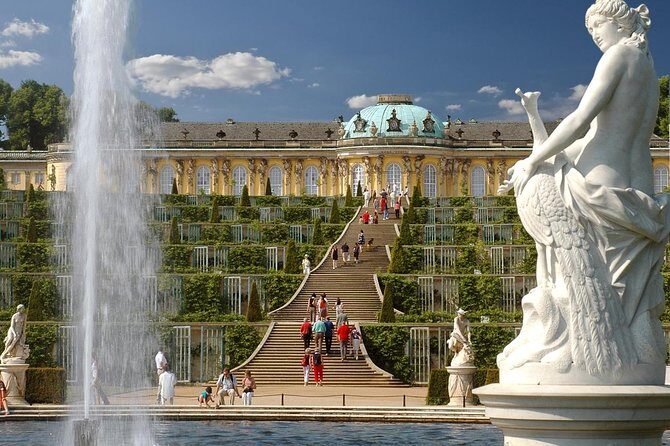
Sanssouci Palace is the star of the show, and the timing is built around it: you get about 2 hours at the palace area, and admission is included. This matters because Sanssouci draws crowds, and “seeing it someday” often turns into “we missed it” on day trips. Here, the plan includes guaranteed skip-the-line access, so you’re spending time inside and learning instead of standing still.
You’ll connect the palace to the person behind it: Frederick the Great, King of Prussia, used Sanssouci as a summer residence where he could relax away from the formality of Berlin court life. The palace was designed and built by Georg Wenzeslaus von Knobelsdorff between 1745 and 1747. That quick timeline helps you understand why the style feels intentional and unified—it’s not a random patchwork of eras.
What I like about the way this visit is structured is that the palace isn’t treated like a single room you rush through. It’s framed as part of a larger park concept, with temples and follies designed to shape how you move through the grounds. Even if your time inside is limited, the guide’s stories help you read the space: it’s court power, but softened into leisure.
One practical note: the palace experience may include guided narration via a portable listening device system. That’s a good thing if you want crisp facts fast, but it also means the interior portion can feel tightly timed—so don’t plan on wandering independently for long. Go in with curiosity, not with the mindset of a slow museum day.
Where Sanssouci might not match your expectations
If you’re expecting something on the scale of Europe’s most oversized palaces, set your expectations slightly. Sanssouci is grand in taste and planning, but it doesn’t try to overwhelm you with raw size. You’ll likely appreciate it more if you enjoy detail, symbolism, and the idea of a royal getaway designed for a specific mood.
Glienicke Bridge and the Bridge of Spies: a Cold War photo stop with real teeth
Between Potsdam landmarks, you’ll hit Glienicke Bridge, a bridge across the Havel River connecting Berlin’s Wannsee district with Potsdam. The name links to Glienicke Palace, and the current bridge is the fourth at the site, completed in 1907. It needed major reconstruction after damage during World War II, which adds a subtle layer: this is a place people fought over, not just a scenic crossing.
The reason you’ll remember it is the Cold War story. During that era, this stretch of the Havel River functioned as part of the border between West Berlin and East Germany. The bridge became famous for spy exchanges—so famous it earned the nickname Bridge of Spies. Standing here, you get a physical sense of how borders turn into stages.
How to use this stop well
This is typically not a long sit-and-stare moment. It’s more of a viewpoint stop—photo time plus context from your guide. If photos are your thing, position yourself early and be ready to move when the group does. The guide will likely connect the bridge to the larger tension of the era, so keep your eyes up while you’re snapping.


Dutch Quarter (Holländisches Viertel): red-brick history with a surprisingly modern vibe
Next up is the Dutch Quarter in Potsdam, also called Holländisches Viertel. This area is striking for one simple reason: 134 red Dutch-brick buildings, and nearly all of them have been renovated.
The quarter was built from 1733 to 1740 under the order of Frederick William I of Prussia, designed by Jan Bouman. That “why” matters. This isn’t random Dutch-style decoration—it’s a deliberate architectural decision, showing how Prussia borrowed from other European influences while building its own identity.
What makes this stop enjoyable on a half-day schedule is how it breaks the heavy mood. After Sanssouci’s Prussian royal atmosphere and the Cold War stakes at Glienicke Bridge, the Dutch Quarter feels human-scaled and neighborhood-like. Even if you mostly see it from the outside, it’s the kind of place where you can picture everyday life in a different century.
Alexandrovka: the Russian singers’ colony that became a UNESCO story
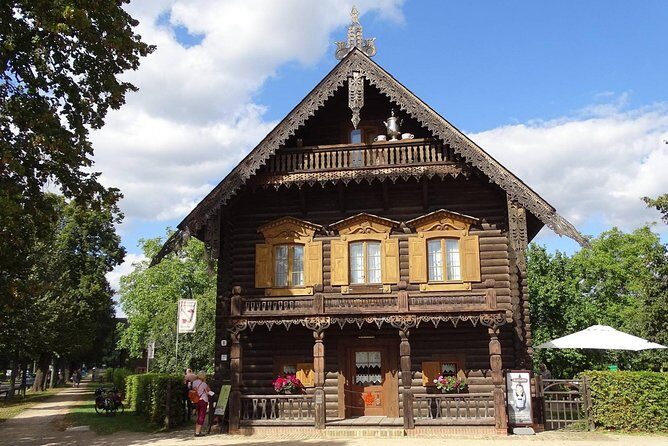
In the north of Potsdam sits Alexandrovka, a Russian colony built for a very specific group: the last twelve Russian singers from a former choir of 62 soldiers. King Frederick William III had it built in 1826/27. The idea wasn’t just cultural display—it grew from family and friendly relations between the Hohenzollern and Romanov houses.
Alexandrovka’s name is tied to Tsar Alexander I, who died in 1825. The colony was named as a memorial, and today it’s part of the UNESCO World Heritage landscape of Potsdam.
Why this stop is worth your attention
This is one of those places where you learn a fact and it changes how you look at the whole town. A Russian singers’ colony in Prussia sounds odd until the guide explains the political and personal connections behind it. On a short tour, that kind of “wait, what?” detail is exactly what you want—because it turns a quick stop into a lasting mental snapshot.
Don’t expect this to be a big walking loop. The value is in understanding what you’re seeing and why it exists here at all.
Old Market Square and St. Nicholas Church: Potsdam center, rebuilt and in use
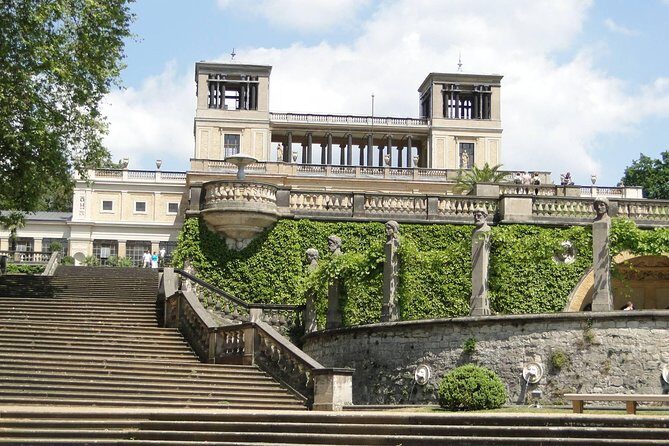
The tour also heads into Potsdam’s Old Market Square, the historical center of the city. It’s centered around St. Nicholas’ Church, which is one of the most important skyline anchors in town.
St. Nicholas Church is Lutheran and built in the Classicist style. Plans were made by Karl Friedrich Schinkel between 1830 and 1837, and the church’s main tower drum (the tambour) that rises above rooftops was built between 1843 and 1850. Ludwig Persius was involved in the construction, and Friedrich August Stüler worked on the project.
Then comes the real-world drama: during the end of the Second World War, the church was hit during a British air raid on Potsdam and badly damaged by Soviet artillery fire. After years of rebuilding, it was re-consecrated in 1981. Today the church is open to visitors, and it also hosts concert events, not just services.
What you’ll feel here on a short tour
This stop connects the dots between “palace city” and “real city.” Potsdam isn’t only Frederick the Great’s stage sets. It’s a place that got hit, repaired, and kept going. If you want your trip to feel grounded and not only ceremonial, St. Nicholas Church delivers.
Also, because you’re moving on, treat this as a moment for orientation: stand in the square, locate the church tower, and let it help you understand where you are in the city.
Coach comfort, small group size, and realistic timing
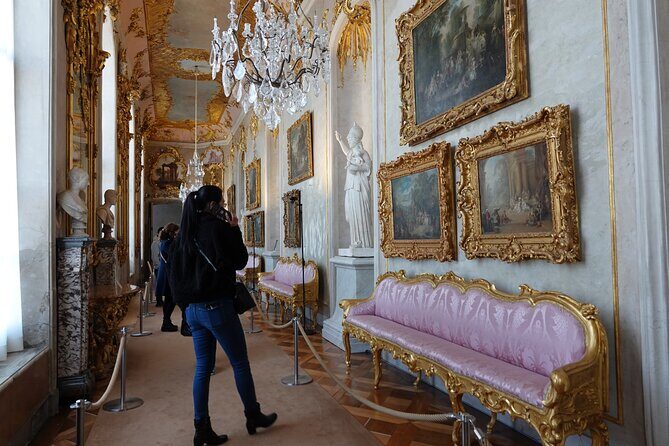
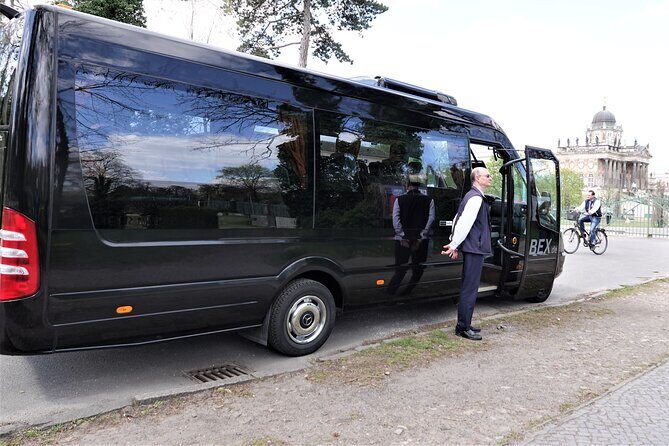
A big part of why this tour works is that it doesn’t rely on you doing everything manually. You’re on a coach with driver, and the schedule is designed to fit a half-day from Berlin. That means fewer transfers, fewer lineups, and more time spent listening and looking.
The max group size of 30 keeps things manageable. And since your guide is working in English and German, the tour can adapt to the group’s language balance—though your experience may depend on that mix.
Bathroom and food reality check
Two practical notes based on how tours like this actually run:
- Food and drinks aren’t included, so plan a water plan and consider a snack if you know you’ll want one.
- Bathroom availability can be limited. One practical tip I’d follow: bring small change, since restroom access at the gate or during stops may not be free and could require payment.
Best mindset for a 4-hour day
Think of it as a curated sampler. You’ll see major highlights, learn the themes behind them, and get enough context to either:
- enjoy Potsdam on this one visit, or
- come back later with a deeper plan.
If your goal is to spend half a day doing only interiors and long museum-style wandering, you may feel a little squeezed.
Price and value: what you’re paying for (and what you’re not)
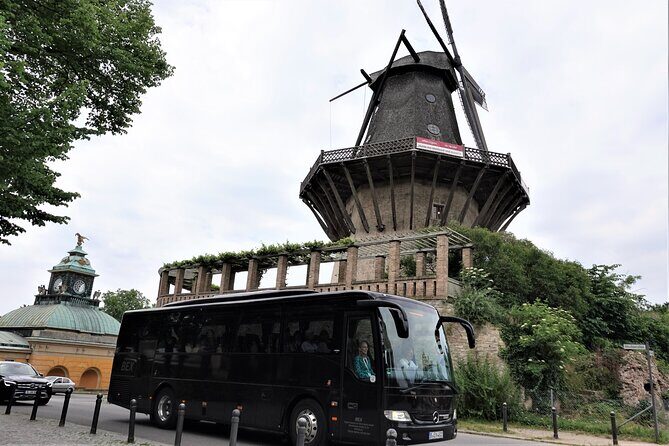
At $77.23 per person, this is not a “budget-only” option. But you are paying for several things that add up fast on a day trip:
- Coach transport from Berlin and back
- Skip-the-line Sanssouci Palace entry
- Guided interpretation across multiple historic sites
- Admission included for the palace portion
In other words, the value here is time and clarity. Without a guide and skip-the-line entry, it’s easy to lose the best part of Sanssouci to waiting. And without the explanations, you might walk through fancy rooms and grounds without connecting them to Frederick the Great’s motives and the larger political story.
What could make the price feel steep is the half-day format. If you compare cost to “hours spent standing around,” it can feel like you don’t get enough time. If you compare cost to “time saved + guide help + admission,” it starts to make more sense.
A balanced expectation check:
- You get real time at Sanssouci.
- Several other stops are more efficient photo-and-context moments.
- The tour is designed for a first-time overview, not a slow deep study.
Who should book this Potsdam tour from Berlin?
This is a great fit if:
- you want an efficient first look at Potsdam’s major landmarks
- you like a guide who explains the story behind the buildings
- you’d rather pay for skip-the-line than manage tickets on your own
- you want a manageable group day with a comfortable coach
It might be less ideal if:
- you want lots of unscripted time inside multiple palaces
- you need very consistent English narration the entire time, regardless of group language mix
- you’re traveling with a strict schedule that can’t handle a tight 4-hour plan
Should you book this Potsdam tour?
If you want the “best-of Potsdam” feeling without planning headaches, I think you should book. This tour’s core strength is that it protects your time at Sanssouci Palace while still giving you the Cold War and architectural variety that makes Potsdam memorable.
If you’re on the fence, use this rule: book it if your goal is context and highlights in half a day. Skip it or pair it with extra time if your goal is long interior wandering and deep independent exploration.