REVIEW · BERLIN
Cold War and Berlin Wall Tour in Italian
Book on Viator →Operated by Vive Berlin Tours · Bookable on Viator
Berlin’s Cold War story walks beside you. This Italian guided route strings together the Wall’s key sites with real street-level context, from Potsdamer Platz to the East Side Gallery, so you spend less time planning and more time understanding. You’ll cover the Berlin Wall Memorial, GDR-era architecture, and the murals that became an international symbol of freedom.
What I like most is how the walk turns scattered facts into a clear story you can follow as you move. Two standouts for me: the guide’s explanations of escape systems at the Wall memorial, and the way the route pairs emotion with specific places you can still see today.
One thing to consider: this is a walking tour with mostly outdoor viewing, and the Berlin TV Tower is only seen from the outside. Also, the guide is Italian, so if you’re not comfortable with Italian, you may feel limited.
In This Review
- Key highlights you’ll actually feel on this tour
- A clear Cold War route in Italian, from Potsdamer Platz to the Wall
- Meeting at Potsdamer Platz: find the blue bicycle
- Berlin-Nordbahnhof and the story behind ghost stations
- The Memorial of the Berlin Wall: victims, construction, and escape systems
- Alexanderplatz: GDR architecture and the political energy of public space
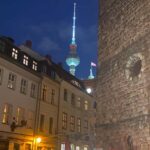
- Berlin TV Tower (outside only): a GDR landmark you can still read
- Karl-Marx-Allee: Stalinist-era buildings and the beginnings of the GDR
- East Side Gallery: murals that turned a wall into a message
- Price and value: what $27.87 gets you in real terms
- Who this tour is best for (and who should skip it)
- Should you book this Cold War and Berlin Wall Tour in Italian?
- FAQ
- How long is the Cold War and Berlin Wall Tour in Italian?
- Where does the tour start and where does it end?
- What language is the guide?
- Is admission included for the stops?
- Is there a maximum group size?
- What is the cancellation policy?
Key highlights you’ll actually feel on this tour
- A single route through major Cold War stops without needing to stitch together tickets and directions yourself
- Ghost-station history at Berlin-Nordbahnhof, where you learn what made parts of the transit system eerie
- 50 minutes at the Berlin Wall Memorial, with attention to victims and escape attempts
- GDR landmarks in a logical flow: Alexanderplatz, the Berlin TV Tower (outside), and Karl-Marx-Allee
- The East Side Gallery as a finish point, where murals carry the meaning of 1989
A clear Cold War route in Italian, from Potsdamer Platz to the Wall
Berlin can feel like a museum that you walk through at random, unless someone gives you the thread. This tour does that work for you. You start in the Potsdamer Platz area and follow a route designed to connect the Cold War logic of Berlin—who controlled what, who wanted to leave, and why the city looked the way it did.
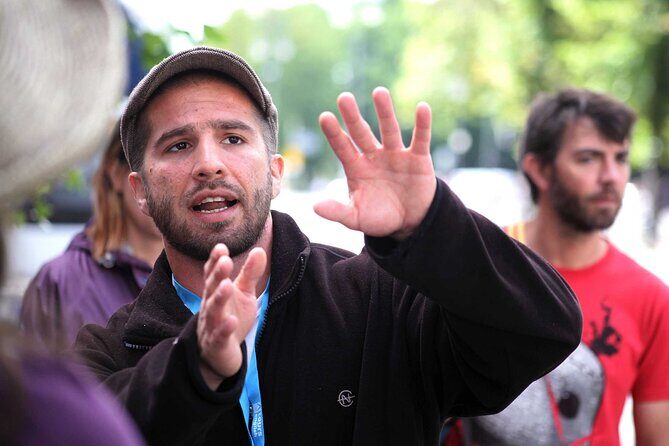
The format is simple: you meet your Italian-speaking guide, then you walk from stop to stop with commentary that explains what you’re seeing. That’s the big practical win. Instead of trying to figure out each location on your own, you get context while the memories are attached to the street in front of you.
And yes, it’s emotional. One of the strongest notes from the experience is how well the guide brings that period to life. In one Italian review, the guide was described as preparatissima—and that kind of preparation matters here, because you’re dealing with tragedy, not trivia.
You can also read our reviews of more tours and experiences in Berlin.


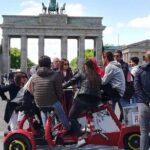
Meeting at Potsdamer Platz: find the blue bicycle
The tour starts at Potsdamer Platz 10 (S/U-Bahn Potsdamer Platz). The key detail is the meetup: look for the blue bicycle near VIVE BERLIN TOURS, with the logo flag. It’s a small thing, but it prevents that stressful last-minute scramble.
The tour uses a mobile ticket, and the meeting point is near public transportation. That’s helpful because you can arrive cleanly, even if you don’t know Berlin’s layout well yet. Also, the end point is at the East Side Gallery (10243 Berlin), and your guide can suggest what public transport to take afterward.
Timing is also straightforward: it starts at 10:00 am and runs for about 3 hours 30 minutes. If you like to keep your afternoons open for wandering, this is a good half-day commitment.
Berlin-Nordbahnhof and the story behind ghost stations
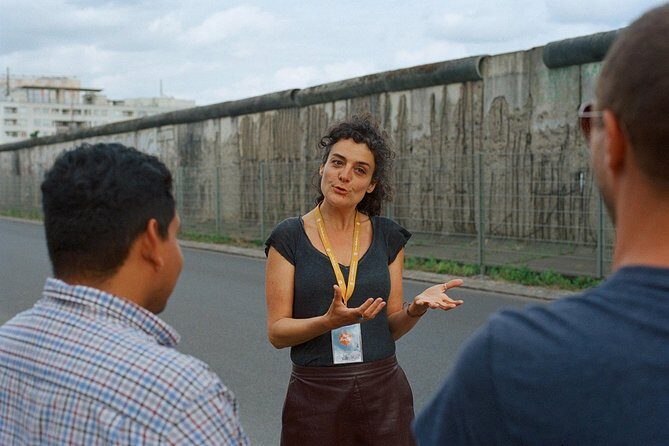
One of the most intriguing stops comes right away: Berlin-Nordbahnhof, where the guide talks about the history of ghost stations. This is the kind of detail that’s hard to grasp if you’re just reading a sign. With a guide, you understand what made certain stations special—places that existed physically, but didn’t function the way travelers expect.
This stop is about 10 minutes, so it’s not a long detour. The goal is to give you a mental model before you reach the bigger Wall sites. If you’ve ever wondered how politics shaped daily life and transit, this is one of the fastest ways to see it.
Possible drawback: because it’s short, you’ll want to stay close and listen carefully. If you drift and fall behind, you’ll miss the point.
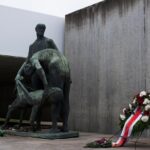
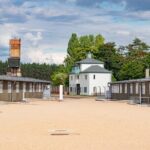
The Memorial of the Berlin Wall: victims, construction, and escape systems
The emotional center of the tour is the Memorial of the Berlin Wall, with about 50 minutes on site. This is where you slow down, absorb what’s left, and learn how the Wall was built and used to control movement.
What makes this stop especially valuable is the focus on two themes:
- the tragic stories of the victims, and
- the systems used to escape.
That combination is important. The Wall wasn’t only a barrier of concrete—it was a whole enforcement system. When you understand how escape attempts were met and prevented, the structure starts to make sense in a way photos alone rarely deliver.
The time here also means you can actually look around, not just pass by. Take a moment to pace yourself. Some parts of Berlin Wall history can feel heavy, and you’ll get more out of the memorial if you don’t rush.
Practical note: since this portion is part of the memorial experience, you’ll get the best value by staying present and letting the guide’s explanations land before you move on.
Alexanderplatz: GDR architecture and the political energy of public space
Next comes Alexanderplatz for about 15 minutes. This stop is less about one single object and more about atmosphere—how the German Democratic Republic (GDR) looked and how public life played out in a major square.
Your guide connects the architecture to the story of the GDR, then shifts to an idea that matters for understanding 1989: popular demonstrations at Alexanderplatz and how that pressure contributed to the fall of the Wall.
This is a smart piece of staging. By the time you reach Alexanderplatz, you’ve already absorbed the Wall’s function. Now you’re seeing how public momentum—people in a place—became part of dismantling the system.
Possible consideration: 15 minutes passes quickly. If Alexanderplatz is on your own sightseeing list later, you might want to return after the tour to linger longer—this stop gives you a clear orientation, not a full photo shoot.


Berlin TV Tower (outside only): a GDR landmark you can still read
For about 10 minutes, the tour pauses at the Berlin TV Tower. The important detail here is that you’ll visit it only outside. No interior visit is part of this experience.
So why include it? Because it’s described as the most impressive structure in the GDR and still the tallest building in Berlin. Even from the outside, it’s a powerful visual anchor. It helps you connect the West-and-East split not only to borders and walls, but also to what each side wanted to build, symbolize, and show.
If you’re hoping for big panoramic views from inside the tower during this specific tour, you’ll want to plan that separately. But as a visual marker for the GDR era, it fits the route.
Karl-Marx-Allee: Stalinist-era buildings and the beginnings of the GDR
Then you walk to Karl-Marx-Allee for about 20 minutes. This boulevard is framed by buildings from the Stalinist era, and the guide explains how this helped shape the early GDR.
This stop is useful because it gives you a “before and after” feeling: you’re not only seeing remnants of the Wall. You’re also seeing the ideology embedded in urban design. The buildings create a tone. The guide gives you the political meaning behind that tone.
If you’re the kind of traveler who likes to understand why a city looks the way it does—rather than just where to take photos—this stop is a real payoff. And 20 minutes is just enough time to look upward and take in the boulevard feel without the schedule getting bogged down.
East Side Gallery: murals that turned a wall into a message
The final major stop is the East Side Gallery, for about 20 minutes. This is the longest part of the Berlin Wall and is famous for the murals that transformed the Wall’s meaning.
It’s a fitting ending, because your earlier stops explain control, fear, and escape systems. Here, you see the opposite: artists turning the Wall into a public message about freedom.
In practical terms, 20 minutes can feel short if you want to read every mural title and symbol. But the tour’s job here is to give you the context and the emotional arc, then point you toward the best way to keep exploring after the walk.
If you want even more out of this stop, linger on your own afterward and pick one or two murals to study carefully. The meaning becomes clearer once you’ve already heard the Wall story from the beginning.
Price and value: what $27.87 gets you in real terms
At $27.87 per person, this is priced in a way that feels reasonable for a guided, multi-stop history walk—especially in a city where individual attractions and guided services can add up fast.
What you’re paying for isn’t just someone to walk with you. It’s a structured route that hits:
- the Berlin Wall Memorial (with substantial time),
- multiple GDR landmarks, and
- key Cold War context points along the way.
You also get an Italian-speaking guide and admission tickets marked as free at the listed stops. That matters for value because it reduces the “hidden cost” feeling. You’re not constantly stopping to pay extra.
Group size is capped at 25 travelers, which is a sweet spot for a walking tour. Big enough to feel social, small enough that you’re not invisible.
One more practical detail: the experience is often booked about 24 days in advance on average. If you want a specific day, don’t assume you can wait too long.
Who this tour is best for (and who should skip it)
This tour is a strong fit if you:
- want a guided explanation in Italian,
- prefer walking with a plan over doing Berlin Wall logistics on your own,
- care about understanding how everyday life, architecture, and politics connect.
It’s also good for first-time visitors who want a “Cold War spine” through the city—without needing to research for hours.
You might choose differently if:
- you want a lot of indoor time or a comprehensive museum visit,
- you’re hoping for a view experience from inside the TV Tower during this tour,
- you don’t read or listen well in Italian and don’t want to rely on partial comprehension.
Should you book this Cold War and Berlin Wall Tour in Italian?
Yes, I’d book it if you want a focused, emotionally grounded walk that links multiple major sites into one coherent story. The biggest reason is the way the guide’s commentary gives meaning to what you’re standing in front of—especially at the Berlin Wall Memorial, where the focus on victims and escape systems makes the history feel real.
Book it sooner rather than later if your dates are fixed, since it’s commonly reserved around a few weeks ahead. And if you’re Italian-speaking or comfortable with Italian, you’ll likely feel the same strength people note about the guide’s preparation and the way the route makes 1989 feel present rather than distant.
FAQ
How long is the Cold War and Berlin Wall Tour in Italian?
The tour runs for about 3 hours 30 minutes.
Where does the tour start and where does it end?
It starts at Potsdamer Platz 10, 10785 Berlin, near S/U-Bahn Potsdamer Platz, and ends at the East Side Gallery area, 10243 Berlin.
What language is the guide?
The guide provides commentary in Italian.
Is admission included for the stops?
The listed stops show admission tickets as free, and the tour includes the guide in Italian.
Is there a maximum group size?
Yes. The tour has a maximum of 25 travelers.
What is the cancellation policy?
You can cancel for a full refund up to 24 hours before the experience’s start time.