REVIEW · BERLIN
Kreuzberg Berlin: Off the Beaten Track PRIVATE Walking Tour
Book on Viator →Operated by Withlocals · Bookable on Viator
Berlin’s street art has a second map. This private walk turns Kreuzberg and the East Side Gallery into a story you can actually follow, with local context and the kind of detours you only get with a one-on-one host.
I love the way the tour stays flexible: after you book (or even on the day), you can steer the route toward what you care about most. I also like that you’re walking with someone who can point out why specific art matters, from protest graffiti to neighborhood changes.
The one possible downside is simple: if you’re expecting a tightly scripted lecture with lots of dates and deep background on every single wall, you may want to ask for more explanation as you go, because the focus can feel more street-level and story-driven than academic.
In This Review
- Key Highlights You’ll Feel on This Walk
- Why Kreuzberg Street Art Works Better as a Private Walk
- Hackescher Markt: The Smart Starting Point for Offbeat Berlin
- Stop 1: Kreuzberg’s Counterculture Corners and Courtyard Life
- The Pink Man and the East Side Gallery: When Graffiti Becomes Protest History
- Pink Man (Blu): Protest in a single, visible target
- East Side Gallery: International artists and a living wall
- Urban Spree Gallery: Where You Can Keep Following the Thread
- Metro Ticket and the Pace: How the Logistics Actually Help
- Guides and the Alternative Berlin Vibe: What You Can Expect From the Host
- What You’re Really Paying For: Value Beyond the Stops
- Who This Tour Fits Best (and Who Might Prefer Something Else)
- Should You Book Kreuzberg Berlin: Off the Beaten Track?
- FAQ
- FAQ
- Where is the tour meeting point?
- How long is the Kreuzberg Berlin off the beaten track private walking tour?
- Is this a private tour or a group tour?
- What is included in the tour price?
- Is hotel pickup included?
- What language is the tour offered in?
- Can the route be changed after booking or on the day?
- Do I need to bring tickets?
- Is the tour physically demanding?
Key Highlights You’ll Feel on This Walk

- Private, just you and your guide: no group pace, no watching from the side.
- Street art with meaning: stops can include Blu’s Pink Man protesting gentrification and wall art tied to Berlin Wall history.
- Counterculture neighborhoods beyond the postcard route: Kreuzberg gives you the more local edge of the city.
- A big art hub with easy follow-ups: Urban Spree Gallery is the kind of place you can return to after the tour.
- Route changes are allowed: you can adjust after booking or on the day to fit your interests.
- Food and hangout suggestions help you keep going: hosts often recommend nearby places to eat and unwind.
Why Kreuzberg Street Art Works Better as a Private Walk
Berlin has two speeds. One is the classic tourist circuit with the same photo angles for everyone. The other is what you notice when you’re slow enough to read a wall, spot a courtyard door, or realize a neighborhood has changed around the edges.
This tour leans hard into that second speed. You start with a local host and then you guide the momentum. Yes, there are planned highlights, but you’re not locked into a one-size-fits-all route. If you’re the type who wants to linger at a piece, ask questions, or hop to a nearby alley because something catches your eye, a private setup is the real point.
And this isn’t just random graffiti spotting. The route is built around culture signals: where street art lives, how it reflects power and change, and what “alternative Berlin” can look like in 2026, not just in old photos.
You can also read our reviews of more walking tours in Berlin
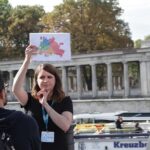


Hackescher Markt: The Smart Starting Point for Offbeat Berlin
You meet at Hackescher Markt 4, right in a part of Berlin that’s easy to reach and easy to orient from. That matters because it keeps the tour from feeling like a transit chore. If you’re already using public transport (and you will), being near a rail hub keeps the day smooth.
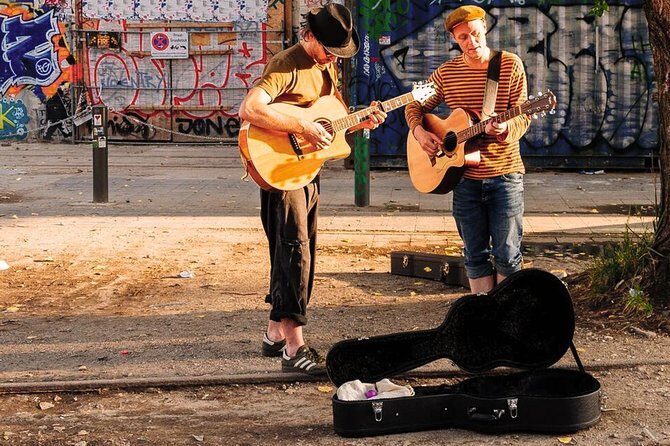
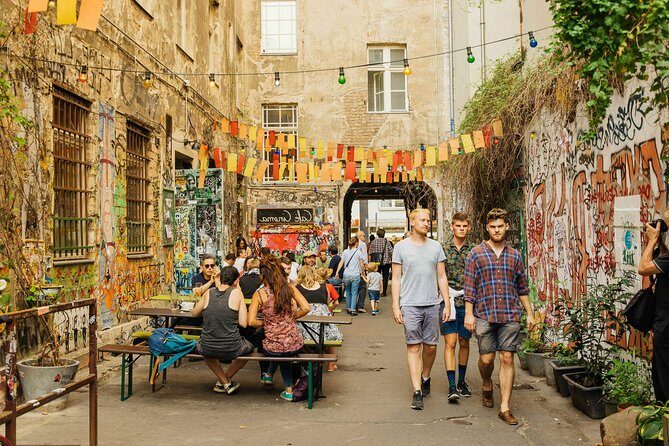
You’ll begin by heading to a courtyard that contemporary artists love. Courtyards in Berlin can feel like another planet—quiet pockets tucked behind streets that look ordinary from the outside. On this walk, you’re not just seeing a pretty place. You’re learning how art can reshape a space and how people assign meaning to what they see.
Expect your guide to talk you through the “why” behind the visuals: what the art is trying to say, how the setting influences interpretation, and why Berliners often treat street culture as part of everyday life, not a separate museum category.
Stop 1: Kreuzberg’s Counterculture Corners and Courtyard Life
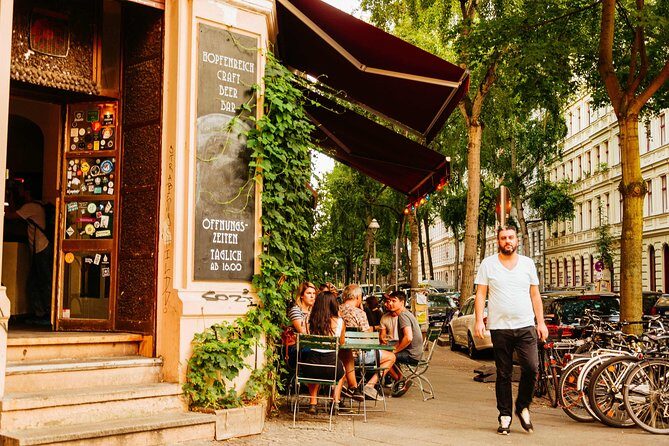
Kreuzberg is where Berlin’s cool factor often feels earned, not packaged. During this first stretch, you get a lesser-known part of the district that’s meant to feel more authentic than the loudest tourist magnets.
This is also where you can start building a mental map of Kreuzberg. You’ll see the neighborhood through the lens of alternative culture: courtyards that feel half-architectural and half-gallery, side alleys where street art is part of the fabric, and community spaces that reflect how people actually live there.
A couple specific details you might encounter depending on the route:
- Jewish quarter courtyards with tiled building charm and a garden oasis vibe
- Places like Dead Cat Alley, including the Little Lucy piece
- Mentions of Otto Weidt’s museum, connected to blind people employed during WWII (and to how memory is kept alive through small, focused sites)
Two things I really like about starting here:
1) Kreuzberg sets the tone fast. You’re not easing into “art Berlin.” You’re stepping into the city that makes it.
2) It’s where questions make sense. If you’re wondering what gentrification means in practice, or why some neighborhoods draw certain communities, the street-level context helps.
If you want a caution, it’s this: Kreuzberg can be a lot for your brain at once—art, history, politics, design, and daily life all mixed together. Wear good shoes and don’t rush. The payoff is in noticing.
The Pink Man and the East Side Gallery: When Graffiti Becomes Protest History
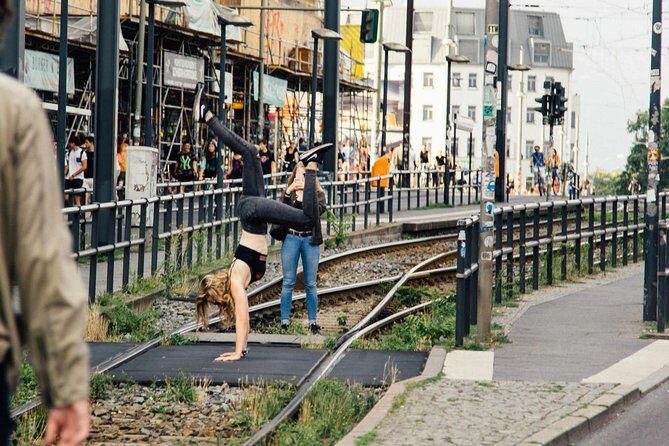
After Kreuzberg, the walk shifts into Berlin Wall-era art and protest visuals. Two stops sit at the core of that.
Pink Man (Blu): Protest in a single, visible target
You may stop by the Pink Man, a graffiti piece by Blu that protests gentrification. This is the kind of work that doesn’t need a caption to land. The message is there, in color and placement, and your guide should help you connect it to the neighborhood shifts happening around it.
This stop is valuable because it reframes street art. It’s not just style. It’s commentary—sometimes sharp, sometimes personal, often aimed at real-world pressure like rent hikes and displacement.
You can also read our reviews of more private tours in Berlin



East Side Gallery: International artists and a living wall
Then you move to the East Side Gallery. Expect street art layered with history. International artists left their marks on sections of the Berlin Wall, turning a brutal landmark into a kind of open-air canvas.
You’ll likely see well-known pieces along the way, including the Kiss mural at East Side Gallery (where your guide can explain why that imagery stuck in Berlin’s international story). You’ll also get context on how the gallery functions now—how visitors see it, but also how locals and culture-makers treat it as part of the city’s ongoing narrative.
Here’s the practical truth: at the East Side Gallery, it’s easy to become a stand-and-snap tourist. The tour helps you avoid that by turning the wall into guided reading—what the imagery suggests, what the artists were responding to, and how the meaning has evolved since the wall era.
One more small note: the gallery area is very visual. If you’re sensitive to crowds or strong emotions tied to WWII and the Cold War, take breaks. Ask your guide to pause. Private tours make that easy.
Urban Spree Gallery: Where You Can Keep Following the Thread
The route often includes Urban Spree Gallery, a bigger artistic center tied to urban art culture. This stop feels like a transition from street-level visuals into a space where art and community are more structured.
Think of it as a place to widen your understanding. A lot of people come to Berlin to see street art as an exterior activity—walls, alleys, and fences. Urban Spree Gallery helps you see how the same culture can live indoors, in programming, and in a wider arts ecosystem.
What I like here for your trip planning:
- It gives you an anchor location. Even after the tour ends, you’ll know where to go if you want more.
- It’s an easy “second-act” stop if you’re already planning to spend time in the neighborhood.
- Your guide can point you toward what to do next nearby—especially eating and a good place to reset.
Depending on your host and how your route is shaped, you might also pass by a small theater known for its 1970s flair. That’s the kind of detour that makes Berlin feel like Berlin—quirky, specific, and often better in person than in photos.
Metro Ticket and the Pace: How the Logistics Actually Help
This tour includes a metro ticket, which is a quiet but important value add. It means you’re not paying extra to keep moving through districts, and it also nudges the route toward locations that are realistic to reach by transit rather than by taxi.
The duration is about 3 hours (approx.), and the walking level is described as moderate fitness. That usually translates to: expect steady walking, a few stops where you linger, and a pace that still lets you see multiple areas without feeling like you’re racing the clock.
Because it’s private (only you and your local guide), you can shape your pace:
- If you want to slow down for photos and explanation, you can.
- If you want fewer stops and more movement, you can steer it.
- If you have questions mid-walk, you don’t have to wait for a group answer.
This matters for value. A private tour at around $123.36 per person for about 3 hours might sound steep if you’re comparing it to a general sightseeing bus. But you’re buying something else: time with a local who can translate what you’re seeing and help you connect neighborhoods to the city’s ongoing changes.
Guides and the Alternative Berlin Vibe: What You Can Expect From the Host
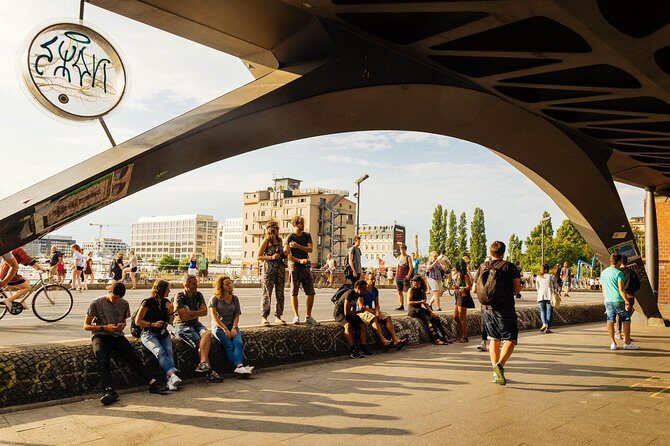
The vibe depends on your guide, but the overall style seems consistent: enthusiastic, question-friendly, and focused on how the city works rather than only what it used to be.
In the feedback tied to this experience, a few guide names show up again and again, including Betty, Seth, Miha, Amelia, Michelle, Leah, Melina, Pedro, and Dave. People describe them as relaxed hosts who make the walk feel personal. Some tours even touch on the clubbing scene and the history of ideas behind modern culture, not just the art itself.
If you’re art-focused, you’ll likely get plenty of pointers on what to notice. If you’re history-focused, you might need to ask for more backstory on specific sites as you go. One common critique is that a guide can feel more like a companion than a deep explainer. That doesn’t mean the tour is bad; it means you should actively manage expectations by asking clear questions like:
- What is the message behind this piece?
- How did this neighborhood change over time?
- What should I look at that most visitors miss?
A good host will welcome those questions.
What You’re Really Paying For: Value Beyond the Stops
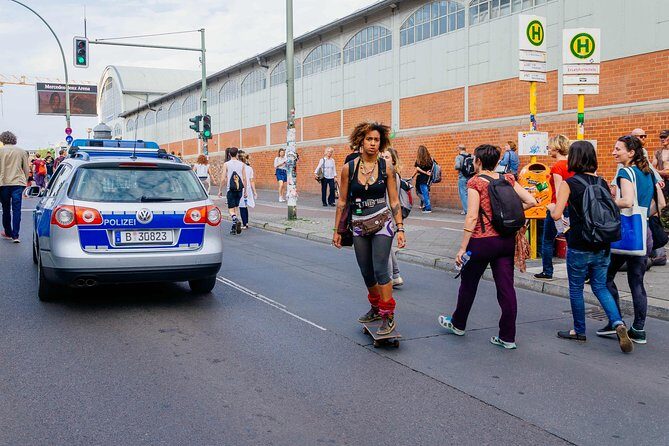
Let’s talk value in a practical way. You pay about $123.36 per person for a private 3-hour walk. You’re also getting:
- A private local guide
- A metro ticket
- A mobile ticket
- A sustainable carbon neutral experience
So the best way to think about the price is this: you’re not paying just for access to sights. You’re paying for guided interpretation, smart routing across districts, and the freedom to make changes after booking or on the day.
The tour also includes plenty of “free admission” type stops, which matters in Berlin where fees can add up fast if you stack multiple museum-style experiences.
And there’s a human value that’s hard to price: you leave with local suggestions. People often mention food stops recommended by guides, including ideas like hand-pulled noodles, a Sudanese lunch, or a Turkish restaurant meal. Even if meals aren’t included, a good recommendation saves you time and helps you eat in the places that match the vibe you just walked through.
Who This Tour Fits Best (and Who Might Prefer Something Else)
This is a great fit if you:
- Want street art and alternative culture, not only major monuments
- Like asking questions and getting context in the moment
- Prefer a route that can shift based on your interests
- Enjoy neighborhoods with visible community life
It might be less ideal if you:
- Want every stop explained with heavy historical detail at each point
- Prefer museum-style pacing with quiet indoor time rather than street-level walking
- Don’t like unpredictability (because the route can be tailored)
Should You Book Kreuzberg Berlin: Off the Beaten Track?
If you’re spending only a few days in Berlin and you want one experience that makes the city feel lived-in, I’d book this. The mix of Kreuzberg neighborhoods, street art with protest meaning, and the East Side Gallery’s Wall-era background is a strong way to get beyond the usual highlights.
I’d especially book it if you’re the type who reads walls, notices courtyards, and wants a host who can point out why certain art works hit harder than others. Private format plus route flexibility is the real win.
If you’re unsure, do this simple check: prepare 3 questions you care about (gentrification, Berlin Wall memory, or how street art relates to club culture). If you can get answers you like, this tour is worth every minute.
FAQ
FAQ
Where is the tour meeting point?
You meet at Hackescher Markt 4, 10178 Berlin, Germany.
How long is the Kreuzberg Berlin off the beaten track private walking tour?
It’s about 3 hours (approx.).
Is this a private tour or a group tour?
It’s private. Only you and your local guide participate.
What is included in the tour price?
The tour includes a private local guide, a metro ticket, and a sustainable carbon neutral experience. Admission tickets for the listed stops are free.
Is hotel pickup included?
No. Hotel pick-up and drop-off are not included.
What language is the tour offered in?
The tour is offered in English.
Can the route be changed after booking or on the day?
Yes. The tour is described as completely customizable, and you can make changes to the itinerary after booking or on the day.
Do I need to bring tickets?
You’ll have a mobile ticket.
Is the tour physically demanding?
It’s described as suitable for travelers with moderate physical fitness level, since it involves walking.