REVIEW · BERLIN
Clash of Titans: Battle for Seelow Heights WW2 tour
Book on Viator →Operated by On the Front Tours · Bookable on Viator
WWII trenches near Berlin changed everything. This Seelow Heights tour gives you a clear, on-the-ground look at how the Red Army pushed through the Seelow line in 1945, with stops that connect the big battle story to specific trenches, bunkers, and command posts. I especially like the small group size (max 7), which means questions actually get answered and the pacing stays human, and I also like that you start with the museum so the later trench walk makes sense right away, including a 3D model of the Soviet bunker and trench network.
The main drawback is physical: you’ll walk on uneven ground and through forested areas to reach remnants of the lines, so you’ll want sturdy boots and good weather. If you’re the kind of traveler who hates muddy shoes or doesn’t handle outdoor walking well, this might feel like too much of the day outside.
In This Review
- Quick hits on the Seelow Heights battlefield day
- Why Seelow Heights is a different kind of WWII tour
- Getting to the battlefield: meeting at Alexanderplatz and staying comfortable
- Stop 1: Gedenkstaette Seelower Hoehen museum and the 3D Soviet bunker view
- Stop 2: Am Reitweiner Sporn and the assault starting-point story
- Stop 3: Walking into the trench and bunker remnants near Zhukov’s position
- Stop 4: Dolgelin Railway station and German defensive command positions
- Stop 5: Komturei Lietzen, a German field cemetery, and the Templar-era detour
- Stop 6: Schlosskirche Jahnsfelde and the sports-field last stand
- What you get back in Berlin and how to plan your evening
- Price and value: is $167.74 a good deal?
- Who this tour suits best (and who might want another option)
- A quick note on guides, pacing, and what to ask
- Should you book Clash of Titans: Battle for Seelow Heights?
- FAQ
- What time does the tour start and where is the meeting point?
- How long is Clash of Titans: Battle for Seelow Heights?
- What language is the tour offered in?
- What’s included in the price?
- Is lunch included?
- How big is the group?
- Will I need to walk on uneven ground?
- What’s the tour like at the main museum stop?
- What happens if weather is bad?
- Can I cancel and get a full refund?
Quick hits on the Seelow Heights battlefield day
- Max 7 people keeps the tour personal and makes it easier to slow down for different walkers
- Museum first so you understand what you’ll later see in the trenches and bunker remnants
- Zhukov’s command bunker and observation point are part of the on-foot experience
- Reitwein’s role in the assault gets explained with hard numbers for infantry, tanks, artillery, and aircraft
- German defensive positions are shown at the Dolgelin area, including the command-post story linked to Colonel Scheunemann
- Harrowing last-stand detail at Jahnsfelde turns the “where” into a real sense of desperation and scale
Why Seelow Heights is a different kind of WWII tour
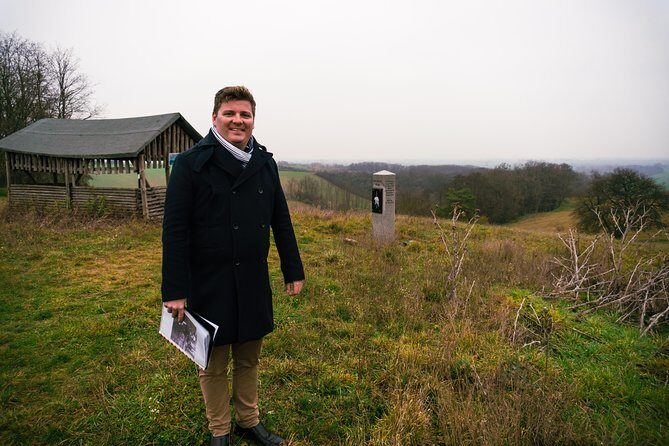
Berlin gets all the attention, but Seelow Heights was one of the pressure points that helped decide what happened next. Standing on or near these positions, you start to grasp how the terrain, the lines of fire, and the command decisions shaped the fight—especially on the Eastern Front, where movement was slow and the stakes were brutal.
What makes this tour feel practical (not just educational) is that it builds your understanding in order. You don’t just get facts tossed at you. You get a sequence: operation overview at the memorial site, then the assault starting point, then the trench/bunker remnants, then German defenses, and finally the last-stand aftermath story as you work your way back toward Berlin.
You can also read our reviews of more tours and experiences in Berlin.



Getting to the battlefield: meeting at Alexanderplatz and staying comfortable
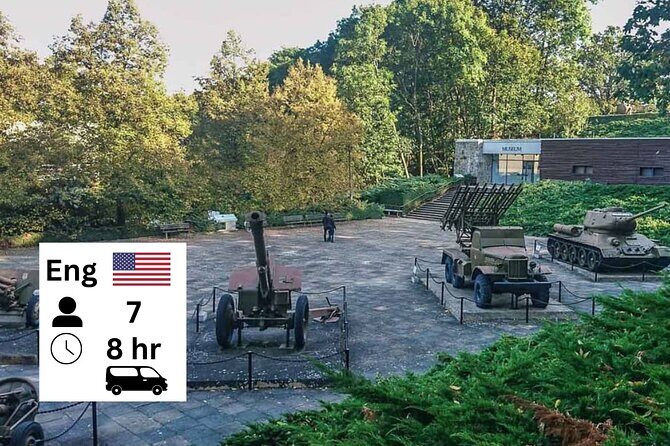
The day runs about 7 hours, starting at 9:15 am from Alexanderplatz (Dircksenstraße 2, 10179 Berlin). You’ll ride in an air-conditioned vehicle, which matters when you’re spending the day on the move around rural areas outside Berlin.
A big quality-of-life point here is that the tour is designed around easy transportation between scattered sites. The highlights call out 2-way hotel transfers, and even if you’re not taking a hotel pickup, you can still expect a straightforward Berlin start and a return to a central point or your hotel at the end.
Also, this is a tour in English, and you get Wi-Fi and a small bottle of water. Lunch is on you, but at least you’re not juggling everything else during the day.
Stop 1: Gedenkstaette Seelower Hoehen museum and the 3D Soviet bunker view
You begin at Gedenkstaette Seelower Hoehen, a memorial site focused on this phase of the Berlin-Seelow offensive operation. First you get a detailed introduction and a sense of what the operation was trying to do—how the attack unfolded and why Seelow mattered.
Then comes the part that makes later stops click: the museum visit includes a 3D model showing the Soviet 1st Belorussian Front bunker and trench network that you’ll visit later. After the intro (about 40 minutes total here), you get free time inside the museum to explore at your own pace.
This stop is where you decide whether the rest of the tour will feel like names on a map—or like a story with geography. If you’re the kind of person who likes context, don’t rush this first segment.
Practical note: museum time is short, so if you have strong questions, save them for when your guide can point you to the most relevant displays.
Stop 2: Am Reitweiner Sporn and the assault starting-point story
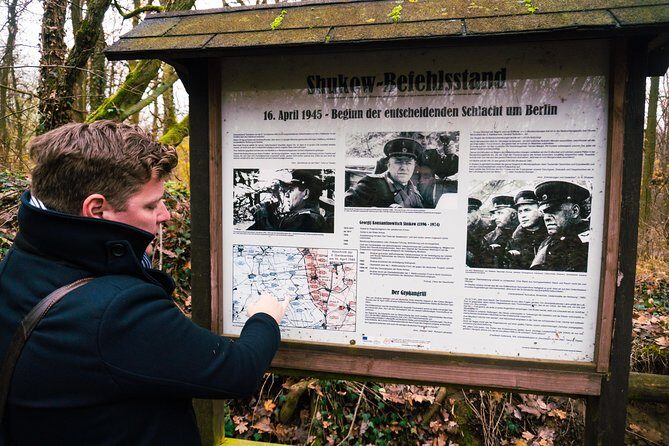
From the museum, it’s a short drive to Reitwein and the Am Reitweiner Sporn area. This part of the tour is brief—around 20 minutes—but the numbers are intense, and that’s the point.
The guide explains how Reitwein was tied to the start of the 1st Belorussian Front assault on Seelow and the future push toward Berlin. You’ll hear figures like 768,000 infantry (including 78,556 soldiers of the Polish 1st Army), 3,059 tanks, 16,934 artillery and mortars, and 3,279 combat aircraft. Even if you already know WWII history in general, those totals help you recalibrate what “offensive” meant in 1945.
If you like “big picture” explanations, this is where you get them in a grounded way—tied to the terrain, not just the calendar.
Stop 3: Walking into the trench and bunker remnants near Zhukov’s position
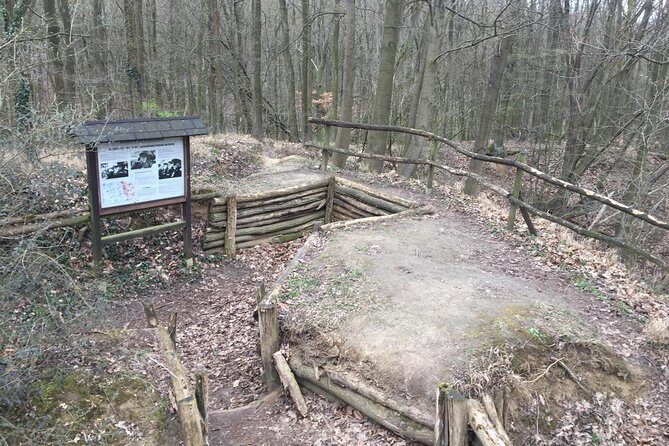
After the town stop, you’ll take a short walk through the forest to reach the bunker and trench network systems. This is the part that feels most like a real battlefield walk: remnants of positions still sit in the area, so you’re not just viewing history behind glass.
This segment is about 30 minutes, with highlights including Marshal Zhukov’s command bunker and observation point. That detail changes the experience because it shifts you from thinking about “armies” to thinking about decision-making under extreme pressure. You’re placed near where command could observe and direct, which is a very different mental frame than standing near a memorial plaque.
One word of advice: wear boots that can handle dirt and roots. The tour notes and the overall experience style both point to off-the-beaten-path walking, and it’s easier when your footwear is ready.




Stop 4: Dolgelin Railway station and German defensive command positions
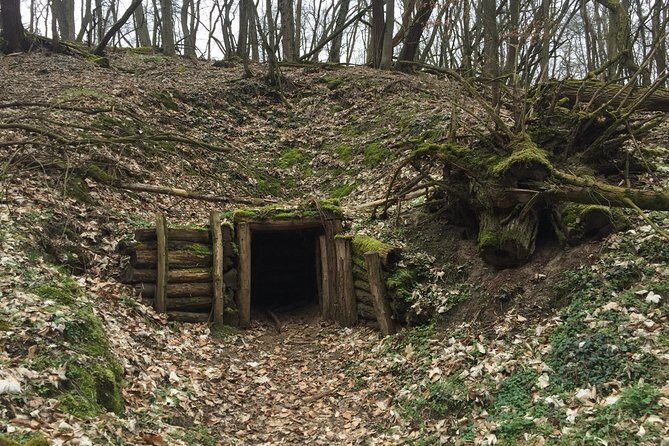
Next you move on toward Dolgelin Railway station, with a trench-network excursion before arriving at the key defensive-story location. This stop is about 20 minutes, and it focuses on what German forces were doing while the Soviet and Polish troops were pushing through.
The tour ties the area to Colonel Scheunemann, commander of the 303rd Infantry Division, who set up his command post in defense of the heights. Standing in these kinds of spots helps you understand the tug-of-war between offense and defense: attackers needed breaks and momentum; defenders needed resistance and time.
This is also where you start hearing about the practical difficulties the attackers faced while crossing what’s described as a shooting gallery—terrain and fire that turned movement into survival math.
Stop 5: Komturei Lietzen, a German field cemetery, and the Templar-era detour
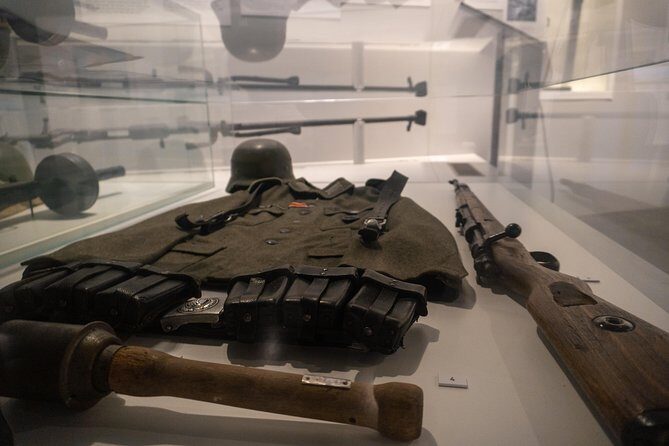
On the return route toward Berlin, you pass through Lietzen and stop briefly at a German field cemetery. The stop is about 30 minutes, and it has a quiet, heavy tone: the cemetery has been significantly extended since German reunification, and newly found remains are added to wartime graves.
This stop matters because it pulls the timeline back from tactics into human cost. It also reminds you that the war is not only something that happened in 1945—it keeps being uncovered and recorded over time.
Then the tour includes an offbeat historical contrast: Lietzen has what’s said to be Germany’s oldest barn, plus a manor house built by the Knights Templar dating back to 1252. It’s a quick detour, but it’s a good reminder that this region didn’t stop being a place for normal life after the war.
Stop 6: Schlosskirche Jahnsfelde and the sports-field last stand
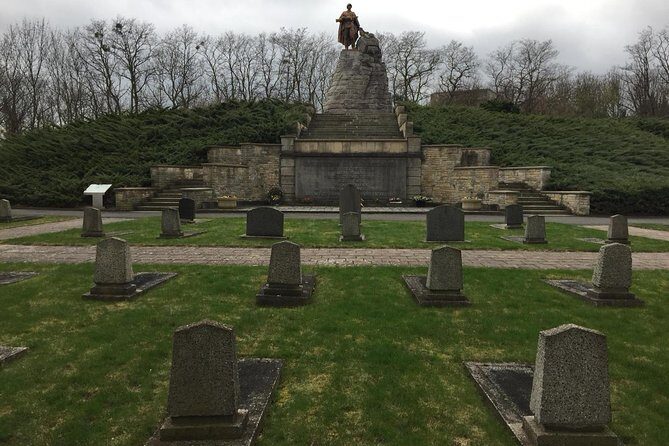
The final battlefield-focused stop is in Jahnsfelde, at Schlosskirche Jahnsfelde. This segment is about 20 minutes, and it doesn’t shy away from brutality.
The tour describes a sports field that used to be the site of a German field hospital, attacked by Soviet aircraft targeting red cross markings. From there, it connects to the last stand of the 3rd Battalion of the Artillery Regiment 18, including a story of setting up defense during a withdrawal after being caught by advancing Soviet armor.
The numbers here are stark: the battalion is described as destroying an estimated 100 tanks, but suffering the cost of 8 officers, 163 killed, over two-thirds wounded, and all guns lost. That sequence is what makes this tour feel different from “photo stops.” It ties geography to the kind of moment where survival isn’t a plan, it’s a hope.
What you get back in Berlin and how to plan your evening
You return to Berlin and your guide drops you back at your hotel or a central point of your choosing. The tour ends back at the meeting point area, so you can plan dinner without a long additional commute.
Because the day is built around multiple stops, you’ll likely want a quiet evening afterward. If you’re staying central, this is a good day to pair with a low-key meal and then read or review what you just saw—especially the way the trench and bunker remnants connect to the museum model.
Price and value: is $167.74 a good deal?
At $167.74 per person for roughly 7 hours, this tour isn’t cheap, but it also isn’t just a bus ride. For your money you get:
- Air-conditioned transport for a full day
- Museum entrance included for Stop 1
- A small group (max 7)
- Guided interpretation across multiple battlefield sites
- Wi-Fi and a bottle of water
Lunch isn’t included, so budget extra for food. But if you compare this to doing the same sites independently, the biggest savings isn’t only cost—it’s time and interpretation. You’re getting the “why this matters” layer at each stop, tied to the specific places you’re standing.
If you care about WWII beyond broad overview—especially Eastern Front details—this price starts to look fair fast.
Who this tour suits best (and who might want another option)
This works best for you if:
- you like WW2 history tied to real places, not just museum panels
- you want a small-group format that keeps questions in play
- you’re comfortable walking on uneven ground and through forested areas
- you want an orderly sequence: museum context, then trenches, then defenses, then aftermath
It may be less ideal if:
- you dislike outdoor walking or rough ground
- you want long stops for lingering photos (the time per location is tight)
- you’d struggle without lunch being provided (bring a plan for meals)
A quick note on guides, pacing, and what to ask
You may meet guides such as Steve or Matt, who are described as passionate and good at answering questions. The tour style includes large maps and timeline-style explanations at stops, which is helpful when you’re trying to keep the four days and shifting fronts straight.
If you’re short on time and want to get the most out of each stop, ask questions like:
- What was the main obstacle at this specific point in the advance?
- How does this bunker/observation area change what a commander could control?
- Where does the German defense try to buy time, and how does it fail or hold?
That kind of question fits the format.
Should you book Clash of Titans: Battle for Seelow Heights?
I’d book it if you want a WWII day trip in Berlin that feels grounded and human—one where you stand near command points, trench remnants, and specific defensive positions, and you leave with a clearer sense of how the operation worked. The small group and the choice to start with the museum (including the 3D model) make the whole experience easier to follow.
Skip it only if you know you’ll struggle with short walks in natural terrain and you strongly prefer tours with long indoor time or built-in lunch. If you can handle boots and an outdoor day, this is one of the more focused WWII experiences you can do from Berlin.
FAQ
What time does the tour start and where is the meeting point?
The tour starts at 9:15 am at Alexanderplatz, Dircksenstraße 2, 10179 Berlin, Germany.
How long is Clash of Titans: Battle for Seelow Heights?
The duration is listed as about 7 hours.
What language is the tour offered in?
The tour is offered in English.
What’s included in the price?
Included items are an air-conditioned vehicle, museum entrance, Wi-Fi, and a small bottle of water.
Is lunch included?
No. Lunch is not included.
How big is the group?
The tour has a maximum of 7 travelers, which keeps it small-group focused.
Will I need to walk on uneven ground?
You’ll have short walks, including through forested areas to reach bunker and trench network remnants, so sturdy footwear is a smart idea.
What’s the tour like at the main museum stop?
At Gedenkstaette Seelower Hoehen, your guide gives an overview (about 40 minutes total), and the museum visit includes a 3D model related to the Soviet bunker and trench network you’ll later see.
What happens if weather is bad?
The experience requires good weather. If it’s canceled due to poor weather, you’ll be offered a different date or a full refund.
Can I cancel and get a full refund?
Yes—free cancellation is available up to 24 hours in advance for a full refund. If you cancel less than 24 hours before the start time, the amount paid is not refunded.