REVIEW · BERLIN
Group Walking Tour (1 – 20 people): 3 Hours the Wall, Third Reich, WW2, Cold War
Book on Viator →Operated by Private Tour Berlin · Bookable on Viator
Berlin has a way of teaching fast. This 3-hour private walk connects the Third Reich era to the fall of the Berlin Wall with a guide who keeps the story clear.
I love that you get landmark-to-landmark context in real time, not just a list of sites. And I really like the small-group feel, which makes it easier to ask questions as you go.
What stands out most is the way the guide uses local detail to make big events feel understandable and human. Brandenburg Gate is a strong starting anchor, and then you shift into the wall-era setting that made Berlin a living border. One consideration: you won’t have personal headsets, so you’ll want to be positioned where you can hear the guide on busy streets.
In This Review
- Key things to know before you walk Berlin’s 20th-century story
- Why this 3-hour route works: big events, manageable pace
- Private guide + small group: what you actually gain
- Brandenburg Gate as your starting anchor (and how to “read” it)
- The Wall memorial stop: where the story becomes physical
- Checkpoint Charlie and the Cold War “border feeling”
- The Holocaust Memorial moment: meaning over spectacle
- How the guide brings it together: from events to choices
- No personal headsets: a small change that matters
- Pickup, mobile ticket, and getting to the meeting point
- Weather-proof reality: what to wear so you can focus
- Price and value: what $338.19 per group buys
- Who this tour is best for (and who should reconsider)
- Booking checklist: how to choose the right expectations
- Should you book this Berlin Wall, WWII, and Cold War walking tour?
- FAQ
- How long is the tour?
- Is this a private tour?
- Which landmarks are included?
- Is pickup offered and do I get a mobile ticket?
- Are personal headsets provided?
- Can I get a refund if I cancel?
Key things to know before you walk Berlin’s 20th-century story
- Small private group feel (up to 15) for questions and pacing that fits your interests
- Local guides connected with the Berlin Guides Association and fluent English
- Two major, timed anchors: Brandenburg Gate (15 min) and the Berlin Wall memorial (25 min)
- Street listening with no personal headsets, so your spot matters
- Weather-proof operation: it runs in bad weather, so plan your layers
- Real guide names from past tours include Peter, Harold, Wolfgang, and Harald
Why this 3-hour route works: big events, manageable pace
If you try to self-guide Berlin’s 20th century, you’ll likely bounce between places and still feel like the timeline is slippery. This tour is built for order. You walk a tight route for about 3 hours (approx.), so you get a clear arc from Nazi Germany to the Cold War city that followed.
I like the way the focus stays on the why behind each location, not just the what. You’ll see the Berlin icons people photograph, but you’ll also get the context that makes those photos start to make sense. It’s the difference between looking at a monument and understanding what life was like around it.
You can also read our reviews of more walking tours in Berlin



Private guide + small group: what you actually gain
This is a private tour/activity, meaning only your group participates. With a group size capped at up to 15, it’s small enough to keep things conversational, but big enough that you’re not constantly waiting for the guide to catch up with one person’s questions.
The guides are local experts and speak English very well, and they’re part of the Berlin Guides Association. That matters because Berlin’s history is dense and emotional. A guide who can explain complex shifts in power and ideology in plain language saves you from reading the same fact three times and still feeling lost.
It also helps that the tour is described as customizable. If your interest leans WWII-era details, Cold War politics, or the lived experience of divided Berlin, you can usually steer the conversation so the walk fits you.
Brandenburg Gate as your starting anchor (and how to “read” it)
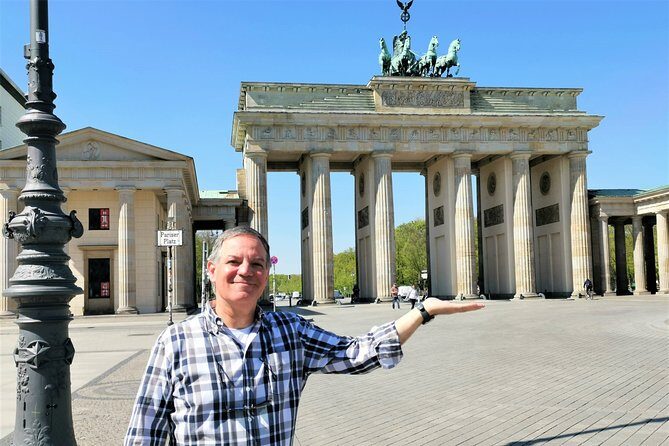
You start at the Brandenburg Gate, one of those places that looks like it belongs to every era at once. On this tour, you’ll spend about 15 minutes there, and that time is used for orientation—history in a way you can carry into the rest of the route.
This is a smart move. Before you tackle walls, checkpoints, and memorial spaces, you need a mental map of what Berlin represents and how symbols shifted across regimes. The gate is ideal because it’s instantly recognizable, and it sets a baseline for the story you’ll hear next.
Practical tip: if you’re sensitive to crowded spaces, plan a slightly quieter moment before you arrive. It’s an iconic stop, so you’ll want to stay aware of foot traffic while still catching every word.
The Wall memorial stop: where the story becomes physical
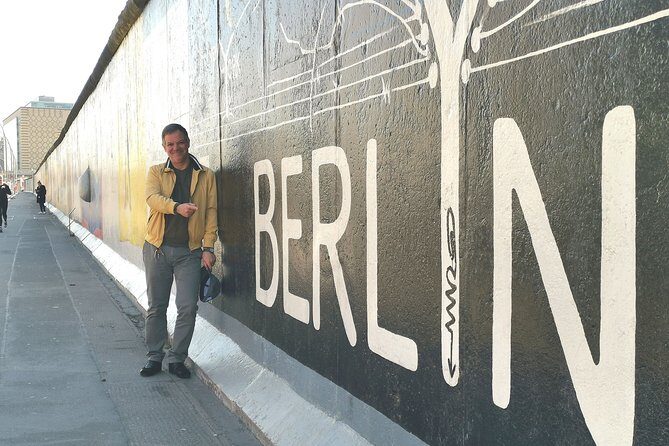
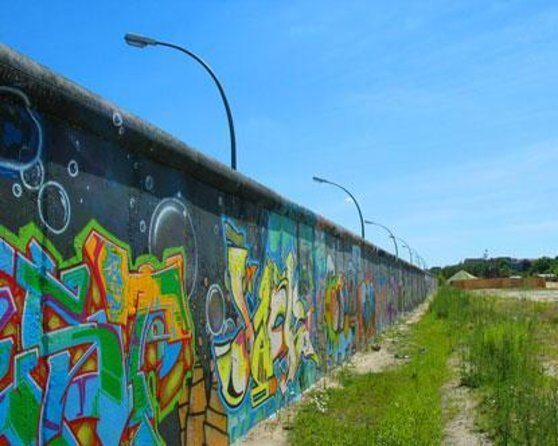
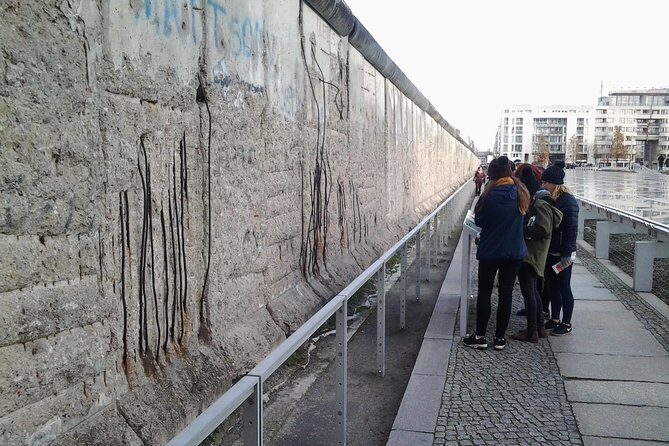
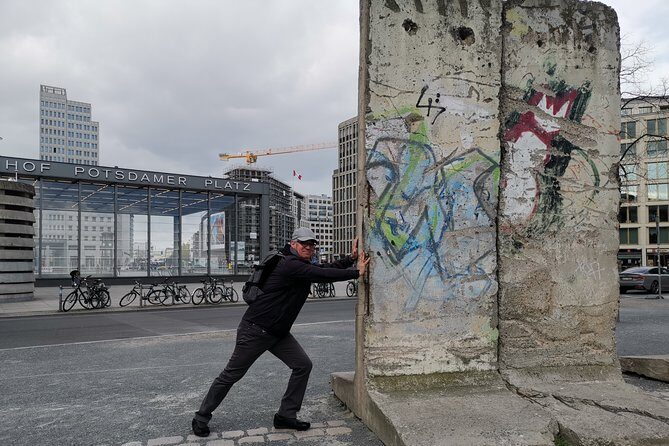
Next comes the Memorial of the Berlin Wall. You’ll have about 25 minutes here, and that’s long enough to slow down and actually absorb what you’re looking at.
What I like about putting this stop early-ish is the contrast. Brandenburg Gate can feel like a symbol floating above history. The wall memorial brings you back down to the reality of division—how a city can be cut into separate lives. Even if you already know the broad facts, seeing this space in person is what makes the timeline stick.
A consideration here: this is a memorial environment, and it can feel serious. Keep your expectations respectful. The tour guides are there to explain, but you should give the place room to land.
Checkpoint Charlie and the Cold War “border feeling”
You also visit Checkpoint Charlie, one of Berlin’s most famous Cold War crossing points. Even if you’ve seen photos before, the power of this stop is in how your guide connects it to the Cold War setup: propaganda, tension, and the everyday reality of living in a divided city.
This is where Berlin turns into a set of decisions. You’ll hear how borders weren’t only lines on maps. They affected movement, information, safety, and what people could risk saying or doing. Walking from one landmark to the next makes the concept feel less abstract.
If you like history that feels close to daily life—who could go where, how rules worked, what ordinary people dealt with—Checkpoint Charlie is the kind of stop that delivers.
A few more Berlin tours and experiences worth a look




The Holocaust Memorial moment: meaning over spectacle
The tour includes the Holocaust Memorial, and this stop deserves careful attention. Unlike a monument you can treat as scenery, this is a space built to make you slow down and think. Your guide’s job here is to give the context you may not get from just viewing the site.
I value that this tour doesn’t treat WWII as only uniforms and dates. It keeps attention on consequences and memory. A good guide helps you understand why this memorial exists and how it fits into Germany’s later reckoning with the Nazi period.
Practical note: plan for a quieter mindset here. If you’re traveling with people who want only quick sightseeing, this portion may feel more time-heavy than you expect.
How the guide brings it together: from events to choices
The strongest tours connect sites into one story. Here, you’re essentially walking along the fault line between systems: Nazi control, post-war division, then the Cold War world that shaped Berlin until the wall fell.
I especially liked the quality signals from past guides. Tours have been led by Peter, praised for formidable knowledge of 20th-century Berlin, and Harold, known for both strong local insight and good humor. Another guide, Wolfgang, has been singled out for using illustrations and speaking French very well. Those details point to a real teaching style, not just reciting facts.
You can expect your guide to keep returning to the same underlying question: how did Berlin go from one political reality to another, and what did that change mean on the ground? That repeated thread is what turns separate landmarks into a single coherent experience.
No personal headsets: a small change that matters
This tour notes that no personal headsets are used with the guide on the street. That can sound minor, but it affects your comfort level and your ability to hear.
Here’s how to handle it: stay close to your guide, especially at the bigger stops. If your group tends to spread out, gently pull together. If you’re in the middle/back, you might catch less detail, and with a history tour, missing a few lines can make the timeline harder to follow.
It’s also worth noting that the tour runs in all weather. So if it’s windy or rainy, your “hearing strategy” matters even more.
Pickup, mobile ticket, and getting to the meeting point
You may have pickup offered, which is useful if you want to reduce transit friction at the start of a walk. The tour is also described as near public transportation, so you have options even if you don’t take pickup.
You’ll receive a mobile ticket, which helps you avoid paper and last-minute scrambling. If you like to travel light and move quickly, this setup is convenient.
Weather-proof reality: what to wear so you can focus
These tours run in bad weather. That’s not a “maybe.” It’s the plan. So bring layers, a rain shell if needed, and shoes you can stand and walk in comfortably.
This matters more than it sounds. A history walk only feels enjoyable if you’re not fighting the elements. Berlin weather can shift fast, and you’ll get the most out of the story when your body isn’t busy negotiating with cold or wet air.
Also, the tour is for people with moderate physical fitness. It’s a walking tour, so pace yourself and take breaks if you need them, but don’t expect short sightseeing stops to replace actual walking.
Price and value: what $338.19 per group buys
The price is $338.19 per group (up to 15), which means the cost is not “per person” in the way many tours are marketed. In other words, your group size matters a lot.
So here’s how I think about value:
- If you’re traveling as a couple or small group, you’re paying for a guide and a private route, and the per-person cost can be higher.
- If you can fill more of the group capacity, the cost spreads out and becomes a smarter deal.
- You’re also paying for a local expert approach that keeps WWII and Cold War context understandable, especially at emotional sites like the Holocaust Memorial.
One more practical point: the experience is booked on average 64 days in advance. That doesn’t mean it always sells out, but it does suggest it’s a popular slot. If your dates are fixed, don’t wait until the last week to decide.
Who this tour is best for (and who should reconsider)
This tour fits you if you want:
- A guided timeline that connects WWII to the Cold War without requiring you to study Berlin like a textbook
- Iconic stops like Brandenburg Gate and Checkpoint Charlie, plus memorial spaces that need context
- A walk with a guide who can handle questions and tailor the focus
It may be less ideal if:
- You hate walking and prefer short indoor museum time
- You rely on headsets or struggle to hear spoken commentary in outdoor spaces
- Your group wants only quick photo stops with minimal discussion
It’s also suitable for families with the minimum age of 10, as long as children are accompanied by an adult. Service animals are allowed too, which is helpful.
Booking checklist: how to choose the right expectations
Before you book, set expectations that this is a serious, city-wide story delivered on foot. You’re not signing up for a light “see the sights” afternoon. You’re walking through a period where symbols and systems mattered a lot, and your guide will treat those sites with the right tone.
Also, because this experience is described as non-refundable and cannot be changed for any reason, it’s best for trips where your schedule is firm. If your plans are shaky, you might want to think twice.
Should you book this Berlin Wall, WWII, and Cold War walking tour?
I’d book it if you want a guided connection between the Third Reich, post-war division, and the Berlin Wall story, all within a manageable walking window. The combination of a private group setup, local experts, and landmark stops makes it a practical way to understand Berlin without spending hours building your own timeline.
One final nudge: for the best experience, come ready to listen and stay close to the guide, especially since there are no personal headsets. If you do that, this tour is the kind of walk that leaves Berlin feeling less like scattered photos and more like a story you can retell.
FAQ
How long is the tour?
The tour lasts about 3 hours.
Is this a private tour?
Yes. It’s a private tour/activity, and only your group will participate.
Which landmarks are included?
You’ll see Brandenburg Gate, the Memorial of the Berlin Wall, Holocaust Memorial, and Checkpoint Charlie.
Is pickup offered and do I get a mobile ticket?
Yes. The tour offers pickup and provides a mobile ticket.
Are personal headsets provided?
No. The tour uses no personal headsets while you’re with the guide on the street.
Can I get a refund if I cancel?
No. The experience is non-refundable and cannot be changed for any reason.