REVIEW · BERLIN
Explore Berlin History and Highlights Sightseeing Walking Tour
Book on Viator →Operated by Birchys Berlin Tours · Bookable on Viator
Berlin’s past walks right alongside you. This 3.5-hour guided walk links the Brandenburg Gate to the Museum Island area with a tight loop of major landmarks and the stories behind them. I really like the small group (15 max) and the way the guide turns each stop into an easy-to-follow timeline. One thing to plan for: it’s a walking tour, and a few stops are emotionally heavy, so come ready for that pace and tone.
If you want to get your bearings fast, this is a strong way to do it. You’ll start at Wurst 🙂 at Brandenburger Tor (Ebertstraße, Ecke, Scheidemannstraße) at 10:00 am, and you’ll end on Museum Island. The tour runs in English, uses a mobile ticket, and leans on commentary rather than a bunch of separate ticket lines.
In This Review
- Key things I’d highlight before you go
- Why this tour works: Berlin’s story, laid out on foot
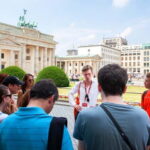
- From Wurst 🙂 to Brandenburg Gate: starting with an icon that carries stories
- Reichstag Building: where politics, tragedy, and war overlap
- Holocaust Memorial: the largest central memorial isn’t about sightseeing
- Fuhrerbunker: the most infamous bunker-like site, explained without theatrics
- Bundesministerium der Finanzen: an unexpected Cold War-era lesson
- Topography of Terror: seeing how the machinery of repression left a mark
- Checkpoint Charlie: a Cold War symbol you can actually walk to
- Gendarmenmarkt to Bebelplatz: from 18th-century elegance to a 1933 warning
- Unter den Linden: universities, museums, and a walk through modern identity
- Museum Island finale: medieval roots, reunification views, and five museums you’ll notice later
- Price, group size, and what you actually get for $32.58
- What kind of traveler should book this?
- Should you book this Berlin history walking tour?
- FAQ
- How long is the tour?
- How much does it cost?
- Is it a walking tour?
- What language is the tour offered in?
- Where does the tour start and end?
- Do I need to pay for admission tickets at the stops?
- Can I get a refund if I cancel?
Key things I’d highlight before you go
- Small group size (15 max) means more questions and more back-and-forth during the walk
- Major landmarks, one by one: Brandenburg Gate, Reichstag, Holocaust Memorial, Checkpoint Charlie, and more
- Free-entry stops listed for every main stop, so your money mainly goes to the guide and route
- A chronological feel to the narrative, from Imperial Germany to the Nazi era to Cold War Berlin and reunification
- Guides bring the story to life with personal touches and interactive moments you can actually connect with
Why this tour works: Berlin’s story, laid out on foot
Berlin can feel like a “wow, that’s cool” city on the surface. This tour helps you go one step deeper without turning your day into homework. The biggest value is the structure: you move through key sites in a sequence that shows how one era leads into the next. That makes it easier to read the city later when you’re wandering on your own.
You’ll also appreciate the small group. With a cap of 15, the guide can slow down when questions pop up, and you’re less likely to feel like a cattle line moving from plaque to plaque. Many guides (I’ve seen names like Al, Eugen, Rhys, Cairan, Aurel, and Paul connected with this experience) also bring energy and humor in the right places, which matters because Berlin’s 20th-century history isn’t light.
The other practical win: many stops are marked as free to enter, so you’re not paying extra at each location or stuck hunting for individual tickets. At $32.58 per person for about 3 hours 30 minutes, that’s a pretty fair deal when you compare it to the cost of piecing together multiple attractions with separate tickets and no narrative thread.
You can also read our reviews of more walking tours in Berlin



From Wurst 🙂 to Brandenburg Gate: starting with an icon that carries stories

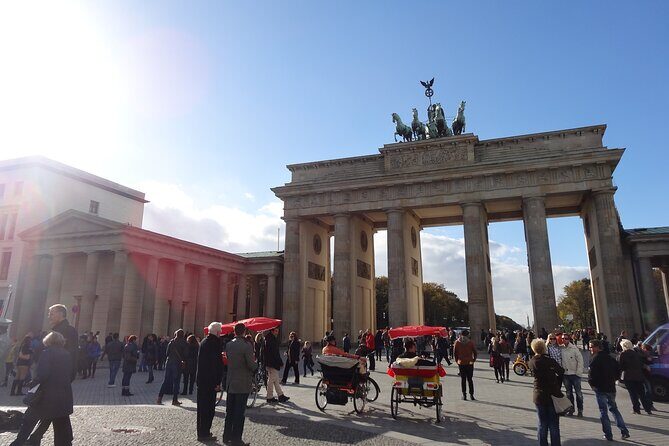
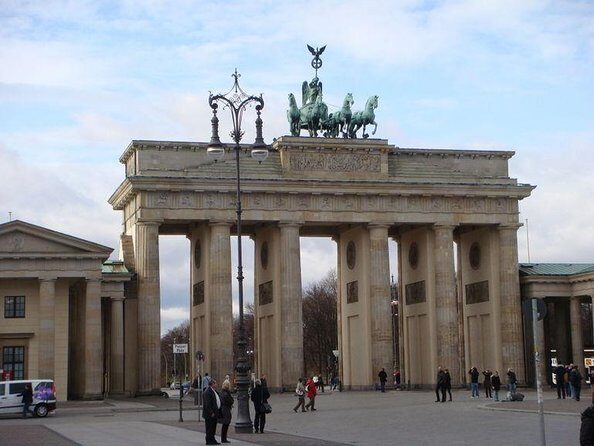
You begin near Brandenburger Tor, meeting at Wurst 🙂 by Brandenburger Tor on Ebertstraße near Scheidemannstraße. That location is convenient because it puts you right where Berlin’s grand central axis begins—ideal for the tour’s “start with the headline, then explain the chapters” approach.
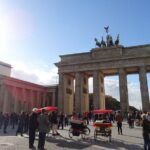
At the Brandenburg Gate stop, the guide gives the kind of context that makes the building stop feeling like a postcard. It’s not just an iconic structure; it’s been a witness. You’ll hear why this gate matters and how its symbolism shifted as Berlin changed politically and socially. It’s also a good moment to set expectations: this tour doesn’t treat monuments as isolated objects. It treats them as evidence.
Photo tip that’s worth using: if you want a less crowded shot of the Brandenburg Gate, consider arriving earlier or late in the day for photos. For this tour, you’ll be there at 10:00 am, so the crowd level may be what it is—plan to focus on the storytelling first, and the photos second.
Reichstag Building: where politics, tragedy, and war overlap
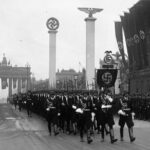
Next up is the Reichstag Building, with time set aside for a close look. This stop works because the guide doesn’t just describe architecture. You’ll connect it to the Imperial period, the fire that followed shortly after Hitler became Chancellor, and later the Soviet targeting during the end of WWII when Berlin was taken by force.
This is one of those stops where your understanding changes quickly once you see how many different powers have fought over it—both literally and symbolically. The guide’s commentary helps you make sense of why the Reichstag remains so central to German political identity, even after devastating events.
A drawback to keep in mind: the tone here is more serious, and the tour is also time-boxed (about 20 minutes at this stop). If you’re the type who wants unlimited time at each building, you’ll still get the core story, but you won’t have hours of wandering.
Holocaust Memorial: the largest central memorial isn’t about sightseeing
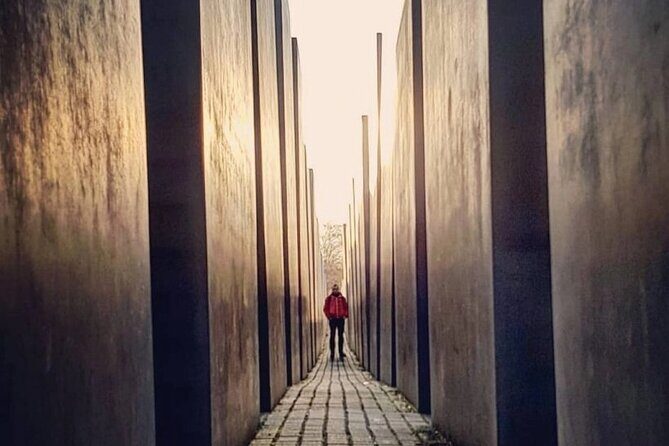
Then you’ll move to the Memorial to the Murdered Jews of Europe. This stop is emotionally intense, but it’s also presented with care: you’ll learn about why the memorial was built and how the crimes that enabled it are part of the story behind its creation.
I like how this tour doesn’t race through it like a checklist item. The guide’s framing is what makes the difference—especially for visitors who don’t know the background. You’ll understand that the memorial is not meant to be enjoyed in the usual way. It’s meant to make you think, and it’s meant to remember precisely who was targeted and why.
Plan for a slower inner pace here. Even though the stop is about 15 minutes, give yourself permission to stand with the space rather than just take photos and move on.
Fuhrerbunker: the most infamous bunker-like site, explained without theatrics
After the memorial, the route shifts into the darkest part of the Nazi era with a visit to Fuhrerbunker. The tour describes it as the infamous car-park in the world, but that punchline is only the entry point. The point is what happened here—Hitler’s bunker and the end of his reign.
This is another stop where the guide’s job matters. Without commentary, sites like this can feel like “spotting places” rather than understanding events. With the guide, you’ll connect the location to the broader story of how the Reich’s leadership collapsed as the war closed in.
One thing to consider: this tour packs several heavy themes in succession. If you’re sensitive to 20th-century atrocities, bring a little mental buffer. You’ll still get the history, but you may feel it more if you don’t pace yourself emotionally.
You can also read our reviews of more historical tours in Berlin




Bundesministerium der Finanzen: an unexpected Cold War-era lesson
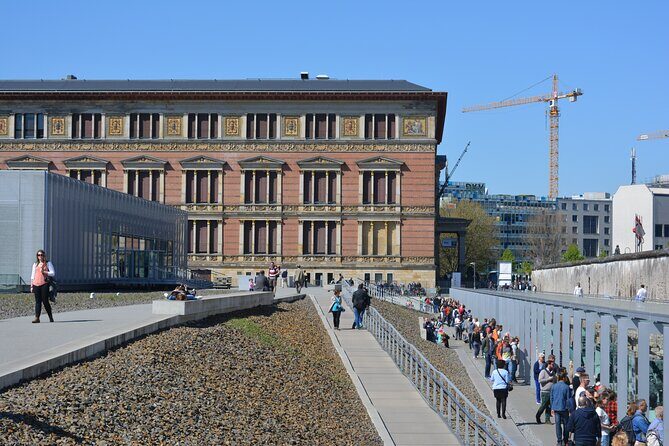
The tour then heads to the Bundesministerium der Finanzen (the Finance Ministry building). Right now it’s a finance office, but it used to be the Luftwaffe HQ. That contrast is the whole point: Berlin’s buildings are often reuse projects built on layered pasts.
From here, the guide also connects the location to Cold War history, including how different regimes used the same strategic geography. You walk away with a better sense of why Berlin’s urban landscape can feel like it’s full of “ghost chapters”—not because buildings are haunted, but because power keeps changing hands.
This stop is about learning to read the city. It’s also a nice palate change from the bunker and memorial tone, because it’s more about systems—institutions, construction, and what those structures signaled at the time.
Topography of Terror: seeing how the machinery of repression left a mark
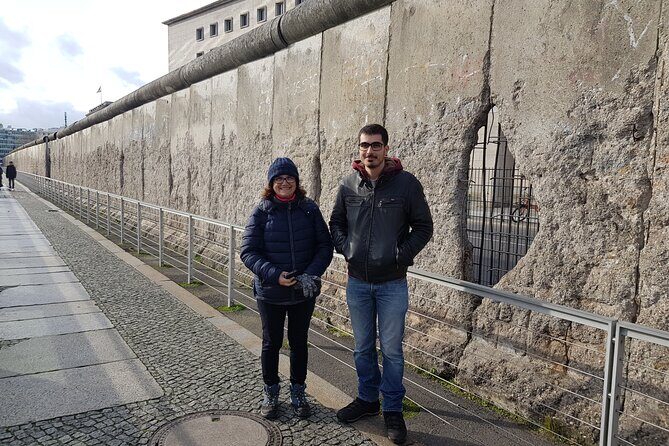
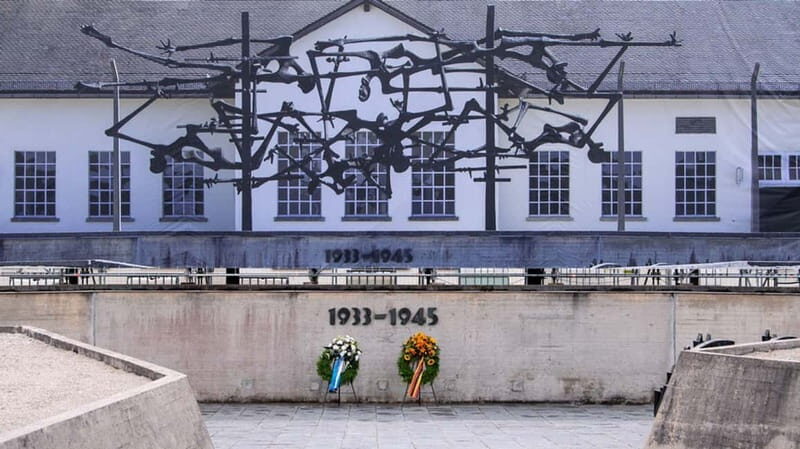
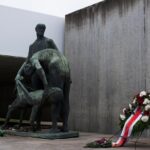
Next is Topography of Terror, at the site of the former headquarters of the SS, Gestapo, and SD. The guide explains what the site represented during the Nazi period, then how post-war memorialization took shape afterward.
This is a powerful stop because it doesn’t ask you to just feel. It helps you understand how repression functioned and why these organizations mattered. You also get context for why the site’s afterlife as a memorial matters—because history isn’t only about what happened. It’s also about how societies choose to remember.
This is also a good place to ask questions if you have them. The tour format gives you enough time to make the stop feel like comprehension rather than just exposure.
Checkpoint Charlie: a Cold War symbol you can actually walk to
Checkpoint Charlie is one of the most recognizable Cold War Berlin locations. Here, the guide connects it to how the city worked under division—who could move, who couldn’t, and how boundaries became part of everyday life for Berliners.
In about 20 minutes, you don’t get an endless history lecture. But you do get enough context that you’ll understand what made Checkpoint Charlie such a global symbol, not just a photo-op.
Practical tip: after sites like this, you’re usually ready to move and breathe. If you’ve been standing still at memorials, this is a nice shift back to street-level reality.
Gendarmenmarkt to Bebelplatz: from 18th-century elegance to a 1933 warning
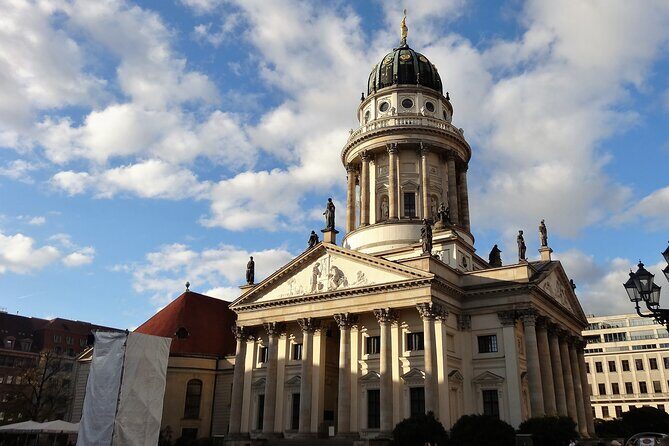
Then the tour shifts into beautiful architecture with a stop at Gendarmenmarkt. You’ll hear the history tied to its foundation and development, along with details about the 18th and 19th century splendor you can see right in front of you. It’s a reminder that Berlin wasn’t built only by war and politics. It’s also built by art, urban planning, and civic identity.
From there, you’ll reach Bebelplatz. The story here is darker: you’ll learn about why the buildings around the square were constructed, then you’ll see the Memorial to the darkest chapter of the square’s past—the 1933 Nazi book burning.
That pairing is smart. It shows how easily cultural and intellectual life can be attacked, and how quickly “civil” spaces can be repurposed by brutal ideology. It’s not just a history fact. It’s a pattern that you can connect to other places where censorship took root.
Unter den Linden: universities, museums, and a walk through modern identity
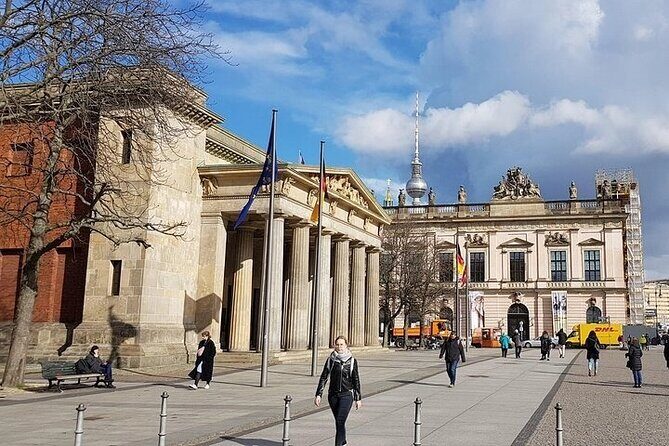
The tour continues along Unter den Linden, visiting sites connected to Humboldt University and other major landmarks in the area. You’ll also hear about the Memorial to Victims of War and Tyranny and the German History Museum.
This part of the tour feels more like a guided stroll through Berlin’s institutional heart. It’s a chance to connect the earlier eras to what Berlin became afterward—how education, museums, and public memory play a role in shaping a city’s identity.
You’ll also appreciate the pacing here. Earlier stops can feel heavy and dense in emotion. Unter den Linden helps you breathe without losing the thread.
Museum Island finale: medieval roots, reunification views, and five museums you’ll notice later
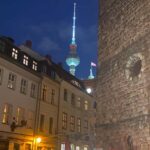
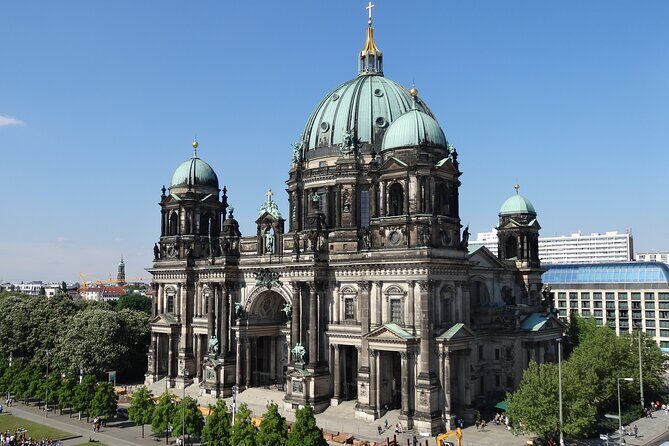
The final stop is Museum Island. The tour crosses from the area into what’s described as medieval Berlin, tied to the Stadt Schloss (City Palace) from the 15th century, the Berlin Cathedral, and the museums that now call this area home.
What I like about ending here is the visual payoff. From the eastern side of Museum Island, you’ll look toward Alexanderplatz, the center of Post-War East Berlin. That sightline helps you tie together the Cold War story with the present-day city layout.
It’s a strong way to end because you’re not just dropping off at a random destination. You’re placed in a museum district that makes sense as a “thinking end point.” If you want to continue exploring on your own, Museum Island is a practical finish because you can choose what matches your mood—history, art, or architecture—without needing more transit planning.
Price, group size, and what you actually get for $32.58
At $32.58 per person, you’re paying for the guided narrative across multiple high-profile sites, in a compact 3.5-hour format. For me, the value comes from three things:
1) You get the connections between eras instead of only seeing buildings.
2) The group size stays small (15 max), which keeps the experience interactive.
3) The stops listed are free to enter, which means your cost isn’t inflated by ticket line surprises.
Could you DIY this route on your own? Sure. But DIY usually means your day becomes about reading plaques and trying to piece together context from your phone. This tour saves you that work by giving you a coherent story while you walk.
What kind of traveler should book this?
This works best if you want a structured overview and you like explanations that make monuments and architecture feel meaningful. It’s especially good for first-timers who want to understand what they’re seeing across Berlin’s major political turning points.
I’d also recommend it if you’re traveling with family or mixed ages, because the guides often balance seriousness with approachable storytelling. One nice detail from the experience style: some guides use personal photos and short interactive moments to help the era feel more human, not just historical.
Who might want to think twice: if you know you can’t handle a sustained walking route, this is still a walking tour. Comfortable shoes matter.
Should you book this Berlin history walking tour?
Yes, if your goal is a clear, guided route through Berlin’s biggest landmarks with context that helps you understand what you’re seeing afterward. The combination of a small group, English commentary, and a string of free-entry stops makes it a smart value for the time.
I’d pass or swap to a shorter option if you’re worried about the walking distance or you prefer a lighter, more relaxed day. Berlin history is powerful, and this tour is built to connect major chapters tightly, one after another.
If you do book it, plan for comfortable shoes, bring water, and give yourself permission to feel the heavy stops without rushing your way through them. That’s when the tour turns from sightseeing into understanding.
FAQ
How long is the tour?
The tour runs for about 3 hours 30 minutes.
How much does it cost?
It costs $32.58 per person.
Is it a walking tour?
Yes, it’s a walking tour.
What language is the tour offered in?
The tour is offered in English.
Where does the tour start and end?
It starts at Wurst 🙂 at Brandenburger Tor, Ebertstraße, Ecke, Scheidemannstraße, 10117 Berlin. It ends at Museum Island.
Do I need to pay for admission tickets at the stops?
The listed stops are marked as admission ticket free.
Can I get a refund if I cancel?
Yes. You can cancel up to 24 hours in advance for a full refund. If you cancel less than 24 hours before the start time, the amount paid won’t be refunded.