REVIEW · BERLIN
East Berlin: City of Shadows Walking Tour
Book on Viator →Operated by Insight Cities · Bookable on Viator
Berlin has a second story—one told in concrete and fear. This East Berlin: City of Shadows walk is a fast, guided way to understand how the DDR shaped daily life and politics, site by site. I especially like how the tour links today’s landmarks to what happened around them, and how it explains cause-and-effect: Cold War division, tighter control, and then the cracks that led to 1989.
You’ll also get a clear city orientation in just about 3 hours. The focus stays on Communist-era places and the lived reality behind them, with stops designed to help you “see” the map differently afterward. One thing to consider: it’s not a long museum day, and some stops are short—so if you want deep time inside places like the Stasi Museum, you’ll likely plan a return trip on your own.
In This Review
- Key Things I’d Watch For on This Walk
- A 3-Hour Berlin Wall Era Orientation You Can Actually Use
- Where the Tour Starts: Unter den Linden to Brandenburg Gate
- Friedrichstraße and the Palace of Tears: How Division Hit Families
- Ghost Stations at Park am Nordbahnhof: The Cold War Hidden in Plain Sight
- Karl-Marx-Allee: Socialist Dreams Turned Into Pressure
- The Berlin Wall Memorial and the Death Strip
- Stasimuseum: Eric Mielke, Surveillance, and Fear in Daily Life
- Alexanderplatz: East Berlin’s Public Heart and the Push That Ended It
- Price and Logistics: Is It Worth $156.53 for 3 Hours?
- Who Should Book This City of Shadows Walk?
- Should You Book This Tour?
- FAQ
- How long is the East Berlin: City of Shadows walking tour?
- What sites does the tour include?
- Is the tour offered in English?
- How much does the tour cost?
- Is pickup available?
- Do I need to pay for entry tickets at the stops?
- Will I need public transportation during the tour?
- Is food or drinks included?
- What if I want to cancel?
- What kind of group size is this tour?
Key Things I’d Watch For on This Walk
- A small group (max 8) means more back-and-forth and fewer rushed questions.
- 3 hours with a local historian gives you the political context that many self-guided walks miss.
- Short stop times keep the pace brisk, so bring your curiosity and take notes as you go.
- Public transit is part of the plan, since some key points aren’t practical to connect on foot.
- Stasi + Wall coverage is the emotional center, with clear explanations of how the system worked.
- Free admission noted at each stop helps you budget without surprise entry fees.
A 3-Hour Berlin Wall Era Orientation You Can Actually Use

If Berlin feels layered, that’s because it is. This tour takes you through East Berlin’s Communist-era sites in a way that helps you connect what you see now with what used to be happening nearby. The guide’s goal is simple: give you an orientation of the city and the political legacy behind it, not just a list of places.
I like that the tour treats buildings and street corners as evidence. Brandenburg Gate, Friedrichstraße station, Alexanderplatz—these aren’t just famous. They become pointers to policies, propaganda, and family life under the DDR. And because the group size stays small, you’re not stuck listening at a distance. You can ask what anything means, then keep moving with a clearer mental map.
The main tradeoff is pacing. Each stop is timed, so you won’t get long readings on one topic. You’re getting a guided sweep that makes later independent exploring easier.
You can also read our reviews of more walking tours in Berlin



Where the Tour Starts: Unter den Linden to Brandenburg Gate
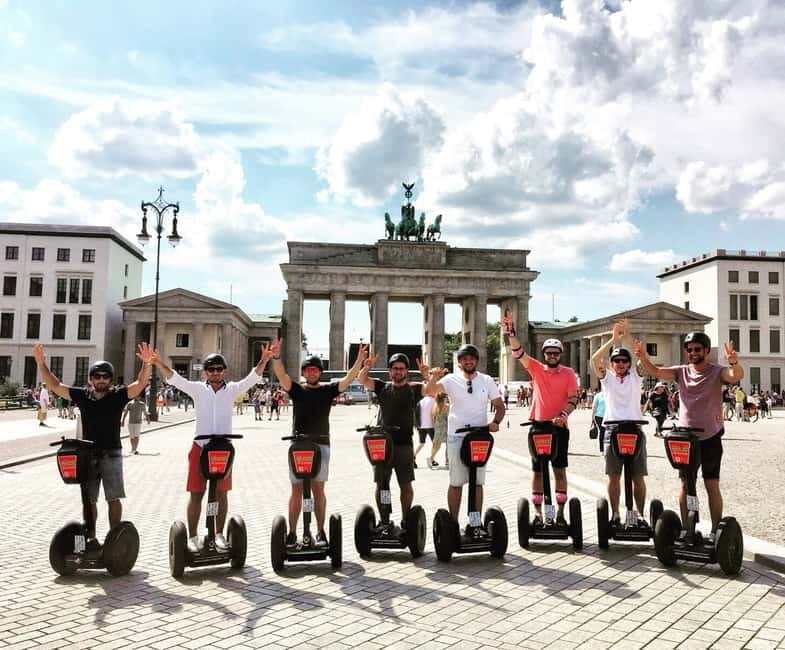
The meeting point is Unter den Linden 42, 10117 Berlin, and from there the story begins fast. You’ll start at Brandenburg Gate, which is an ideal opener because it sits right where modern Berlin’s public face meets the darker Cold War history around it.
This stop centers on how Berlin became a divided stage after World War II. You’ll hear about the Allied post-war division into zones, how tensions grew for decades, and how that division created a wall-era reality for East Germans. The tour also references the moment in June 1987 when Ronald Reagan, then President of the United States, famously called on Mikhail Gorbachev to tear down the wall—an anchor for understanding why international pressure and internal strain mattered.
A second reason this start works: you also get context for the nearby former Soviet Embassy, built in 1945 with rubble still around. The guide frames it as a bold statement of ambition and control over Berlin. It’s a good reminder that Cold War power wasn’t only on borders—it was declared in architecture.
What I’d be ready for: the guide’s tone can be heavy. This is the beginning of the “shadows” part, and it sets expectations for the rest of the walk.
Friedrichstraße and the Palace of Tears: How Division Hit Families
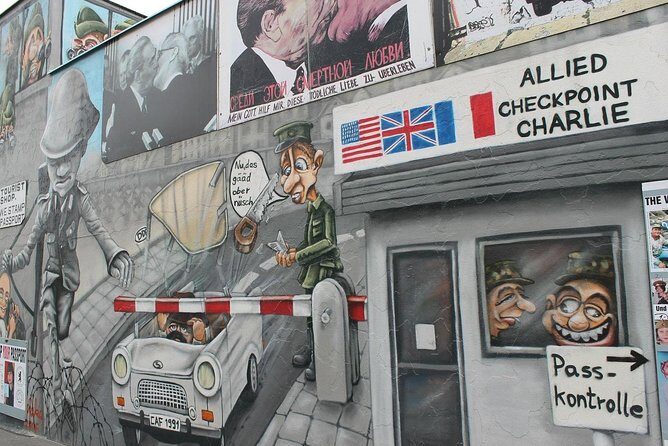
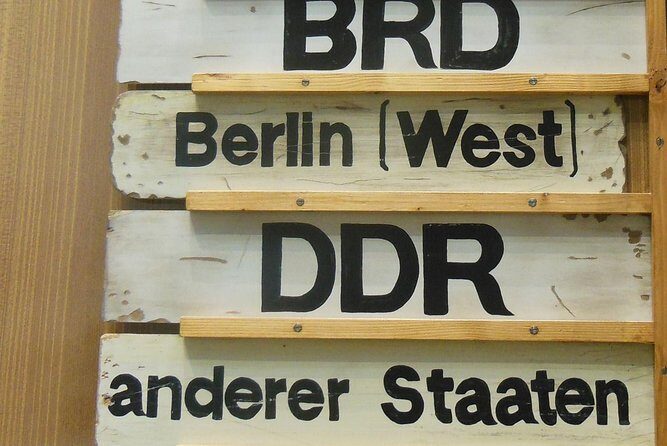
Next you move to Friedrichstraße, and it makes sense that this is where the tour turns human. Friedrichstraße station was a major crossing point between East and West Berlin, which meant it wasn’t only about trains and passports. It was where families were forced to separate.
The story at this stop focuses on the East German approach to immigration and travel, where people’s lives could be broken apart by rules that were brutally enforced. The guide brings in the office known as the Palace of Tears, where sad goodbyes happened during departures. Even if you’ve seen the word “division” on signs before, hearing it tied to a specific place changes how you understand what those borders meant.
This stop is short—about 15 minutes—so aim to take in the emotional takeaway first. Then, if you want more, you’ll know what direction to search afterward.
Ghost Stations at Park am Nordbahnhof: The Cold War Hidden in Plain Sight
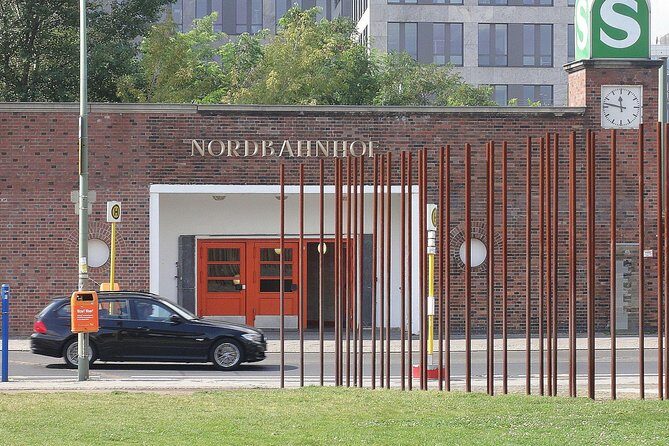
At Park am Nordbahnhof, the tour explains one of the most unnerving “details-as-history” ideas in Berlin: division created “ghost” stations. These were stops on West Berlin subway lines that ended up inside East German territory—unused, but heavily guarded.
This is one of those places where the physical layout feels ordinary until the guide reframes it. What looks like part of a normal transit system becomes a reminder of political control: the idea that even underground movement could be restricted, monitored, or denied depending on where a platform sat on the map.
The stop is about 10 minutes, but it’s memorable because it teaches you to look at infrastructure differently. You’ll start spotting the logic of boundaries in the city, not just the boundaries themselves.
Karl-Marx-Allee: Socialist Dreams Turned Into Pressure
Then comes Karl-Marx-Allee, the long, grand housing complex that symbolized a Socialist ideal. The tour invites you to judge the gap between promises and lived reality. You’ll hear how East Germans’ dreams for a Socialist paradise turned into deprivation, suppression, and paranoia—not as vague concepts, but as consequences of how the system worked.
This stop is brief (around 10 minutes), but it’s an important contrast after the more intimate family stories. Here the guide broadens the lens: individual heartbreak at the crossings, and then the broader atmosphere that shaped daily life across whole districts.
Practical note: wear comfortable shoes here. This area can be a lot of walking even if the stop itself is short, and it’s easier to keep your energy for the emotional parts later.
You can also read our reviews of more city tours in Berlin



The Berlin Wall Memorial and the Death Strip
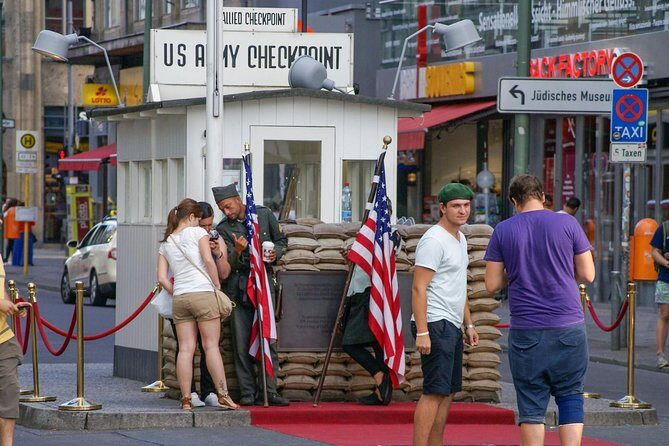
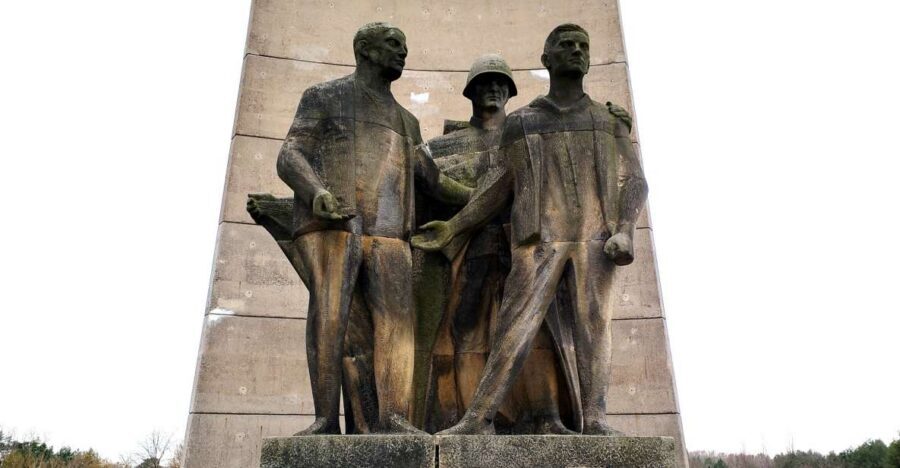
The emotional center of the tour is the Memorial of the Berlin Wall. Expect to learn about the infamous Death Strip area and hear stories tied to escape attempts and the tragic deaths that followed.
This isn’t presented as sensational drama. It’s framed as part of how the regime protected itself and how the border became lethal. Even in a short visit (about 15 minutes), it hits hard because you’re not only learning about policy—you’re learning about the cost of trying to leave.
If you’re the type who hates heavy scenes on group tours, this is where you’ll notice it most. But if you want the “why” behind the Cold War’s final showdown, this stop is one of the most direct explanations you’ll get in a short time.
Stasimuseum: Eric Mielke, Surveillance, and Fear in Daily Life
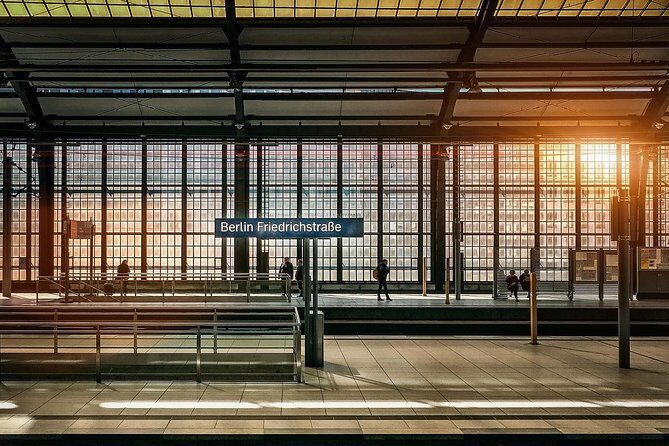
At Stasi headquarters, the tour focuses on East Germany’s secret police system. You’ll learn how the Stasi coerced neighbors and family members to spy on each other, turning trust into a risk.
The guide also connects this system to leadership by talking about the feared Stasi leader Eric Mielke and how he recruited a massive network of spies. You’ll even hear how surveillance techniques were developed and used.
This stop is about 10 minutes, which means you won’t get every detail, but you’ll get the core idea: the DDR wasn’t only enforced through borders and guards. It was enforced through information—through people watching people. That’s why the Stasi story lingers after the tour ends.
If you want more depth than the tour time allows, plan to return to the Stasi Museum on another day. This walk gives you the framework, not the full museum marathon.
Alexanderplatz: East Berlin’s Public Heart and the Push That Ended It
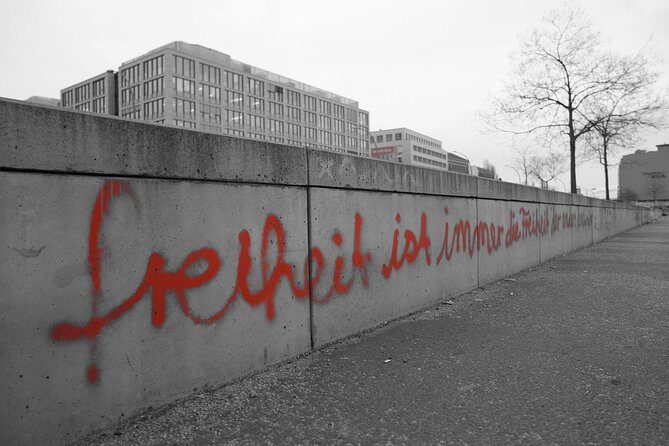
Finally, the tour moves to Alexanderplatz, described as the center of public life in East Berlin. This stop helps you connect daily life to political theater.
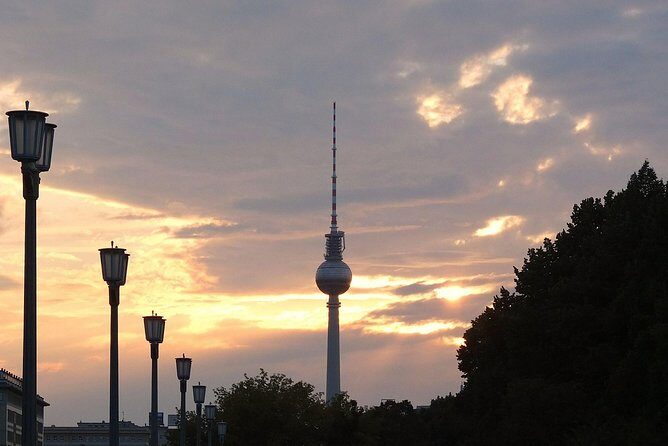
You’ll hear how Alexanderplatz was rebuilt in the 1960s, with landmarks like the futuristic parliament building and the iconic TV Tower. Then the guide brings in 1989—when massive demonstrations gathered here. This is where the tour ties public space to political change: the regime’s downfall is framed as something that played out in a place where people were visible and gathered.
The stop lasts about 10 minutes, but it works because it shows how power and identity were performed in public—and how that performance collapsed.
Price and Logistics: Is It Worth $156.53 for 3 Hours?
The price is $156.53 per person for about 3 hours with a local historian. Whether it feels like good value depends on what you want from the day.
Here’s how I’d judge it:
- You’re paying for context. Berlin’s East Berlin sites can be confusing if you only read plaques.
- You’re also paying for time efficiency. Getting the main thread of Communist-era history across scattered points would take longer on your own.
- You’re not paying for food. So budget for a meal separately.
The biggest logistics detail is transportation. The tour notes that you’ll need public transport a few times because some sites are too far to walk comfortably. If you don’t already have a transit pass, the guide suggests buying a day metro pass:
- Berlin Transit One Way Tarif AB: 2.8 EUR
- Berlin Transit Day Ticket: 7 EUR
- Senior discounts are listed too: 1.70 EUR one-way and 4.70 EUR day ticket.
If you can’t buy ahead of time, the guide can help you purchase at the first metro station during the tour. I like that safety net because transit tickets are easy to mess up if you’re tired or rushed.
Pickup is advertised, but the details are a bit contradictory in the provided info: the tour summary says pickup is offered, while the “not included” section lists hotel pickup and drop-off as not included. The best move is to confirm pickup details during booking, especially if you’re counting on it.
Finally, the group cap is 8 travelers, which is a strong sign you won’t feel herded.
Who Should Book This City of Shadows Walk?
This is a good fit if you want:
- A guided political and social overview of Berlin’s Communist-era legacy
- A walk that helps you understand what you’re looking at
- A small group experience in English
I’d also say it works well for first-time Berlin visitors who want orientation fast. The route hits major anchors: Brandenburg Gate, Friedrichstraße area, Alexanderplatz, Wall memorial, and Stasi headquarters.
On the other hand, if you’re hoping for a long, ticketed museum day with lots of time inside exhibits, this likely won’t satisfy alone. The tour’s stop times are short by design. You’ll get the framework—and then you’ll want to schedule extra time on your own at places like the Stasi Museum and the Wall memorial area.
Should You Book This Tour?
If you want a short, structured way to understand East Berlin’s story—how Cold War division shaped daily life, how surveillance worked, and how public pressure in 1989 brought change—this tour is a solid choice. The $156.53 price makes sense when you factor in the historian, small group size, and the fact that you’re seeing multiple key locations without having to piece together the political connections yourself.
I’d book it if you’re planning only a limited number of hours in Berlin or you want a guide to give you the “right questions” before you explore on your own. I wouldn’t pick it as your only plan if you’re aiming for deep museum time, since the stops are brief and you may need extra independent visits to go further.
FAQ
How long is the East Berlin: City of Shadows walking tour?
It runs for about 3 hours.
What sites does the tour include?
You’ll visit Brandenburg Gate, Friedrichstraße (including the Palace of Tears area), Park am Nordbahnhof, Karl-Marx-Allee, the Memorial of the Berlin Wall, Stasimuseum, and Alexanderplatz.
Is the tour offered in English?
Yes, it’s offered in English.
How much does the tour cost?
The price listed is $156.53 per person.
Is pickup available?
Pickup is mentioned as being offered from accommodations in Berlin, but the information provided also lists hotel pickup as not included. If pickup matters to you, confirm during booking.
Do I need to pay for entry tickets at the stops?
The tour information lists admission tickets as free at each stop mentioned.
Will I need public transportation during the tour?
Yes. The tour notes that you’ll use public transport a few times because some key sites would be too far to walk.
Is food or drinks included?
No, food and drinks are not included.
What if I want to cancel?
Free cancellation is available if you cancel up to 24 hours in advance for a full refund.
What kind of group size is this tour?
The maximum group size is 8 travelers.